Red Light Therapy for Hair Growth: Does It Work?
Red light therapy for hair growth has gone from niche clinical treatment to full-blown beauty trend. Search interest in laser caps, red light helmets, and light therapy combs has surged over the past couple of years, driven by viral before-and-after photos and celebrity endorsements. If you’re noticing thinning at the part line or a widening hairline and wondering whether a glowing helmet could help, you’re far from alone — this is one of the most searched hair-loss questions of the moment.
But popularity isn’t proof. This guide walks through what red light therapy for hair actually is, what the published research supports (and where it’s thin), which devices exist, what results are realistic, and how to decide whether it’s worth your money.
Key Takeaways
- The clinical term is low-level laser/light therapy (LLLT) — the same principle as skin LED therapy, applied to the scalp, usually with red (630–670 nm) and near-infrared wavelengths.
- Research is promising but limited: several small clinical trials show modest improvements in hair density for pattern hair loss, but studies are small, short, and often funded by device makers.
- It works best for early-stage thinning (pattern hair loss with active follicles), not for completely bald areas where follicles are long gone.
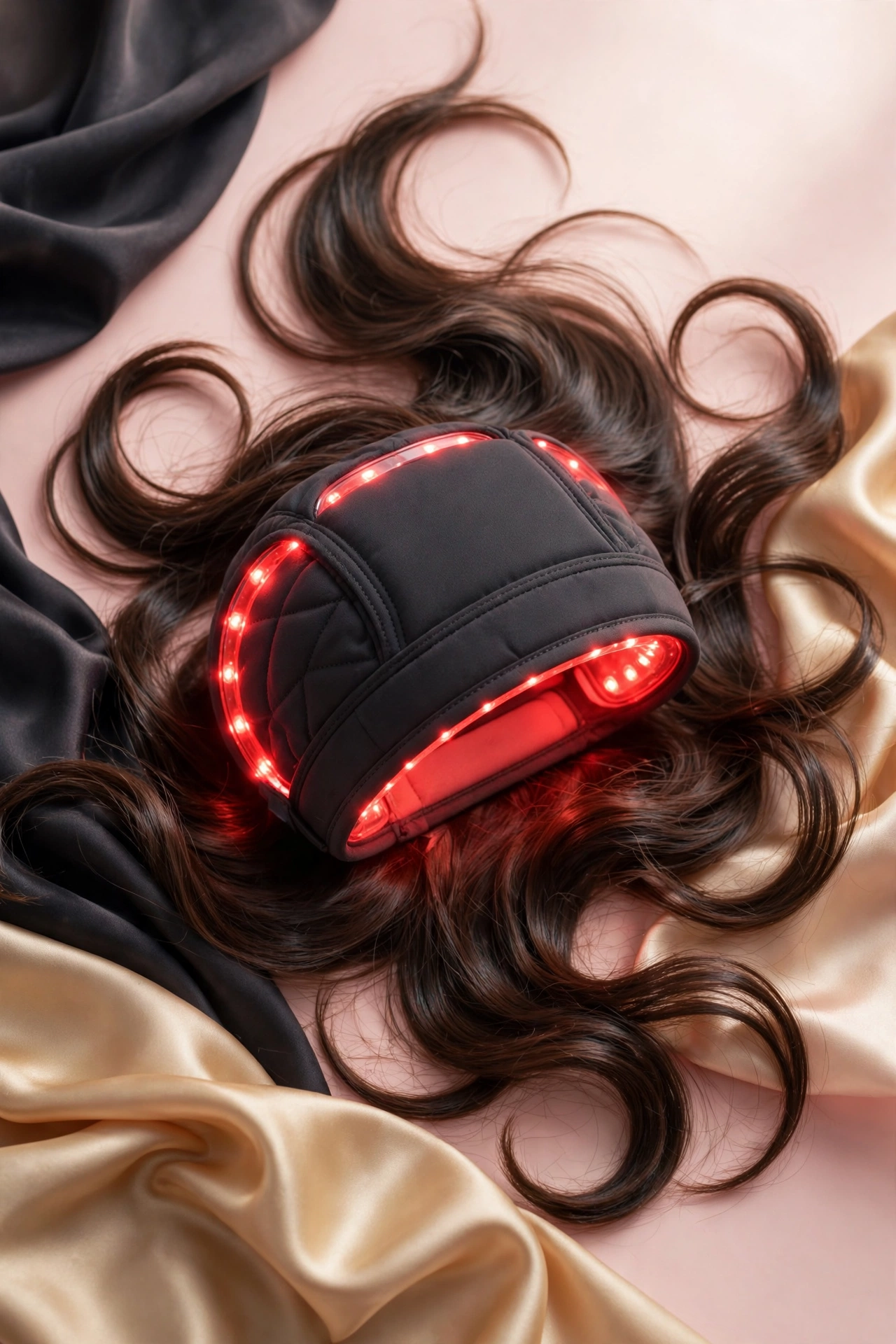
- Device types: laser caps/helmets (hands-free, full scalp), combs and bands (cheaper, manual), panels (off-label scalp use). Caps are the most studied format.
- Realistic timeline: 3–6 months of consistent use before judging results — hair cycles are slow.
This article is for informational purposes only and is not medical advice. Skin conditions vary — see a dermatologist for diagnosis and treatment. Hair loss can have medical causes (hormonal conditions, thyroid issues, nutritional deficiencies), so significant shedding deserves a professional evaluation before you self-treat with any device.
What Red Light Therapy for Hair Actually Is
Red light therapy for hair growth — more precisely called low-level light therapy (LLLT) or photobiomodulation — uses red and near-infrared light to stimulate the scalp. The theory: specific wavelengths are absorbed by cells in the hair follicle, which may increase cellular energy (ATP production), reduce follicle-damaging inflammation, and extend the growth (anagen) phase of the hair cycle.
This isn’t new science. LLLT for hair loss has been studied since the early 2000s, and some devices carry FDA clearance specifically for treating pattern hair loss (androgenetic alopecia) in men and women. What IS new is the marketing: the trend wave has brought dozens of consumer devices, glowing helmets in influencer unboxings, and dramatic claims that go well beyond the evidence.
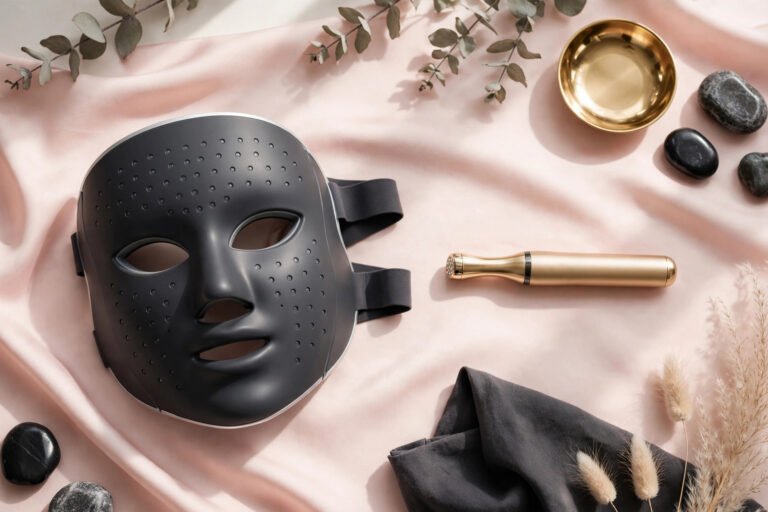
The important distinction: this is not the same as the LED face masks used for skin, though the technology family overlaps. Hair devices typically use higher-powered diodes and are designed to penetrate through hair to reach the scalp — a much harder delivery problem than shining light on bare facial skin. If you’re curious about the skin side of this technology, the complete beginner’s guide to LED light therapy at home covers how wavelengths and dosing work.
What the Research Actually Says
Let’s be honest about the evidence, because the marketing rarely is:
What’s encouraging:
– Multiple randomized controlled trials (the gold standard of study design) have found that LLLT devices increase hair density compared to sham (fake) devices in people with pattern hair loss. These studies typically run 16–26 weeks.
– The effect size is modest — we’re talking about measurable increases in hairs per square centimeter, not a full head of hair restored.
– Both red laser diodes and LED-based devices have shown effects, though lasers (coherent light) are more studied for hair than LEDs.
– Side effects in trials are minimal — occasional scalp irritation or warmth.
What’s limiting:
– Sample sizes are small. Many trials involve dozens, not hundreds, of participants.
– Funding bias is real. A meaningful share of positive studies were funded by the device manufacturers. That doesn’t make them wrong, but independent replication is thinner than the marketing suggests.
– Duration is short. Most trials last 6 months or less. We have limited data on what happens after a year or more of use — including whether results are maintained.
– “Works” means modest improvement. The research supports “denser than without treatment,” not “cures baldness.” Anyone showing you a miracle transformation photo is selling something.
– It doesn’t work on dead follicles. Areas that have been completely smooth and bald for years have follicles that are miniaturized beyond rescue. LLLT can’t resurrect what’s gone.
The honest summary: for early-to-moderate pattern thinning, red light therapy is one of the better-studied non-drug options, with real (if modest) evidence behind it. For advanced hair loss, expectations should be very low.
Types of Devices: Caps, Combs, Bands, and Panels
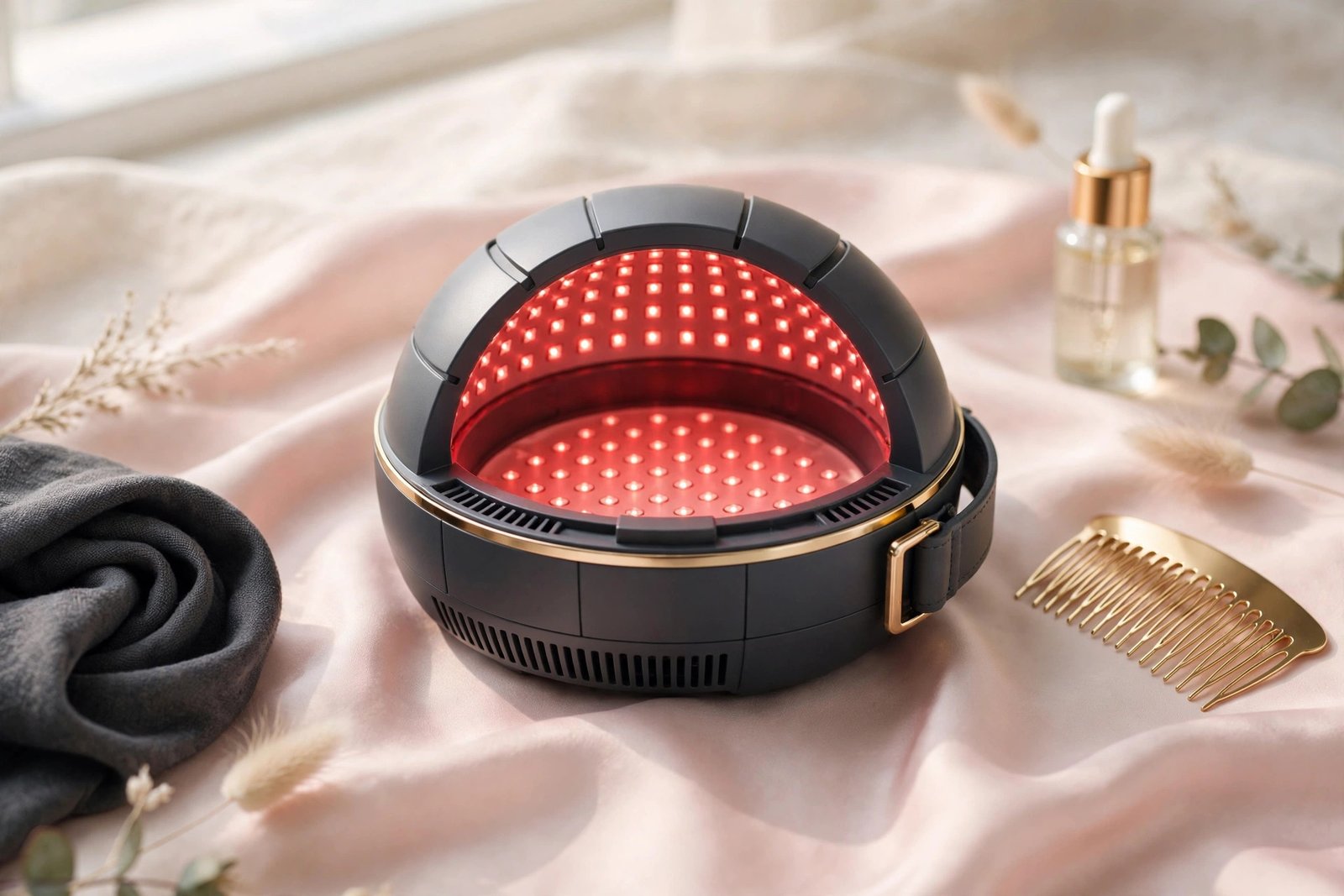
Laser caps and helmets
These are the flagship format: a cap or helmet lined with laser diodes (or a laser/LED mix) that you wear for a set session, typically 6–30 minutes depending on the model. They’re hands-free, cover the whole scalp evenly, and are the format most used in clinical trials — which means the evidence maps most directly to them.
Downsides: they’re the most expensive option (typically $500–$3,000+), they’re bulky, and wearing a glowing helmet is, admittedly, a look. Battery-powered models exist, but many are corded.
Laser combs and headbands
Combs with built-in laser diodes let you part the hair as you go, which helps light reach the scalp through dense hair — a genuine delivery advantage. Headbands target the hairline and temples specifically, which suits people whose thinning is concentrated at the front.
Downsides: they’re manual (you move the comb through your hair for 10–15 minutes), coverage is less even than a cap, and compliance suffers — tedious routines get abandoned.
LED panels and domes
Some people use red light panels or dome devices aimed at the scalp. These are primarily designed for skin, and using them for hair is off-label. The evidence base for panels on hair is much thinner than for laser caps, and getting light through a full head of hair to the scalp with a panel is inefficient. This is the format with the weakest evidence for hair growth specifically.
What to look for
- Laser diodes vs. LEDs: lasers are more studied for hair; devices with more diodes generally deliver better coverage.
- FDA clearance for hair loss: check that the clearance specifically names hair loss (some devices are cleared for skin and marketed loosely for hair).
- Published trial data: the more reputable brands publish or link their clinical results.
- Wavelength: most studied devices use 630–670 nm red light, sometimes with near-infrared.
Realistic Timelines and Expectations
Hair grows slowly, and any treatment that works through the hair cycle needs time. Here’s what’s realistic:
- Months 1–2: nothing visible. Some people report reduced shedding, but this is hard to verify and may be wishful thinking.
- Months 3–4: the earliest point where increased density might show in comparison photos. Many people see nothing yet.
- Months 5–6: the window where clinical trials measure results. If there’s going to be improvement, this is when it typically becomes measurable.
- Beyond 6 months: continued maintenance is required. Hair loss treatments generally need ongoing use — stopping usually means gradual return to baseline.
Photo documentation is essential. Take standardized photos (same lighting, same part, dry hair) every month. Human memory is unreliable for gradual changes, and without photos you can’t judge whether the device is working.
Also important: red light therapy doesn’t address the underlying causes of hair loss. For pattern hair loss, dermatologists typically recommend it as a complement to proven treatments (like minoxidil), not a replacement. If your shedding is sudden, patchy, or accompanied by other symptoms, see a doctor — that pattern suggests causes a light device can’t fix.
How to Use a Hair Light Therapy Device
- Start with a clean, dry scalp. Product buildup and wet hair block light.
- Part hair where possible. For combs and bands, parting the hair helps light reach the scalp. Caps with teeth-like dividers do this automatically.
- Follow the session schedule. Most devices recommend 2–4 sessions per week. More frequent isn’t necessarily better — follicles need recovery time between stimulations.
- Be consistent for at least 6 months. This is the single biggest factor. Skipping weeks undermines the cumulative effect.
- Don’t combine with irritating scalp treatments on the same day unless the manufacturer says it’s fine.
- Track with monthly photos as described above.
And manage the rest of your routine too — gentle handling, avoiding tight hairstyles that pull, and a balanced diet all support hair health. No device compensates for chronic traction or severe nutritional deficiency.
Safety Notes
LLLT for the scalp is generally well tolerated. Reported side effects are mild: temporary scalp warmth, mild irritation, or itching. Eye safety still matters — don’t stare into the diodes, and use any included eye protection. People with scalp conditions (psoriasis, eczema, open sores on the scalp) should check with a dermatologist first, since light therapy isn’t appropriate over broken or inflamed skin. As with skin devices, photosensitizing medications are a reason to consult a doctor first.
One more honest note: the hair device market has a quality problem. The trend surge attracted many cheap, underpowered products with impressive marketing and no published data. A $60 “laser cap” with a handful of weak diodes is unlikely to replicate trial results. If you’re going to try this, the boring advice is the right advice: buy a device with published specs, real clinical data, and clearance for hair loss — or save your money.
Frequently Asked Questions
Does red light therapy work for female pattern hair loss?
Several trials have included women with pattern hair loss and found modest density improvements, and some devices carry clearance specifically for women. The evidence is thinner than for men (fewer studies), but the mechanism should apply to both. Early-stage thinning responds best regardless of gender.
Can it regrow hair on a completely bald spot?
Almost certainly not. Once follicles have been fully miniaturized and the area has been smooth for years, no light therapy has been shown to bring them back. Devices work on thinning areas where follicles are still active but shrinking.
How is this different from LED face masks?
The principle (light stimulating cells) is related, but hair devices must deliver light through hair to the scalp, which requires different engineering — typically laser diodes rather than LEDs, and formats (caps, combs) designed for scalp contact. A face mask held to your head is not an effective hair treatment. For the skin side, see the complete beginner’s guide to LED light therapy at home.
Can I use it with minoxidil or other hair loss treatments?
Many dermatologists recommend combination approaches, and trials have tested LLLT alongside minoxidil. Don’t start or stop prescription treatments without medical advice, but light therapy isn’t generally considered incompatible with topical treatments — just don’t apply topicals immediately before a light session, since product on the scalp can block light.
Are the before-and-after photos online real?
Some may be, but treat viral photos with deep skepticism. Lighting, hair length, styling, and even hair fibers (concealer products) can fake dramatic results. The clinical trial data — modest, measured density increases over months — is a far more reliable guide to what’s possible than any influencer photo.
What about red light therapy for postpartum shedding?
Postpartum shedding (telogen effluvium) is temporary and self-resolving — the hair cycle normalizes on its own, usually within a year. There’s no good evidence that light therapy speeds this up, and most dermatologists would suggest waiting it out rather than buying a device for a temporary condition.
The Bottom Line
Red light therapy for hair growth sits in an unusual spot: it’s genuinely one of the better-studied non-drug options for pattern thinning, with real clinical trials behind it — but the trend-driven marketing has inflated expectations far beyond what the evidence supports. Modest density improvement over 6 months of consistent use? Plausible. Miracle regrowth? No.
If you’re in the early stages of thinning and want to try it, choose a well-studied device format (a cap with real clinical data and hair-loss clearance), commit to six months of consistent use, document with photos, and keep expectations modest. And if your hair loss is sudden, patchy, or severe, skip the device aisle and see a dermatologist first — that’s the step that actually changes outcomes.
For those curious about related at-home technologies, our guides on high frequency wands for acne and gua sha for beginners cover other device and technique options — though neither targets hair growth.
Love this? Pin it for later!