Best Bronzer for Pale Skin (Zero Orange Tones)
Pale skin and bronzer have a complicated relationship. The whole point of bronzer is a sun-kissed warmth, but on fair skin, most shades jump straight past “sun-kissed” and land at “orange.” The result looks less like a golden-hour glow and more like a self-tanner experiment gone wrong. But the fix isn’t avoiding bronzer — it’s choosing the right one.
The secret fair-skinned makeup wearers swear by: go lighter, go neutral-warm (not blazing warm), and build up slowly. The best bronzer for pale skin is one you can barely see after the first sweep — a whisper of warmth that you layer until it looks like health, not makeup. If you’re new to the category, our beginner-friendly bronzer guide covers the foundations before you shop.
Key Takeaways
- The best bronzer for pale skin is 1–2 shades deeper than your natural tone, with neutral-warm or golden-beige undertones — never vivid orange or red.
- Skip shades labeled “deep,” “rich,” or “sunset”; they were designed for medium-to-deep skin.
- Swatch on your jawline or inner wrist in natural light before buying — store lighting lies.
- A sheer, buildable formula beats a heavily pigmented one for fair skin; you can always add more.
- Apply with a light hand and a fluffy brush; heavy application is the top cause of the orange look.
Why Bronzer Turns Orange on Pale Skin
It comes down to contrast. On medium and deep skin, a warm bronzer melts into the natural warmth already present in the complexion. On pale skin, there’s very little underlying warmth for the pigment to blend with, so the bronzer’s warm undertones sit on top and read loudly — the eye picks up the orange because there’s nothing underneath to soften it.
Heavily pigmented bronzers make this worse. When a formula is designed for a wide range of skin tones, its pigment load can be too intense for fair skin even in its lightest shade. That’s why so many pale-skinned makeup lovers find success with sheerer formulas, translucent “glow” bronzers, and even matte contour-adjacent shades that add definition without blazing color.
The undertone trap matters too. Some bronzers lean red-orange (think terracotta on steroids) and some lean golden-beige. On fair skin, the golden-beige family is almost always the safer bet. It reads as sunlight, not as pigment.
What to Look for in a Bronzer for Pale Skin
Shade: light and neutral-warm
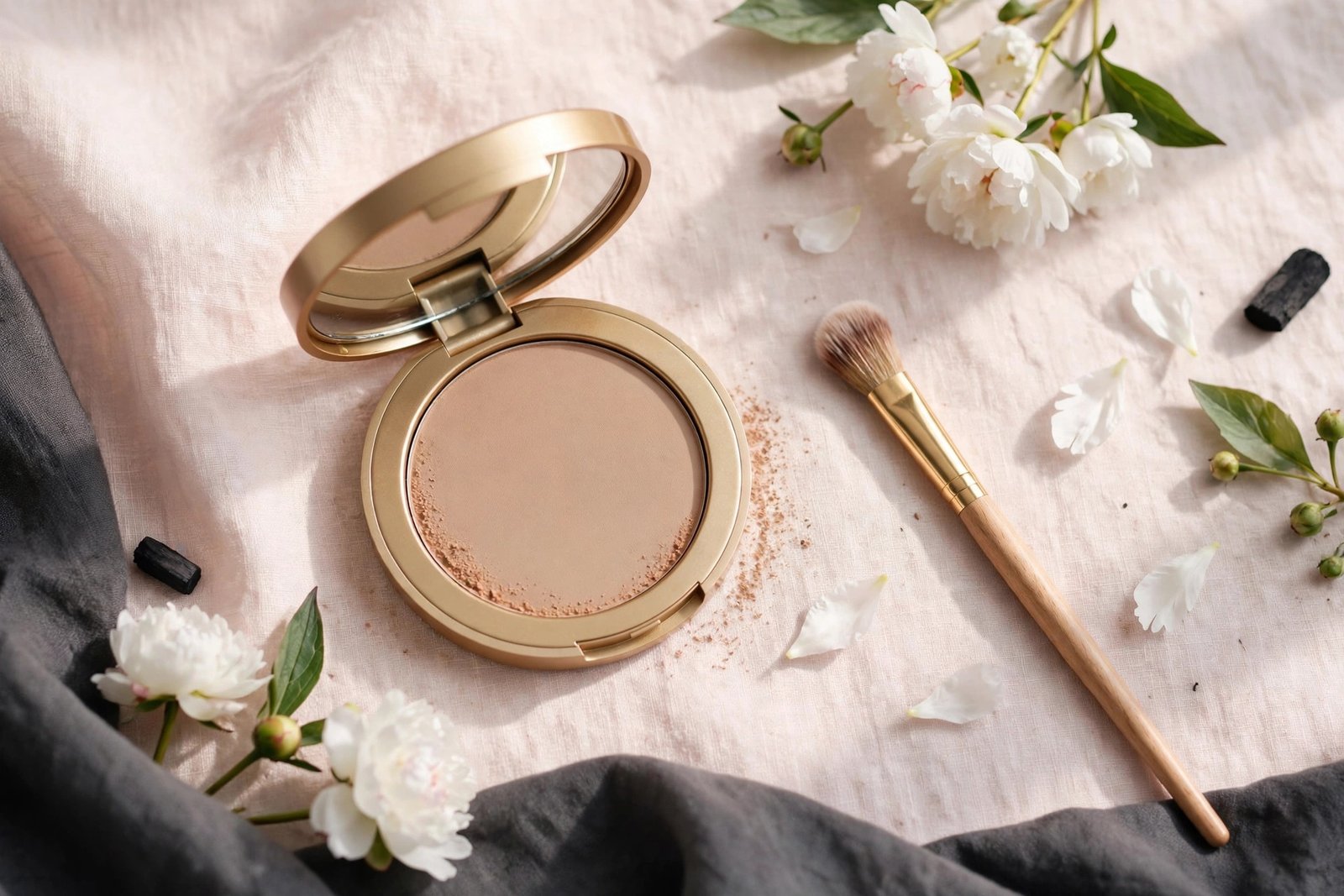
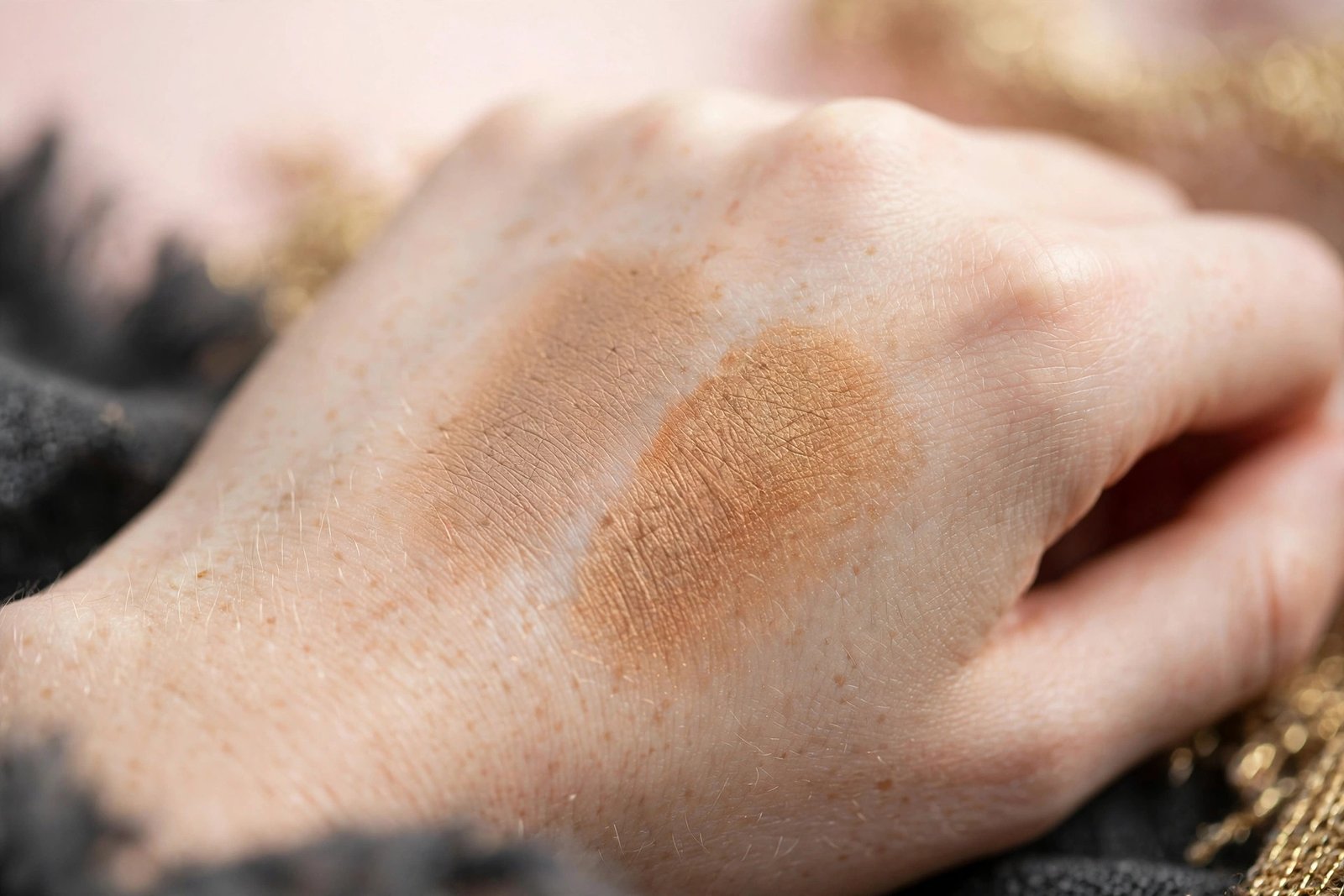
Reach for the lightest bronzer shade available in any range — usually labeled “fair,” “light,” or shade 01. The color should look almost unremarkable in the pan: a soft golden tan or neutral beige, not a rich caramel. If it looks dramatically darker than your hand, it’s too deep.
Undertone: golden-beige over red-orange
Hold the pan next to something golden-beige and something terracotta. The bronzer you want leans toward the golden side. Shades described as “golden,” “honey,” or “natural” usually work; shades described as “burnt,” “ember,” or “sunset” usually don’t — at least not on very fair skin.
Finish: soft satin or sheer glow
Matte bronzers can look flat and powdery on fair skin, while glittery ones read as disco ball. The sweet spot is a soft satin or sheer luminous finish — just enough radiance to mimic real sun-warmed skin. If your bronzer has visible glitter particles, save it for evening.
Formula: sheer and buildable
A bronzer you can layer is a bronzer you control. Highly pigmented formulas deposit too much color in one swipe, and fair skin shows every bit of it. Sheer, buildable formulas — including tinted glow drops and bronzer-serum hybrids — give you room to stop exactly where “natural” ends.
What to Avoid
- Deep, rich shades: If a bronzer is described as “deep” or “for medium-deep skin,” it’s not for you, no matter how pretty it looks in the pan.
- Red-orange undertones: Terracotta and copper shades skew orange on fair skin almost every time.
- Overly shimmery formulas: Chunky glitter emphasizes texture and looks artificial on pale skin.
- Bronzer-contour hybrids in deep tones: A product that tries to do both jobs usually does neither well on fair skin — the bronzer vs contour comparison explains why each product needs its own shade logic.
- Applying with a dense brush: Dense brushes pack on product; fluffy brushes diffuse it. For pale skin, diffusion wins.
How to Test Bronzer Before You Buy
The swatch test takes thirty seconds and saves you from an orange surprise:
- Swatch on your jawline, not your hand. Your hand is usually darker and warmer than your face, so a shade that looks perfect there can still be too dark on your cheeks. The jawline is the truest preview.
- Check in natural light. Store lighting is warm and flattering — it hides orange undertones. Step near a window or doorway and look at the swatch in daylight.
- Blend it out. Don’t judge the raw swipe; blend the edges the way you would on your face. If the blended result looks like a natural flush of warmth, you’ve got a winner. If you see orange or a visible border, move on.
- Wait a few minutes. Some formulas oxidize — they deepen or turn more orange as they set. Give it five minutes and check again.
Can’t swatch in person? Look up swatches on fair-skinned reviewers with a similar undertone to yours. A swatch on medium skin tells you nothing about how a shade behaves on pale skin.
Application Tips for Fair Skin
Even the perfect shade can go wrong with heavy application. These habits keep things believable:
- Tap off the excess. After loading your brush, tap or blow off the extra product before it touches your face. This one habit prevents most bronzer disasters.
- Use the “3” technique lightly. Sweep from forehead to cheek to jawline in a loose “3” shape, as detailed in our step-by-step contouring tutorial — the same blending principles apply, just with a warmer shade.
- Build in layers, not one pass. One sheer layer, assess, then add a second only where you want more depth. Three thin layers beat one thick one every time.
- Blend down the neck. Fair skin shows mismatched edges easily. A whisper of bronzer down the neck bridges the gap between face and body.
- Pair with the right blush. Bronzer and blush should harmonize — a peachy or soft rose blush keeps the overall look warm without competing. Our guide to choosing blush for your skin tone helps you find a shade that flatters fair skin alongside bronzer.
Frequently Asked Questions
Why does every bronzer look orange on me?
Most likely the shade is too deep or too red-orange in undertone for your skin. Switch to the lightest shade in the range with golden-beige undertones, apply sheerly, and the orange cast should disappear.
Can pale skin wear matte bronzer?
Yes, but choose carefully. Matte formulas can look flat or powdery on fair skin if the shade is off. A soft satin finish is usually more flattering, but a well-matched matte bronzer applied lightly looks perfectly natural.
Should I use cream or powder bronzer on fair skin?
Both work. Creams tend to look more natural and skin-like, which benefits pale skin, but they demand careful blending. Powders are more forgiving for beginners. If you want to try the cream route, see our cream bronzer application tutorial for the technique basics.
Is bronzer the same as contour for pale skin?
No — and confusing them is especially visible on fair skin. Bronzer adds warm color; contour adds cool shadow. Using a warm bronzer as contour gives orange stripes; using a cool contour as bronzer gives muddy grayness. Each has its own job.
How do I fix bronzer that’s too dark?
Blend it out with a clean fluffy brush first. If it’s still too intense, press a translucent powder or a bit of your foundation over the top to soften it. Prevention beats correction, though — start sheer.
Can I skip bronzer and just use blush?
Of course. Blush alone gives a fresh, youthful look that many fair-skinned people prefer. Bronzer adds dimension and warmth that blush alone doesn’t, but it’s optional. Our complete blush guide for beginners covers a blush-only routine.
What bronzer shade works for very pale, cool-toned skin?
Look for shades labeled light, fair, or porcelain with beige-gold or neutral undertones — never red-orange. Taupe-beige bronzers made for contour-adjacent warmth often work better than anything marketed as “sun-kissed.” Swatch on your jawline in daylight; the right shade should look like a soft shadow of warmth, not a visible stripe of color.
The Bottom Line
The best bronzer for pale skin isn’t the most dramatic or the most golden — it’s the one that disappears into your complexion and leaves behind nothing but warmth. Go light, go golden-beige, apply sheerly, and always test in natural light. Once you find your match, bronzer stops being a risk and becomes the step that makes everything else look better.
Love this? Pin it for later!