Microcurrent Devices for Beginners: What to Know First
Microcurrent devices promise something tantalizing: visibly lifted, more toned-looking skin without needles, downtime, or a clinic appointment. The before-and-after photos are striking — one side of the face looks subtly more sculpted than the other after a single session. But what is microcurrent actually doing, are the results real or temporary, and is an at-home device worth the investment? This beginner’s guide covers how the technology works, what results are realistic, how to use a device safely, and what to look for when buying your first one.

Key Takeaways
- Microcurrent uses low-level electrical current (measured in microamps) to stimulate facial muscles and skin — it’s often called a “workout for your face.”
- Results are real but mostly temporary at first: a single session gives a subtle lifted look lasting hours to a day; consistent use over weeks may build more lasting tone.
- Evidence is modest: the technology has medical roots (wound healing, facial palsy rehab), but cosmetic at-home results are less studied — most proof is anecdotal and brand-funded.
- Technique matters enormously: conductive gel is mandatory, and proper upward strokes along muscle lines make the difference between results and wasted time.
- Not for everyone: skip microcurrent if you’re pregnant, have a pacemaker or metal implants in the face, or have certain skin conditions — details below.
This article is for informational purposes only and is not medical advice. Skin conditions vary — see a dermatologist for diagnosis and treatment. Microcurrent devices are cosmetic tools, not medical treatments, and they can’t diagnose or treat underlying skin or muscle conditions.
What Microcurrent Is and How It Works
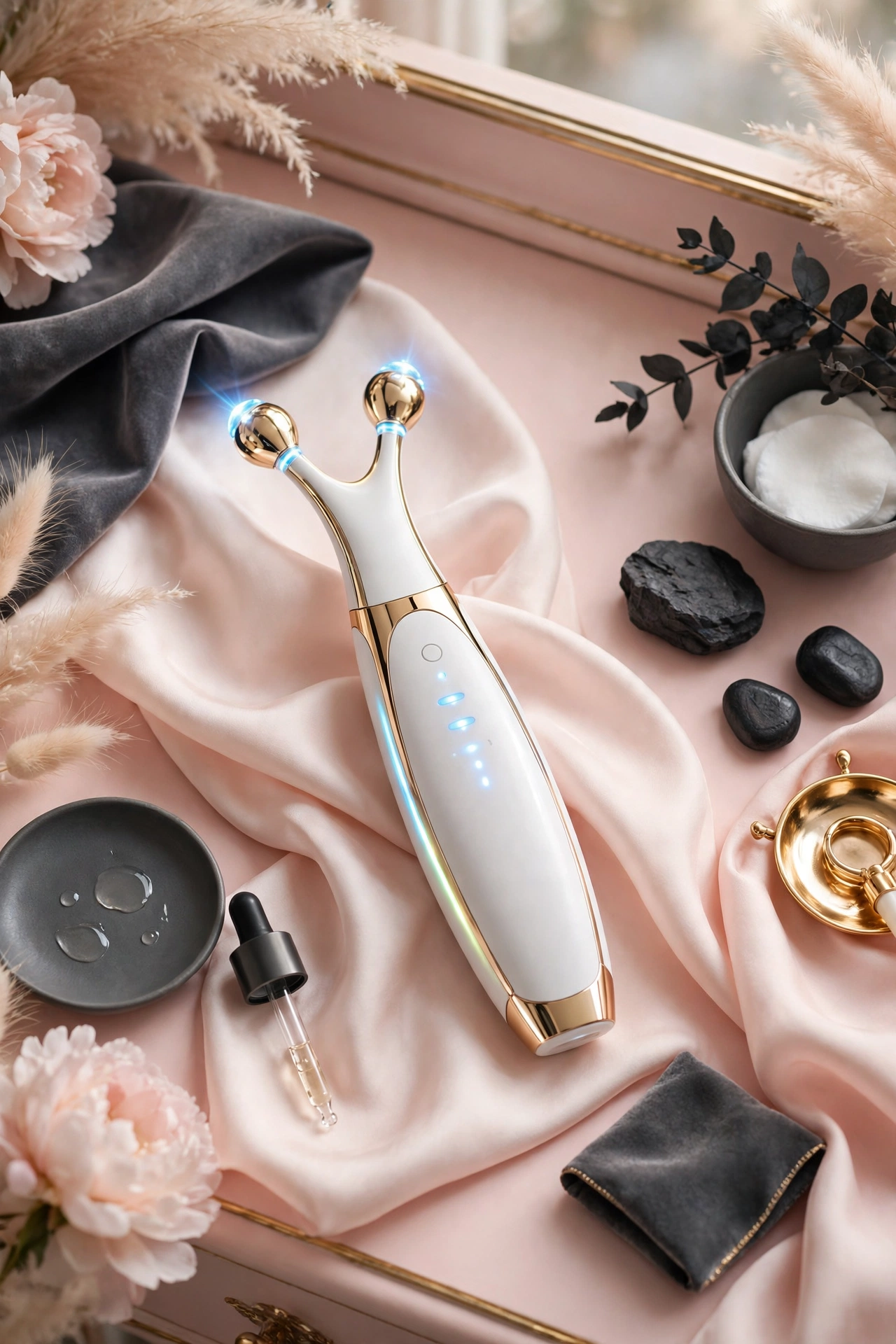
Microcurrent devices deliver a very low-level electrical current — typically between 100 and 500 microamps — through two metal probes or spheres that glide over the skin. To put that in perspective, it’s a fraction of the current used in TENS pain-relief devices, and most people feel nothing at all (or a very faint tingling).
The claimed mechanism has two parts:
- Muscle stimulation. The current is thought to stimulate the small facial muscles, encouraging a mild contraction that “tones” them over time — similar in concept to how exercise tones body muscles. Proponents say this is what creates the lifted, more sculpted appearance.
- Cellular energy (ATP) support. Early laboratory research (most famously a 1982 study on rat skin) suggested microcurrent could increase ATP production and protein synthesis in cells. Brands cite this heavily — but it’s worth knowing the foundational study was on rats, decades ago, and cosmetic human evidence is much thinner.
Microcurrent has legitimate medical history: physical therapists have used it for wound healing and muscle rehabilitation, including facial palsy recovery. The leap from clinical rehab to cosmetic “face lifting” is where the evidence gets softer. That doesn’t mean it does nothing — many users report genuinely visible (if temporary) effects — but the marketing often outruns the science.
Do They Really Work? An Honest Answer
Here’s the balanced take:
What users consistently report:
– An immediate, subtle “lifted” look after a session — particularly along the jawline and cheekbones — that lasts several hours to about a day.
– With consistent use (4–5 times per week for several weeks), some users feel their facial tone looks better maintained between sessions — a cumulative effect.
– Reduced morning puffiness, likely from the lymphatic-drainage aspect of the gliding massage motion.
What the evidence actually supports:
– The immediate effect is real for many people but temporary — it’s partly muscle stimulation and partly the massage itself moving fluid. Think of it like the difference your face looks after a good facial massage.
– Long-term “muscle toning” claims are the least supported part. Facial muscles are small and complex; the idea that microamps meaningfully re-tone them over months has limited human research behind it.
– No at-home device will replicate a surgical facelift, thread lift, or even professional in-office microcurrent (which uses higher intensities and trained technique).
The honest bottom line: microcurrent is best understood as a maintenance and enhancement tool — good for a temporary lifted look before events, and potentially useful as part of a long-term routine — not a transformative anti-aging treatment. If you go in expecting a subtle, temporary improvement that rewards consistency, you won’t be disappointed. If you expect it to erase a decade, you will be.
How to Use a Microcurrent Device: Beginner Technique
Technique is everything with microcurrent. A good device used badly gives nothing; a basic device used well can give visible results. Here’s the method:
Step 1: Start with clean skin
Remove all makeup, sunscreen, and skincare. Microcurrent needs direct contact through conductive gel — anything between the probes and your skin interferes with the current.
Step 2: Apply conductive gel generously
This is non-negotiable. Microcurrent does not work without conductive gel — dry skin blocks the current, and the device will drag painfully. Apply a thick, even layer to one section of the face at a time (it dries out, so work in zones: one cheek, then the other, then forehead, then jaw). Most devices come with a starter gel; aloe-based conductive gels also work. Never substitute regular moisturizer — it isn’t conductive.
Step 3: Learn the stroke pattern
The general technique, used across most devices:
– Glide slowly upward and outward, following the muscle lines — from the center of the face toward the ears, from the jaw toward the temples, from the brow upward into the hairline.
– Hold at the end of each stroke for a few seconds at the “anchor point” (near the ear, temple, or hairline) — this is where lymphatic drainage happens.
– Repeat each stroke 3–5 times per section before moving on.
– Keep the probes in contact with the skin throughout each stroke — lifting mid-stroke breaks the circuit.
– Work one side, then mirror it on the other side for symmetry.
Most brands include tutorial videos for their specific device — watch them. Five minutes of learning proper form beats months of ineffective gliding.
Step 4: Session length and frequency
- Beginners: 5 minutes per session, 4–5 times per week for the first 60 days. This “training period” is what brands recommend to build the cumulative effect.
- Maintenance: 2–3 times per week, 5–10 minutes per session.
- More is not better. Overdoing it can leave skin irritated or the muscles feeling fatigued. Stick to the schedule.
Step 5: Finish your skincare after
Wipe off residual gel, then apply your normal serums and moisturizer. Microcurrent sessions pair well with hydrating products afterward — the skin is freshly stimulated and receptive.
What to Buy: Beginner Buying Guide
Device types
- Classic dual-probe devices: two metal spheres or prongs on a single handle — the standard format, good for learning technique.
- Devices with interchangeable heads: add-on attachments for the eye area, lips, or body. Useful if you want targeted treatment, but beginners don’t need them on day one.
- Mini/travel devices: smaller, often USB-charged. Fine for maintenance once you know the technique, less ideal for learning.
Features that matter
- Adjustable intensity levels. Beginners should start on the lowest setting. Multiple levels let you progress as your skin adapts.
- A timer or guided app. Sessions are easy to over- or under-do without guidance; built-in programs keep you on track.
- Good probe design. Smooth, well-spaced spheres glide better and maintain contact more easily than awkward shapes.
- Rechargeable battery with decent life. You don’t want it dying mid-routine.
- Included conductive gel and clear instructions. A beginner kit should set you up completely.
What to skip as a beginner
- Don’t pay extra for attachments you won’t use yet (body heads, LED add-ons).
- Be wary of devices that promise dramatic results in marketing but publish no specifications — reputable brands state their microamp output range.
- Price ranges from around $150 to $400+ for well-known devices; ultra-cheap no-name devices often have inconsistent current output.
Microcurrent vs. Other At-Home Devices
Beginners often wonder how microcurrent compares to the other popular at-home technologies:
- vs. LED light therapy: different mechanisms entirely — microcurrent uses electrical current on muscles; LED uses light on skin cells. They can be used in the same routine (many people do microcurrent first, then LED), and they target different concerns. See the complete beginner’s guide to LED light therapy at home for the light side.
- vs. gua sha / facial massage: gua sha works through manual pressure — circulation, lymphatic drainage, tension release. Microcurrent adds electrical muscle stimulation on top of a similar gliding motion. They’re complementary, not competitors; see gua sha for beginners.
- vs. high frequency wands: high frequency uses a different electrical current (higher frequency, argon/neon gas electrodes) primarily marketed for acne. The technologies aren’t interchangeable — see high frequency wands for acne.
Safety: Who Should Skip Microcurrent
Microcurrent is low-risk for most people, but there are firm contraindications:
- Do not use if you have a pacemaker, implanted defibrillator, or other implanted electronic device. Electrical current and implants don’t mix — this is the one absolute rule.
- Avoid if pregnant or breastfeeding. Not because harm is proven, but because it hasn’t been studied — the standard precaution applies.
- Skip over metal implants, pins, or plates in the face. Current can concentrate around metal.
- Avoid over active breakouts, open wounds, rashes, or irritated skin. Wait until skin is calm.
- Use caution with rosacea or very reactive skin — start on the lowest setting and watch for flushing.
- Don’t use on the thyroid area (front of the neck) — most manufacturers advise avoiding it.
- If you have epilepsy or a seizure disorder, check with your doctor first.
Common mild side effects: slight tingling, temporary redness, or a metallic taste (harmless, from the current near the mouth area). If you feel actual zapping or pain, you’re using too little gel or too high an intensity — add gel and turn it down.
Frequently Asked Questions
How long do microcurrent results last?
After a single session, the visible lifted effect typically lasts several hours up to about a day. With consistent use over weeks, many users report the baseline look between sessions gradually improves — but this cumulative effect fades if you stop entirely. Think of it like exercise: maintenance is the whole game.
Can microcurrent replace Botox or fillers?
No. Botox relaxes muscles to smooth dynamic wrinkles; fillers restore volume. Microcurrent does neither — it offers subtle toning and a temporary lifted appearance. They’re entirely different tools for different concerns, and microcurrent won’t address deep wrinkles or volume loss.
Is the conductive gel really necessary, or can I use aloe vera?
Something conductive is mandatory — the current can’t reach your skin through dry contact. Dedicated conductive gels are formulated for the job and worth using. Plain aloe vera gel (without alcohol or heavy additives) is a commonly used alternative, but avoid regular moisturizers, oils, or serums — they insulate rather than conduct.
Will it work on sagging jowls or a double chin?
This is where expectations need the most management. Microcurrent may subtly improve the appearance of mild laxity along the jawline with consistent use, but it cannot meaningfully lift significant sagging — that’s a structural issue involving fat pads, ligaments, and skin elasticity that surface current doesn’t reach. Honest brands don’t promise jowl reversal.
Can I use microcurrent every day?
Most manufacturers recommend 4–5 times per week during the initial period, then 2–3 times for maintenance — not daily indefinitely. Facial muscles, like any muscles, benefit from rest days. Daily use doesn’t speed results and may irritate skin.
Does it hurt?
On the correct (low) setting with enough gel, most people feel nothing or a faint tingle. Pain, zapping, or strong muscle twitching means something’s wrong — usually too little gel, too high an intensity, or the probes losing contact. Adjust before continuing.
The Bottom Line
Microcurrent devices are a legitimate, low-risk addition to a skincare routine — if you buy them for what they actually do. Expect a subtle, temporary lifted look that rewards consistent technique, not a transformation. The people who love their devices are the ones who enjoy the ritual, master the strokes, and stick with the schedule. The people who feel ripped off are the ones who expected a facelift in a box.
Start on the lowest setting, never skip the gel, learn proper upward strokes, and give it the full 60-day consistent trial before judging. And if your main concerns are acne scarring or texture rather than tone, your money is better spent elsewhere — see our guide on how to prevent acne scars and dark marks for where to focus instead.
Love this? Pin it for later!