Face Masks Guide for Beginners: Types, Benefits & How to Choose
If you have ever stood in the skincare aisle feeling overwhelmed by the wall of face masks — sheet masks, clay masks, sleeping masks, peel-offs, muds, gels — this face masks guide for beginners is exactly where to start. Masks are one of the simplest ways to give your skin a targeted boost, but only when you choose the right type for your skin and use it the way it was designed to be used.
The good news is that you do not need a ten-step routine or expensive products to start masking. Most beginners get the best results from just one or two mask types matched to their main concern: dryness, oiliness, dullness, clogged pores, or the occasional breakout. Pick the wrong mask, though, and you can end up drier, oilier, or more irritated than when you started.
This guide walks you through the five main types of face masks, what each one actually does, how to choose based on your skin type, where masks fit into your routine, and the beginner mistakes worth avoiding. By the end, you will know exactly which mask to buy first — and how to use it with confidence.
Key Takeaways
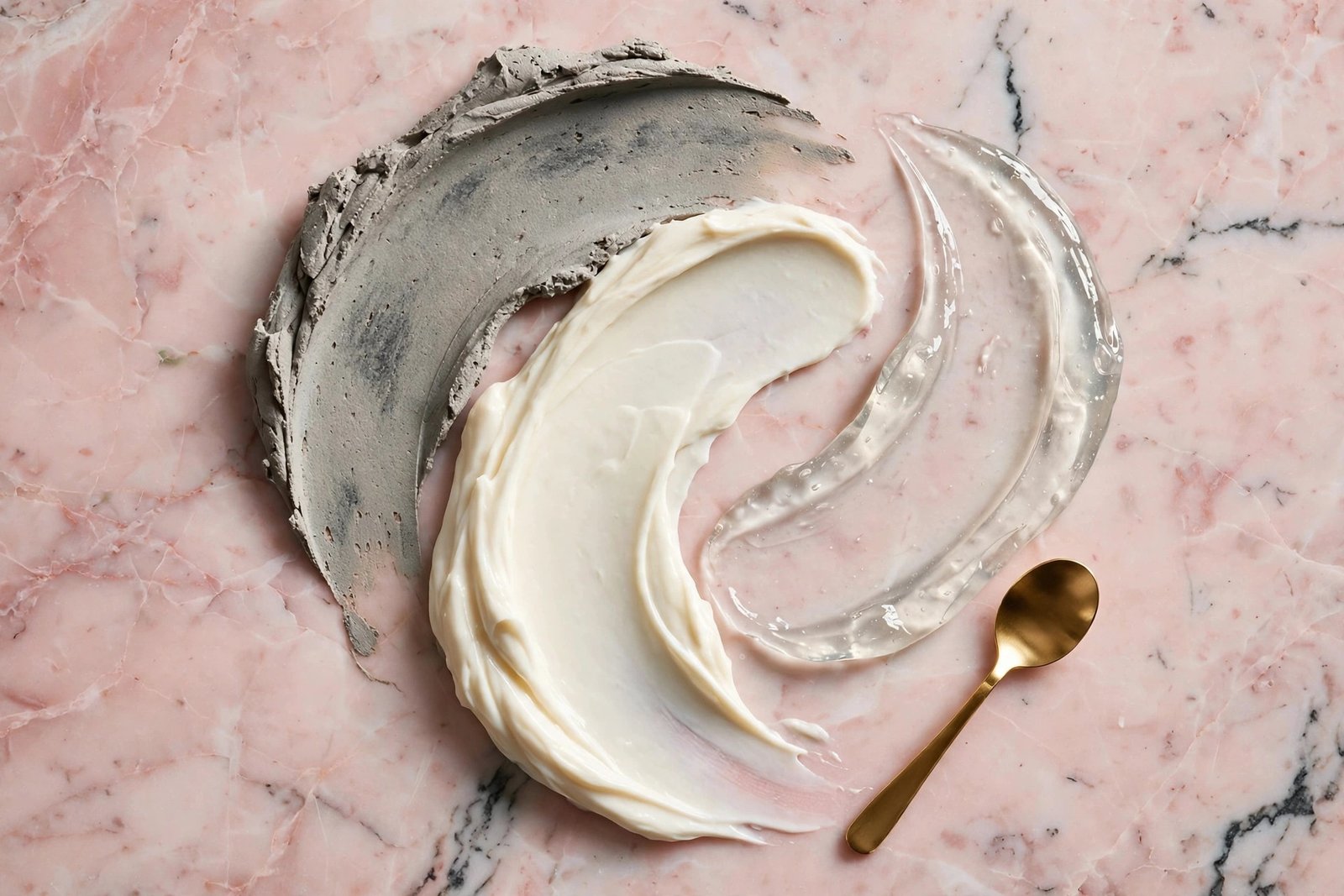
- The five main mask types are sheet, clay, sleeping (overnight), peel-off, and cream/gel masks — each solves a different problem.
- Match the mask to your concern: clay for oil and clogged pores, sheet and sleeping masks for dryness and dullness.
- Masking works because of longer contact time: ingredients sit on your skin for 10–20 minutes instead of being rinsed away in seconds.
- Most beginners should mask 1–3 times per week; more is not better and can damage your skin barrier.
- Always apply masks to clean skin, and never let a clay mask dry until it cracks.
- Patch test any new mask, especially if your skin is sensitive or reactive.
Why Use a Face Mask at All?
A face mask is essentially a concentrated treatment that stays on your skin longer than your everyday products. When you cleanse, the product touches your skin for maybe 30 seconds. A serum absorbs in a minute or two. A mask, by contrast, sits on your face for 10 to 20 minutes (or all night, in the case of sleeping masks), giving its ingredients extended contact time to do their work.
That longer contact time is the whole point. Hydrating ingredients like hyaluronic acid and glycerin get time to draw water into the skin. Clays like kaolin and bentonite get time to absorb excess oil from inside the pores. It is the difference between waving at your skin’s concerns and sitting down with them for a proper conversation.
Masks are also targeted. Your daily moisturizer has to suit your whole face, every day. A mask can address one specific issue — a shiny T-zone, flaky cheeks, pre-event dullness — without committing your entire routine to it. That makes masks ideal for beginners: you can experiment with one concern at a time instead of overhauling everything at once.
There is a ritual benefit too. The 15 minutes you spend with a sheet mask on, phone down, is a genuine pause. Skincare adherence improves when part of the routine feels enjoyable, and masks are the most enjoyable step most people own.
The 5 Main Types of Face Masks (and What Each One Does)
Walk into any beauty store and you will see dozens of masks, but nearly all of them fall into five families. Learn these five and you can decode any product label.
1. Sheet Masks
Sheet masks are single-use fabric or hydrogel sheets soaked in serum, with cutouts for your eyes, nose, and mouth. You unfold one, press it onto your face, leave it for 15 to 20 minutes, then remove it and pat the remaining serum into your skin.
They are the hydration specialists of the mask world. The sheet acts as a barrier that prevents the serum from evaporating, so your skin gets an extended drink of hydrating and brightening ingredients. They are beginner-friendly because there is no mixing, no timing guesswork, and no rinsing.
Best for: dry, dehydrated, or dull skin; pre-event glow; soothing skin after sun exposure. If sheet masks sound like your starting point, follow this [step-by-step guide to using sheet masks → how-to-use-sheet-masks] to get the timing and technique right.
2. Clay Masks
Clay masks are thick pastes made from clays such as kaolin, bentonite, or French green clay. You spread a thin layer over your face, leave it for about 10 to 15 minutes, then rinse it off with lukewarm water. As the clay sits, it absorbs excess oil and helps loosen the buildup inside pores.
They are the deep-clean option — the mask equivalent of a reset button for oily or congested skin. The critical rule with clay masks is timing: remove them while they are still slightly tacky, never after they have dried into a cracked shell. Letting clay fully dry can strip moisture and leave skin tight and irritated.
Best for: oily skin, visible pores, blackheads, and occasional congestion. New to them? Read [how to apply a clay mask without over-drying your skin → how-to-use-clay-mask] before your first application.
3. Sleeping Masks (Overnight Masks)
Sleeping masks are lightweight gel or cream formulas you apply as the very last step of your nighttime routine and leave on while you sleep. They form a breathable seal over everything underneath, locking in moisture and letting hydrating ingredients work for hours instead of minutes.
Despite the name, they are not the same as night creams. Sleeping masks tend to be lighter in texture and are designed to layer over your moisturizer, while night creams are usually richer and replace or serve as the moisturizer itself. Many people use both — or choose one based on the season.
Best for: dry or dehydrated skin, dullness, and anyone whose skin looks tired in the morning. Learn the differences in [what sleeping masks are and how to use them → what-is-sleeping-mask-how-to-use].
4. Peel-Off Masks
Peel-off masks go on as a gel or liquid and dry into a film you physically peel away. They are marketed for blackheads and pore-clearing, and the peeling action can lift away surface debris and fine facial hair along with the film.
They are the most controversial mask type. The peeling action that makes them satisfying can also irritate sensitive skin, and dermatologists generally consider them less effective for blackheads than they appear — much of what you see on the peeled film is fine hair and surface oil rather than deep pore contents. If you enjoy them, use sparingly, avoid the delicate eye area, and skip them entirely if your skin is sensitive, sunburned, or reactive.
Best for: occasional use on resilient, non-sensitive skin types. Not the ideal first mask for a beginner.
5. Cream and Gel Masks (Rinse-Off)
Cream and gel masks are the versatile middle ground: you smooth them on like a moisturizer, wait 10 to 15 minutes, and rinse or tissue off. They come in hydrating, calming, brightening, and exfoliating versions, so this category covers almost every concern.
Because they rinse off, they suit people who dislike the feeling of product sitting on their skin. They are also the easiest type to control — apply a thicker layer where you need more help (dry cheeks) and a thinner one where you do not (oily T-zone), a technique called multi-masking.
Best for: just about everyone, especially beginners who want one flexible mask. Sensitive skin types often do best with a simple calming cream mask containing ingredients like oatmeal, aloe, or ceramides.
How to Choose the Right Mask for Your Skin Type
The fastest way to choose is to start from your main concern rather than from the product shelf. Find your situation below, then pick from the recommended types.
| Your main concern | Best mask types to try first |
|---|---|
| Oily skin, shiny T-zone | Clay mask (kaolin-based for a gentler start) |
| Dry or tight-feeling skin | Sheet mask, sleeping mask, hydrating cream mask |
| Dullness, uneven tone | Sheet mask (vitamin C or niacinamide), sleeping mask |
| Clogged pores, blackheads | Clay mask 1x/week; avoid harsh peel-offs |
| Occasional breakouts | Clay mask on congested areas; soothing sheet mask elsewhere |
| Sensitive or easily red skin | Fragrance-free cream mask with oatmeal or ceramides; always patch test |
| Combination skin | Multi-mask: clay on the T-zone, hydrating mask on cheeks |
A few principles make choosing easier. First, one concern at a time: do not try to fix oiliness, dryness, and dullness with three new masks in one week. Start with your biggest concern, use one mask consistently for two to three weeks, then assess. Second, read the ingredient list, not just the front of the packet. “Charcoal” and “detox” are marketing words; kaolin, niacinamide, hyaluronic acid, and ceramides are ingredient facts. Third, when in doubt, choose the gentler option. A mild clay used correctly beats a harsh one used aggressively every time.
If your skin is sensitive, patch test every new mask: apply a small amount behind your ear or on your jawline, wait 24 hours, and check for redness, itching, or bumps before using it on your full face.
Where Face Masks Fit in Your Routine
Masking order matters because products layer from thinnest to thickest, and masks have a specific slot. Here is the simple version:
Morning routine: masks rarely belong here. If you do a quick sheet mask before makeup, cleanse first, mask for 10 minutes, then continue with serum, moisturizer, and sunscreen.
Evening routine (the standard masking slot):
1. Cleanse — masks go on clean skin, always. If you wear sunscreen or makeup, [double cleansing → how-to-double-cleanse] first gives the mask a truly clean canvas.
2. Optional: toner or essence to dampen the skin (especially helpful before sheet masks).
3. Mask:
– Rinse-off masks (clay, cream, gel, peel-off) go on now, after cleansing.
– Sheet masks go on now too, replacing your serum step for the evening.
4. Serum (skip or go light if you just used a sheet mask — your skin already got its serum).
5. Moisturizer to seal everything in.
6. Sleeping mask — only at night, and only as the absolute last step, over your moisturizer.
One timing rule: do not use a strong exfoliating mask and a chemical exfoliant in the same routine. If you use exfoliating acids or scrubs, check [how often to exfoliate → how-often-should-you-exfoliate-face] and keep masking and exfoliating on separate days while you are learning your skin’s limits. For the full routine framework, this [beginner skincare routine → skincare-routine-for-beginners-step-by-step] shows where every step belongs.
How Often Should You Mask?
Frequency is where most beginners go wrong — usually by doing too much, not too little. The short answer: most people should mask 1 to 3 times per week total, and the right number depends on the mask type and your skin.
Sheet masks are the most forgiving (many people use them 2 to 3 times a week), clay masks need more restraint (1 to 2 times a week for oily skin, less for dry skin), and sleeping masks typically work best 2 to 3 nights a week rather than nightly. Peel-offs should stay at once a week at most.
For the complete breakdown by mask type and skin type — plus the warning signs that you are over-masking — read [how often you should use each type of face mask → how-often-should-you-use-a-face-mask].
7 Beginner Mistakes That Make Masks Backfire
- Letting a clay mask dry until it cracks. This is the number one masking mistake. A fully dried clay mask pulls moisture out of your skin along with the oil. Remove it while it is still slightly tacky, usually at the 10-minute mark.
- Leaving a sheet mask on until it dries out. A dry sheet mask reverses course and starts pulling hydration back out of your skin. Set a timer for 15 to 20 minutes and remove it while it is still damp.
- Masking on uncleansed skin. A mask layered over sunscreen, makeup, or the day’s grime cannot reach your skin properly. Cleanse first, every time.
- Trying three new masks in one week. If your skin reacts, you will have no idea which product caused it. Introduce one mask at a time.
- Skipping moisturizer after a clay or rinse-off mask. Clay removes oil; your skin needs moisture put back afterward. Always follow with moisturizer.
- Reusing a single-use sheet mask. Once opened, a sheet mask is a one-time product. Folding it back into the packet “for tomorrow” invites bacteria.
- Masking over irritated or sunburned skin. If your skin is already angry — red, stinging, peeling — skip masks until it calms down. A mask on compromised skin usually makes things worse, not better.
Frequently Asked Questions
Can I use a face mask every day?
For most mask types, no. Daily masking — especially with clay or exfoliating masks — strips the skin barrier and leads to redness, sensitivity, and breakouts. The exception is gentle hydrating sheet masks, which some people use daily for short periods (like a week before an event), but even then, watch for signs of overload and scale back if your skin feels reactive.
Should I wash my face before or after a sheet mask?
Before, always. Cleanse, then apply the sheet mask to clean skin. After removing it, do not wash your face — pat the remaining serum in and follow with moisturizer. Rinsing afterward washes away the ingredients you just paid for.
Do face masks actually do anything, or are they just hype?
They do something real, within limits. A mask will not permanently shrink pores or erase wrinkles, but the extended contact time genuinely boosts hydration, helps clear surface congestion, and improves how skin looks and feels for a day or two. Think of masks as treatments with visible short-term benefits, not miracle cures.
Can I use two different masks at once?
Yes — this is called multi-masking, and it is genuinely useful for combination skin. Apply a clay mask to the oily T-zone and a hydrating mask to drier cheeks in the same session. Just keep the timing right for each: remove the clay when tacky, the hydrating mask per its own instructions.
Are expensive face masks better than cheap ones?
Not necessarily. Price often reflects packaging and branding more than performance. Many affordable masks use the same core ingredients (kaolin clay, hyaluronic acid, glycerin) as luxury ones. For beginners, a well-reviewed affordable mask from each type you want to try is the smart buy — upgrade later once you know what your skin likes.
What should I do if a mask irritates my skin?
Rinse it off immediately with lukewarm water — do not “wait it out.” Follow with a gentle moisturizer and skip actives for a day or two. Mild tingling for a minute can be normal with some clay masks, but burning, spreading redness, or itching means the mask is not for you.
Your Next Step
You now know the five mask families, which ones match your skin, and where they fit in your routine. The best next move is a practical one: pick the single mask type that matches your biggest concern and learn to use it properly. If hydration or glow is the goal, start with the [step-by-step guide to using sheet masks → how-to-use-sheet-masks]. If oil and clogged pores are the issue, start with [how to apply a clay mask without over-drying your skin → how-to-use-clay-mask]. Curious about the overnight option? Read [what sleeping masks are and how to use them → what-is-sleeping-mask-how-to-use]. And before you build a weekly habit, check [how often you should use each type of face mask → how-often-should-you-use-a-face-mask] so you mask enough to see results without overdoing it.
Start simple, stay consistent for a few weeks, and let your skin — not the marketing — tell you what is working.
step-by-step guide to using sheet masks
how to apply a clay mask without over-drying your skin
what sleeping masks are and how to use them
how often you should use each type of face mask
beginner skincare routine
double cleansing
how often to exfoliate
Love this? Pin it for later!