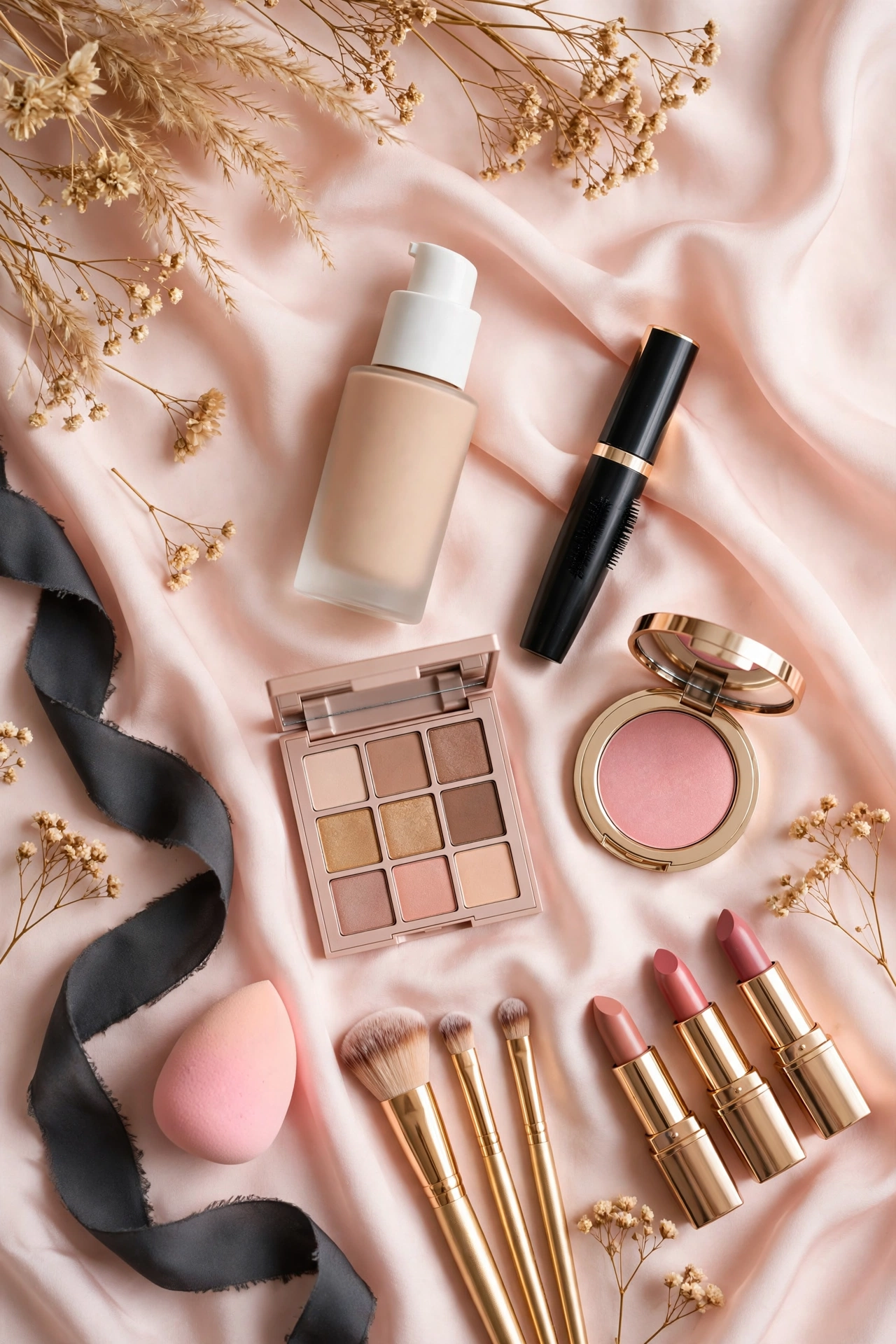
Drugstore Makeup Kit for Beginners: Everything You Need
Starting makeup from scratch can feel overwhelming — and expensive. Between foundations, concealers, palettes, brushes, and primers, it’s easy to walk out of the drugstore with a bag full of products you don’t need and a receipt that stings.
Here’s the truth: you don’t need all of it. A beginner’s drugstore makeup kit needs about a dozen well-chosen products, and the whole thing can cost less than a single high-end foundation. This guide covers exactly what to buy, what order to buy it in, where to save, and where it’s worth spending a little more — so you build a kit you’ll actually use, without wasting money on beginner mistakes.
Key Takeaways
- A complete beginner kit needs roughly 12 products — not the 30+ the drugstore aisle suggests.
- Buy in priority order: base products first (foundation, concealer), then eyes, then lips and tools.
- Save on: mascara, lip products, blush, and brushes. Spend a little more on: foundation shade match and a good concealer.
- Skip for now: contour kits, baking powders, lash curlers, and anything labeled “pro.”
- Your total starter kit can come in under $75 — and a full face is possible for under $50.
The Beginner Kit Philosophy: Less, But Right
The biggest beginner mistake isn’t buying cheap makeup — it’s buying too much makeup. Most beginners use about 20% of what they buy in the first six months. The rest expires in a drawer.
A smarter approach: build your kit in layers. Start with the products that make the biggest visible difference (your base), learn to use them well, then add one category at a time. This keeps your spending low, your routine simple, and your learning curve manageable. Every product below earns its place by being something beginners actually reach for daily.
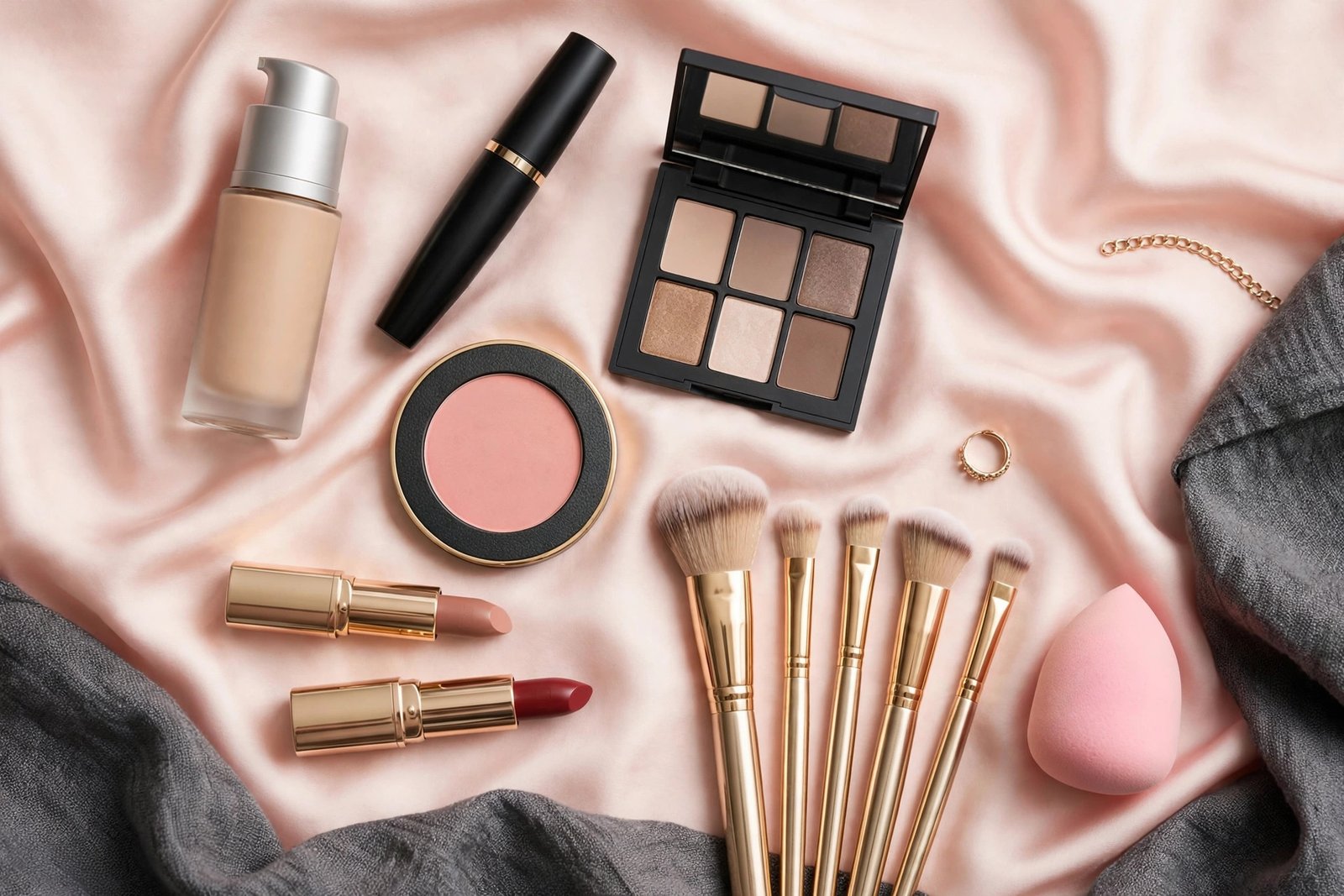
The 12 Essentials: What to Buy
1. Primer (optional but helpful)
Primer smooths skin and helps makeup last longer. It’s the most skippable item on this list — a good moisturizer does half the job. If your makeup slides off by noon or you have visible pores, grab an affordable mattifying or hydrating primer depending on your skin type. If your skin is well-behaved, skip it for now and spend the money elsewhere.
2. Foundation or tinted moisturizer
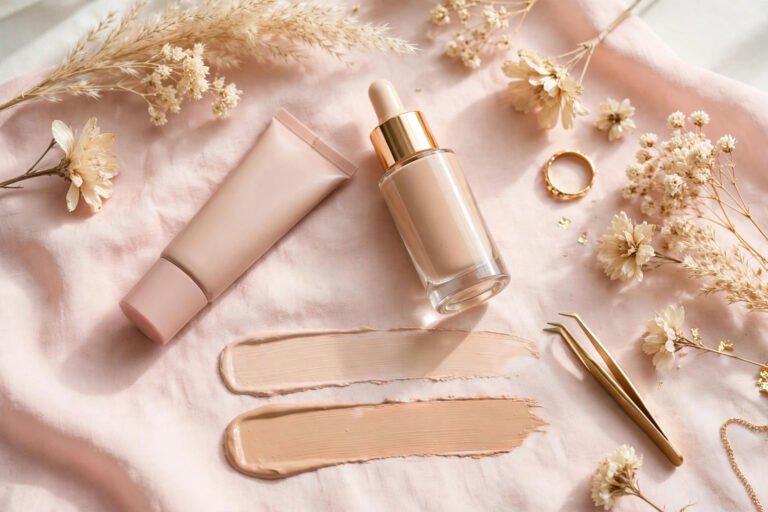
This is the single most important purchase in your kit — and the one worth spending the most time on, not necessarily the most money. Drugstore foundations today rival high-end formulas; what matters is the shade match and finish for your skin type.
- Oily skin: look for matte or oil-free liquid foundations.
- Dry skin: look for hydrating, dewy, or serum foundations.
- Beginners who hate heavy makeup: start with a tinted moisturizer or BB cream — they’re nearly impossible to mess up.
Always swatch on your jawline in natural light, not on your hand. If you’re between shades, most beginners look better going slightly warm than slightly ashy.
3. Concealer
One good concealer covers blemishes, dark spots, and under-eye circles. Choose a shade matching your skin tone for spots, and one shade lighter for brightening under the eyes (if you only buy one, match your skin tone — it’s more versatile). Creamy, blendable formulas beat ultra-matte ones for beginners, since they’re more forgiving. For a deeper dive on technique, see our step-by-step makeup guide for beginners.
4. Setting powder (translucent)
A light dusting of translucent powder sets your base and controls shine. Beginners should avoid heavy “baking” — just press a small amount into the T-zone and under the eyes with a fluffy brush or puff. One affordable translucent powder lasts months.
5. Blush
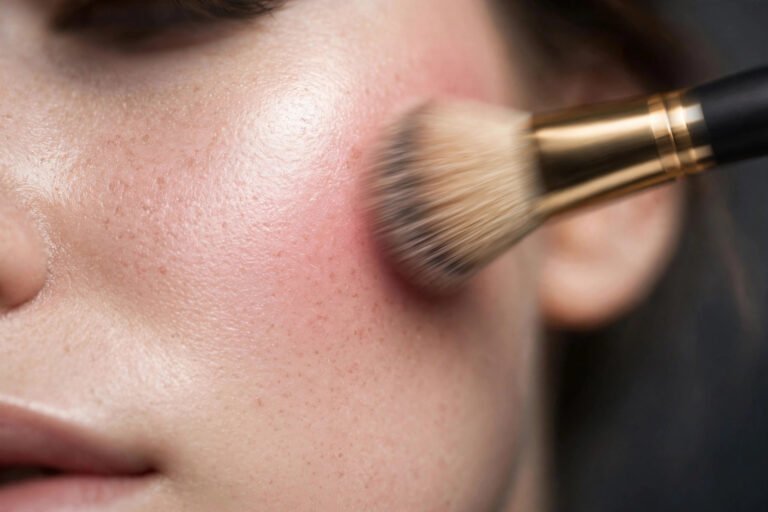
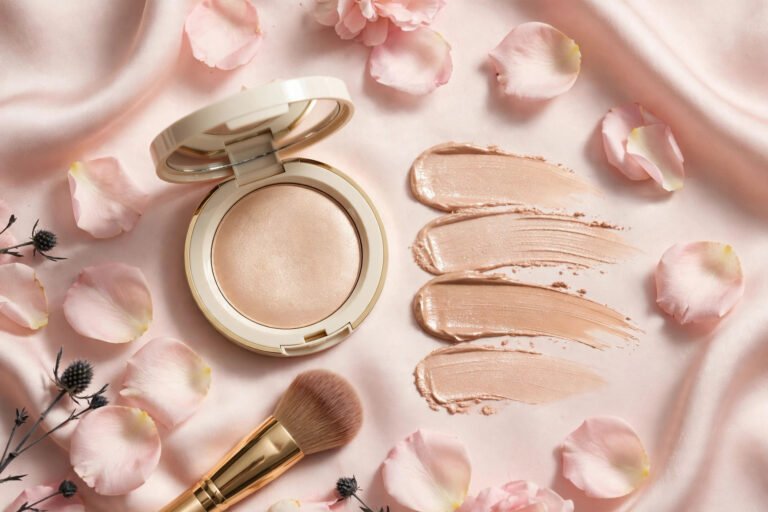
Blush is the fastest way to look alive and healthy — it makes a bigger difference than most beginners expect. Powder blush is easiest to control; cream blush looks more natural but can disturb foundation if you’re heavy-handed. Start with a neutral rose or peachy-pink that suits most skin tones, applied to the apples of the cheeks and blended upward.
6. Bronzer (optional)
Bronzer adds warmth and dimension, but it’s genuinely optional for beginners. If you buy one, choose a matte shade only 1–2 shades deeper than your skin — shimmery bronzers double as highlighters and get confusing fast. Dust lightly where the sun hits: forehead, cheekbones, jawline.
7. Neutral eyeshadow (one small palette)
You do not need a 35-pan palette. One small neutral palette (6–12 pans) with matte browns, taupes, and one or two shimmers covers every everyday look you’ll want for the first year. Matte shades are more forgiving than shimmers for beginners — they blend easier and mistakes show less.
8. Eyeliner (pencil)
A soft pencil eyeliner is far easier than liquid for beginners. Black-brown is more forgiving than jet black and looks softer for daytime. Tightlining (lining right at the lash line) defines eyes without requiring a steady wing — save liquid liner and wings for later.
9. Mascara
Mascara is the best value in the entire drugstore: it’s the category where affordable formulas genuinely compete with — and often beat — expensive ones. One everyday black mascara is all you need. Replace it every 3 months; old mascara clumps and can irritate eyes.
10. Eyebrow product (pencil or gel)
Brows frame the whole face, and a simple brow pencil or tinted brow gel makes a surprising difference. Choose a shade matching your brow hair (not your head hair — go slightly ashy rather than warm). Light, hair-like strokes beat drawn-on blocks every time.
11. Lip products (two)
Start with two: one everyday neutral (a tinted lip balm or nude lipstick close to your natural lip color) and one slightly bolder shade for evenings (a classic red or berry). Lip products are the safest place to save money — drugstore lipsticks and balms are excellent.
12. Makeup remover
Taking makeup off properly matters as much as putting it on. A gentle micellar water or cleansing balm removes everything without scrubbing. Never sleep in your makeup — it’s the fastest route to breakouts and dull skin.
Tools: The 5 Brushes (and 1 Sponge) You Actually Need
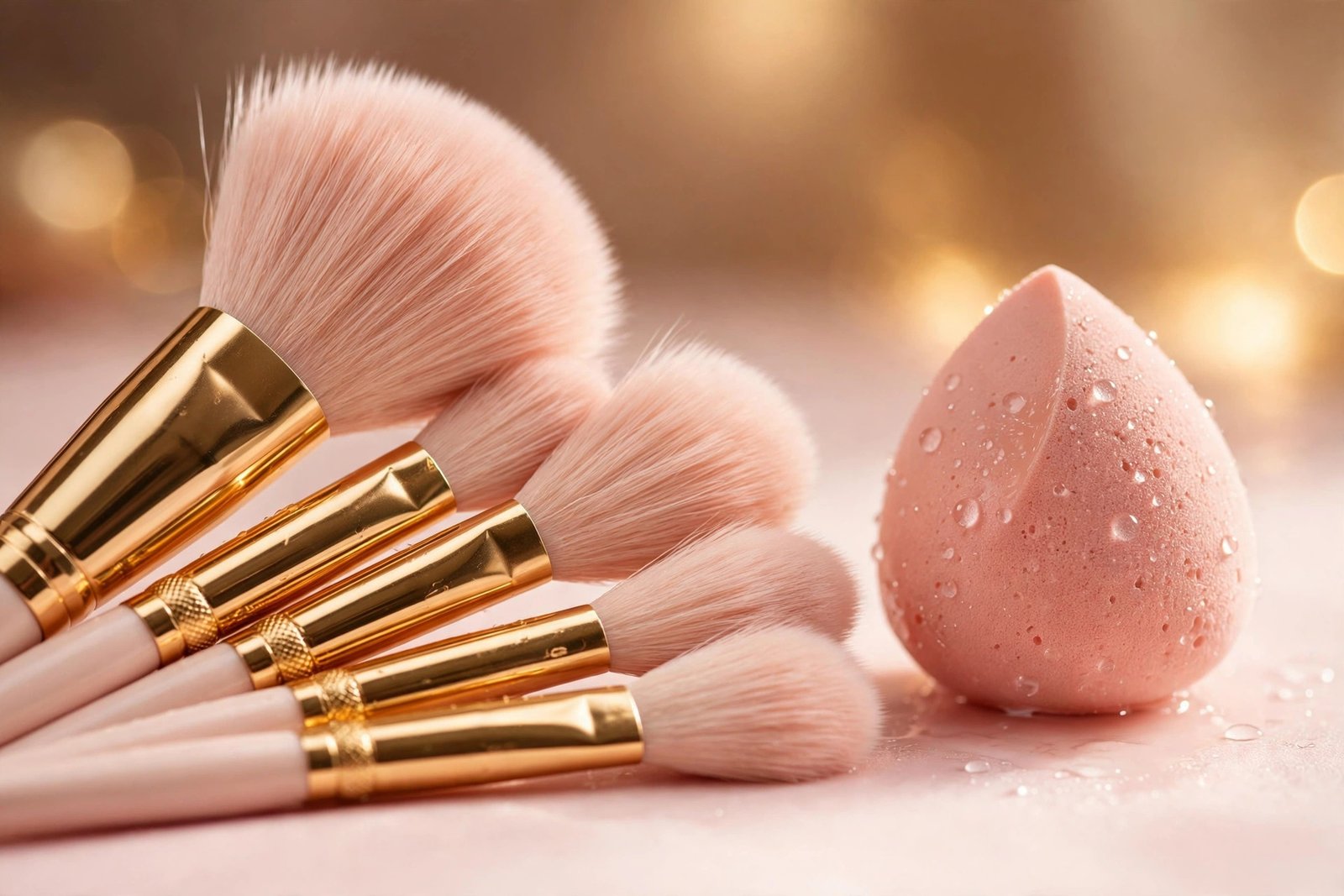
Beginners are routinely sold 24-piece brush sets. You need five brushes and one sponge:
- Foundation brush or damp beauty sponge — a sponge gives the most natural, foolproof finish.
- Fluffy powder brush — for setting powder and bronzer.
- Blush brush — medium, tapered.
- Flat eyeshadow brush — for packing color onto lids.
- Blending brush — fluffy and domed, for softening eyeshadow edges.
- (Bonus) Angled brush — doubles for brows and eyeliner.
Affordable brush sets are one of drugstore beauty’s genuine bargains — see our best affordable makeup brushes for beginners for the sets worth buying. Wash brushes weekly with gentle soap; clean tools apply makeup better and break you out less.
What to Buy First: The Priority Order
If you’re building your kit paycheck by paycheck, buy in this order — each stage gives you a complete, wearable look:
- Stage 1 (the base): tinted moisturizer or foundation + concealer + setting powder. This alone makes the biggest difference.
- Stage 2 (the polish): mascara + blush + brow product. Now you look finished with minimal effort.
- Stage 3 (the fun): eyeshadow palette + eyeliner + lip products. Time to experiment.
- Stage 4 (the extras): primer, bronzer, tools upgrades.
Stopping after Stage 2 is completely fine — that’s a full everyday face for under $40.
How to Swatch and Test Products In-Store
Drugstore testers exist for a reason — use them. But test smart, because bad swatching is how beginners end up with the wrong shades.
Foundation and concealer: Stripe 2–3 shades along your jawline (not your wrist, not the back of your hand — the skin there is a different tone and texture). Walk to the store entrance or a window and check in natural light. The shade that disappears into your skin is your match. If you’re torn between two, pick the slightly warmer one — most beginners look better warm than ashy. Give liquid foundation a few minutes to “settle” before judging, since some formulas oxidize slightly darker as they dry.
Blush and bronzer: Swatch on the back of your hand to check pigment payoff — one light swipe should show color without scrubbing. If you have to dig to see anything, the formula is too sheer; if one tap gives you a clown stripe, it’s hard to control for a beginner.
Lip products: Never apply a used tester directly to your lips. Swatch on the pad of your fingertip — its texture and warmth approximate lips better than the back of your hand.
Mascara and eyeliner: Don’t open sealed mascara testers (hygiene). For mascara, judge by the brush shape and reviews; for eyeliner, draw a line on the back of your hand to check softness and pigment.
The lighting trick: Drugstore aisles use harsh fluorescent light that flatters nothing. Always do your final shade check in daylight. It takes thirty seconds and prevents the most common beginner regret: a foundation that looked perfect under store lights and orange at home.
Keep your receipts. Even with careful swatching, a shade can surprise you at home. Most drugstores accept returns on opened cosmetics within 30–60 days — a safety net that makes experimenting much less stressful.
Your First-Week Routine: Putting the Kit to Work
Owning the products is only half the battle. Here’s a simple 10-minute daily routine using your new kit — practice this for a week before adding anything new:
- Moisturize (from your skincare routine) and let it absorb for a minute.
- Base: Apply tinted moisturizer or foundation with a damp sponge, pressing and bouncing — not dragging — over the face. Less is more; you can always add.
- Conceal: Pat concealer only where you still see discoloration — under eyes, around the nose, on spots. Blend the edges.
- Set: Lightly press translucent powder into the T-zone and under the eyes.
- Blush: Smile, dust blush on the apples of the cheeks, and blend upward toward the temples.
- Brows: Fill sparse areas with light, hair-like strokes.
- Eyes: One neutral shadow swept across the lid, blended at the edges; tightline with pencil if you like.
- Mascara: One to two coats, wiggling at the base of the lashes.
- Lips: Your everyday neutral.
Do this same routine for five to seven days. By the end of the week your hands will know the motions, you’ll know which steps you enjoy and which you skip — and that tells you what to buy next. If you never reach for the eyeshadow, don’t buy more eyeshadow. If you love the blush step, that’s where an upgrade makes sense. Let your actual habits, not the aisle displays, direct your spending.
Storing and Organizing Your Kit
A beginner kit doesn’t need an acrylic organizer wall — but a little order prevents waste:
- One pouch or tray for daily products keeps your routine fast and stops things rolling behind furniture.
- Store upright anything liquid (foundation, concealer) to prevent leaks, and keep everything out of the bathroom if it’s steamy — heat and humidity shorten product life.
- Mark purchase dates on the bottom of mascara and foundation with a marker so you know when the 3- and 12-month clocks run out.
- Keep a “try later” box for products that didn’t work right away. A foundation that’s too dark for winter may be perfect in summer; don’t toss it before checking.
Where to Save vs. Where to Spend
Save on these (drugstore is just as good)
- Mascara — the #1 category where cheap beats expensive.
- Lip products — balms, lipsticks, and glosses perform beautifully at drugstore prices.
- Blush and bronzer — simple powder formulas with no fancy technology needed.
- Brushes — affordable sets are genuinely good now.
- Setting powder — translucent powder is translucent powder.
- Makeup remover — micellar water is micellar water.
Spend a little more on these
- Foundation shade match — not necessarily a pricier foundation, but the time to find your exact shade. A wrong shade ruins everything layered on top of it. If a drugstore shade works, great — buy the drugstore one.
- Concealer — you’ll use it daily on the most visible areas of your face; a formula that creases or oxidizes isn’t worth the savings.
- Skincare underneath — makeup looks only as good as the skin under it. A basic skincare routine on a budget does more for your makeup than any primer.
The dupe strategy
Once you know what you like, drugstore dupes let you try trends without high-end prices. Our drugstore dupes for high-end makeup that actually work rounds up the affordable alternatives that genuinely perform like their $50+ counterparts — perfect for experimenting once your core kit is built.
Beginner Mistakes That Waste Money
- Buying full kits and palettes for one shade. That 12-pan “contour kit” where you’ll use two pans? Buy the two singles instead.
- Shade-guessing online. Foundation and concealer bought blind are returned or abandoned at brutal rates. Swatch in store.
- Chasing trends before basics. You don’t need colored eyeliner or chrome highlighter before you own a foundation that matches.
- Ignoring expiration. Mascara (3 months), liquid foundation (12 months), lipstick (18–24 months) — old products perform badly and can irritate skin. Buying less means less waste.
- Buying “pro” tools too early. A $40 brush won’t fix technique; practice with affordable tools first.
Building Your Kit for Under $75: A Sample Breakdown
Here’s what a complete starter kit can cost at typical drugstore prices:
| Product | Typical drugstore price |
|---|---|
| Tinted moisturizer / BB cream | $10–14 |
| Concealer | $7–10 |
| Translucent setting powder | $6–9 |
| Blush | $5–8 |
| Neutral eyeshadow palette (small) | $8–12 |
| Pencil eyeliner | $3–5 |
| Mascara | $6–9 |
| Brow pencil or gel | $5–8 |
| 2 lip products | $8–12 total |
| Micellar water | $6–9 |
| Brush set (5–6 pieces) + sponge | $12–18 |
| Total | ~$65–75 |
And if that’s still steep, a full face is genuinely possible for under $50 by trimming to the true essentials.
Frequently Asked Questions
Is drugstore makeup actually good, or should beginners invest in high-end?
Drugstore makeup is genuinely good in 2026 — many formulas are made in the same labs as prestige products. The categories where high-end sometimes wins (complexion shade ranges, long-wear foundations) matter less when you’re learning. Start drugstore; upgrade selectively later based on what you find lacking, not what marketing tells you.
How many products does a beginner really need?
About 10–12 for a full routine, but you can look polished with as few as 5: base product, concealer, mascara, blush, and a lip product. Everything beyond that is enhancement, not requirement.
What’s the first makeup product a beginner should buy?
A skin-tone-evening base — tinted moisturizer, BB cream, or foundation — plus concealer. An even base makes every other product look better, while eye and lip products on uneven skin tend to look unfinished.
How do I find my foundation shade at the drugstore?
Swatch 2–3 candidate shades in a stripe along your jawline, then step into natural light (near the store entrance or a window). The shade that disappears into your skin is the match. Test on your jaw, not your wrist or hand — hand skin is a different tone. When in doubt between two, beginners usually look better in the slightly warmer option.
How long does drugstore makeup last before expiring?
Mascara: 3 months. Liquid foundation and concealer: about 12 months. Powders (blush, bronzer, eyeshadow): 18–24 months. Lipsticks: 18–24 months. Write the purchase month on the bottom with a marker so you know when to replace.
Should beginners buy makeup online or in store?
In store for anything shade-critical (foundation, concealer, blush). Online is fine for mascara, lip products in shades you’ve seen swatched, brushes, and removers — and online is where you’ll find the best prices and reviews.
Conclusion
A great beginner makeup kit isn’t about owning everything — it’s about owning the right things. Start with your base, add polish with mascara and blush, then expand into eyes and lips as your confidence grows. Buy drugstore, buy in priority order, save where drugstore wins (mascara, lips, brushes), and put your effort into shade matching rather than spending.
Your kit will grow with you. Six months from now you’ll know exactly which products you reach for daily and which upgrades are worth it — and that’s knowledge no shopping list can give you upfront. Ready for the next step? Our step-by-step makeup guide for beginners shows you how to use everything in your new kit, in order.
Love this? Pin it for later!