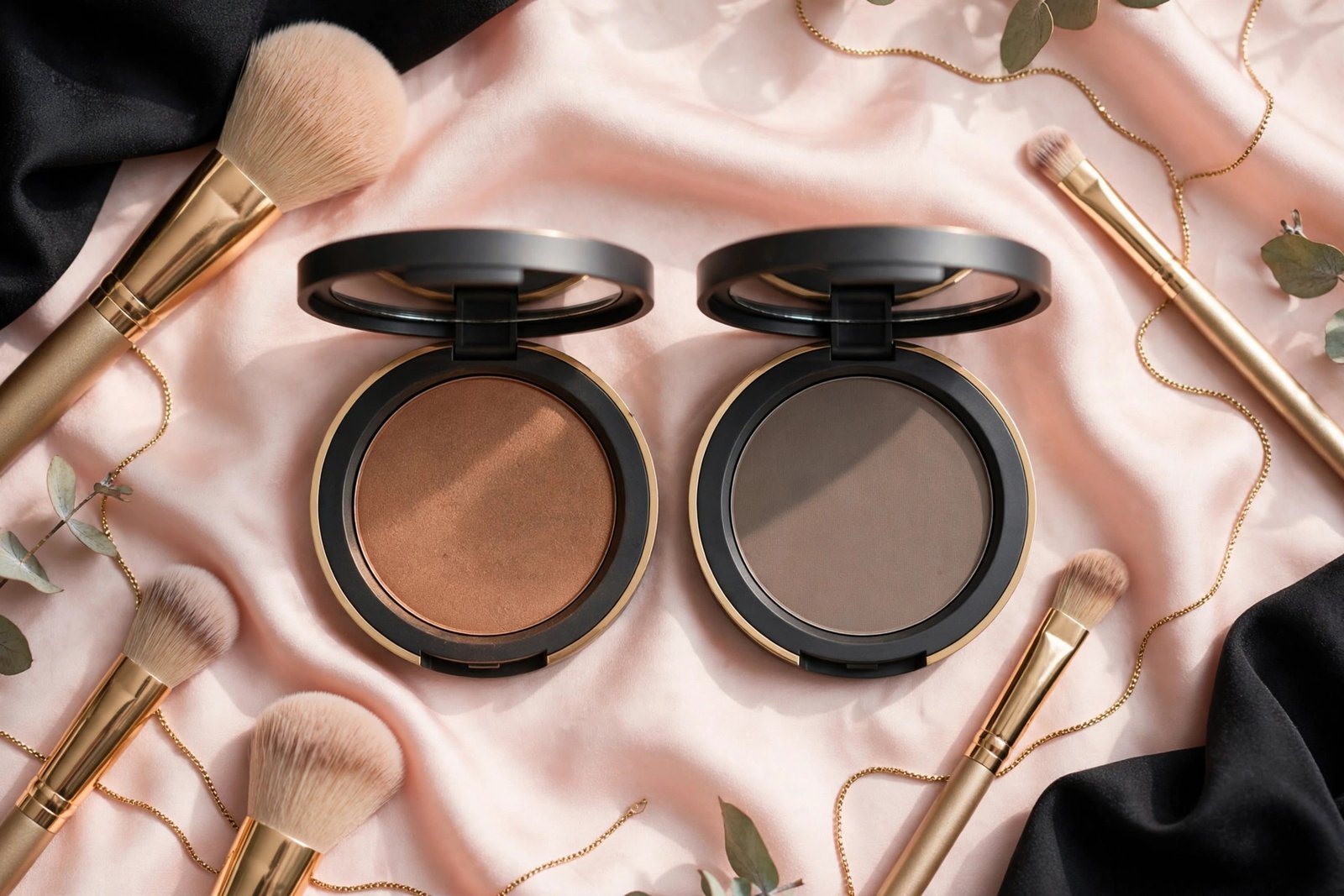
Bronzer vs Contour: What’s the Real Difference?
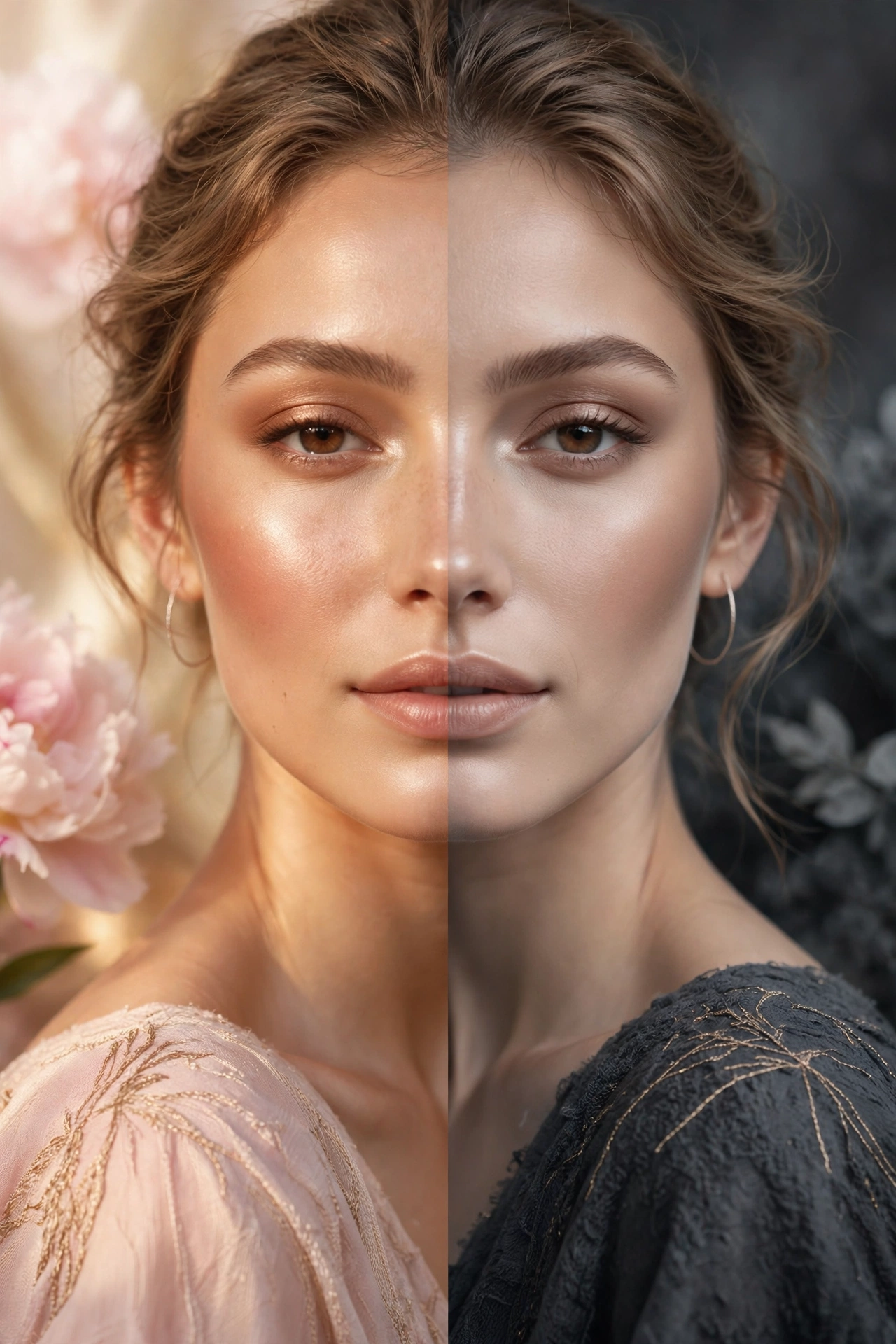
Open any makeup bag and you’ll likely find two brownish powders that look almost identical — and that’s exactly where the confusion starts. Bronzer and contour may share a color family, but they do completely different jobs on your face. Bronzer adds warmth and a sun-kissed glow, as if you’d just come back from a long weekend by the sea. Contour, on the other hand, adds dimension and definition, creating the illusion of sculpted cheekbones and a sharper jawline with cool-toned shadow.
Mix them up and the results can look muddy, orange, or strangely flat. But once you understand what separates them — purpose, undertone, placement, and finish — both become some of the easiest products in your routine. If you’re building your makeup basics from scratch, start with our beginner-friendly bronzer guide and the step-by-step contouring tutorial to see each technique in full detail.
Key Takeaways
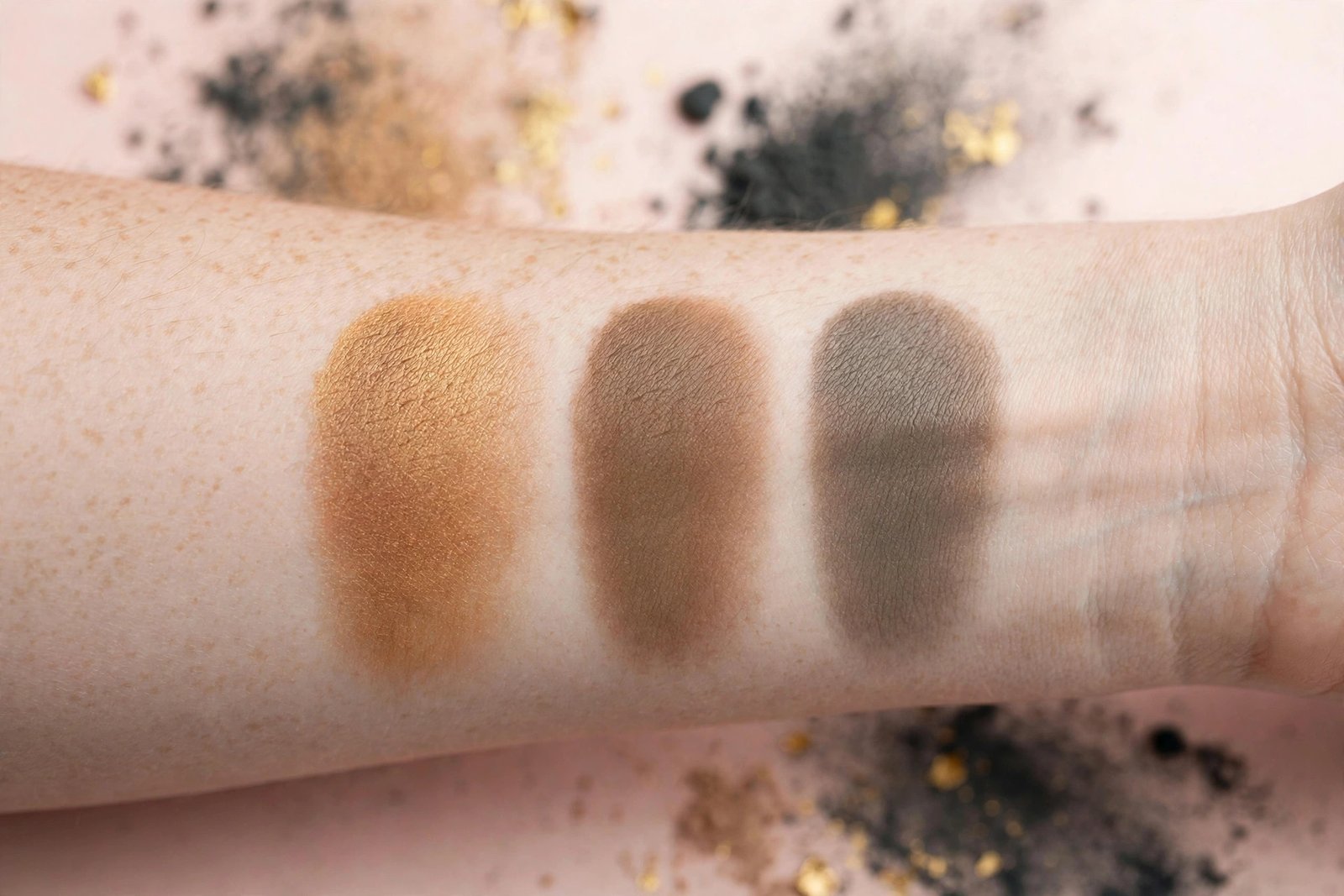
- Bronzer adds warmth (sun-kissed glow) with warm, golden undertones; contour adds shadow (sculpted definition) with cool, grayish-brown undertones.
- Bronzer goes on the high points of the face where the sun naturally hits; contour goes in the hollows and edges where natural shadows fall.
- You can wear one, the other, or both — but they are not interchangeable.
- The biggest beginner mistake is using bronzer as a contour shade (hello, orange stripes) or contour as bronzer (hello, muddy gray cheeks).
Bronzer: The Sun in a Compact
Bronzer exists to mimic what the sun does to your skin — minus the UV damage. It warms up the complexion and brings life back to a face that foundation can sometimes flatten out. Think of it as the difference between a photograph taken indoors and the same shot in golden-hour light.
The best bronzers carry warm undertones: golden, caramel, terracotta, or honey. They’re typically satin, shimmery, or at least softly luminous, because real sun-kissed skin has a glow to it. A bronzer that’s too matte can still work, but most beginners get a more natural result from a formula with a hint of radiance. For shade selection basics, our guide to choosing your first bronzer walks through undertone matching step by step.
Where Bronzer Goes
Bronzer belongs on the high points of your face — the places sunlight would naturally hit first:
- Temples and forehead: Sweep it across the top of the forehead near the hairline, in a loose “3” shape down the temple.
- Cheekbones: Dust it across the apples and tops of the cheeks, where a flush of sun would show.
- Nose bridge: A light sweep down the bridge and a touch on the tip gives that just-from-the-beach warmth.
- Chin: A whisper along the center of the chin ties the whole look together.
The classic application is the “3” or “E” technique: starting at the forehead, sweep down to the cheek, then curve under the jawline, tracing the shape of a 3 on each side of the face. Keep the color blended and buildable — bronzer should never have visible edges.
Contour: The Architect’s Tool
Contour is essentially makeup’s way of painting shadows. Real faces have natural depth — hollows beneath the cheekbones, shadow under the jawline, recesses along the sides of the nose — and contour deepens those areas to create a more sculpted, defined structure. It’s an optical illusion, not color.
This is why contour shades are cool-toned. Real shadows on skin have a grayish, taupe quality, never orange. A contour with warm or golden undertones won’t read as shadow; it’ll read as dirt or an odd stripe. The sweet spot is a matte (or near-matte) shade about two shades deeper than your natural skin tone, with a gray-brown or taupe undertone. Our beginner’s contouring tutorial demonstrates exactly how to find your shade and blend it out.
Where Contour Goes
Contour goes where shadows naturally fall — the hollows, not the high points:
- Under the cheekbones: Find the hollow by sucking your cheeks in slightly, and place contour just below the bone, blending upward.
- Sides of the nose: Two thin lines down each side create the illusion of a slimmer, straighter nose.
- Jawline: A sweep along the underside of the jaw sharpens definition.
- Temples and hairline: Contouring the perimeter of the forehead can visually balance a wide forehead.
The golden rule: blend until you can’t tell where the product starts. Harsh lines are the telltale sign of contour gone wrong. Use a fluffy angled brush for powder or a dense brush for cream, and always blend upward into the hairline, not downward into the cheek.
Bronzer vs Contour: The Side-by-Side Breakdown
| Bronzer | Contour | |
|---|---|---|
| Purpose | Warmth and glow | Shadow and definition |
| Undertone | Warm — golden, caramel, terracotta | Cool — taupe, gray-brown, ash |
| Finish | Often satin or luminous | Almost always matte |
| Placement | High points (forehead, cheek tops, nose bridge) | Hollows and edges (under cheekbones, jawline, nose sides) |
| Feeling | “I just got back from vacation” | “I was born with these cheekbones” |
Can You Use Both at Once?
Absolutely — they complement each other beautifully when layered correctly. The order matters: apply contour first to carve out structure, then sweep bronzer over the high points for warmth. Finish with blush on the apples of the cheeks to connect the two. This three-step layering — contour, bronzer, blush — is the foundation of a complete face. If you’re adding blush to the mix, our complete blush guide explains where it sits in the routine and how to pick your shade.
A few layering tips from professional makeup artists:
- Cream under powder: If you’re using cream formulas, always apply creams before powders. Set with a light translucent powder at the very end.
- Keep contour matte: Let bronzer carry the glow. If both products shimmer, the face can look oily rather than radiant.
- Blend at the boundary: Where bronzer and contour meet along the cheek, use a clean fluffy brush to diffuse the transition so there’s no visible line.
The 5 Most Common Mistakes (and How to Fix Them)
1. Using bronzer as contour
This is the single most common mistake. A warm golden bronzer placed in the cheek hollow doesn’t create shadow — it creates an orange stripe that reads like a fake tan gone wrong. If you only own one product, use bronzer on the high points and skip contouring for now.
2. Using contour as an all-over bronzer
The reverse is just as bad. Dusting a cool gray-brown contour across the whole forehead and cheeks doesn’t warm the face — it makes skin look dull and muddy, like a shadow was cast over everything.
3. Choosing a shade too deep
Both bronzer and contour should sit within one to three shades of your natural skin tone. Going darker doesn’t make the effect stronger — it makes it harder to blend and easier to overdo. Build up gradually; you can always add more.
4. Skipping the blend
Unblended edges are what separate a polished look from a costume look. Spend as much time blending as you spend applying. A good test: step back from the mirror and check in natural light — visible lines mean you need to keep going.
5. Forgetting the neck
If your bronzer or contour stops at the jawline while your neck stays a different shade, the mismatch is obvious. Blend a touch of bronzer down the neck to bridge the gap.
Quick Quiz: Which One Do You Actually Need?
Ask yourself what you want from the product:
- “My face looks flat and pale — I want healthy color.” → Bronzer.
- “I want sharper cheekbones and a defined jawline.” → Contour.
- “I want both warmth and structure.” → Both, layered contour-then-bronzer.
- “I want a playful, sun-kissed look with freckles.” → Bronzer is the star here, and you might enjoy our guide to freckle makeup with bronzer and blush.
Frequently Asked Questions
Can I use bronzer to contour?
Not well. Bronzer’s warm undertones and often-luminous finish fight against the shadow effect you’re trying to create. In a pinch, a matte bronzer in a neutral-to-cool shade can do double duty, but a dedicated contour product will always look more natural for sculpting.
Can I use contour as bronzer?
No — contour is designed to mimic shadow, so applying it where the sun would hit looks unnatural and dull. It won’t give you that lit-from-within warmth. Stick to its job: sculpting.
Do I need both bronzer and contour?
No. Many makeup routines use only one, and plenty of people skip both. If you’re a beginner, bronzer is generally the easier starting point because it’s more forgiving — warmth is harder to mess up than shadow. Add contour later when you want more definition.
Which goes on first, bronzer or contour?
Contour first, then bronzer. Carve out the structure, then add warmth on top of the high points. Blush comes last of the three to tie everything together.
What undertone should my bronzer be?
Warm — golden, honey, or caramel. Even fair skin does better with a warm-leaning bronzer (in a lighter shade) than with a cool one, because the whole point is mimicking sunlight.
What undertone should my contour be?
Cool — taupe, gray-brown, or ash. Real facial shadows are cool-toned, so a warm contour shade looks like a stripe instead of a shadow.
The Bottom Line
Bronzer and contour are teammates, not twins. Bronzer brings the warmth and glow of sunlight; contour brings the depth and definition of shadow. Choose the right undertone, place each where it belongs, blend relentlessly, and layer them in the right order — and you’ll never mix them up again. Start with whichever appeals to you most, master its placement, and build from there.
Love this? Pin it for later!