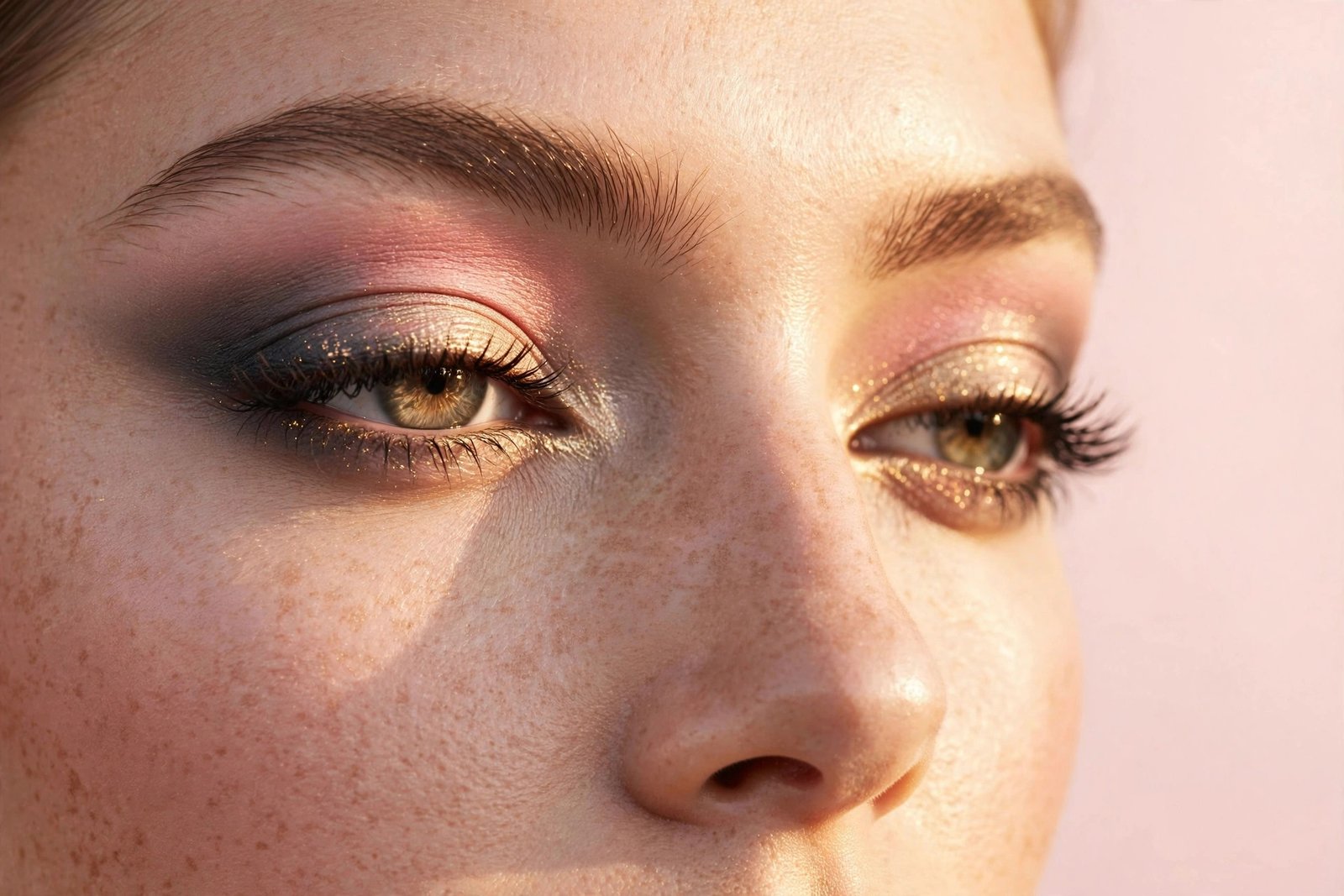
Close-Set vs Wide-Set Eyes: Makeup That Flatters
Close-set vs wide-set eyes is one of the most underrated makeup adjustments a beginner can learn. Most tutorials focus on lid shape — hooded, monolid, deep-set — but the horizontal spacing between your eyes changes which techniques actually work. The same eyeshadow application can look stunning on one person and unbalanced on another simply because their eyes sit closer together or farther apart. Once you know your spacing, small shifts in where you place color, where you start your eyeliner, and where you concentrate mascara can visually balance your features without heavy contouring or complicated techniques.
The good news: the rules are straightforward, and they’re essentially opposites for each eye type. Close-set eyes need techniques that draw the eye outward. Wide-set eyes need techniques that draw the eye inward. Master that one principle and every eye look you apply will look more intentional and flattering. This guide covers how to identify your eye spacing, the exact liner and shadow tricks for each type, the mascara placement that makes the biggest difference, and the mistakes that most beginners make with each eye spacing.
- Key Takeaways
- Eye spacing is measured by comparing the gap between your inner corners to the width of one eye — a shorter gap means close-set eyes; a wider gap means wide-set eyes.
- Close-set eyes look most balanced when color, liner, and mascara concentrate on the outer corners.
- Wide-set eyes look most balanced when definition concentrates on the inner corners and inner lashes.
- Highlighter on the inner corners opens up close-set eyes; dark shadow there widens the look of wide-set eyes.
- The same rule applies in reverse: never put heavy dark shadow on the outer corners of close-set eyes, and avoid heavy outer-corner wings on wide-set eyes.
- Your eye spacing never changes, so once you learn your formula, it works for every eye look you create.
How to Tell If Your Eyes Are Close-Set or Wide-Set
Before adjusting your makeup, you need an honest read on your eye spacing. Stand in front of a mirror in natural light, looking straight ahead.
The One-Eye-Width Test
The classic method: imagine the width of one of your eyes. Compare that measurement to the space between your inner corners (the tear-duct area). If the gap between your eyes is shorter than one eye width, your eyes are close-set. If the gap is wider than one eye width, your eyes are wide-set. If the gap is roughly equal to one eye width, your eyes are average-set, and standard balanced techniques apply.
The Ruler Method for Accuracy
For a more precise read, hold a ruler (or use a measuring app) just under your eyes. Measure the inner-corner-to-inner-corner distance, then measure the width of one eye from inner corner to outer corner. Compare the two numbers. Many people are surprised — what feels like close-set eyes is sometimes just a prominent nose bridge or close-set brows. Brows in particular can skew perception, so judge spacing by the eyes themselves, not the brows above them. If you’ve read a general guide on eye makeup for different eye shapes, spacing is the horizontal dimension that completes the picture.
Common Misjudgments
A strong nose bridge can make eyes appear closer together than they are. Epicanthal folds (common in monolid eyes) can also create the illusion of close-set eyes. And deep-set eyes can cast shadows at the inner corners that mimic close spacing. When in doubt, do the ruler test rather than eyeballing it. Getting this right matters because the techniques for each spacing are opposites — applying wide-set techniques to close-set eyes will exaggerate what you’re trying to balance.
Makeup for Close-Set Eyes: Create Outward Space
The goal with close-set eyes is to create the illusion of more distance between them. Every technique below pulls attention toward the outer corners and keeps the inner corners light and open.
Eyeshadow Strategy for Close-Set Eyes
Start your darkest shades at the outer third of the lid and blend inward, letting the color fade as it approaches the inner corner. The inner half of the lid should stay light — a bright champagne, soft pink, or light shimmer works beautifully here. When blending into the crease, sweep your brush upward and outward rather than across, extending the crease shadow slightly past the outer corner in a lifted direction. This creates a horizontal stretch that visually moves the eyes apart.
Avoid placing dark shadow at the inner corners. A dark inner corner visually closes the gap between the eyes and makes close-set eyes look even closer together. Similarly, skip the “V” shape at the outer corner that closes off the lid — it concentrates darkness exactly where you don’t want it. If you’re working through an beginner eyeshadow tutorial, apply its blending basics but always bias your darkest color outward.
Eyeliner Placement for Close-Set Eyes
Start your eyeliner one-third of the way in from the inner corner, not at the very inner corner. Lining the entire lid from tear duct to outer corner boxes the eye in and emphasizes the narrow inner gap. Instead, begin your line where the iris starts (roughly), and gradually thicken it toward the outer corner. A slight wing or a softly flicked tail extends the eye outward and is one of the most flattering moves for close-set eyes.
Tightlining (lining the upper waterline) is excellent for close-set eyes because it defines without adding width near the inner corners. Avoid heavy lower liner on close-set eyes — it closes the eye off. If you want lower definition, keep it to the outer half only and smudge it softly. For step-by-step lining foundations, an eyeliner guide for beginners pairs well with these spacing adjustments.
Mascara Placement for Close-Set Eyes
Concentrate your mascara on the outer lashes. Wiggle the wand at the base of the outer-corner lashes and pull outward, even angling the wand slightly toward the temples. This flares the lash line outward, visually widening the eye. Keep inner-corner lashes lighter — one light coat is plenty. You can also apply false lashes or lash clusters only on the outer half of the eye for the same flaring effect.
Highlighter and Inner-Corner Tricks
A dab of light shimmering highlighter at the inner corners is one of the most effective tricks for close-set eyes. It brightens the tight inner gap, making it appear wider and more open. Use a small brush and keep the highlight tiny and precise — a big patch of shimmer can look frosty. This is the one spot where close-set eyes get to enjoy inner-corner sparkle freely.
Makeup for Wide-Set Eyes: Create Inward Focus
With wide-set eyes, the goal is the mirror image: pull attention toward the inner corners so the eyes appear closer together and the overall face looks more centered.
Eyeshadow Strategy for Wide-Set Eyes
Place your darkest or most defined shadow at the inner third of the lid, near the inner corner, and blend outward. A soft dark smoky shade at the inner corner (kept tidy with a small brush) visually closes the gap between the eyes. The outer half of the lid can stay lighter or carry a mid-tone wash, but resist the urge to extend shadow far past the outer corner — wings and elongated outer shadow stretch wide-set eyes further apart.
When blending into the crease, sweep the color inward rather than outward. Think of the crease shadow as a soft frame that hugs the inner eye. One technique that works beautifully: apply a deeper shade to the inner half of the crease and keep the outer half neutral. If you’re combining this with hooded-eye techniques from a guide like the best eyeshadow approaches for hooded eyes, bias every placement rule toward the inner eye.
Eyeliner Placement for Wide-Set Eyes
Start your eyeliner at the very inner corner and keep the line even or slightly thicker near the inner third. Full-length liner from tear duct to outer corner works well for wide-set eyes because it connects the eye toward the center of the face. A short, tight wing is fine, but avoid dramatic long wings — they pull the eye outward and exaggerate the spacing.
Tightlining the upper waterline all the way across adds definition that draws the eye inward. Lower liner is also more forgiving on wide-set eyes than close-set ones: a soft line along the lower lash line, especially through the inner half, helps bridge the gap. Smoky lower liner through the inner corner is a classic balancing move.
Mascara Placement for Wide-Set Eyes
Concentrate mascara on the inner and center lashes. Use the tip of the wand to reach the tiny inner-corner lashes and give them a full coat — these short lashes matter more on wide-set eyes because they sit closest to the center of the face. Keep outer-corner lashes defined but don’t overdo the outward flare; one even coat is usually enough. If you wear false lashes, choose styles with even fullness rather than flared outer corners.
Inner-Corner Depth (Not Highlight)
Unlike close-set eyes, wide-set eyes benefit from depth at the inner corner rather than highlight. A small amount of medium-dark matte shadow pressed into the inner corner (blended well) narrows the apparent gap. Skip the bright inner-corner highlight on wide-set eyes — it opens up the inner corner and visually pushes the eyes further apart, which is the opposite of the goal.
Side-by-Side: Close-Set vs Wide-Set Cheat Sheet
| Technique | Close-Set Eyes | Wide-Set Eyes |
|---|---|---|
| Dark shadow placement | Outer third of lid | Inner third of lid |
| Crease blending direction | Upward and outward | Inward toward the nose |
| Eyeliner start point | One-third in from inner corner | At the very inner corner |
| Wing style | Extended, flared outward | Short and tight, or skip |
| Mascara focus | Outer lashes, flared | Inner and center lashes |
| Inner corner | Light highlighter | Soft dark depth |
| Lower liner | Outer half only, smudged | Full or inner half, soft |
Print this table mentally and you’ll never have to guess again: every row is a mirror image of the other.
Mistakes That Exaggerate Eye Spacing
Even with the right techniques, a few common mistakes can undo your work.
For close-set eyes: the biggest mistake is heavy liner or dark shadow hugging the inner corners — it visually shrinks the gap between the eyes. A close second is inner-corner darkness from unblended crease shadow that drifts inward. Always check your inner corners in the mirror after blending and clean up any dark fallout there with a light concealer tap.
For wide-set eyes: the biggest mistake is a long, dramatic wing or heavy outer-corner shadow that stretches the eye outward. Wide-set eyes also suffer from over-highlighted inner corners — that trendy bright inner-corner pop actually works against you. Swap it for a matte light shade instead.
For both: thick, straight-across brows can emphasize spacing issues. Brows that start too far apart exaggerate wide-set eyes; brows drawn too close together exaggerate close-set eyes. Brow placement should follow your natural bone structure — don’t try to “fix” eye spacing with brow drawing, since the mismatch usually reads as unnatural.
Mascara clumps are a universal problem: clumpy lashes draw the eye to exactly the wrong spots. Even, separated lashes let your spacing techniques do their job.
Frequently Asked Questions
Can I wear smoky eyes with close-set eyes?
Yes — just place the smoke on the outer half. Keep the inner half of the lid light and luminous, and build your smoky depth from the middle of the lid outward. The smoky effect still reads as dramatic, but the placement keeps your eyes looking balanced instead of crowded.
Can I wear a winged liner with wide-set eyes?
A short, subtle wing is fine, but long dramatic wings pull wide-set eyes further apart. If you love the winged look, keep the flick short and angled upward rather than outward. Tightlining plus a modest wing gives definition without the outward stretch.
Do these rules change for hooded or monolid eyes?
The spacing principles stay the same; you just combine them with lid-shape techniques. For example, close-set hooded eyes still want outward-focused shadow, but placed above the crease where it’s visible. Spacing and lid shape are independent variables — address both.
What about colorful eyeshadow — does placement still matter?
Absolutely. The color changes but the geometry doesn’t. Bright or colorful shadow on the outer third still widens close-set eyes; bright inner-corner color still narrows the gap for wide-set eyes. The rules are about where color goes, not which color.
I have one close-set eye and one wide-set-looking eye (asymmetry). What do I do?
Most faces have some asymmetry. Apply the close-set technique (outward focus) slightly more strongly on the eye that sits closer to center, and the wide-set technique (inner focus) on the eye that sits farther out. Small asymmetric adjustments can visually even out the spacing.
Should I change my technique for glasses?
Glasses frames already add horizontal structure around the eyes, which can either help or hurt. Thin frames change little; bold frames near the inner corners can visually close the gap for wide-set eyes (helpful) or crowd close-set eyes (less helpful). Keep your spacing techniques the same and let the frames be a secondary factor.
Conclusion
Close-set vs wide-set eyes comes down to one memorable principle: push color outward for close-set eyes, pull it inward for wide-set eyes. Every technique — shadow placement, liner start points, mascara focus, inner-corner treatment — is just that principle applied to a different step. Measure your spacing once with the one-eye-width test, build your routine around your result, and you’ll stop fighting your features and start flattering them. For the full picture of how spacing interacts with lid shape, explore a complete guide to eye makeup for different eye shapes and refine from there.
Love this? Pin it for later!