Gray Blending for Men: Options Beyond Full Dye
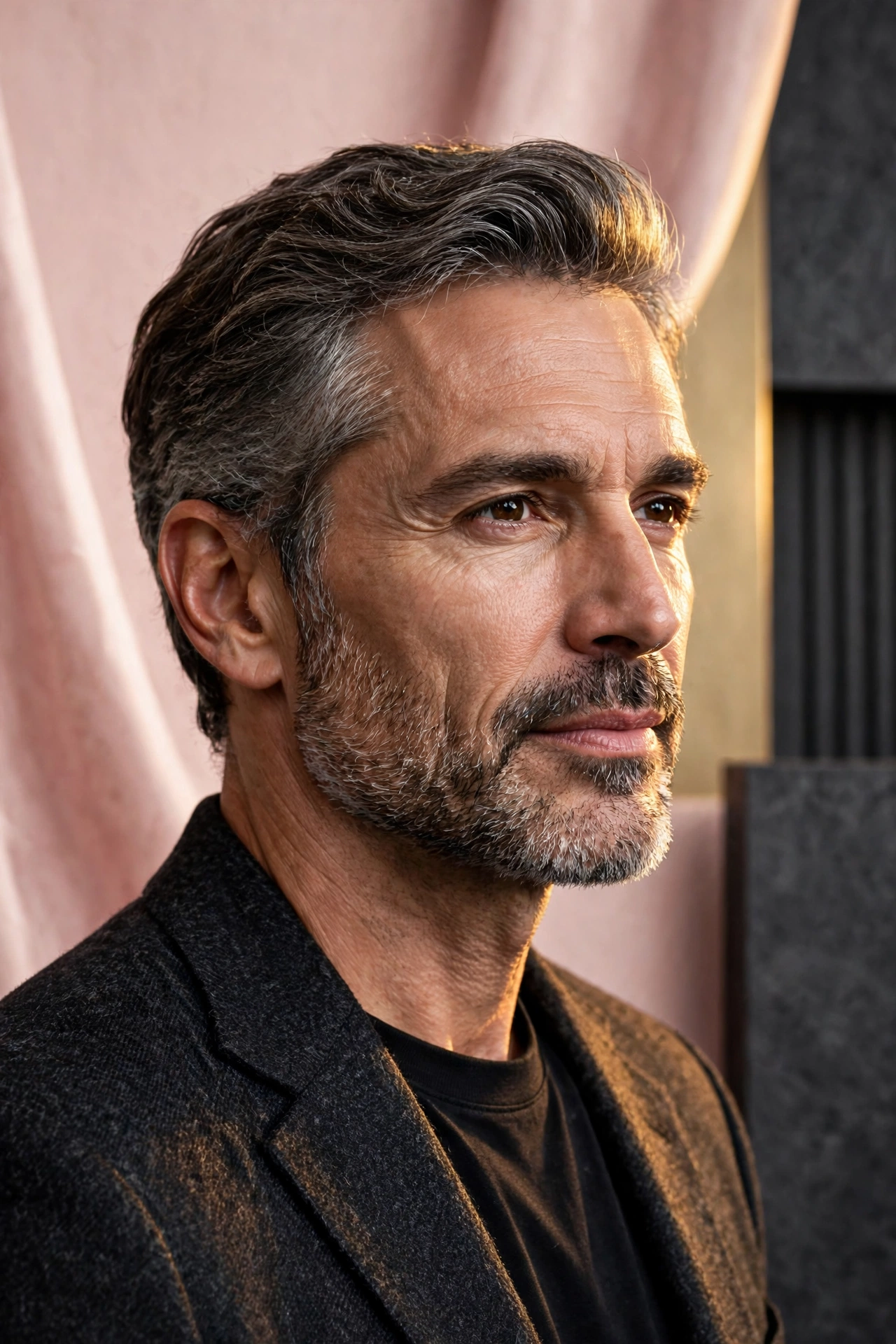
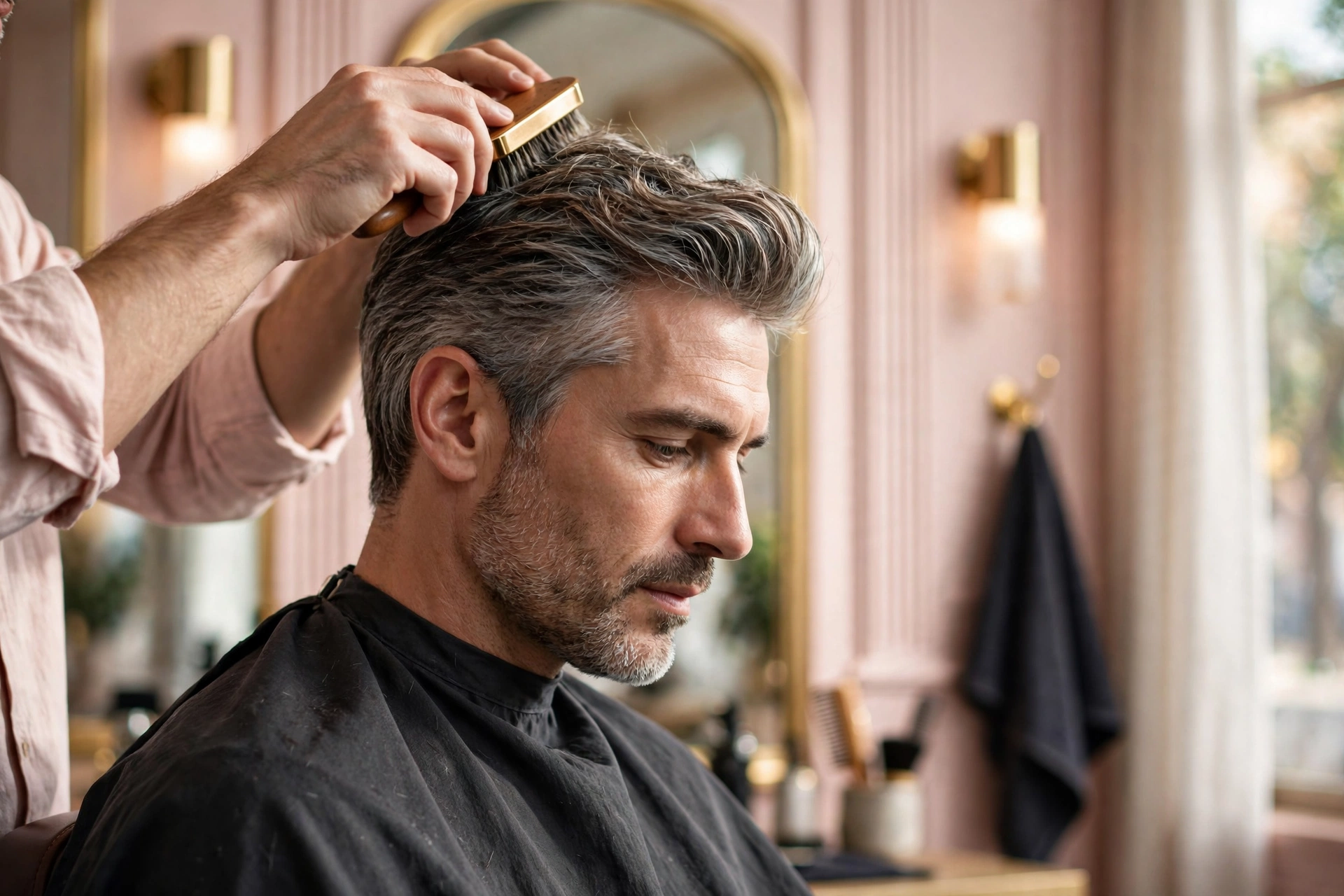
The old approach to gray hair was binary: dye it all, or let it all go gray. Gray blending sits in the middle — it softens the gray, takes down the harshest whites, and leaves a natural-looking salt-and-pepper finish that doesn’t announce itself the moment roots grow in. For men who want to look younger without looking “dyed,” it’s the most realistic option available today.
Full permanent dye is the giveaway. It deposits one flat color over everything, and within two weeks there’s a hard line at the roots. Blending avoids all of that by working with the gray instead of burying it. This guide covers the options: at-home blending products, salon techniques, and how to choose between them based on how much gray you have.
Key Takeaways
- Gray blending softens and darkens gray hair rather than covering it completely, so there are no harsh root lines.
- Camo color (demi-permanent) is the most popular option — it processes in about 5–10 minutes and fades gradually over 4–6 weeks.
- The amount of gray you have matters: under 30% blends easily, 30–70% needs a stylist’s technique, and over 70% may look better with a different strategy.
- Gray-blending shampoos and foams are low-commitment at-home options with subtle results.
- Pairing blending with a good haircut matters more than most men expect — the cut and the color should be planned together.
What Gray Blending Actually Means
Gray blending is any technique that reduces the contrast between gray/white hair and your natural color without committing to full, opaque coverage. The goal is hair that reads as “younger-looking” rather than “dyed.”
How it differs from regular dye
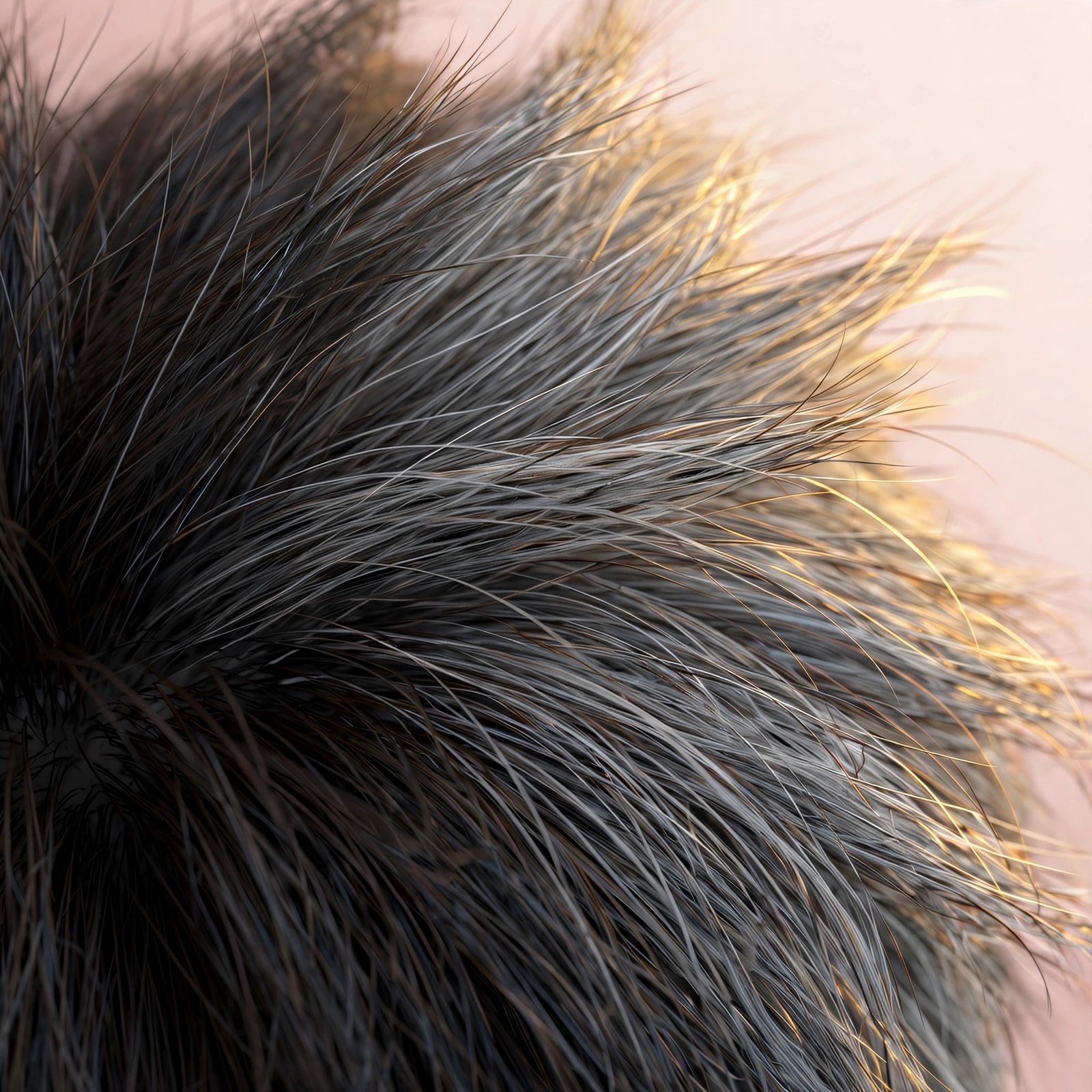
Permanent color uses ammonia or similar chemicals to open the hair shaft and deposit pigment deep inside, changing every strand to a single uniform shade. Gray-blending techniques are usually demi-permanent or semi-permanent: they stain the hair shaft rather than fully penetrating it, so the natural variation in your hair shows through. The result is dimensional — some strands darker, some still lighter — which is exactly how uncolored hair looks.
Why it grows out gracefully
Because blending color fades rather than growing out as a hard line, touch-ups are invisible. When demi-permanent color fades over 4–6 weeks, it washes out gradually instead of leaving a two-tone root situation. This is the single biggest advantage over permanent dye, and the reason most stylists recommend blending to men who’ve never colored their hair before.
Who benefits most
Blending works best for men with mild to moderate gray — roughly 10% to 60% gray. If you’re just starting to notice silver at the temples, blending can essentially erase it. If you’re half-gray, a skilled stylist can still produce a convincing salt-and-pepper look. Men who are nearly all gray have less natural pigment left to blend against, so the techniques change (more on that below).
The At-Home Options
Camo color (demi-permanent men’s formulas)
Camo color is the category leader — it’s demi-permanent hair color formulated specifically for men’s gray, designed to process in about 5 minutes and take down the brightest grays while leaving a natural result. It’s applied to dry hair, timed carefully (longer processing = more coverage), and rinsed. Because it’s demi-permanent, it fades gradually with no root line.
This is an in-between product: stronger than a blending shampoo, weaker than a permanent dye. Many men get it done at the barbershop during a haircut — it’s a quick add-on service. At home, the main risk is overprocessing (leaving it on too long), which produces a flatter, more “dyed” look. If you want to learn the full routine of covering gray at home before trying anything, see how to cover gray hair at home step by step.
Gray-blending shampoos
Color-depositing or “gray blending” shampoos work gradually: each wash deposits a small amount of pigment, so the effect builds over a week or two of use and washes out if you stop. The result is subtle — these won’t erase significant gray, but they can knock the brightness off white strands and add tone.
They’re the lowest-commitment entry point. Use them 2–3 times per week at first, then dial back to maintenance. The trade-off is that results are modest; think of them as gray-softening rather than gray-covering.
Blending foams and instant touch-up sprays
Foam formulas that you massage in and don’t rinse are another quick option — they coat the hair with temporary color that lasts until the next shampoo. Touch-up sprays cover roots or temple gray between haircuts. These are event-day fixes more than daily solutions, but they’re genuinely useful: they let you stretch the time between blending treatments without visible regrowth.
The Salon Techniques
Camo color at the barbershop
Most barbershops and men’s salons offer camo color as a quick service — often priced as an add-on to a haircut. The advantage over doing it yourself is control: a professional judges your gray percentage and picks the right shade and processing time. They can also customize the placement, leaving some areas (like the sides or the temples) slightly lighter so it looks like natural variation rather than uniform color.
Foil highlights or lowlights
For men with significant gray, stylists sometimes weave in fine lowlights — strands colored slightly darker than the natural shade — to break up large areas of gray and create dimension. On darker hair, adding a few highlights around the face can also blend gray convincingly. These are precision techniques that belong in professional hands; DIY foiling almost always looks worse than doing nothing.
Blending for very gray hair
Once hair is 70–80% gray or more, traditional blending has less to work with. At this stage, options include:
- Going lighter overall: lightening the remaining dark hair so the whole head reads as a natural silver or light salt-and-pepper.
- Balayage-style softening: a stylist hand-paints subtle dimension through the hair so it doesn’t look like a single flat shade.
- Embracing the silver: some men simply clean up the silver with purple toning products that keep it bright and intentional-looking.
A good consultation with a stylist experienced in men’s color is worth more at this stage than any product — the wrong move on very gray hair is hard to reverse.
Choosing the Right Shade
The one-shade rule
The cardinal rule of gray blending: never go more than one shade darker than your natural color. Hair that’s visibly darker than what your skin tone and eyebrows suggest reads as dyed instantly. When in doubt, go lighter — a shade too light still looks natural, while a shade too dark looks artificial.
Matching your eyebrows
Your eyebrows are your natural color reference. They gray more slowly than scalp hair, so they usually show what your hair color was. Pick a blending shade close to your eyebrow color and the result stays believable. If your brows are already heavily gray, use your natural color from photos taken in your early thirties.
Cool vs. warm tones
Most men’s gray is cool-toned (silver/white). Blending shades should generally stay on the cool or neutral side — warm shades (golden, coppery) on blended gray can look orange and artificial. If you want more detailed guidance on what works for your features, check the best hairstyles for men by face shape, since cut, color, and facial structure all interact.
Pairing Blending With Your Haircut
Timing matters
Plan color and cut together. If you’re doing camo color at the barbershop, it usually goes on before or after the cut in the same visit. If you’re blending at home, do it between cuts, not right before — freshly cut hair colors more evenly, and your barber should see your true color to plan the cut properly.
Shorter hair blends better
Shorter haircuts show blending more convincingly than long hair, for a simple reason: there are fewer strands of visible gray to manage, and the cut itself creates dimension. The classic blended-gray looks — think of a short textured crop or a clean fade with salt-and-pepper on top — work because the cut does half the blending work. If you’re considering a change, a beginner’s guide to beard grooming pairs well with a gray-blending routine, since facial hair is often where gray shows first.
Facial hair is part of the picture
Beards gray before scalp hair for most men, and a gray beard against blended scalp hair can look mismatched — or completely fine, depending on the look you want. Beard-specific blending products exist and follow the same principles. Whether you blend the beard too or let it stay silver is a style choice; just make sure it’s deliberate, because half-hearted gray management in the beard undercuts the whole effect.
Maintenance and Upkeep
The typical cycle
- Camo color (demi): redo every 4–6 weeks, timed with haircuts.
- Blending shampoos: ongoing, 2–3 times per week.
- Salon lowlights: every 8–12 weeks, since they grow out softly.
Products that extend results
Color-safe shampoo (sulfate-free) makes any blending treatment last longer, since sulfates strip deposited pigment faster. Dry shampoo between washes also extends the life of temporary blending. And regular conditioning matters — gray hair is coarser and drier than pigmented hair, and well-moisturized hair holds blending color better and reflects light more evenly, which itself makes gray less noticeable.
When to stop and reassess
Blending should get easier over time, not harder. If you find yourself increasing processing times, going darker, or blending more often just to maintain the same look, step back: you’re drifting toward full-dye territory. The healthiest long-term approach is to let the blending get progressively lighter as you gray more, keeping the look natural at every stage rather than chasing a color you’ve outgrown.
Frequently Asked Questions
Does gray blending damage hair?
Demi-permanent blending color is gentler than permanent dye — it’s ammonia-free in most formulas and doesn’t lift natural pigment. With reasonable frequency (every 4–6 weeks), damage is minimal, especially for short hair where colored ends are cut off regularly. Using color-safe shampoo between treatments helps further.
Will people be able to tell I colored my hair?
Done well, no — that’s the entire point of blending. The telltale signs of bad blending are the same as bad dye: too dark, too uniform, or mismatched with the eyebrows. A conservative shade, slightly under-processed, is always more convincing than an aggressive one.
How much does professional gray blending cost?
As a barbershop add-on, camo color typically runs modest compared to a full salon color service — it’s a 5–10 minute add-on, not a full appointment. Salon lowlights or foils cost more, comparable to women’s partial-highlight pricing. At-home products are the cheapest route by far, though the learning curve costs a few uneven applications at the start.
Can I blend gray if my hair is very short or buzzed?
Yes, and it often looks best that way. Short hair processes evenly and grows out fast, which hides mistakes. On very short cuts (under an inch), even a blending shampoo can make a visible difference. The only caution: on buzzed hair, over-processing is more obvious because there’s nowhere for unevenness to hide.
Does gray blending work on beards?
Yes — there are beard-specific blending formulas, and the principles are identical. Beard hair is coarser and absorbs color differently, so use products made for facial hair rather than scalp products, and patch-test first since the skin underneath is sensitive. Most men find the beard needs blending more often than the scalp because it grows faster and shows gray earlier.
What if I don’t like the result — can I reverse it?
That’s the beauty of blending over dyeing: demi-permanent color and blending shampoos fade on their own within a few weeks. If you hate it, stop using the product and wait. Clarifying shampoo speeds the fade. Only permanent color is a real commitment — and that’s exactly why blending is the recommended starting point.
The Bottom Line on Gray Blending
Gray blending is the realistic middle path: it takes the edge off gray without the maintenance trap and root-line giveaway of full dye. Start conservative — a blending shampoo or one light camo application — and increase only if you want more coverage. Pair it with a haircut that works with your gray instead of against it, keep the shade within one level of natural, and nobody will know you’ve done anything at all. They’ll just think you look good.
For a complete routine that covers cutting, styling, and color in one system, start with the men’s hair care and styling guide and build your gray-blending schedule into your regular grooming calendar.
Love this? Pin it for later!