Hair Slugging: The Overnight Treatment for Dry, Damaged Ends
Hair slugging borrows its name — and its logic — from skincare slugging, the K-beauty practice of sealing moisture in with an occlusive layer overnight. Applied to hair, it means this: apply a nourishing oil or treatment to dry ends, then seal it in with an occlusive product (or a physical wrap) before bed. You wake up to softer, shinier, less frizzy hair.
It sounds almost too simple, but the mechanism is sound. Dry, porous ends lose moisture to the air constantly; an occlusive barrier slows that loss while the oil underneath conditions the hair shaft. Here’s how to do it right — and who should skip it entirely.
Overnight treatments work best when daytime styling is gentle too — the claw clip hairstyles guide is full of low-tension updos that won’t undo your progress.
How Hair Slugging Works
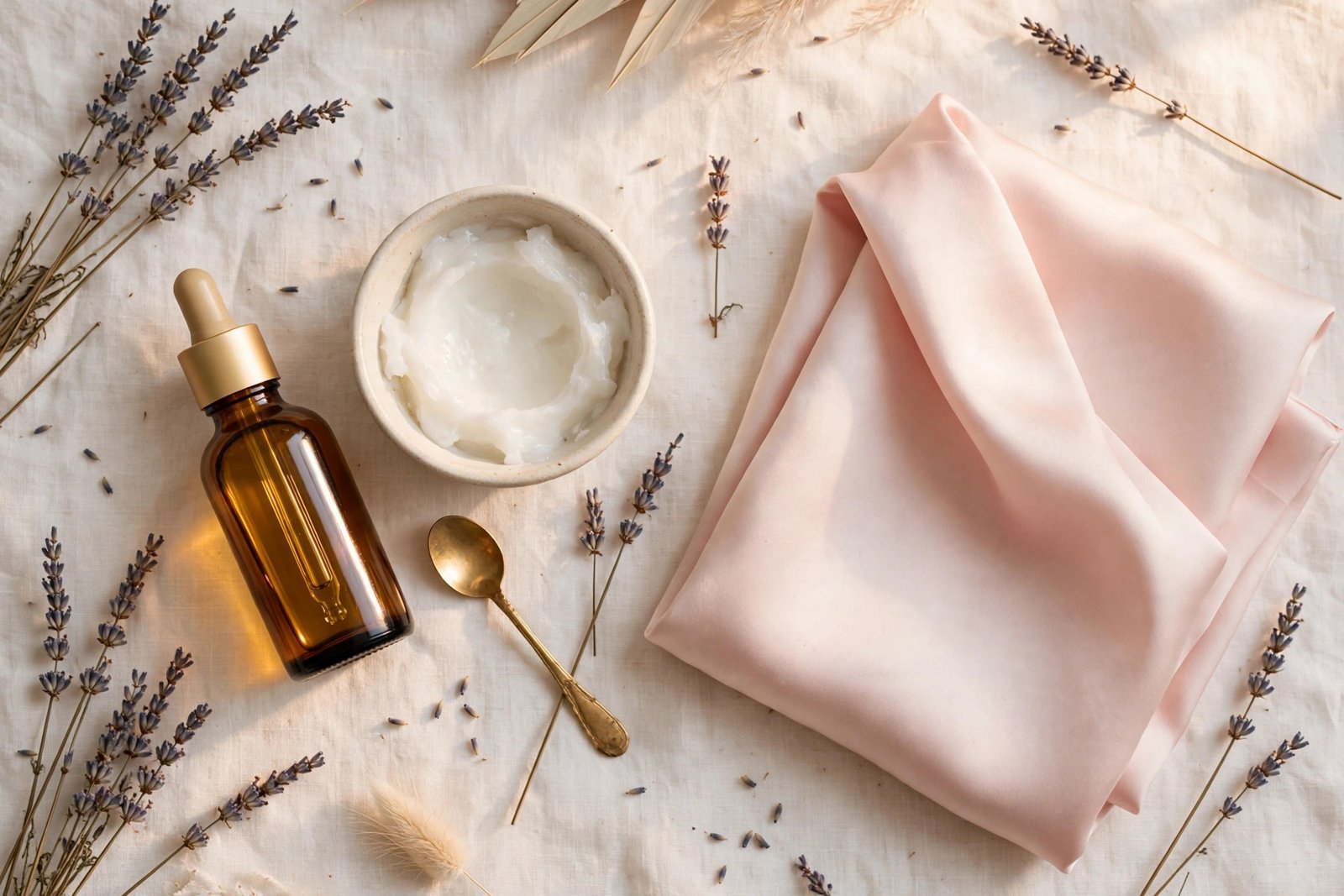
Hair is most vulnerable when it’s dry and porous — think bleached ends, heat-styled lengths, or naturally coarse textures. Oils penetrate the hair shaft (coconut and argan oils do this best) or coat it (jojoba, olive oil), smoothing the cuticle and adding flexibility. The occlusive layer on top — a heavier butter, a silicone serum, or even a physical barrier like a silk wrap — locks everything in and prevents the oil from transferring to your pillow instead of your hair.
The result after one night: noticeably softer ends and less frizz. After a few weekly sessions: ends that look healthier, feel stronger, and break less. It pairs naturally with a solid beginner hair care routine.
What You Need
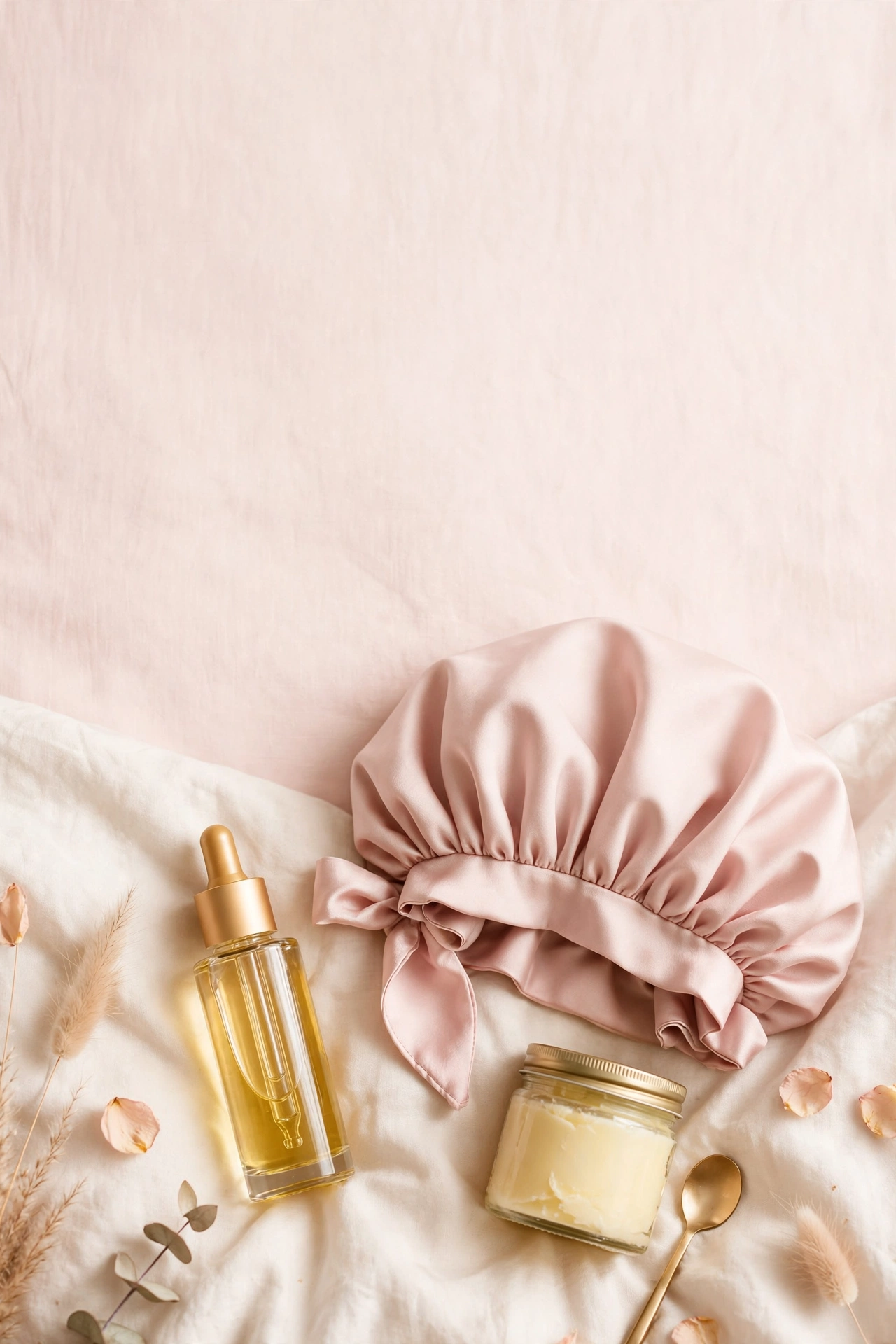
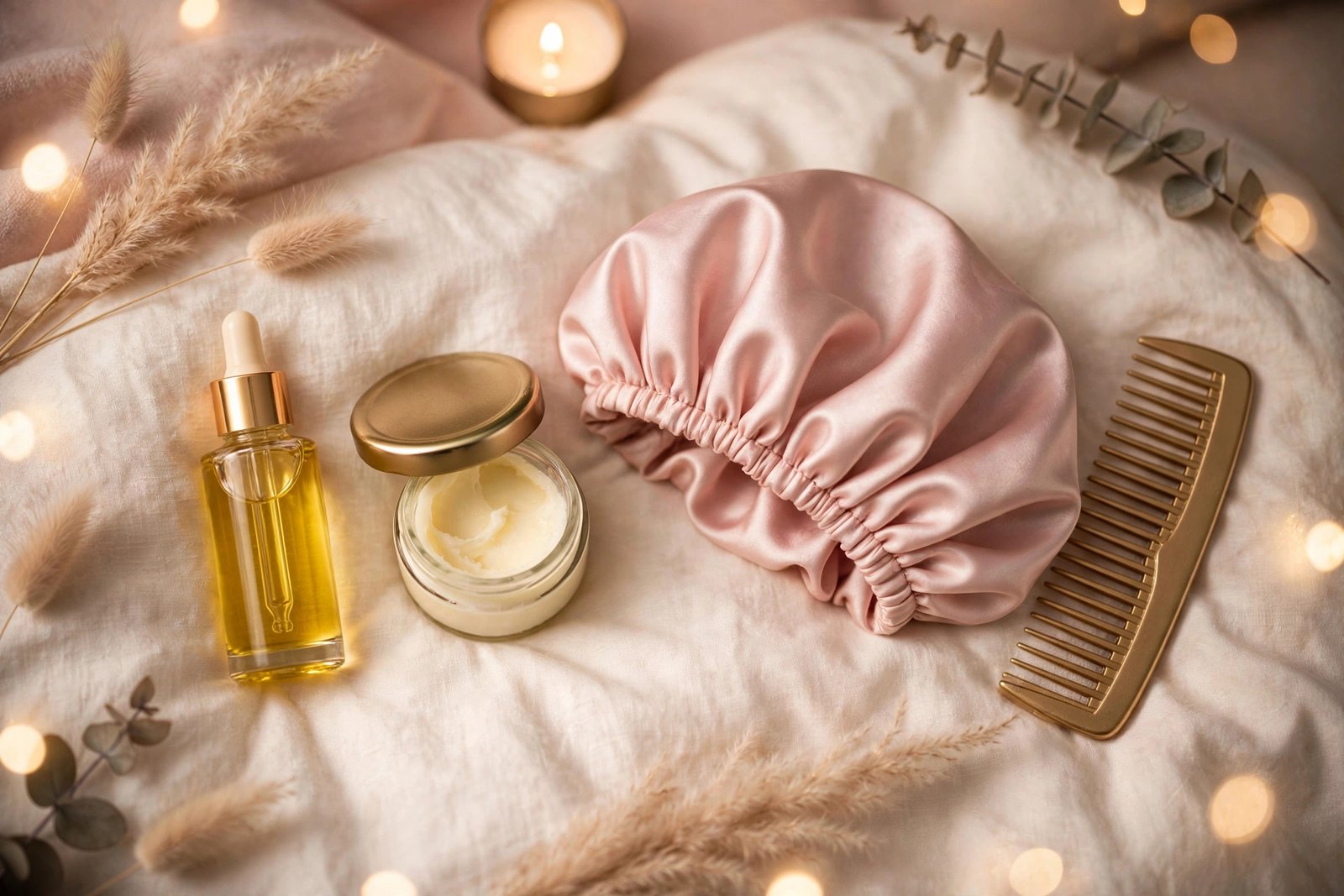
- A penetrating oil: coconut oil, argan oil, or a dedicated hair oil. Choose based on your hair’s porosity — coconut for high-porosity/damaged hair, argan or jojoba for medium porosity.
- An occlusive layer: shea butter, a silicone-based serum, or a thick hair mask. This is the “slug” seal.
- Protection for your pillow: a silk or satin pillowcase, a silk bonnet, or an old towel over your pillow.
- Optional: a wide-tooth comb for even distribution.
For guidance on choosing oils, see how to oil hair.
Step-by-Step: The Hair Slugging Nighttime Routine
Step 1: Start with dry or slightly damp hair
Unlike most treatments, slugging works on dry hair — that’s the point. If your hair is very dry, mist the mid-lengths and ends lightly with water first; oil seals in whatever moisture is present, so a little dampness gives it more to lock in.
Step 2: Apply oil to the mid-lengths and ends
Warm a coin-sized amount of oil between your palms. Starting about halfway down your hair (never at the roots — more on that below), work the oil through to the ends. Focus on the oldest, driest inches. Comb through gently with a wide-tooth comb for even coverage.
How much: fine hair needs a dime-sized amount; thick hair can take a quarter-sized amount or more. Your ends should look lightly coated, not dripping.
Step 3: Seal with the occlusive layer
Apply a thin layer of your occlusive product — shea butter, silicone serum, or hair mask — over the oiled sections. This is the barrier that keeps moisture in and the oil working (instead of migrating to your pillowcase). Keep it to the mid-lengths and ends, same as the oil.
Step 4: Protect and contain
Loosely braid your hair or twist it into a low, loose bun. Cover with a silk bonnet or sleep on a silk pillowcase. This serves two purposes: it keeps the product on your hair rather than your bedding, and it reduces friction that causes breakage overnight. Never sleep with hair in a tight style — see the gentle styling options for daytime alternatives that don’t stress strands.
Step 5: Wash out in the morning
Shampoo as normal — you may need two latherings to fully remove the occlusive layer, which is expected. Follow with conditioner on the lengths. Style as usual; many people find they need less styling product after a slugging night because the hair is already smooth. For next-day styling ideas, try second-day refresh or dry shampoo technique.
How Often Should You Slug?
- Very dry or damaged hair: 1–2 times per week.
- Normal hair with dry ends: once a week or every other week.
- Maintenance: once or twice a month is enough once ends are in good shape.
More is not better — overdoing occlusive treatments leads to buildup that makes hair look dull and feel coated. If your hair starts feeling heavy or limp after slugging, scale back frequency or use a clarifying shampoo.
Who Should SKIP Hair Slugging
This treatment is not for everyone. Skip it — or heavily modify it — if:
- You have fine, thin hair. Heavy oils and occlusives overwhelm fine strands, leaving them limp, stringy, and weighed down. If you want to try it anyway, use a tiny amount of lightweight argan oil only, skip the occlusive layer, and slug once a month at most.
- Your scalp is oily or you’re prone to buildup. Slugging the lengths is fine, but keep all product well away from the roots. If oil migrates to your scalp overnight, you’ll wake up needing an immediate wash.
- You have seborrheic dermatitis or scalp conditions. Occlusive products near the scalp can aggravate flaking and irritation. Keep treatments strictly on the ends and consult a dermatologist about your scalp routine.
- Your hair is low-porosity and healthy. Hair that already retains moisture well doesn’t need an occlusive seal — you’ll likely just get buildup with no visible benefit.
- You’re protein-sensitive with certain masks. If your occlusive layer is a protein-rich mask, overuse can make hair brittle. Alternate with moisture-only sealants.
Troubleshooting
Hair feels greasy after washing
You used too much product or didn’t shampoo thoroughly. Double-shampoo, focusing the second lather on the lengths, and reduce the oil amount next time.
No visible difference
Your hair may be low-porosity (product sits on top rather than absorbing) or already well-moisturized. Try applying to slightly damp hair, or switch to a lighter oil. One session also may not be enough — give it 3–4 weekly sessions before judging.
Breakouts along the hairline
Product migrated to your face overnight. Keep the treatment lower on the lengths, wear a bonnet, and change your pillowcase after slugging nights.
Ends still feel dry
The oil may not be penetrating. Try coconut oil (one of the few oils proven to penetrate the shaft) on slightly damp hair, and make sure you’re treating the very ends — the last inch is where damage concentrates.
Key Takeaways
- Hair slugging = nourishing oil on dry mid-lengths and ends, sealed with an occlusive layer, left overnight.
- Apply to dry or slightly damp hair, keep product off the roots, and protect your pillow with silk.
- Very dry or damaged hair benefits from 1–2 sessions per week; healthy hair needs it rarely or not at all.
- Fine, thin, or oily hair types should skip it or use a drastically lightened version — heavy occlusives cause limpness and buildup.
- Double-shampoo in the morning to fully remove the occlusive layer.
Frequently Asked Questions
What is hair slugging exactly?
It’s an overnight treatment where you apply oil to the mid-lengths and ends of dry hair, seal it with an occlusive product (butter, silicone serum, or mask), and sleep with it protected. The occlusive layer locks moisture in while the oil conditions the hair shaft.
Can you slug your hair every night?
No — that’s too much. 1–2 times per week is the maximum for very dry hair, and most people do well with weekly or biweekly sessions. Nightly slugging causes buildup that leaves hair dull and coated.
Does hair slugging work on oily hair?
Only on the ends, and cautiously. Keep all product away from the roots and scalp, use lightweight oils, and wash thoroughly in the morning. If your ends aren’t dry, you probably don’t need this treatment at all — slugging is designed to solve dryness, not to be a universal routine.
Should you slug wet or dry hair?
Dry or slightly damp. The method was designed for dry hair, but a light mist of water on very dry ends gives the oil more moisture to seal in. Never slug soaking-wet hair — the water blocks oil absorption.
What oil is best for hair slugging?
Coconut oil for high-porosity or damaged hair (it penetrates the shaft), argan or jojoba for medium porosity and finer textures. The “best” oil depends on your hair’s porosity more than any trend — match the oil to your hair, not to what’s popular.
Do you need to wash your hair after slugging?
Yes, always. The occlusive layer must be shampooed out in the morning — usually with two latherings. Leaving it in leads to buildup, dullness, and potential scalp issues.
Love this? Pin it for later!