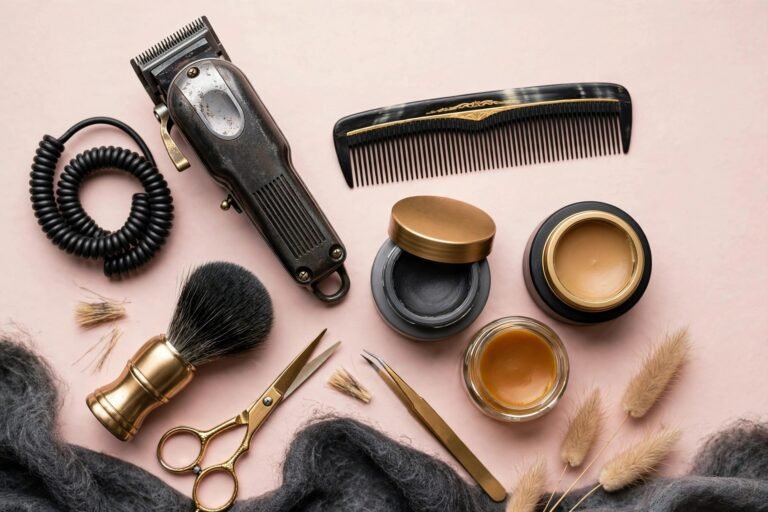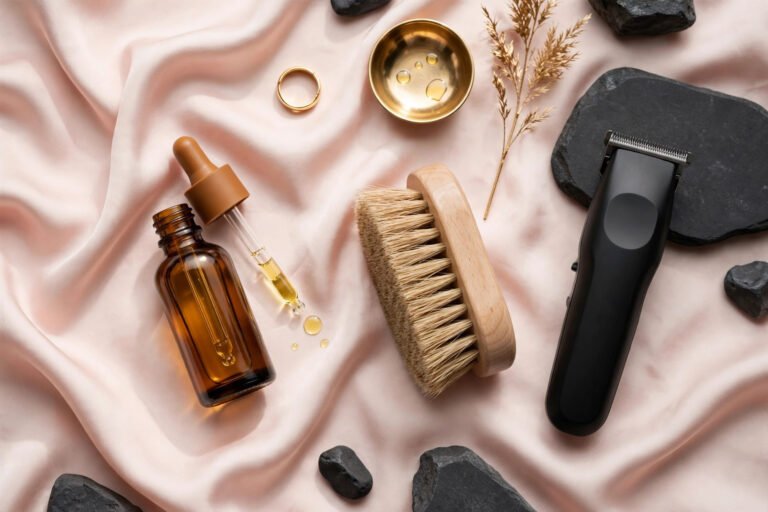
Men’s Hair Care and Styling Guide for Beginners
Most men’s hair advice falls into two useless camps: the barber who says “just use whatever” and the grooming influencer with a fourteen-step routine and a sponsored product in every step. If you are starting from zero — washing with the same bar of soap as everything else, or grabbing whatever shampoo was on sale — you do not need a fourteen-step routine. You need the fundamentals done right.
This guide covers exactly that: how to wash, condition, and style men’s hair properly, which products are actually worth buying (and which are marketing), how to work with your specific hair type, and when to get professional help. No fluff, no gatekeeping, no assumption that you already know the difference between pomade and clay.
Key Takeaways
- Most men wash too often and condition too rarely — shampoo 2–4 times a week and condition every time you shampoo.
- Hair type (straight, wavy, curly, coily) and thickness determine which products work; there is no universal “best” product.
- A basic routine needs only four products: a good shampoo, a conditioner, one styler matched to your hair, and optionally a heat protectant.
- Technique matters more than product price: how you dry and style your hair changes the result more than the brand.
- See a barber every 3–6 weeks for maintenance, and bring a photo of what you want — describing haircuts in words is where most bad cuts start.
Washing: The Foundation Everything Else Depends On
How Often Should Men Wash Their Hair?
The most common mistake is daily shampooing with a harsh cleanser. Shampoo strips the natural oils (sebum) that keep hair flexible and the scalp comfortable. Wash away too much, too often, and the scalp overcompensates by producing more oil — which is why many daily washers have hair that looks greasy by evening.
For most men, 2–4 shampoos per week is the sweet spot. Adjust based on your reality:
- Very oily scalp or daily heavy sweating (construction work, intense training): up to daily washing, but use a gentle, sulfate-free shampoo rather than a stripping one.
- Normal scalp, office life: 2–3 times per week.
- Dry scalp, curly or coily hair: 1–2 times per week; co-washing (conditioner-only washing) between shampoos works well for textured hair.
- Fine or thin hair: every other day often works best, since fine hair shows oil faster.
On non-shampoo days, rinsing with water alone is completely fine. Water removes sweat and dust without stripping oils.
How to Shampoo Properly
Technique beats product here. Most men use too much shampoo and scrub the wrong parts.
- Wet your hair thoroughly with warm (not hot) water. Hair should be fully saturated — shampoo does not spread well on half-wet hair.
- Use a coin-sized amount — roughly a teaspoon. Long hair needs a bit more; short hair needs less. If your shampoo does not lather at all, your hair was not wet enough, not that you need more product.
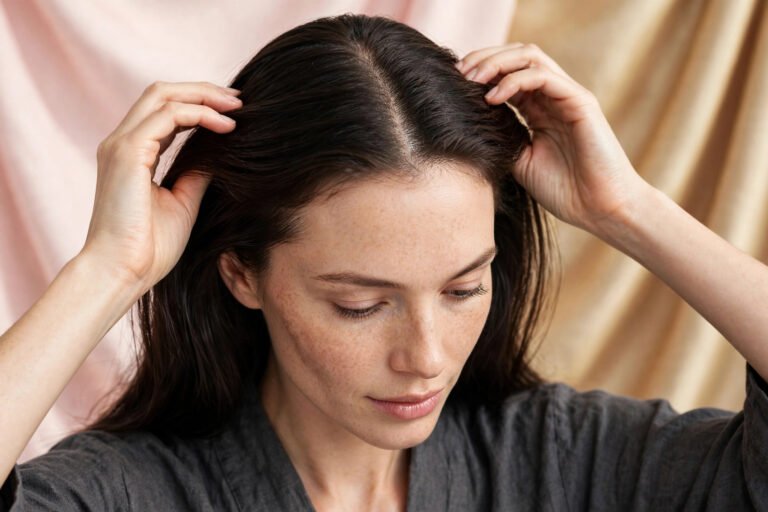
- Scrub the scalp, not the ends. Use your fingertips (never fingernails) and massage the scalp in small circles for 30–60 seconds. The lengths of your hair get cleaned by the rinse running through them; scrubbing the ends directly causes tangles and breakage.
- Rinse completely. Leftover shampoo leaves residue that makes hair look dull and feel coated. Rinse until the water runs clear and your hair squeaks slightly between your fingers.
- Water temperature matters. Hot water feels great but strips more oil and can irritate the scalp. Warm for washing, and a cool rinse at the end if you can stand it — cool water helps the hair cuticle lie flat, which means more shine.
Choosing a Shampoo (Without Overthinking It)
Ignore the “2-in-1” and “3-in-1” products. A shampoo-conditioner-body-wash combo does three jobs badly instead of one job well. Look for:
- Sulfate-free or gentle sulfate formulas if your scalp is sensitive, dry, or you wash frequently. Sulfates are effective cleansers but can be harsh with daily use.
- A shampoo matched to your concern: dandruff (look for zinc pyrithione, selenium sulfide, or ketoconazole), oily scalp (clarifying formulas, used once a week), or dry hair (moisturizing formulas with gentle surfactants).
- No need to spend big here. Shampoo sits on your hair for sixty seconds and rinses off. A solid drugstore shampoo outperforms an expensive one used incorrectly.
One honest note: “men’s” vs “women’s” shampoo is almost entirely marketing. The formulas overlap heavily; buy based on your hair’s needs, not the color of the bottle.
Conditioning: The Step Most Men Skip
Why Conditioner Is Non-Negotiable
Shampoo opens the hair’s outer layer (the cuticle) to clean it. Conditioner smooths that layer back down, which is what makes hair soft, manageable, and less prone to breakage. Skipping conditioner is the number one reason men’s hair feels rough, looks dull, and refuses to style the way the barber styled it.
Every time you shampoo, condition. No exceptions, regardless of hair length. Even a buzz cut benefits — conditioned short hair feels better and the scalp stays more comfortable.
How to Condition Correctly
- Squeeze excess water from your hair first. Conditioner slides off sopping-wet hair before it can absorb. A quick squeeze is enough.
- Apply from mid-length to ends, not directly on the scalp (unless the product says otherwise). Conditioner on the scalp can weigh hair down and make it look oily faster — the scalp already produces its own oils.
- Leave it for 2–3 minutes. This is the step everyone rushes. The conditioning agents need contact time to work. Shave, wash your face, or just stand there — then rinse.
- Rinse thoroughly but not obsessively. Hair should feel smooth and slippery-slick, not coated. If it feels gummy after rinsing, you used too much.
For very dry, coarse, or curly hair, a leave-in conditioner (applied to damp hair after the shower, not rinsed out) is a game-changer for manageability and frizz control.
Know Your Hair Type (It Determines Everything)
The Four Hair Types
Hair type is about your hair’s natural pattern, and it dictates which products and techniques work:
- Straight (Type 1): Lies flat, gets oily fastest because scalp oils travel straight down the strand. Needs lightweight products; heavy creams and oils will make it limp.
- Wavy (Type 2): S-shaped waves. The most versatile type — it can go sleek or textured depending on styling. Medium-weight products work best.
- Curly (Type 3): Defined curls or ringlets. Prone to dryness and frizz because oils cannot travel around the curls easily. Needs moisture-rich products and minimal brushing when dry.
- Coily (Type 4): Tight coils or zigzag pattern. The most fragile and dryness-prone type. Needs rich moisturizers, gentle handling, and protective styling.
Thickness and Density Matter Too
Beyond curl pattern, consider thickness (how wide each strand is) and density (how many strands you have):
- Fine hair gets weighed down easily — use lightweight products and avoid over-conditioning.
- Thick, coarse hair can handle (and usually needs) richer products.
- Thinning hair needs volumizing approaches and honest assessment — which this guide to fixing thinning hair in men covers in detail, from styling tricks to when to see a dermatologist.
The Honest Truth About “Hair Type” Products
Product lines marketed to specific hair types are a useful starting filter, not a law. Two men with wavy hair can need completely different products if one has fine strands and the other has coarse ones. Use hair type as your starting point, then adjust based on how your hair actually responds over two to three weeks of consistent use.
Styling Basics: From Wet Hair to Finished Look
Start With the Right Cut
No product fixes a bad haircut. Before investing in stylers, make sure your cut actually suits your face shape and hair type — the wrong cut fights you every morning. This best hairstyles for men by face shape breaks down which cuts flatter oval, round, square, and other face shapes, so you can walk into the barbershop with a plan instead of a vague “just clean it up.”
Bring a photo to your barber. Not three photos of different cuts — one photo of the specific cut you want, from someone with roughly your hair type. Barbers are visual professionals; words like “textured” and “tapered” mean different things to different people.
The Blow-Dryer Is Not Optional (for Most Styles)
Here is the secret barbers rarely spell out: the styled look you walk out with is about 70% blow-dryer technique and 30% product. Product on air-dried hair gives you a fraction of the control.
Basic blow-drying for men:
- Towel-dry first — squeeze, do not rub. Rubbing roughs up the cuticle and creates frizz.
- Apply heat protectant to damp hair if you blow-dry more than a couple of times a week. Heat damage is cumulative and real.
- Dry in the direction you want the hair to go. Use your fingers or a brush to guide hair while the dryer follows. Heat sets the direction; cool air locks it.
- Finish with the cool shot. Most dryers have one — it sets the style and adds shine.
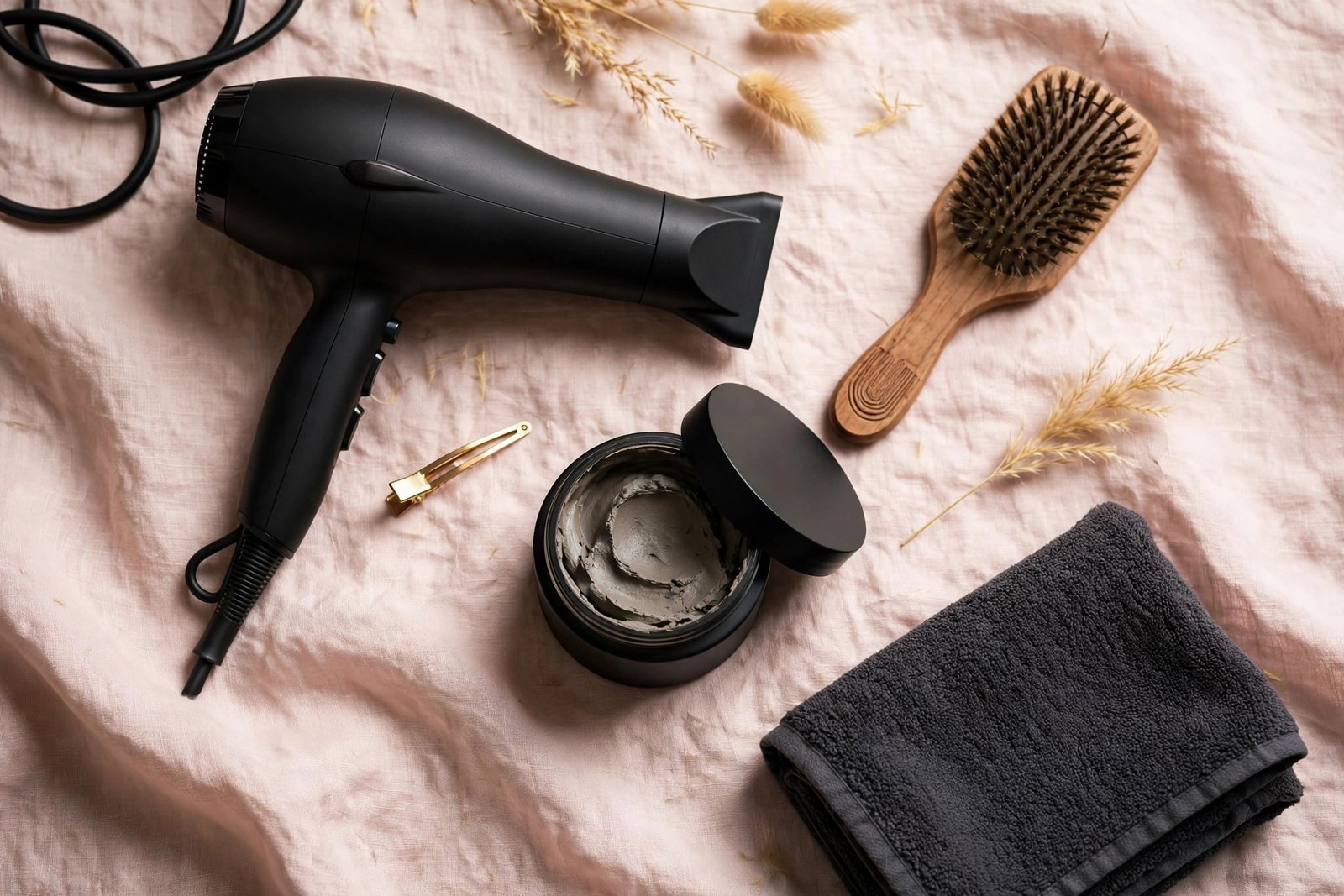
You do not need a salon dryer. A basic dryer with a concentrator nozzle and a cool-shot button handles everything a beginner needs.
Choosing Your Styler: Pomade vs. Clay vs. Everything Else
This is where most beginners get lost, so here is the plain-English breakdown:
- Pomade: Medium to high shine, medium hold. The classic slicked-back, side-part look. Best for straight to wavy hair. Water-based pomades wash out easily; oil-based ones hold stronger but need dedicated shampooing to remove.
- Clay (matte clay): Low shine, strong hold. The modern textured, messy, “effortlessly styled” look. Best all-rounder for most beginners — works on straight, wavy, and short curly hair.
- Wax: Medium shine, pliable hold. Good for defined, piece-y styles. Can feel heavy on fine hair.
- Cream: Low hold, natural finish. Best for taming frizz and adding light control to longer or wavy hair without looking “styled.”
- Gel: High shine, stiff hold. The wet-look or very structured styles. Modern lightweight gels are far better than the crunchy gels of the 2000s, but clay or pomade suits most beginners better.
- Sea salt spray: Adds texture and volume to damp hair before blow-drying. Excellent for wavy hair and beachy texture; not a standalone styler.
The beginner recommendation: if you have short to medium straight or wavy hair and want one product, buy a matte clay. It is the most forgiving styler — mistakes still look intentional.
How Much Product to Use (Less Than You Think)
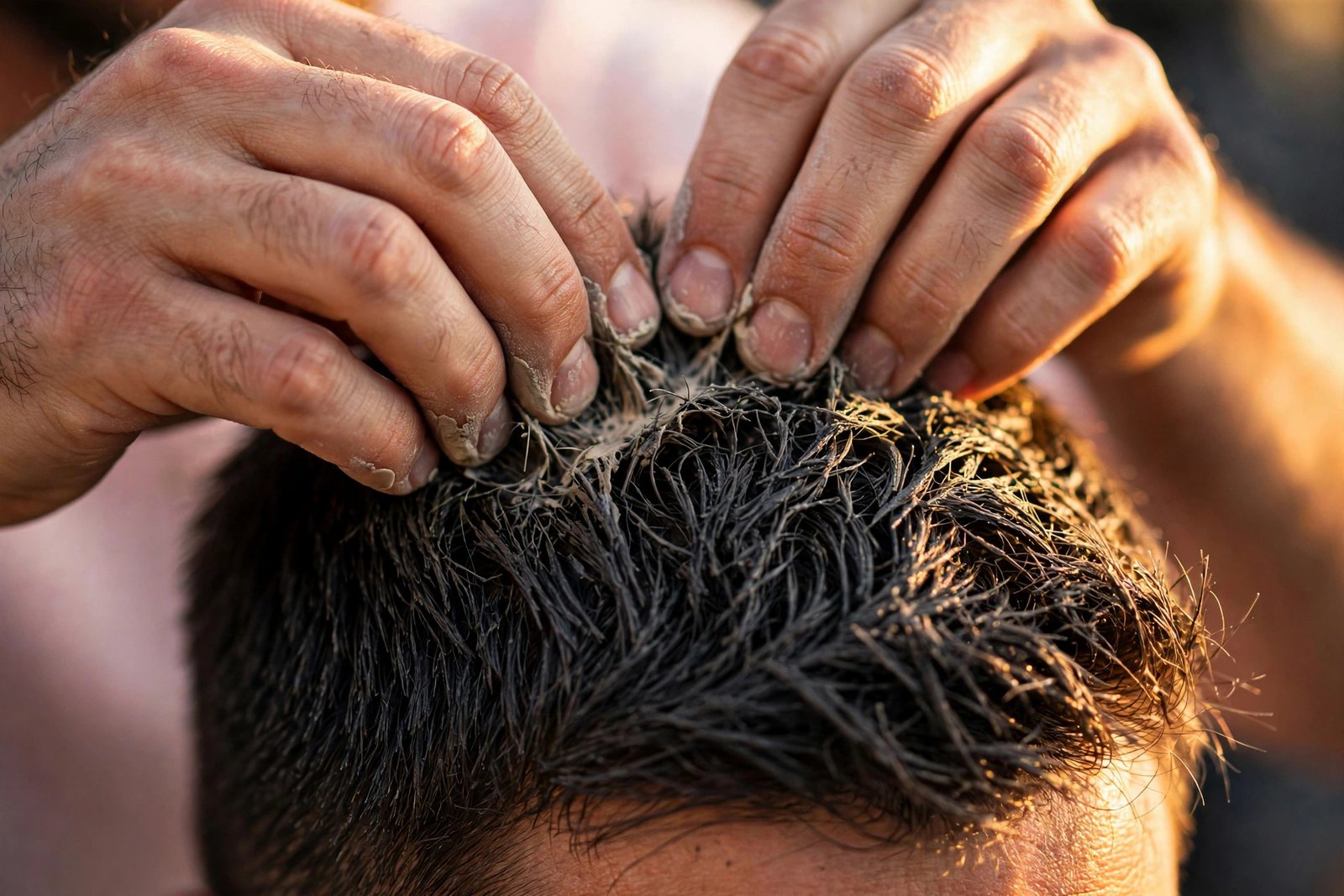
Start with a pea-sized to dime-sized amount, warm it between your palms until it is invisible, then work it through dry or nearly-dry hair from back to front. You can always add more; removing excess means rewashing. The telltale sign of too much product is hair that looks wet when it is dry, or styles that collapse by noon under the weight.
Apply in this order for most styles: roots first for volume and hold, then mid-lengths, then a tiny remainder on the ends for definition. For textured styles, pinch and twist small sections rather than raking product straight through.
The Only Products Worth a Guy’s Money
The Essential Four
A complete beginner routine needs exactly four products:
- Shampoo matched to your scalp (gentle, sulfate-free if you wash often).
- Conditioner — used every wash, left in 2–3 minutes.
- One styler matched to your hair type and desired look (matte clay for most beginners).
- Heat protectant — only if you blow-dry regularly.
That is the whole routine. Everything else is optional optimization, not necessity.
Worth Adding Once the Basics Are Solid
- Leave-in conditioner — for curly, coily, or long hair that needs extra moisture and frizz control.
- Clarifying shampoo — used once every 1–2 weeks if you use heavy stylers or have hard water; resets product buildup.
- Scalp scrub or exfoliating treatment — helpful for flaky or very oily scalps, used weekly.
- Hair oil (lightweight) — a drop or two on the ends tames frizz and adds shine, especially for medium to long hair. Avoid heavy oils on fine hair.
Not Worth It (for Beginners)
- Expensive shampoo. It rinses off in a minute. Spend the money on the styler instead — that is what stays on your hair all day.
- “Thickening” shampoos as a hair-loss treatment. They coat the hair to add temporary fullness, which is fine cosmetically, but they do not regrow hair. Real thinning needs real assessment — see the thinning guide linked above.
- Multi-step systems with cleanser, scrub, serum, and tonic. Useful for enthusiasts; overwhelming and unnecessary when you are still learning to condition consistently.
- Cologne-as-haircare. Hair perfumes exist, but your regular fragrance applied correctly does the job — this men’s fragrance guide for beginners covers scent from the ground up.
Gray Hair: Blend It or Own It
Gray hair arrives on its own schedule, and how you handle it is personal — but it should be a decision, not an accident. The two good options:
- Own it: Well-maintained gray hair looks distinguished. Keep the cut sharp, keep it conditioned (gray hair tends to be coarser and drier), and consider a purple or silver-enhancing shampoo once a week to prevent yellowing.
- Blend it: Gradual gray-blending color services add subtle pigment that fades naturally over weeks — no harsh regrowth line like traditional dye. This gray blending options for men walks through the techniques, costs, and maintenance honestly.
What to avoid: box dye in a dramatically darker shade than your natural color. The contrast at the roots within two weeks looks worse than the gray did.
Beards: The Other Half of the Equation
For many men, hair care and beard care are one system — the two frame the face together. The fundamentals rhyme: wash the beard (with a gentle beard wash or just your regular gentle shampoo, 2–3 times a week), condition it, and keep it shaped with regular trims. Beard oil is not a gimmick — the skin under a beard gets dry and itchy without moisture, and a few drops daily genuinely help.
If you are growing your first beard or wondering how to keep one looking intentional rather than accidental, this beard grooming guide for beginners covers the full routine: growth phases, shaping, and the tools that matter.
One coordination tip: your haircut and beard should be planned together. A sharp fade with an unkempt beard (or vice versa) looks unfinished. Tell your barber you want both handled in the same appointment.
Common Beginner Mistakes (and Easy Fixes)
Washing Every Day With Harsh Shampoo
Fix: cut back to 2–4 washes per week with a gentler formula. Give your scalp two weeks to adjust — the initial oiliness is temporary as oil production recalibrates.
Skipping Conditioner
Fix: there is no hack here. Condition every wash. If you hate the extra shower time, a 2-in-1 is better than nothing, but separate conditioner is better than a 2-in-1.
Towel-Drying by Rubbing
Fix: squeeze and pat. Aggressive rubbing causes breakage and frizz, especially on wavy and curly hair. A microfiber towel or an old cotton t-shirt is gentler than a standard bath towel.
Using Too Much Styler
Fix: halve what you think you need. Warm it fully between your palms. Build up in small additions rather than starting big.
Never Changing the Cut
Fix: hair, face, and lifestyle change. The cut that worked at 22 may not work at 32. Reassess with your barber at least once a year — bring new reference photos and be open to suggestions.
Ignoring the Scalp
Fix: the scalp is skin. Flaking, itching, or persistent oiliness are scalp issues, not hair issues, and they need scalp-targeted solutions (anti-dandruff shampoo, less frequent harsh washing, or a dermatologist if it persists).
Frequently Asked Questions
How long does it take to see results from a new hair routine?
Give any routine change a full 2–3 weeks before judging it. Hair and scalp need time to adjust — especially when cutting back on washing frequency, where the first week often looks worse before oil production balances out. Product performance is also clearer after several uses than after one.
Can I use the same products as my partner?
Yes, with one caveat: use products matched to your hair type, not to whoever bought them. If her moisturizing shampoo suits your dry, curly hair, it is a perfectly good shampoo for you. Marketing gender on the bottle is irrelevant; the formula is what matters.
Do I really need a blow-dryer?
If you want any style with volume, direction, or texture — yes. Air-drying works for very short cuts and some curly routines, but for most men’s styles, the dryer is what creates the shape and the product just holds it. It is the highest-impact tool purchase a beginner can make.
How often should I get a haircut?
Every 3–6 weeks depending on the style. Fades and short textured cuts need maintenance every 3–4 weeks to keep their shape; longer styles can stretch to 6–8 weeks. Waiting until a cut “looks bad” means you have waited too long — maintenance trims keep you looking sharp continuously.
Is expensive salon product actually better than drugstore?
Sometimes, but not proportionally. The biggest quality jumps happen between terrible products and decent ones, not between decent and luxury. A $12 clay that suits your hair beats a $40 clay that does not. Once you know what works for your hair type, then experimenting upmarket makes sense.
At what point should I see a dermatologist about my hair?
See one if you notice sudden or patchy hair loss, a persistently itchy/flaky scalp that does not respond to anti-dandruff shampoo after a month, or thinning that is clearly progressing. Early professional assessment preserves more options — waiting rarely helps with hair loss.
Your First-Week Action Plan
You do not need to overhaul everything tonight. Here is the beginner sequence that actually sticks:
Days 1–2: Buy a gentle shampoo, a conditioner, and one styler (matte clay if you are unsure). Total cost should be modest — the drugstore is fine.
Days 3–4: Switch to shampooing 2–3 times a week, conditioning every wash, leaving the conditioner in for a full two minutes. Notice how different your hair feels.
Days 5–6: Practice blow-drying in the direction you want your hair to sit, then apply a small amount of styler to nearly-dry hair. It will feel clumsy the first few times — that is normal.
Day 7: Book a barber appointment, bring one reference photo, and ask what they would recommend for your hair type and face shape. A good barber is the best grooming investment there is.
Master these fundamentals and you will have better hair than the vast majority of men — not because you bought the most products, but because you finally learned how hair actually works. Everything after this is refinement, and refinement is fun once the foundation is solid.
Love this? Pin it for later!