Signs of Product Buildup on Your Scalp (7 to Watch)
Your hair was fine last month, and now it’s dull, limp, and your scalp itches no matter what you do. Before you blame your shampoo, your water, or your genes, consider the most common and most overlooked culprit: product buildup on the scalp.
Buildup is the gradual accumulation of everything you put on your hair and scalp — dry shampoo, styling creams, gels, oils, silicones from serums, and even minerals from hard water. Each layer is invisible on its own, but together they form a film that blocks moisture, weighs hair down, and irritates the scalp. The tricky part? Buildup mimics other conditions, especially dandruff, so many people treat the wrong problem for months.
Here are the 7 signs of product buildup on your scalp, how to tell buildup apart from dandruff, and exactly what to do about it.
Key Takeaways
- Product buildup causes itch, flakes, dullness, limp hair, odor, slow-drying hair, and products that stop absorbing.
- Buildup flakes are larger, oilier, and stick to the scalp; dandruff flakes are smaller, drier, and shed easily.
- A clarifying shampoo is the fastest fix — use one every 2–4 weeks to prevent recurrence.
- If symptoms persist after clarifying, see a dermatologist; it may be seborrheic dermatitis or another scalp condition.
Sign 1: An Itchy Scalp That Won’t Quit
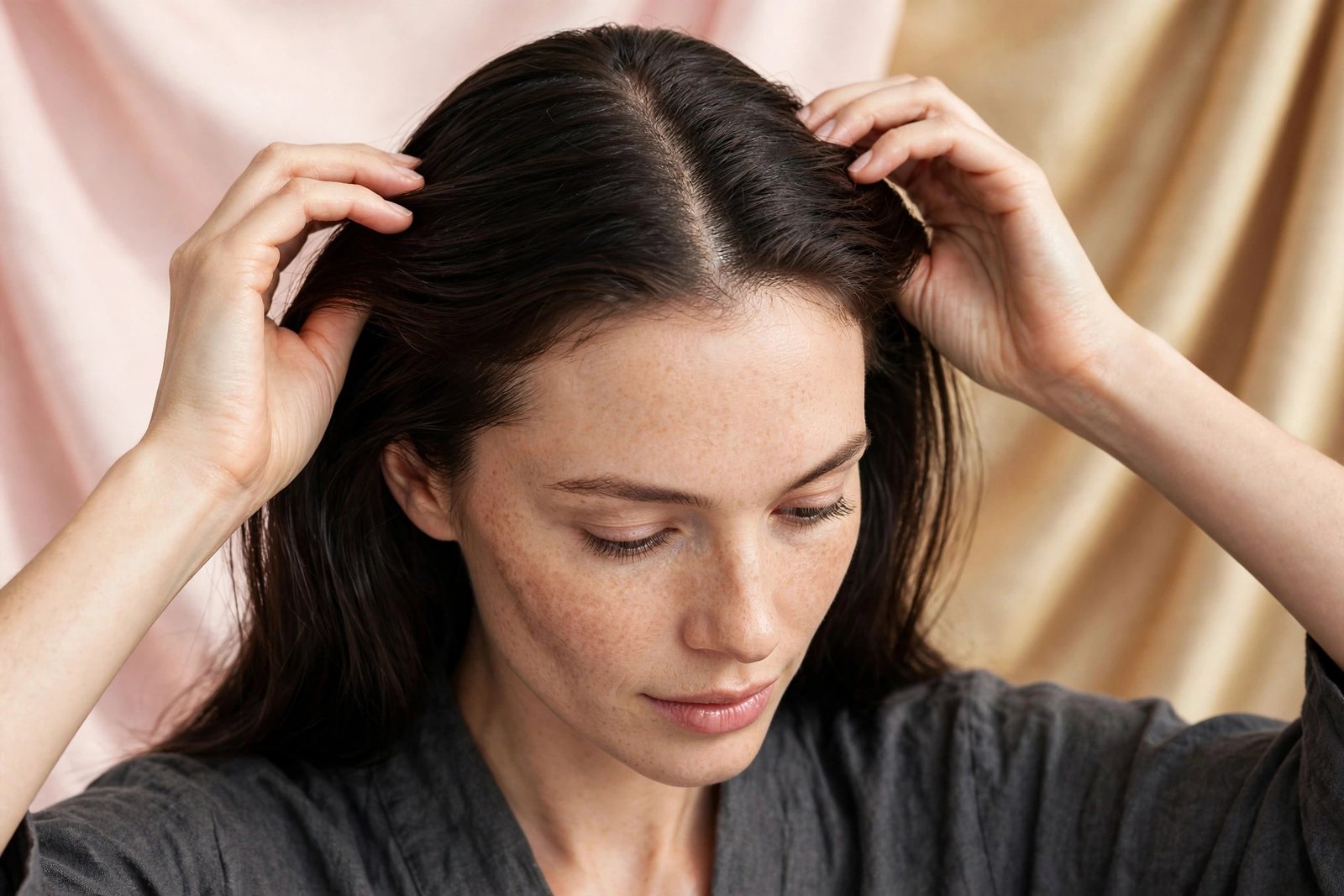
Persistent itching is the most common early sign of buildup. When residue coats the scalp, it traps sweat, oil, and dead skin underneath, creating an irritating film. The itch tends to feel like a general, all-over prickliness rather than the intense, localized itch of an allergic reaction.
Key clue: if the itching gets worse in the days after washing (as opposed to right before a wash, when oiliness is the obvious cause), residue is likely the trigger. A thorough cleanse usually brings immediate relief — which itself is diagnostic.
Sign 2: Flakes That Aren’t Quite Dandruff
Buildup flakes look different from true dandruff, and learning the difference saves you from buying the wrong treatment:
| Product buildup flakes | Dandruff flakes | |
|---|---|---|
| Size | Larger, chunkier | Smaller, finer |
| Texture | Oily, waxy, sticky | Dry, powdery |
| Behavior | Cling to the scalp, hard to brush out | Shed easily onto shoulders and clothes |
| Scalp underneath | Often looks coated or shiny | May look red or irritated |
If your flakes are waxy and glued to the scalp, an anti-dandruff shampoo (designed for fungal overgrowth) won’t solve the problem — you need a cleanser that dissolves residue. Buildup-related flaking is one of the main reasons people end up in a clarifying shampoo routine after months of the wrong products.
Sign 3: Hair That Looks Dull No Matter What
Shine comes from a smooth, clean cuticle that reflects light. Buildup roughens that surface — each layer of residue scatters light instead of reflecting it, so hair looks matte and lifeless even right after washing. If your usual shine serum suddenly “stopped working,” the serum isn’t the problem; the film sitting on your hair is blocking it.
This is also why clarifying before any shine treatment or color service matters: products perform dramatically better on a clean canvas. Many stylists clarify as the first step of every appointment for exactly this reason.
Sign 4: Limp, Lifeless Roots
Volume starts at the scalp. When residue weighs roots down, hair lies flat no matter how much you tease or how good your blowout technique is. The tell-tale pattern: roots feel slightly tacky or coated to the touch, and volume disappears within hours of styling.
Fine-haired people notice this first, but it affects every hair type. If your roots used to hold volume for days and now collapse by afternoon, buildup — not your styling skills — is the likely cause. Those who co-wash curly hair should pay special attention here, since conditioning agents can accumulate at the roots between clarifying washes.
Sign 5: Styling Products Stop Absorbing
Healthy hair drinks up leave-in conditioner, curl cream, and styling products. Coated hair repels them — product sits on the surface, pills up, or leaves a white residue. You might find yourself using more and more product to get the same result, which only accelerates the cycle: more product, more buildup, less absorption.
This is the sign most people misread. The instinct is to switch products (“this cream stopped working for me”), when the real fix is removing the barrier. One clarifying wash usually restores normal absorption immediately.
Sign 6: Hair Takes Much Longer to Dry
Water should evaporate from clean hair at a predictable rate. A film of silicones, butters, and mineral deposits acts like a raincoat — it slows water loss, so hair stays damp far longer than it used to. If your wash-and-go suddenly takes twice as long to dry with no change in weather or routine, buildup is slowing evaporation.
This sign often appears alongside dullness and limpness. Together, the trio — slow drying, no shine, flat roots — is the classic buildup fingerprint. It’s also a useful checkpoint in your regular scalp care routine: if drying time creeps up, schedule a clarifying wash.
Sign 7: A Sour or Musty Scalp Odor
A healthy scalp has very little smell. When buildup traps sweat, oil, and dead skin against the scalp, bacteria feed on the mixture and produce odor — often described as sour, musty, or “stale.” It’s usually noticeable to you before anyone else, often when you scratch your scalp or part your hair.
Occasional odor after a sweaty day is normal. Persistent odor despite regular washing means washing isn’t reaching the scalp — the residue barrier is in the way. This is one of the clearest signals that a gentle cleanser is no longer enough.
Buildup vs. Dandruff vs. Dry Scalp: How to Tell
These three get confused constantly. Here’s the quick differential:
- Product buildup: waxy, sticky flakes that cling; itch improves immediately after a deep cleanse; hair looks dull and feels coated. Fixed by clarifying.
- Dandruff (seborrheic dermatitis): fine, greasy yellowish flakes; redness and irritation; may need antifungal treatment. Clarifying helps remove flakes but doesn’t treat the underlying cause.
- Dry scalp: small, dry white flakes; tight, dry feeling; worse in winter. Needs moisture, not stronger cleansing — clarifying can make it worse.
The practical test: do one thorough clarifying wash. If symptoms improve dramatically within a day or two, it was buildup. If flakes and itch persist unchanged after two clarifying washes two weeks apart, book a dermatologist — persistent dandruff-like symptoms can indicate seborrheic dermatitis, psoriasis, or contact dermatitis, which need medical treatment. For the full comparison of cleansing approaches, see this co-washing versus clarifying guide.
What Causes Buildup in the First Place
Understanding the sources helps you prevent recurrence:
- Dry shampoo overuse. The starches and clays that absorb oil don’t rinse out with water alone — they need surfactants. Several days of dry shampoo between washes is the fastest route to scalp buildup.
- Silicone-heavy products. Silicones (ingredients ending in -cone, -conol, -xane) coat the hair shaft. Non-water-soluble silicones require sulfates to remove — co-washing and sulfate-free shampoos leave them behind.
- Heavy oils and butters. Coconut oil, shea butter, and wax-based pomades are excellent sealants but poor rinsers. They accumulate with repeated use.
- Hard water. Calcium and magnesium deposit a mineral film that no regular shampoo dissolves — this needs a chelating formula.
- Infrequent or rushed washing. Skipping the full scalp massage (the technique at the heart of washing curly hair properly) leaves residue behind every time.
Most people have two or three of these working together, which is why buildup creeps up gradually rather than appearing overnight.
How to Fix Buildup (and Keep It Away)
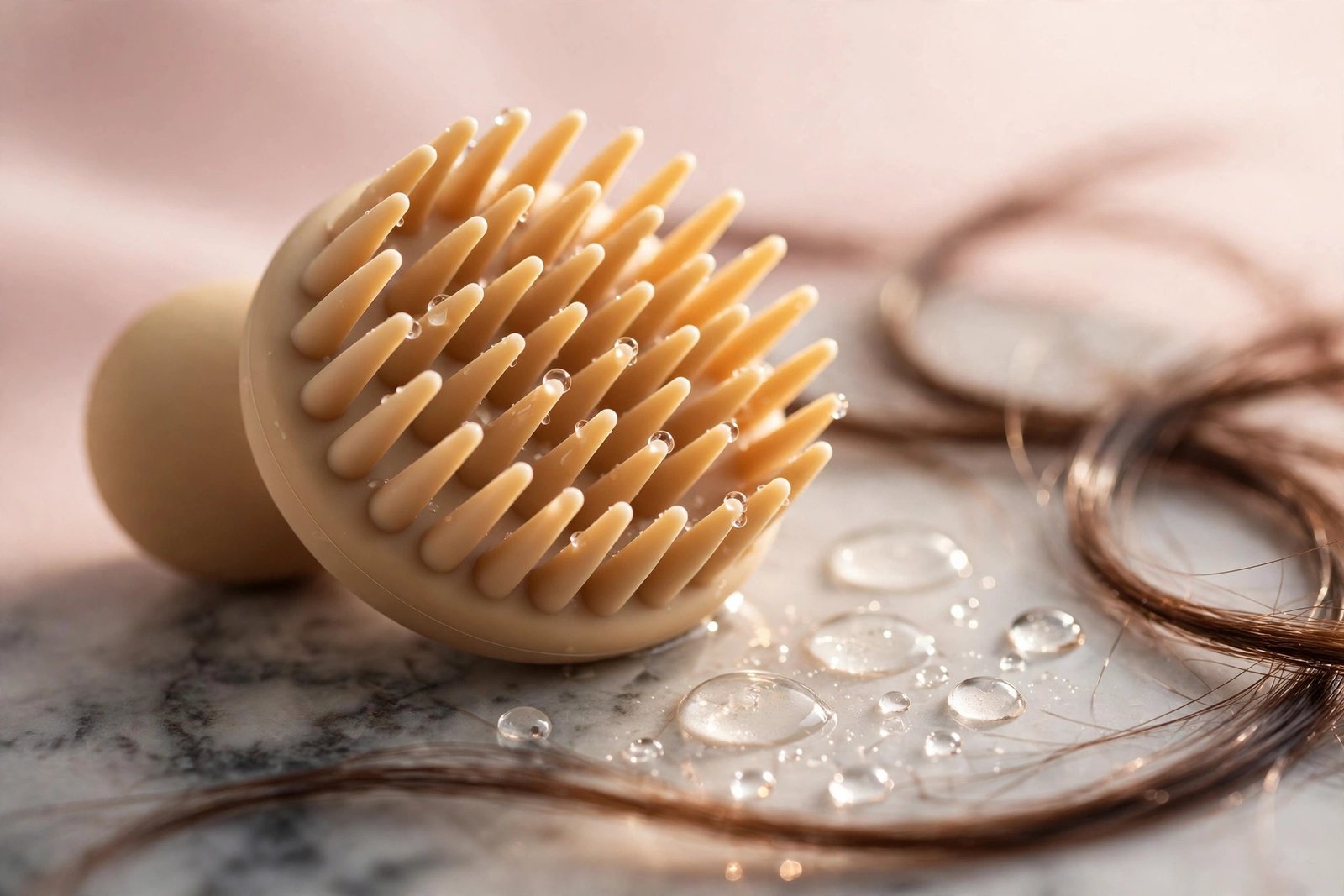
Step 1: Clarify. Use a proper clarifying shampoo — shampoo twice, massage the scalp for 2–3 minutes, and rinse thoroughly. See the best clarifying shampoos for buildup for formulas matched to your specific buildup type.
Step 2: Deep condition. Clarifying removes moisture along with residue. Follow immediately with a rich conditioner or mask on the lengths for 5–10 minutes.
Step 3: Reset your routine. After clarifying, go lighter: use less dry shampoo, choose water-soluble silicones or go silicone-free, and make sure every wash includes a real scalp massage.
Step 4: Schedule maintenance clarifying. Every 2–4 weeks for most hair; every 2 weeks if you’re a heavy product user, swimmer, or live with hard water. Put it on the calendar like an appointment.
Step 5: Exfoliate the scalp weekly. A gentle scalp scrub or chemical exfoliant (salicylic acid scalp treatments work well) keeps dead skin and light residue from accumulating between clarifying washes. This pairs naturally with a consistent scalp care routine.
Frequently Asked Questions
How long does it take to get rid of product buildup?
One good clarifying wash removes most buildup immediately. Severe, months-old accumulation (heavy silicone layering plus hard-water minerals) may need two clarifying washes a week apart. Hair should feel noticeably lighter and cleaner after the first one.
Can buildup cause hair loss?
Buildup itself doesn’t cause pattern hair loss, but chronic scalp buildup can contribute to shedding. An irritated, inflamed scalp is a poor environment for follicles, and heavy residue can clog follicular openings. Keeping the scalp clean supports healthy growth — though sudden or significant shedding always warrants a dermatologist visit.
Does apple cider vinegar remove buildup?
ACV rinses help dissolve light mineral film and add shine, but they can’t cut through heavy silicone or dry-shampoo accumulation. Use ACV as maintenance between clarifying washes, not as the main treatment.
Can I prevent buildup while still using dry shampoo?
Yes — use it sparingly (a light dusting, not a cloud), apply it the night before so it absorbs overnight, brush it out thoroughly the next day, and never go more than 2–3 days without a proper shampoo. Dry shampoo is a bridge between washes, not a replacement for them.
Is scalp buildup the same as dandruff?
No. Buildup is accumulated product, oil, and minerals sitting on the scalp — it’s external and washes away. Dandruff (seborrheic dermatitis) is a skin condition involving excess oil production and yeast overgrowth — it’s internal to the scalp’s biology and needs ongoing management. They can coexist, which is why the clarifying test above is so useful.
The Bottom Line
Itchy scalp, waxy flakes, dull limp hair, products that won’t absorb, slow drying, and musty odor — any two or three of these together point to product buildup, not a mystery condition. The fix is refreshingly simple: one clarifying wash, a deep condition, and a lighter routine going forward. And if clarifying doesn’t clear it up within two weeks, that’s your signal to see a dermatologist rather than keep guessing.
Love this? Pin it for later!