Best Affordable Makeup Brushes for Beginners
Walking into the brush aisle can feel like stepping into a paint supply store with no labels. Dense buffing brushes, tapered blending brushes, fan brushes, stippling brushes — dozens of shapes, prices ranging from $1 to $60 each, and every set promising it’s the “complete kit you need.” The truth is simpler: most beginners use only five brushes regularly, and the affordable versions perform beautifully when you know which shapes actually matter.
This guide breaks down the five essential makeup brushes for beginners, all available affordably at drugstore prices. Your whole routine — foundation, concealer, powder, blush, eyeshadow — can be covered for under $30 total. You’ll also learn which brushes to skip, how bristle type affects your finish, and the care habits that keep cheap brushes performing like expensive ones for years. If you’re building out the rest of your affordable routine too, this drugstore makeup kit for beginners pairs perfectly with the brush plan below.
Key Takeaways
- You only need 5 brushes to cover a full beginner routine: foundation, concealer, powder, blush, and eyeshadow blending
- Synthetic bristles beat natural ones for affordable brushes — they don’t shed, they wash easily, and they work better with liquid and cream products
- A $30 hand-picked set of drugstore brushes outperforms most pre-packaged 20+ piece kits
- Cleaning your brushes weekly matters more than what you paid for them — even premium brushes perform badly when dirty
- Skip the gimmick brushes (fan brushes, silicone applicators, tiny detail brushes) until you’ve mastered the basics
The 5 Brushes That Cover Your Whole Routine
Before diving into each brush, here is the shortlist that handles a complete face. Every recommendation below has an affordable equivalent — you never need to pay prestige prices to get excellent results.
1. Foundation Buffing Brush (or Flat-Top Kabuki)
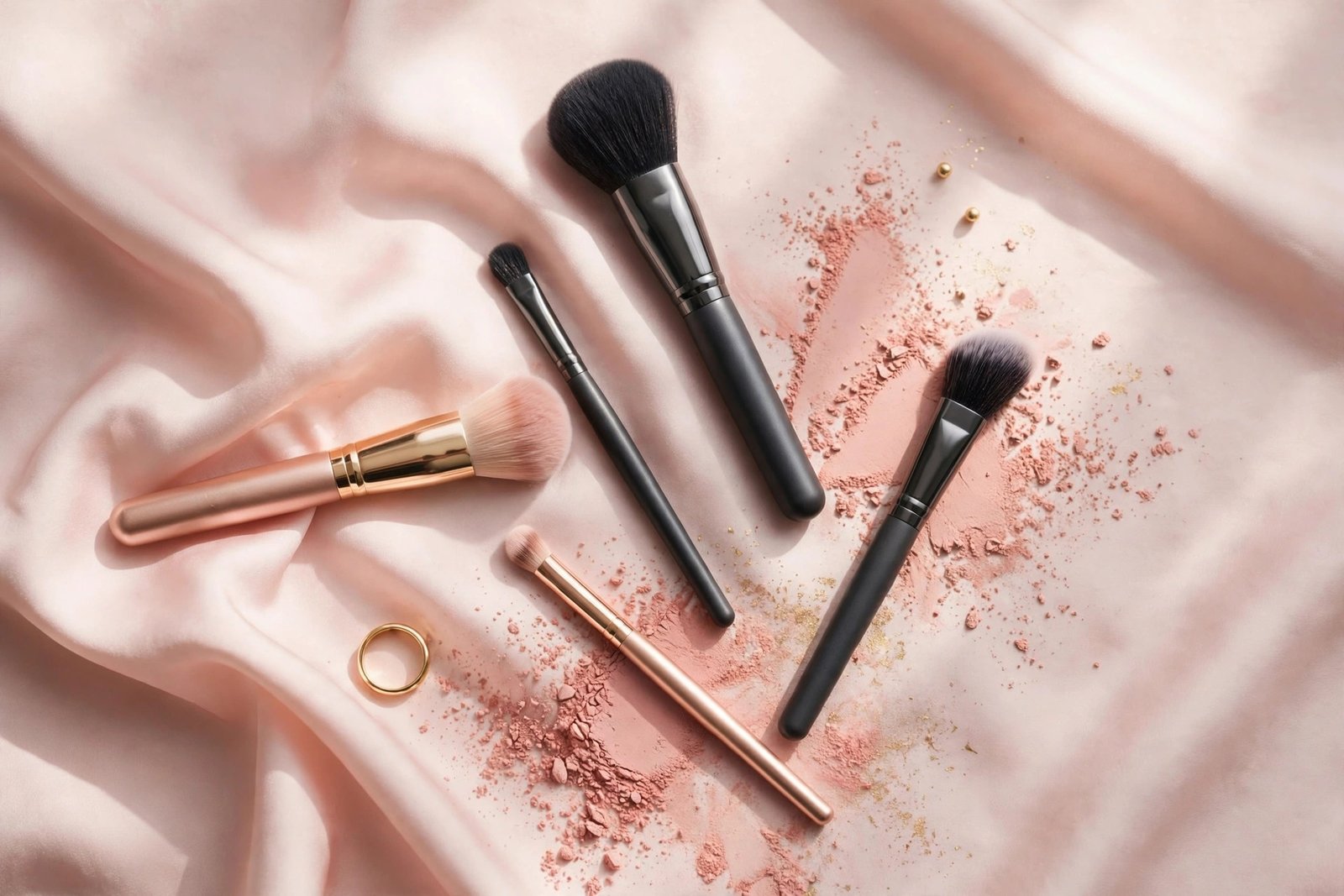
This is the workhorse. A dense, flat-topped kabuki or rounded buffing brush applies liquid and cream foundation smoothly without streaks, and it gives more coverage and control than fingers or a sponge for most beginners. Look for densely packed synthetic bristles with a slightly domed or flat top — the density is what buffs the product into the skin instead of sitting on top of it.
Budget tip: The foundation brush is worth spending the most on within your $30 budget. A single good $8–12 synthetic buffing brush from a drugstore brand outperforms most brushes that arrive inside cheap brush sets.
2. Concealer Brush (Small and Tapered)
A small, slightly tapered brush with firm-but-soft bristles lets you place concealer exactly where you need it — under the eyes, around the nose, over blemishes — without dragging the product across the skin. After placing it, use the same brush with light patting motions (stippling) to blend the edges so it melts into the skin.
Budget tip: Many beginners skip this and use their foundation brush for concealer. That works in a pinch, but a dedicated small concealer brush gives you noticeably neater under-eye blending. Affordable options are plentiful.
3. Large Fluffy Powder Brush
A big, fluffy, dome-shaped brush is your all-rounder for powder products: setting powder over the whole face, bronzer, and even finishing powder. The loose, airy bristles deposit a sheer layer instead of a heavy one, which is exactly what beginners need — heavy-handed powder application is one of the most common beginner mistakes.
Budget tip: For powder brushes, softness matters most. Look for plush synthetic fibers that feel silky against the back of your hand. Stiff, scratchy powder brushes apply product unevenly no matter how good the powder is.
4. Angled Blush Brush
An angled brush follows the natural contour of your cheekbones, making blush placement almost foolproof. The slanted edge sits right along the cheek, while the fluffy length blends the color upward and outward. It doubles as a bronzer brush and even works for light contouring when you’re ready.
Budget tip: If you want to save money, this brush is the easiest to substitute — your powder brush can handle blush in a pinch. But an angled blush brush makes placement so much easier that most beginners find it worth the few dollars.
5. Fluffy Eyeshadow Blending Brush
One good fluffy blending brush handles most beginner eyeshadow looks: washing a transition shade through the crease, softening edges, and blending colors together so there are no harsh lines. Beginners don’t need a packer brush, a pencil brush, and a smudger — one versatile blending brush does the job.
Budget tip: This is where drugstore brushes genuinely rival prestige ones. A basic synthetic blending brush from an affordable brand performs the same blending motion as a luxury brush — the technique matters far more than the price tag.
Synthetic vs Natural Bristles: What Beginners Should Know
Years ago, makeup artists insisted natural-hair bristles were superior. For beginners shopping on a budget today, synthetic bristles are the better choice across the board, and here is why:
- They work better with modern formulas. Liquid and cream products (foundation, concealer, cream blush) perform best with synthetic bristles. Natural hair absorbs liquid, which wastes product and makes blending harder.
- They don’t shed. Affordable natural-bristle brushes shed hairs onto your face constantly. Quality synthetic bristles stay put.
- They wash easily and dry fast. Synthetic fibers release makeup residue more readily, which means less staining and quicker drying after your weekly wash.
- They’re cruelty-free. No animal hair involved — a meaningful bonus for many shoppers.
- They’re cheaper to make well. A $6 synthetic brush can be genuinely excellent. A $6 natural-hair brush almost never is.
The bottom line: Buy synthetic everything. Every affordable brush brand worth buying sells synthetic lines, and they outperform the natural-hair options at the same price point every time.
The Brushes You Can Skip (For Now)
Big pre-packaged sets survive on the idea that more brushes equal better makeup. In practice, most beginners use fewer than half of the brushes in a 24-piece kit — the full makeup brushes guide explains what every brush type actually does, so you can tell essentials from filler. Here are the ones to skip until your skills grow:
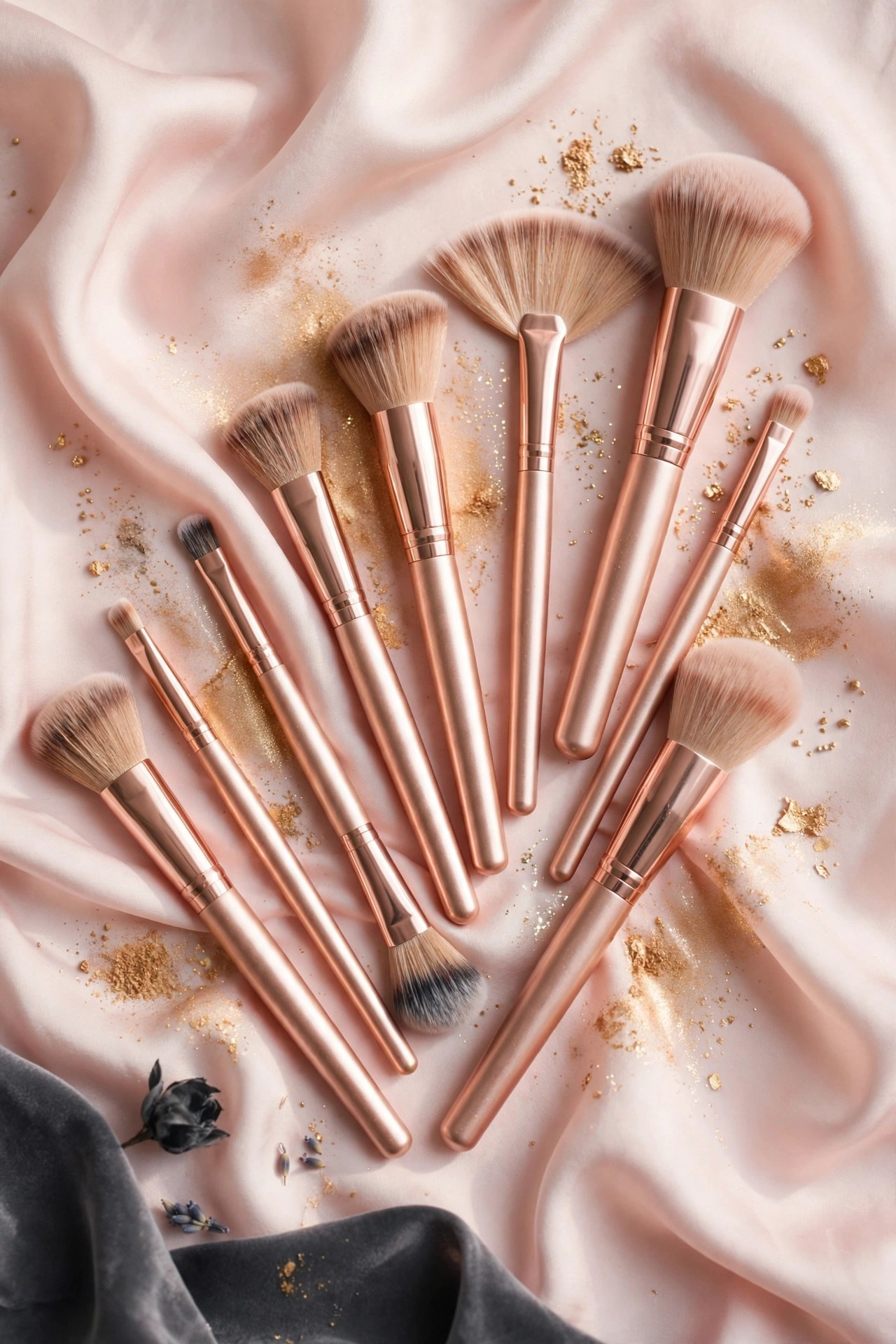
- Fan brushes — marketed for highlighter, but most beginners get a chalky stripe instead of a glow. Your blush brush applies highlighter better.
- Silicone applicators and spatulas — they push product around rather than blending it. A real buffing brush is superior in every way.
- Tiny detail brushes — lip brushes, eyeliner brushes, brow detailers. Useful eventually, but not part of a beginner’s core kit.
- Oversized kabukis for liquid foundation — the giant dome style soaks up too much product. A standard flat-top buffing brush is more economical.
- Duo-fiber stippling brushes — they can create a beautiful airbrushed effect, but they’re harder to control. Master a regular buffing brush first.
Skipping these saves you money and, more importantly, saves you from decision fatigue at the vanity every morning.
How to Care for Affordable Brushes (So They Last)
Here is a secret the beauty industry doesn’t advertise: the biggest difference between a brush that lasts two months and one that lasts two years isn’t the price — it’s how it’s washed and stored.
Wash them weekly
Makeup residue builds up in bristles, making them stiff, scratchy, and less effective. A weekly wash keeps them soft and performing. Use lukewarm water and a gentle cleanser — a drop of mild dish soap or baby shampoo works perfectly. Swirl the bristles in your palm, rinse thoroughly with the bristles pointing downward (so water never loosens the glue at the base), and reshape them with your fingers.
Dry them properly
Lay brushes flat or with the bristles angled downward — never standing upright in a cup while wet, which lets water seep into the ferrule (the metal band) and loosens the glue. Affordable brushes are more vulnerable to this, so drying technique matters even more. They usually dry overnight.
Store them right
Keep brushes in a holder with the bristles facing up once they’re fully dry, away from bathroom humidity when possible. Tossing them loose in a makeup bag bends bristles permanently and contaminates them with product residue from everything else in the bag.
For a full step-by-step on washing technique, see how to clean your makeup brushes the right way.
Building Your Budget Brush Kit: A Shopping Plan
Here is how to spend that roughly $30 wisely across the five essential brushes:
- Foundation buffing brush — ~$8–12. Spend the most here; it’s your highest-use brush.
- Concealer brush — ~$4–6. Small, simple, affordable options are everywhere.
- Large powder brush — ~$5–8. Prioritize softness over everything.
- Angled blush brush — ~$4–6. A great multi-tasker for blush, bronzer, and light contour.
- Fluffy eyeshadow blending brush — ~$3–5. The cheapest brush on the list, and technique matters more than price.
Total: roughly $24–37, depending on the brands and sales. Compare that to a $200 prestige set or even a $40 “beginner kit” full of brushes you’ll never touch.
If you’re building your full face routine at the same time, check out a complete drugstore makeup kit for beginners — the brush plan above pairs perfectly with an affordable product lineup. And for the bigger picture on how brushes fit into your routine, the complete guide to makeup brushes walks through every brush type in detail.
Frequently Asked Questions
Do expensive makeup brushes really make a difference?
For the five basics in this guide, the difference between a well-chosen $8 brush and a $40 brush is small — mostly handle weight and packaging. Technique and cleanliness matter far more. Where premium prices are justified is in very specialized brushes and in bristle longevity under heavy professional use, which doesn’t apply to beginners doing one face a day.
How many makeup brushes does a beginner actually need?
Five: foundation buffing brush, concealer brush, powder brush, angled blush brush, and one eyeshadow blending brush. Everything else is optional. Many beginners do a beautiful full face with even fewer — three brushes and a sponge can work if you’re willing to rinse between steps.
Are makeup brush sets worth it for beginners?
Usually not. Pre-packaged sets include filler brushes most people never use, and the quality is inconsistent — one good brush surrounded by five mediocre ones. Hand-picking five individual affordable brushes gives you better tools for less money. The one exception: some affordable brands sell small curated sets (5–8 brushes) that match this guide’s shortlist; those can be genuinely good value.
How often should I replace my makeup brushes?
With weekly washing and proper drying, good synthetic brushes last 2–5 years. Replace a brush when the bristles stay splayed or stiff after washing, when it sheds persistently, or when the ferrule loosens. Frayed bristles apply product unevenly no matter how good your technique is.
Can I use my fingers instead of brushes?
Fingers work for cream products and can be great for foundation on days you’re in a hurry — the warmth of your hands melts product beautifully. But brushes give more even, streak-free coverage and keep your hands (and their natural oils and any residue) off your face. Most beginners get better results with brushes within the first week of practice.
Conclusion
The best affordable makeup brushes for beginners aren’t hiding in a giant kit — they’re the five workhorses above, hand-picked and bought individually for under $30 total. Start with a good foundation buffing brush, add the other four as your budget allows, and spend the real effort on learning technique and keeping your brushes clean. That combination will outperform a drawer full of expensive brushes used without care, every single time.
Once your five-brush kit is in place, your next upgrade isn’t a sixth brush — it’s learning to use the ones you have. Pair this guide with how to clean makeup brushes to keep them performing, and building a complete drugstore makeup kit when you’re ready to match great tools with great affordable products.
Love this? Pin it for later!