How to Use Dry Shampoo: The Right Technique for Fresh Hair
Dry shampoo is one of those products almost everyone owns and almost no one uses correctly. Sprayed too close, applied to the wrong spots, or left unblended, it creates the dreaded white cast, gritty texture, and chalky roots — the opposite of fresh hair.
Used properly, though, dry shampoo is genuinely transformative: it absorbs excess oil, adds volume at the roots, extends a blowout by days, and gives fine hair the grip it needs for updos. This guide covers the correct technique step by step, plus the fixes for dark hair, the overnight method, and how to know when you’ve gone too far.
How Dry Shampoo Actually Works
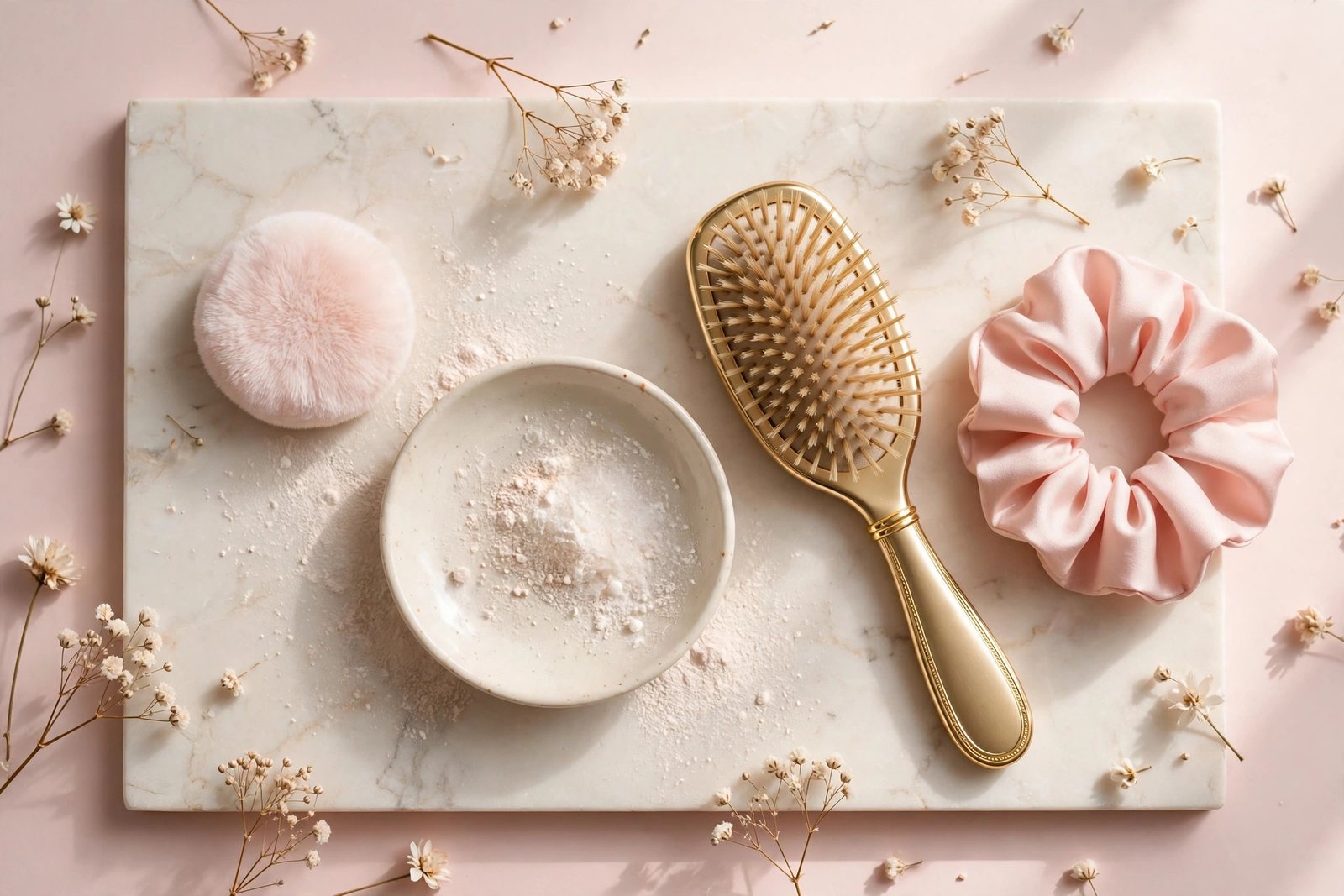
Dry shampoo contains starches or clays (rice starch, corn starch, kaolin) suspended in an alcohol base with propellant. When sprayed at the roots, the alcohol evaporates quickly and the starch particles absorb sebum — the oil your scalp produces. The result: roots that look and feel cleaner, with added texture and lift.
Understanding this matters because it explains the rules: it needs to reach the scalp (not just the hair surface), it needs time to absorb (not instant brushing), and it can’t remove actual dirt — only oil.
It’s a staple in any beginner hair care routine for stretching time between washes — and the secret behind updos that actually hold, like the styles in the claw clip hairstyles guide.
The Correct Technique: Step by Step
Step 1: Section your hair
Divide your hair into 4–6 sections, clipping the top layers up. Dry shampoo works when it reaches the roots — spraying over the top layer only treats the canopy and leaves the oiliest underlayers untouched.
Step 2: Hold the can 6–8 inches away
This is the most common mistake. Holding the nozzle too close concentrates product in one spot, creating white patches and buildup. Six to eight inches (about a hand’s length plus a bit) gives an even, fine mist.
Step 3: Spray at the roots only
Aim directly at the roots and scalp area where oil lives — the first 1–2 inches of hair. Don’t spray the lengths; they don’t need it, and product there just creates dryness and dullness.
Step 4: Wait 2–3 minutes
Let the product sit. The starches need time to absorb the oil — brushing immediately just moves wet product around. Use this time for the rest of your routine.
Step 5: Massage with fingertips
After waiting, massage the roots vigorously with your fingertips (not nails). This works the powder into the scalp and breaks up any concentrated spots.
Step 6: Brush through
Brush from roots to ends with a clean brush. This distributes the product evenly, removes excess, and blends everything into the hair. For dark hair, this step is critical — see below.
Dark Hair: Avoiding the White Cast
White cast is the number one complaint from brunettes and anyone with dark hair. Here’s how to beat it:
- Use a tinted formula. Many brands now make dry shampoos specifically for dark or brunette hair with brown-tinted powder. These blend invisibly and are worth seeking out.
-
Apply the night before. The overnight method (detailed below) gives the powder hours to absorb and blend — white cast is dramatically reduced by morning.
-
Apply in thinner layers. Two light passes blend better than one heavy blast.
- Brush thoroughly. Most white cast is just unblended surface product. A thorough brushing after the waiting period removes the visible residue.
- Apply in thinner layers. Two light passes blend better than one heavy blast.
- Warm it with a blow dryer. A 10-second blast of warm air on the roots after application helps the powder melt into dark hair.
The Overnight Method
Applying dry shampoo before bed is the single best upgrade to your technique:
- Section and spray roots as usual before bed (6–8 inches away, roots only).
- Massage lightly and leave it — don’t brush it all out.
- Sleep on it (a silk pillowcase reduces friction).
- In the morning, massage again and brush through thoroughly.
Overnight, the starches have hours to absorb oil, and your head’s movement distributes the product naturally. You wake up with blended, voluminous roots and zero white cast. This method also means one less step in the morning routine — and it pairs perfectly with an overnight hair treatment on the ends (dry shampoo at roots, oil on ends — the ultimate combo).
How Often Is Too Often?
Dry shampoo extends time between washes — it doesn’t replace washing. The guidelines:
- Maximum: 2–3 consecutive days of dry shampoo use, then wash.
- Ideal pattern: wash, then use dry shampoo on days 2 and 3, wash on day 4.
- Warning signs you’ve overdone it: itchy scalp, visible buildup or flaking, hair that feels coated despite product, breakouts along the hairline, or a sour smell that product can’t mask.
Overuse clogs hair follicles, which can lead to scalp irritation, folliculitis, and even increased shedding over time. Your scalp needs regular cleansing — dry shampoo buys you days, not weeks. If your scalp is unhappy, see scalp oiling guidance for the difference between nourishing the scalp and suffocating it.
Dry Shampoo by Hair Type
Fine hair
Your best friend and biggest risk. Dry shampoo adds the grip and volume fine hair desperately needs — it’s excellent before updos like the claw clip styles. But fine hair shows buildup fastest, so use a light hand and wash after 2 days max.
Thick hair
You need more product and more sections — don’t be shy. Work in 6–8 sections to reach all the roots. Thick hair tolerates dry shampoo well and rarely shows white cast as obviously.
Curly hair
Apply only at the roots, never through the curl lengths — powder disrupts curl patterns and causes frizz. Use a tinted formula, massage gently to avoid disturbing curls, and refresh curls separately with curl refresh tips.
Oily scalp
You may need dry shampoo daily between washes, and that’s fine — just don’t skip the wash itself. Apply at night for best results, and consider that very oily scalps sometimes do better with more frequent washing plus dry shampoo, rather than stretching washes too far.
Choosing a Product: What to Look For
Affiliate-ready product types (no testing claims — these are category descriptions, not reviews):
- Aerosol sprays: the most common type. Fine, even mist; easiest for beginners. Look for ones with rice starch for lighter feel.
- Non-aerosol pump sprays: less propellant, often preferred by those avoiding aerosols. Slightly wetter application — the waiting step matters more.
- Powder/brush-on formulas: loose powder applied with a brush or shaker. Best for precise root application and travel; excellent for dark hair when you choose a tinted powder.
- Tinted formulas: available in light, medium, and dark shades. The top choice for brunettes and black hair to avoid white cast.
- Fragrance-free options: worth seeking if you’re sensitive to scent or get headaches from fragranced products.
Avoid formulas where alcohol is the overwhelming first ingredient and starch barely appears — they dry out without absorbing much.
Key Takeaways
- Section hair, hold the can 6–8 inches away, spray roots only, wait 2–3 minutes, massage, then brush through.
- Dark hair should use tinted formulas, apply the night before, and brush thoroughly to avoid white cast.
- The overnight method gives the best absorption and blending — apply before bed, brush out in the morning.
- Limit dry shampoo to 2–3 consecutive days, then wash; overuse causes scalp buildup and irritation.
- Match the product type to your needs: aerosol for ease, tinted for dark hair, powder for precision.
Frequently Asked Questions
Can dry shampoo cause hair loss?
Not directly, but chronic overuse without washing can clog follicles, leading to scalp inflammation and increased shedding. Used as intended — 2–3 days between washes — it’s safe. The wash itself matters more than the product.
Is it bad to use dry shampoo every day?
Daily use between regular washes is generally fine for most people, but going many days without actually washing is not. If you use it daily, make sure you’re still shampooing every 2–3 days to clear buildup from the scalp.
Why does dry shampoo make my hair feel gritty?
Usually too much product, spraying too close, or not brushing through afterward. Use less, hold the can farther away, wait the full 2–3 minutes, and brush thoroughly. If grittiness persists, try a different formula — some starches feel coarser than others.
Can you use dry shampoo on clean hair?
Yes — it’s excellent as a styling product on clean hair. It adds texture, grip, and volume at the roots, making it easier to create updos and preventing fine hair from falling flat. Many stylists apply it to freshly washed hair before styling.
Does dry shampoo work on greasy bangs?
Very well — bangs are the oiliest section for most people. A light spray at the bang roots, a short wait, and a finger-comb refreshes them in under two minutes. For full bang styling, see curtain bang styling.
How do you remove dry shampoo buildup?
A regular shampoo sometimes isn’t enough for heavy buildup. Use a clarifying shampoo once every 1–2 weeks, massaging the scalp thoroughly, and double-shampoo when you’ve used dry shampoo several days running.
Love this? Pin it for later!