Fragrance-Free Skincare Routine for Sensitive Skin: The Complete Guide
Here is the single highest-impact change most sensitive skin beginners can make: remove fragrance from every product that touches your face. Fragrance — synthetic or “natural” — is the most common cause of cosmetic skin reactions, and it hides in cleansers, moisturizers, sunscreens, and even products marketed as gentle. Dermatologists consistently rank fragrance allergy among the top causes of contact dermatitis from cosmetics.
The tricky part is that fragrance rarely announces itself honestly on labels. This guide gives you a complete fragrance-free AM/PM routine for sensitive skin, teaches you how to spot hidden fragrance in ingredient lists (including the “unscented” trap), and explains why fragrance-free matters more than “clean,” “natural,” or “hypoallergenic” on any label. It builds on the [sensitive skin routine for beginners → sensitive-skin-routine-guide] with a strict zero-fragrance filter applied to every step.
Key Takeaways
- Fragrance is the #1 cosmetic irritant — removing it helps more sensitive skin types than any single “miracle” ingredient.
- “Unscented” does not mean fragrance-free: it can mean masking fragrance was added to cover chemical smells.
- Check for “fragrance,” “parfum,” and essential oils (lavender, citrus, tea tree) anywhere in the ingredient list.
- A full fragrance-free routine needs only 3–4 products per routine (AM/PM), all vetted for hidden scent.
- “Natural” fragrance and essential oils irritate just as readily as synthetic fragrance — sometimes more.
Why Fragrance Is the Enemy of Sensitive Skin
Fragrance compounds — whether synthetic aroma chemicals or plant-derived essential oils — are small, volatile molecules designed to interact with receptors. On resilient skin they are merely scent; on reactive skin they are frequent triggers for stinging, redness, itching, and delayed contact allergy. The North American Contact Dermatitis Group lists fragrance mix among the most common positive patch-test allergens year after year.
Sensitive skin’s weakened barrier lets more of these molecules through, which is why a fragranced product that bothers no one else can set your face alight. The fix is not “less fragrance” — it is zero fragrance, in everything, consistently. Partial elimination (fragrance-free moisturizer but fragranced cleanser) still leaves daily exposure in place.
How to Spot Hidden Fragrance on Labels
Ingredient lists are regulated, so use them — the front label is marketing. Scan the full INCI list for:
- Fragrance / parfum — the catch-all term covering undisclosed scent blends.
- Essential oils: lavender (lavandula angustifolia), tea tree (melaleuca alternifolia), citrus oils (limonene, linalool, citronellol, geraniol — these are also listed individually as allergens in the EU), eucalyptus, peppermint, ylang-ylang.
- “Natural fragrance” — still fragrance, still a sensitizer.
- Masking fragrance — scent added to cover base odor; check for it even in “unscented” products.
The “unscented” trap deserves emphasis: “unscented” legally means no perceptible scent, which manufacturers achieve either by formulating without fragrance (good) or by adding masking fragrance (bad for you). Only “fragrance-free” means no fragrance ingredients were added. When in doubt, read the ingredient list — it does not lie.
The Fragrance-Free Morning Routine
Three steps, every product verified fragrance-free:
Step 1: Cleanse (or rinse)
Lukewarm water rinse for dry-sensitive skin; a fragrance-free gentle cleanser for oily-sensitive skin. The [cleanser guide → best-cleanser-for-sensitive-skin] only recommends fragrance-free formulas — any pick there works here.
Step 2: Moisturize
A fragrance-free moisturizer with ceramides, glycerin, or squalane, applied to slightly damp skin. Fragrance-free moisturizers are widely available at every price point — this is the easiest swap in the whole routine.
Step 3: Protect
Broad-spectrum SPF 30+, fragrance-free. Sunscreen is the category where hidden fragrance is most common (chemical filters have odors manufacturers love to mask), so check labels carefully. Fragrance-free mineral sunscreens are the safest default for reactive skin.
The Fragrance-Free Evening Routine
Step 1: Cleanse
Your fragrance-free gentle cleanser; double cleanse with a fragrance-free oil or balm first if you wore water-resistant sunscreen or makeup.
Step 2: Treat (optional)
If your barrier is stable, one fragrance-free treatment — for example, a gentle [vitamin C serum for sensitive skin → best-vitamin-c-serum-for-sensitive-skin] (check that the formula is genuinely fragrance-free, as some Vit C serums add citrus-derived scent). Introduce one treatment at a time, patch tested.
Step 3: Moisturize
Same fragrance-free moisturizer as morning, or a richer fragrance-free cream at night. During barrier repair, a thin petrolatum layer over moisturizer a few nights a week accelerates recovery.
Auditing Your Current Routine for Fragrance
Do this once — it takes twenty minutes:
- Gather every product that touches your face, including sunscreen, lip balm, and anything used near the hairline.
- Read each full ingredient list (brand websites publish them) and flag fragrance, parfum, essential oils, and individual scent allergens.
- Replace flagged products one category at a time, starting with leave-on products (moisturizer, sunscreen, serums) — they have the longest skin contact and the biggest impact.
- Do not forget makeup, hair products that touch your forehead, and laundry scent on pillowcases — all can contribute to facial irritation.
Fragrance-Free vs. “Clean” vs. “Natural”
These terms are not interchangeable, and the confusion costs sensitive skin dearly:
- Fragrance-free: no fragrance ingredients added. This is the term that matters for you.
- Clean beauty: an unregulated marketing term with no agreed definition; many “clean” products are full of sensitizing essential oils.
- Natural: also unregulated for cosmetics; poison ivy is natural. Essential-oil-heavy “natural” skincare is among the worst choices for reactive skin.
- Hypoallergenic / dermatologist-tested: unregulated terms meaning the manufacturer believes most people will tolerate it — not a guarantee, and not a substitute for reading the ingredient list.
Judge every product by its ingredient list, not its front-label adjectives. And when in doubt about any new formula, the [patch-testing method → sensitive-skin-routine-guide] still applies — fragrance-free is necessary, not sufficient.
Fragrance-Free Product Picks by Step
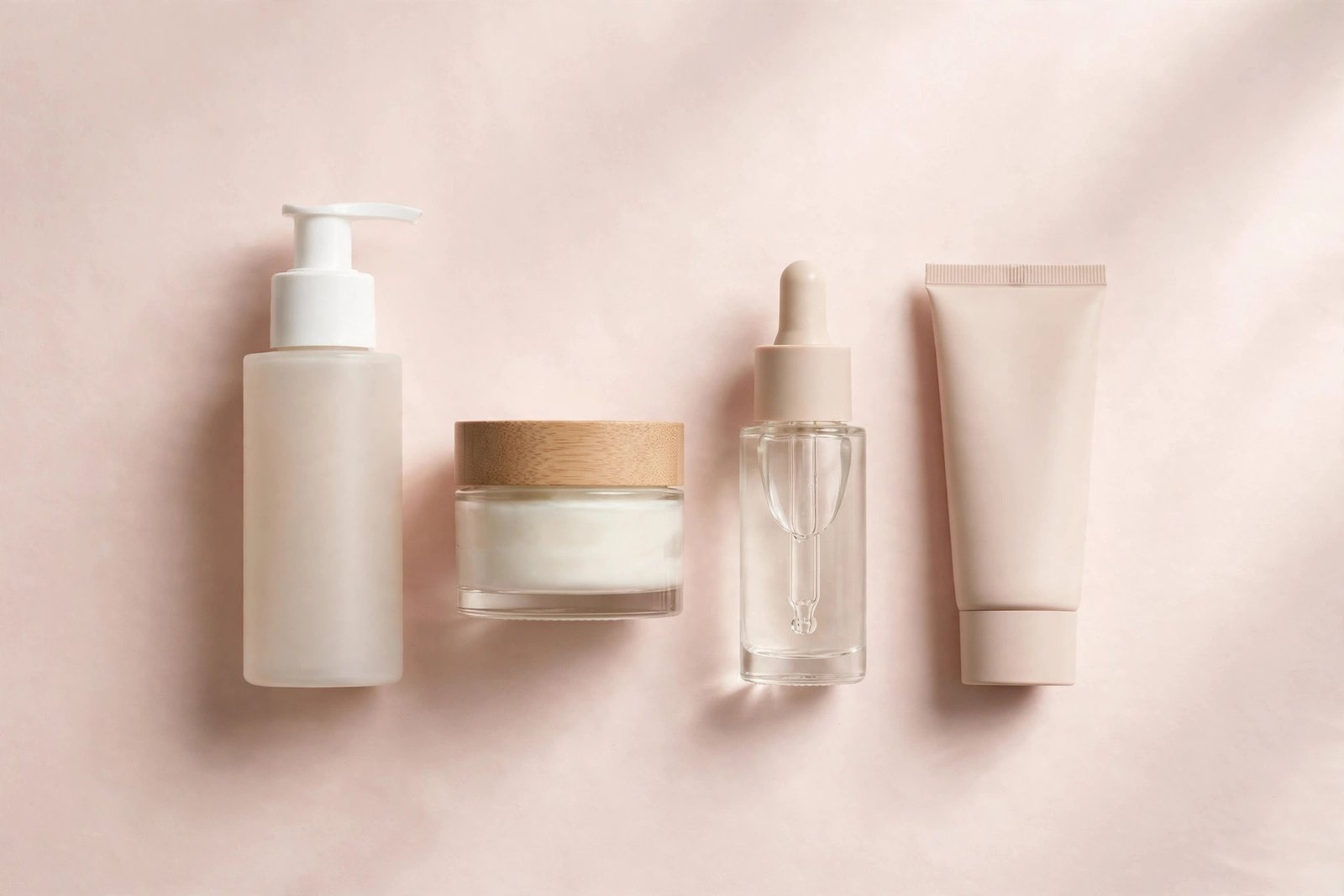
You do not need luxury prices to go fragrance-free — every step below has solid options at drugstore prices. What to look for per category:
- Cleanser: A fragrance-free cream, lotion, or low-pH gel cleanser. The full vetted roundup is in the [cleanser guide → best-cleanser-for-sensitive-skin] — every pick there is fragrance-free by design.
- Moisturizer: Fragrance-free ceramide or squalane creams are the easiest category to shop; nearly every major dermatologist-recommended brand offers one. Choose cream texture for dry-sensitive skin, lotion or gel-cream for oily-sensitive.
- Treatment: If you add one, keep it fragrance-free and single-purpose — a [gentle vitamin C derivative serum → best-vitamin-c-serum-for-sensitive-skin] or a low-concentration niacinamide serum, not a cocktail product with botanical extracts.
- Sunscreen: The hardest category. Fragrance-free mineral sunscreens (zinc oxide based) are the safest default; several fragrance-free chemical options exist too if mineral formulas leave a cast or feel heavy. Whatever you choose, verify “fragrance-free” on the ingredient list, not just the front label.
- Lip balm and eye cream: Frequently forgotten sources of fragrance exposure. Plain petrolatum-based balms and fragrance-free eye creams close the loop.
Replace leave-on products first (moisturizer, sunscreen, serums), then rinse-off products — leave-ons have hours of skin contact versus seconds, so they deliver the biggest irritation reduction per swap.
Frequently Asked Questions
Is “fragrance-free” really better than “unscented”?
Yes, for sensitive skin. Fragrance-free means no fragrance chemicals were added. Unscented only means you cannot smell anything — which is sometimes achieved with masking fragrance. Always choose fragrance-free and verify on the ingredient list.
Can essential oils be okay if they’re “natural”?
For reactive skin, generally no. Essential oils contain many of the same sensitizing compounds (limonene, linalool, geraniol) as synthetic fragrance, and because they are complex mixtures, they can be harder to identify as the culprit. Lavender and tea tree oil are frequent offenders despite their “soothing” reputations.
My moisturizer says “dermatologist recommended for sensitive skin” but lists parfum — is it fine?
No. Front-label claims are marketing; the ingredient list is the truth. If parfum or fragrance appears anywhere in the list, the product is not fragrance-free regardless of what the front says.
Do I need to avoid fragrance in body products too?
Facial skin is the priority since it is thinner and more reactive, but heavily fragranced body products, hair products, and laundry scents can all contribute — especially anything touching your pillowcase or hairline. Many people clear persistent chin and forehead irritation by switching hair and pillow-adjacent products to fragrance-free.
How long after going fragrance-free will I see improvement?
Many people notice less stinging within 1–2 weeks. Contact-allergy-type reactions can take 3–6 weeks to fully settle after the trigger is removed, so give it at least a month of strict fragrance-free before judging.
Going fragrance-free is not about fear of chemicals — it is about removing the single most common irritant so your skin finally gets a fair chance to calm down. Pair this routine with the [sensitive skin routine framework → sensitive-skin-routine-guide] and the [emergency calming protocol → how-to-calm-red-irritated-skin-fast] for flare-ups, and you have a complete system for reactive skin.
sensitive skin routine guide
gentle cleansers
calm red irritated skin
vitamin C for sensitive skin
skincare ingredients guide
Love this? Pin it for later!