How to Fix Flaky Skin on Face: Causes and Dermatologist-Backed Fixes
Flaky skin on the face is frustrating because it is visible — foundation clings to it, moisturizer seems to sit on top of it, and the flakes return within hours. The good news: flakes are a symptom, not a life sentence. Once you understand why skin flakes and treat the cause instead of just scrubbing the symptom, most flaking resolves within one to three weeks.
Key Takeaways
- Facial flaking is usually caused by dehydration, a damaged barrier, over-exfoliation, or cold dry air — not by a lack of scrubbing.
- Remove existing flakes gently (damp washcloth or mild chemical exfoliant), then fix the cause with hydration and barrier repair.
- Aggressive scrubbing makes flaking worse by further damaging the barrier.
- Layer hydrating products on damp skin and seal with a ceramide cream or facial oil.
- See a dermatologist if flaking comes with intense itching, cracking, or inflamed patches.
Why Does Skin on the Face Flake?
Flakes are clusters of dead skin cells that did not shed normally. Healthy skin sheds invisibly; flaking means the shedding process (desquamation) is disrupted. The most common reasons:
- Dehydration. When skin lacks water, dead cells cling instead of shedding cleanly. This is the single most common cause of everyday flaking.
- A damaged skin barrier. Harsh cleansers, over-exfoliation, or cold weather create microscopic cracks in the barrier. Water escapes, cells dry out, and flakes form. barrier repair
- Over-exfoliation. Ironically, scrubbing too aggressively causes rebound flaking — the barrier gets thinner, loses more water, and produces more visible flakes.
- Cold, dry air. Winter air holds little moisture, and indoor heating makes it worse. Flaking that appears every November and vanishes in April is almost always environmental.
- Product reactions. New retinoids, strong acids, or benzoyl peroxide commonly cause temporary flaking as skin adjusts (often called retinization or purging-adjacent dryness).
- Skin conditions. Eczema, seborrheic dermatitis, and psoriasis all cause flaking with distinct patterns. If flakes come with significant redness, itching, or scaling in specific zones (like around the nose or eyebrows), a dermatologist should evaluate it.
Why Flakes Cluster in Certain Areas
Flaking rarely covers the whole face evenly. It concentrates where skin is thinnest, most exposed, or most worked by products:
- Around the nose and mouth. Constant movement, wiping, and lip products stress this zone. The nasolabial folds also trap cleanser residue if rinsing is rushed — leftover surfactant dries the area further.
- On the eyebrows and between them. This zone is prone to seborrheic dermatitis, a common condition that causes yellowish, slightly greasy flakes. If flakes here come with redness and do not respond to gentle hydration within two weeks, mention it to a dermatologist — it often needs an antifungal approach, not more moisturizer.
- On the forehead near the hairline. Hair products (especially those with drying alcohols or strong fragrances) migrate onto the forehead and disrupt the barrier at the edges.
- On the cheeks. The thinnest facial skin with the fewest oil glands — usually the first place environmental dryness shows.
Spot-treating these zones works well: apply your richest products (ceramide cream, a dab of facial oil) specifically to flake-prone areas even if the rest of your face needs lighter layers. Skincare does not have to be uniform — multi-moisturizing different zones is a legitimate strategy for combination-dry skin.
Step 1: Remove Existing Flakes Gently
Before fixing the cause, deal with what is already there — but gently. The goal is to lift loose flakes without tearing at attached skin.
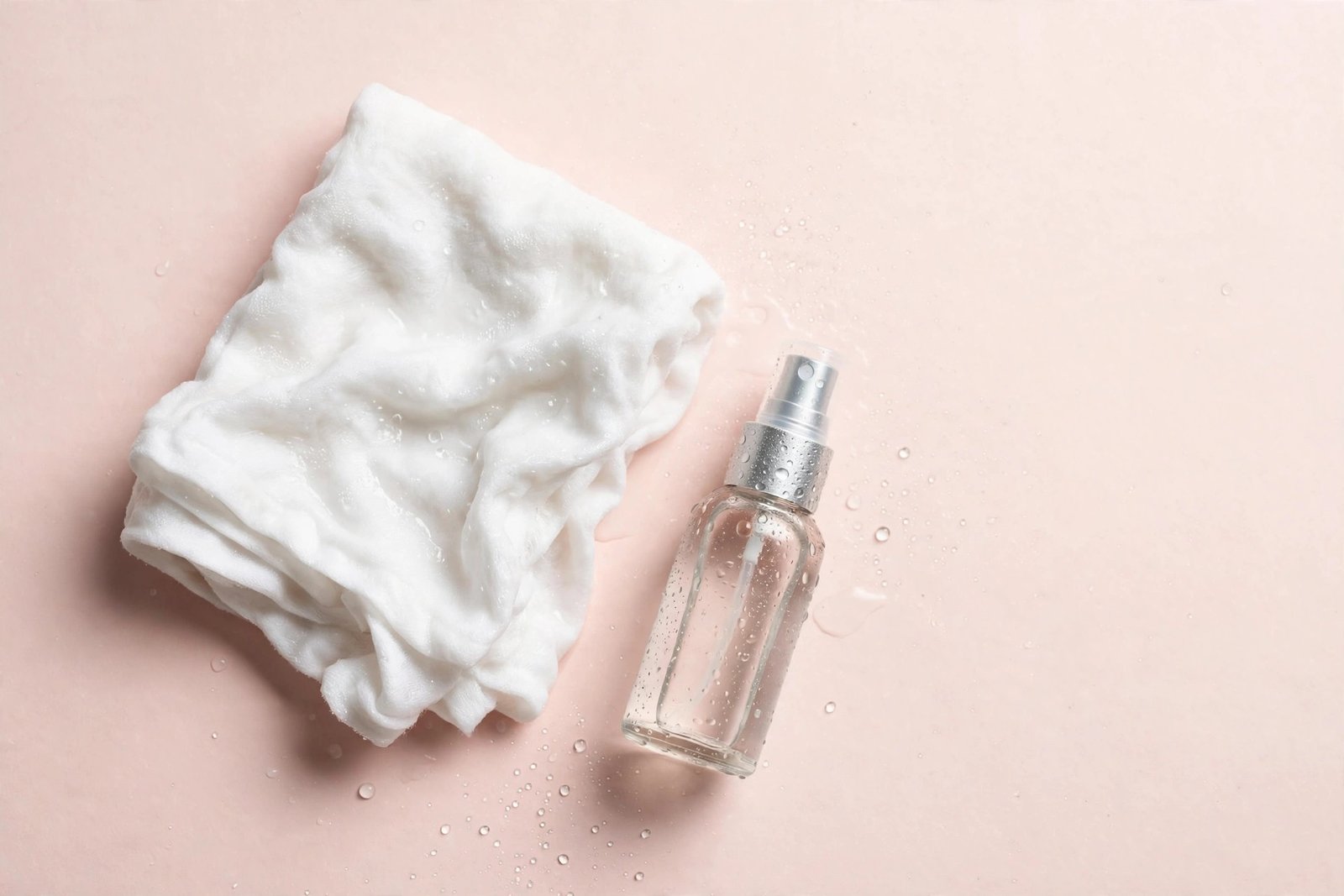
- The damp washcloth method. Soak a soft washcloth in lukewarm water, wring it out, and press it against flaky areas for a minute to soften them. Then use light circular motions to lift what comes away easily. Stop the moment you feel resistance — if it does not lift easily, it is not ready.
- A mild chemical exfoliant, once. A low-strength lactic acid or PHA product dissolves the bonds holding dead cells together without physical friction. Use it once to clear the backlog, then drop back to 1–2 times per week maximum.
- A hydrating enzyme mask. Fruit-enzyme or oat-based masks soften and loosen flakes while adding moisture — a good option for skin too sensitive for acids.
What not to do: dry-scrub with a rough towel, use gritty physical scrubs on flaky areas, pick or peel flakes with fingers, or exfoliate daily “until the flakes are gone.” All of these damage the barrier further and restart the flaking cycle.
Step 2: Fix the Cause With Hydration and Barrier Repair
Removing flakes is cosmetic; stopping them requires fixing why they formed. This is a routine problem with a routine solution:
- Switch to a gentle, non-foaming cleanser. If your face feels tight after washing, your cleanser is too harsh — and tightness is step one of the flaking cycle. Cream or milky cleansers preserve barrier lipids.
- Hydrate on damp skin, in layers. Apply a hydrating toner or essence to damp skin, follow with a hyaluronic acid or glycerin serum, then seal everything with a ceramide moisturizer. Each layer multiplies the last. full routine
- Add an occlusive at night. A thin layer of facial oil, a sleeping mask, or even plain petrolatum over moisturizer on the flakiest zones physically prevents overnight water loss. Many people find this single step resolves morning flaking within days.
- Cut back actives temporarily. If you recently started a retinoid or strong acid, reduce frequency (for example, retinoid every third night instead of nightly) until flaking subsides, and always buffer with moisturizer.
- Check your environment. A bedroom humidifier set to 40–50% humidity counteracts the drying effect of indoor heating. Shorter, lukewarm showers help too.
Most routine-driven flaking improves noticeably within 7–10 days of these changes and resolves within three weeks as the barrier rebuilds.
Step 3: Keep Flakes From Coming Back
- Exfoliate on a schedule, not in reaction to flakes. Once or twice weekly with a gentle formula keeps cell turnover healthy without triggering rebound flaking. how often
- Moisturize within 60 seconds of cleansing. Damp-skin application is the highest-impact habit change for flake-prone skin.
- Adjust seasonally. The routine that kept flakes away in August will likely fail in January. Add richer layers before winter flaking starts, not after. seasonal adjustments
- Do not skip SPF. UV damage degrades the barrier over time, making skin more flake-prone. Choose a hydrating sunscreen formula rather than a mattifying one.
Makeup Tips for Flaky Skin Days
Sometimes flakes appear on a day you need to look polished. Damage control:
- Prep, don’t pile on. Do a gentle flake-removal pass (damp washcloth), then moisturize well and wait 5 minutes before makeup.
- Choose hydrating, liquid formulas. Dewy or satin-finish foundations glide over texture; matte and long-wear formulas cling to every flake.
- Skip powder on flaky zones. If you must set makeup, press a tiny amount of finely milled powder only onto the T-zone, never over dry patches.
- Keep a facial mist handy. A midday mist followed by patting (not rubbing) rehydrates without disturbing makeup.
- Remove makeup gently that night. An oil-based first cleanse dissolves makeup without the friction that worsens flaking.
Frequently Asked Questions
Why is my face flaky even though I moisturize?
Usually one of three reasons: the moisturizer is too light (a gel or lotion without ceramides or occlusives), it is applied to dry skin instead of damp skin, or an underlying cause — harsh cleanser, over-exfoliation, or a new active — is creating flakes faster than moisturizer can prevent them.
Should I exfoliate flaky skin every day until it stops?
No — this is the most common mistake. Daily exfoliation thins the barrier and causes rebound flaking. Exfoliate gently 1–2 times per week and let hydration and barrier repair do the rest.
Can drinking more water fix flaky skin?
Adequate hydration supports overall skin health, but facial flaking is primarily a barrier and topical-moisture problem. Drinking water helps at the margins; fixing your cleanser, moisturizer, and application technique matters far more.
Is flaky skin a sign of eczema?
It can be, especially if flaking comes with intense itching, red inflamed patches, or cracking. Ordinary dryness-related flaking usually responds to routine changes within weeks. If it does not — or if symptoms are severe — see a dermatologist for evaluation.
What is the fastest way to get rid of flakes before an event?
Soften with a warm damp cloth, do one gentle exfoliation pass, then layer hydrating toner, serum, and a rich ceramide cream. Wait a few minutes, then apply a hydrating liquid foundation and skip powder on dry areas. The flakes will be cosmetically gone for the day while the routine work continues underneath.
Flaking is often the first sign your overall routine needs a dry-skin overhaul — start with the complete framework. dry skin routine
Love this? Pin it for later!