Scalp Care Routine for Healthy Hair: The Complete 4-Step Guide
Most people spend their time and money on the hair they can see — masks for the lengths, serums for the ends, heat protectants before styling. Yet healthy hair doesn’t start at the ends. It starts at the scalp, the living skin from which every strand grows. Dermatologists estimate that a huge share of common hair complaints — excess shedding, dullness, slow growth, persistent itch — trace back to a scalp that has been neglected, over-washed, under-washed, or irritated by the wrong products.
A scalp care routine doesn’t need to be complicated or expensive. The same four steps show up in nearly every expert recommendation: cleanse, exfoliate, treat, and protect. This guide walks you through each step in detail, with product-free techniques you can start today and realistic schedules you can actually maintain. If you’re also building a broader [hair care routine for beginners → hair-care-routine-for-beginners], think of this article as the foundation layer: get the scalp right, and everything you do to the lengths works better.
Key Takeaways
- The scalp is skin — it needs cleansing, exfoliation, moisture balance, and protection just like the face.
- A complete scalp routine has 4 steps: cleanse, exfoliate, treat, and protect.
- Most scalps do well with exfoliation once every 1–2 weeks, not daily.
- Persistent flaking, itching, or shedding often signals a scalp issue worth addressing — not just a cosmetic one.
- Oily scalp plus dry ends is a routine problem, not a product problem: cleanse the scalp, condition the ends separately.
- Build the routine gradually: start with correct cleansing, then add exfoliation, then targeted treatments.
Why Your Scalp Deserves Its Own Routine
Each square centimeter of scalp contains hundreds of hair follicles embedded in skin that also produces sebum (natural oil), sheds dead skin cells, and hosts a microbiome of bacteria and yeast. When this ecosystem stays balanced, follicles grow strong hair with minimal drama. When it tips out of balance — from product buildup, infrequent washing, harsh surfactants, or untreated conditions — the visible symptoms show up everywhere: grease at the roots, flakes on dark clothes, itching that distracts you all day, and in some cases accelerated [hair fall → hair-fall-control-complete-guide].
Trichologists (specialists in hair and scalp science) make one point consistently: you cannot out-condition a scalp problem. A heavy mask on the lengths will not fix roots that go flat by noon or an itch that keeps you scratching. The good news is that scalp care responds well to consistency. Most people notice real improvement in two to four weeks of a structured routine — less oil at the roots, calmer skin, and hair that looks fuller simply because each strand grows from healthier ground.
Step 1: Cleanse — The Foundation of Scalp Care
Cleansing is the single most important scalp step, and the one people get wrong most often. The goal is not “squeaky clean” — it’s clean, comfortable, and residue-free.
How often to wash. Dermatologists generally recommend washing often enough that your scalp doesn’t itch, flake, or smell — which for most people is every 2–3 days. If your scalp gets visibly oily by day two, that is your scalp telling you its schedule; fighting it with dry shampoo alone usually backfires into buildup. Fine or straight hair often needs more frequent washing than coarse or curly hair, which loses moisture more easily.
How to wash properly. Most people focus shampoo on the lengths and rinse quickly. Flip that priority:
- Wet hair thoroughly — this alone should take 30–60 seconds.
- Apply shampoo mainly to the scalp, using about a coin-sized amount.
- Massage with your fingertips (never nails) for at least 60 seconds. This mechanical massage is doing real work: loosening dead skin, oil, and residue.
- Let the rinse water carry the shampoo through the lengths — that is enough cleansing for the ends.
- If the first wash produces almost no lather, do a second wash. The first removes surface oil; the second actually cleanses.
Choosing a cleanser. For the scalp, look at what the shampoo actually is rather than its marketing. Sulfate-free formulas (gentler surfactants) suit sensitive, dry, or color-treated scalps. Clarifying shampoos — used occasionally, not daily — are designed to remove buildup from styling products and hard water. If you have the classic combination problem, read our guide to the [best shampoo for oily scalp and dry ends → best-shampoo-for-oily-scalp-dry-ends], which breaks down how to balance both needs in one routine.
Step 2: Exfoliate — Remove Buildup Without Irritation
Exfoliation is the step that separates a good routine from a great one. Even perfect washing leaves behind some dead skin cells and product residue; over time that layer dulls hair at the roots, blocks follicles, and can feed the yeast associated with dandruff.
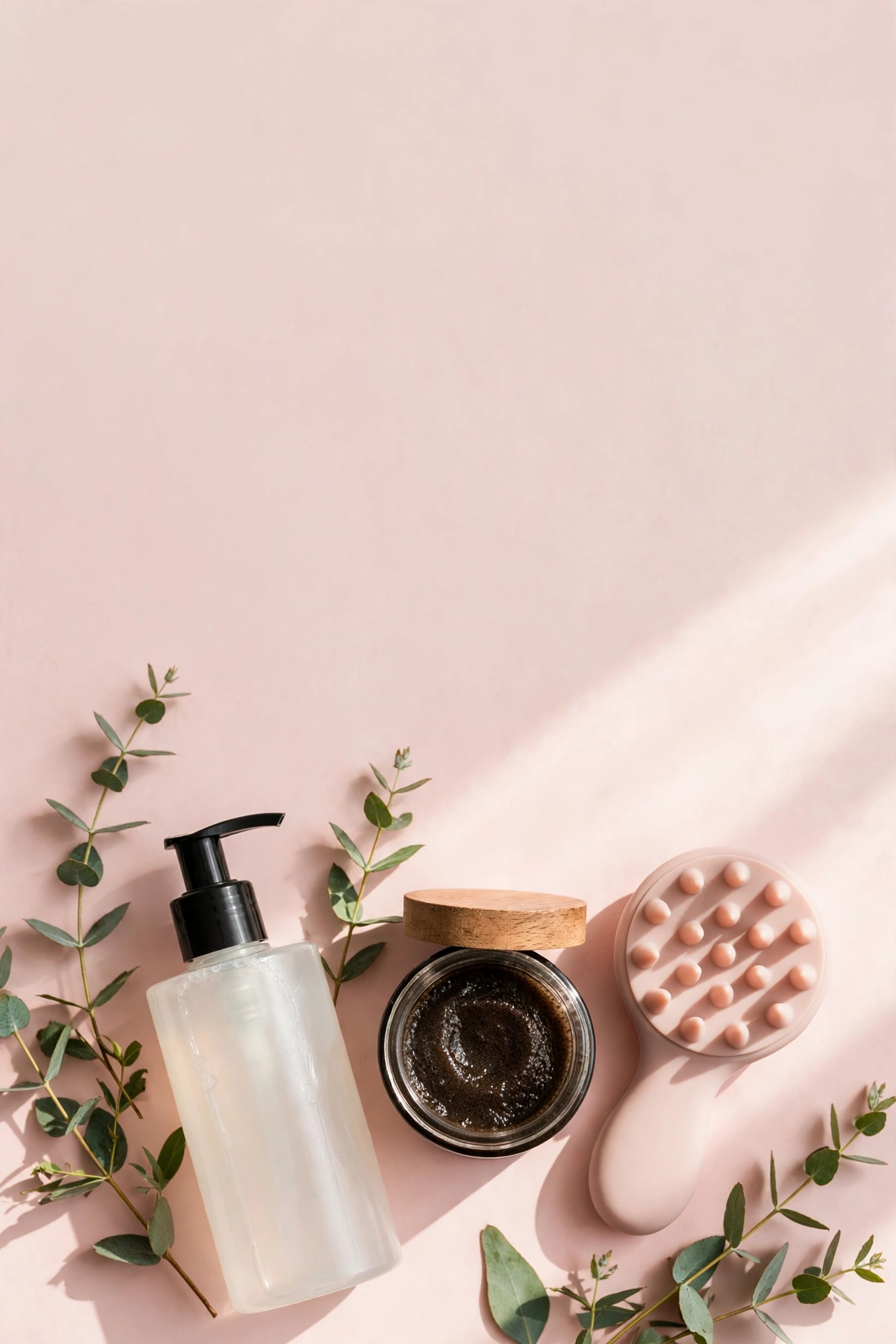
Physical vs. chemical exfoliation. Physical scalp scrubs (sugar, salt, or jojoba-bead formulas) work by abrasion and suit resilient scalps — but they must be used gently, on wet hair, with fingertip massage only. Chemical exfoliants (salicylic acid, glycolic acid, lactic acid serums) dissolve the bonds holding dead cells together with no scrubbing required, which makes them the safer choice for sensitive or inflamed scalps. Our full comparison of methods, frequencies, and DIY options lives in [how to exfoliate your scalp at home → how-to-exfoliate-scalp-at-home].
Frequency guidelines. Start with once every 1–2 weeks. More often than that is where most people go wrong — over-exfoliation thins the scalp’s protective barrier and creates the very irritation it was meant to fix. If your scalp is currently red, broken, or sore, skip exfoliation entirely until it calms down.
Signs you’re overdoing it. Tightness, burning during products that never burned before, new flaking after exfoliating, or redness that lasts more than an hour — all of these mean: pull back on frequency, gentleness, or both.
Step 3: Treat — Target Your Specific Scalp Concerns
This is the customizable step. Once the scalp is clean and lightly exfoliated, targeted treatments address whatever your scalp actually needs. Common concerns:
Flaking and dandruff. If you see white or yellowish flakes regularly, you’re dealing with either dandruff or dry scalp — they look similar but need different treatments. Dandruff involves an overgrowth of the yeast Malassezia and responds to anti-fungal actives like zinc pyrithione, ketoconazole, and selenium sulfide. Dry scalp flaking is a moisture problem and needs gentler care. See [how to get rid of dandruff fast → how-to-get-rid-of-dandruff-fast] for the active-ingredient breakdown and home remedies that actually help.
Itchiness. An itchy scalp has several possible causes — dandruff, dryness, product buildup, allergic reactions, or (less commonly) conditions like psoriasis. The treatment depends entirely on the cause, so diagnosis comes first. Our guide [why is my scalp itchy: causes and remedies → why-is-my-scalp-itchy-causes-remedies] walks through telling them apart.
Excess oil. A scalp that needs washing daily is usually fine being washed daily — “training” your scalp by stretching washes rarely works and often causes buildup. Instead, make each wash count (see Step 1), consider a salicylic-acid scalp serum 2–3 times weekly to keep pores clear, and avoid heavy oils or silicones applied directly to the scalp.
Tenderness or sensitivity. A sore, easily irritated scalp usually needs simplification: a fragrance-free, sulfate-free shampoo, no scrubs, no essential oils, and lukewarm (not hot) water. If soreness persists beyond a couple of weeks, see a dermatologist — the scalp can develop conditions like seborrheic dermatitis that need proper diagnosis.
Slow growth or shedding concerns. No topical treatment can dramatically speed up growth beyond your genetic rate, but a healthy scalp removes the obstacles (inflammation, buildup, poor circulation) that slow it down. Regular fingertip massage during cleansing improves blood flow, and keeping follicles free of buildup lets new hair emerge unimpeded. For shedding-focused strategies, see [how to stop hair fall at home → how-to-stop-hair-fall-at-home] and [best oils for hair fall → best-oils-for-hair-fall].
Step 4: Protect — Keep the Scalp Barrier Healthy
Protection is the step everyone skips, and it’s mostly about what you don’t do:
- Rinse thoroughly. Product residue left on the scalp is one of the most common causes of itch and buildup. Rinse longer than feels necessary.
- Avoid extreme water temperatures. Hot water strips the scalp’s protective oils; lukewarm is ideal.
- Protect from sun. The part line and any thinning areas burn. Wear a hat in strong sun, or apply a lightweight scalp sunscreen before extended exposure.
- Don’t scratch. Scratching an itch damages the scalp barrier and can cause micro-infections. Treat the cause instead (see the itch guide above).
- Mind overnight habits. Sleeping with wet hair creates a damp environment that encourages fungal growth. Dry the scalp (at least) before bed.
Your Weekly Scalp Routine: A Sample Schedule
Here’s what the four steps look like in practice. Adjust frequency to your scalp type — this is a template, not a prescription.
Every wash day (2–4 times per week):
– Cleanse the scalp properly with fingertip massage (Step 1)
– Condition the lengths only, not the scalp
– Dry the scalp before bed
Once weekly:
– Exfoliate before shampooing (Step 2) — physical scrub or chemical serum
– Apply any targeted scalp treatment (Step 3) — e.g., anti-dandruff mask or scalp serum
Monthly:
– Use a clarifying shampoo once to reset buildup (Step 1, occasional)
– Check in: is the scalp calm, comfortable, and flake-free? Adjust frequency up or down
Scalp type adjustments:
– Oily scalp: wash every 1–2 days, exfoliate weekly, keep conditioners and oils off the scalp.
– Dry/sensitive scalp: wash every 3–4 days with a gentle sulfate-free shampoo, exfoliate every 2 weeks (chemical only), skip clarifying shampoos.
– Dandruff-prone scalp: use an anti-dandruff shampoo as your regular cleanser during flare-ups, reduce to maintenance (1–2x weekly) when clear.
Adjusting Your Routine for Seasons and Life Changes
A scalp routine isn’t set-and-forget — the same scalp behaves differently across seasons and life phases, and small adjustments keep the routine working year-round.
Winter. Cold air and indoor heating dry out the scalp, and hats trap sweat and oil against the skin — a combination that triggers both dryness flaking and dandruff flares. In winter, switch to a gentler shampoo, reduce clarifying washes, and keep exfoliation to the gentler end (every 2 weeks). If you wear hats daily, make sure your scalp is fully dry before putting one on; a damp scalp under a hat is an ideal environment for fungal overgrowth.
Summer. Heat, humidity, sweat, sunscreen, and chlorine all land on the scalp. Wash more frequently, add a weekly clarifying wash if you’re swimming or using SPF near the hairline, and don’t skip sun protection on your part line — scalp sunburn peels, itches, and damages follicles. A lightweight, breathable hat beats heavy product buildup.
Postpartum and hormonal shifts. Increased shedding a few months after childbirth or during hormonal changes is common and usually temporary — it’s the hair cycle, not a scalp failure. During these periods, keep the routine gentle and consistent rather than aggressive: good cleansing, light exfoliation, no harsh treatments. If shedding is heavy or patchy, see a dermatologist rather than escalating products.
After chemical treatments. Color, bleach, keratin treatments, and relaxers all sensitize the scalp temporarily. For 48–72 hours afterward, skip exfoliation entirely, wash with lukewarm water and a gentle sulfate-free shampoo, and avoid scratching or scrubbing. Resume the full routine once the scalp feels completely calm.
When traveling. Different water (especially hard water), changed climate, and disrupted washing schedules throw scalps off quickly. Pack a travel-size clarifying shampoo for hard-water destinations and stick to your normal wash frequency even when the schedule gets chaotic.
Scalp Care Mistakes That Slow Your Progress
- Over-washing to “train” the scalp. Skipping washes when the scalp is oily causes buildup, not balance. Wash when your scalp needs it.
- Scrubbing with nails. Nails create micro-tears. Fingertips or a soft silicone scalp massager only.
- Putting conditioner on the scalp. Conditioners are formulated for hair, not skin. Keep them on the mid-lengths and ends.
- Layering too many scalp products. Scalp serums, oils, scrubs, and tonics all at once is a recipe for irritation and buildup. Introduce one new product at a time.
- Ignoring persistent symptoms. Flakes, itch, redness, or soreness that doesn’t improve after 2–3 weeks of a good routine deserves a dermatologist visit, not another product.
Frequently Asked Questions
How long does it take to see results from a scalp care routine?
Most people notice less oil and itching within 1–2 weeks of proper cleansing, and clearer, calmer scalps within 3–4 weeks of adding exfoliation. Hair growth improvements — thicker, stronger-feeling new growth — take 2–3 months because that’s how long the growth cycle takes to show change.
Can scalp care actually make hair grow faster?
Not beyond your genetic growth rate (about half an inch per month on average). But an unhealthy scalp — inflamed, blocked, or irritated — can slow growth and increase shedding. Scalp care removes those obstacles, so you get closer to your full potential growth.
Should I oil my scalp?
It depends. Lightweight oils can benefit dry scalps, but heavy oiling on an oily, dandruff-prone, or acne-prone scalp often worsens flaking and buildup — the yeast behind dandruff feeds on oils. If you oil, apply sparingly, leave it on briefly (30–60 minutes, not overnight), and shampoo thoroughly afterward.
Do I need a separate scalp shampoo and hair shampoo?
Not necessarily. One well-chosen shampoo that cleanses your scalp without stripping your lengths is ideal. The combination of an oily scalp and dry ends is best handled by technique — shampoo the scalp, condition the ends — rather than by owning five different shampoos.
Is a scalp massager brush worth it?
A soft silicone scalp massager can improve your cleansing by distributing shampoo evenly and gently loosening buildup — and many people find the massage pleasant. Just use it with shampoo (not on dry hair), keep the pressure light, and replace it when the bristles wear down.
When should I see a dermatologist about my scalp?
If you have persistent flaking or itching that doesn’t respond to 2–3 weeks of proper care, visible redness, swelling, sores, patches of hair loss, or pain — book an appointment. Conditions like seborrheic dermatitis, psoriasis, and folliculitis need medical diagnosis.
A healthy scalp routine is quiet maintenance, not a dramatic transformation. Cleanse well, exfoliate gently, treat what needs treating, and protect the barrier — and give it a few weeks. Your hair grows from this skin every single day; it’s worth the ten minutes a week it actually takes.
If you take one thing from this guide, let it be this: consistency beats intensity. A simple routine you follow every single week will outperform an elaborate twelve-step ritual you abandon after ten days. Start with better cleansing today, add exfoliation next week, and build from there.
exfoliation methods
fast dandruff remedies
best shampoo for oily scalp and dry ends
itchy scalp causes and remedies
beginner hair care routine
hair fall control guide
Love this? Pin it for later!