How to Control Oily Skin Throughout the Day: 12 Proven Tips
You did everything right this morning — gentle cleanser, lightweight moisturizer, mattifying sunscreen. By 2 PM, your forehead is gleaming anyway. Midday shine is the most frustrating part of oily skin, because it undoes a careful morning routine in real time.
The fix is not a stronger morning cleanser or skipping moisturizer (both backfire). It is a two-part strategy: morning prep that slows oil breakthrough, and a smart touch-up routine that manages shine without disturbing your makeup or irritating your skin. Here are 12 proven tips that keep oily skin under control from morning to night.
Key Takeaways
- Midday shine is normal — sebaceous glands produce oil continuously, and heat, stress, and touching your face accelerate it.
- Morning prep matters most: a mattifying primer, oil-free base products, and setting powder in the T-zone delay shine by hours.
- Blot before you powder. Adding powder over unblotted oil creates a cakey layer that breaks down faster.
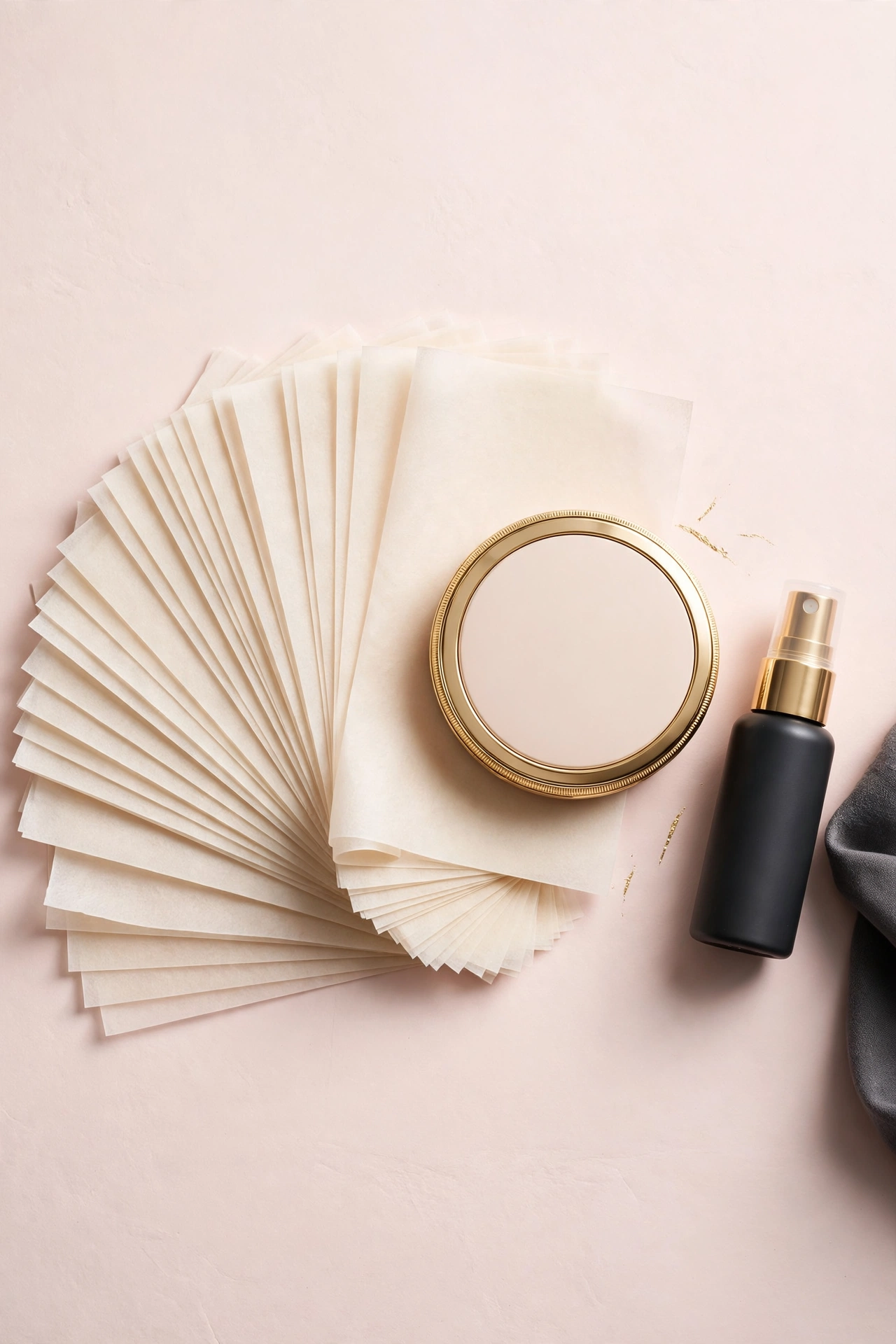
- Carry a small touch-up kit: blotting papers, a pressed powder compact, and (optionally) a travel setting spray.
- Press, don’t rub — whether blotting or powdering, pressing motions keep makeup intact and avoid irritating skin.
- Avoid the urge to re-cleanse midday; it strips skin and triggers rebound oil within the hour.
Why Skin Gets Oilier as the Day Goes On
Sebum production does not stop after your morning cleanse — glands release oil continuously throughout the day. Several factors accelerate the visible buildup:
- Body heat and environment: Warmth liquefies sebum and brings it to the surface faster. Offices, commutes, and summer weather all speed this up.
- Touching your face: Every touch transfers oils from your hands and presses existing sebum around. Phone screens against the cheek do the same.
- Makeup breakdown: As foundation and concealer mix with sebum over hours, they lose their matte finish and start reflecting light — which reads as extra shine.
- Stress: Cortisol fluctuations during a hectic day can stimulate oil glands.
- Skipped morning steps: No primer, no setting product, or a dewy-finish base means nothing is absorbing or locking down oil as it surfaces.
Understanding this helps set expectations: the goal is managing shine so it stays at a healthy glow level, not achieving a powder-dry face at 6 PM. That matte-at-all-costs mindset leads to over-powdering, which looks worse than shine.
Morning Prep: 5 Steps That Delay Shine for Hours
How your skin behaves at 3 PM is largely decided at 8 AM. These morning choices have the biggest impact:
1. Use a mattifying primer on the T-zone. Primer creates a barrier between skin and makeup that absorbs oil as it surfaces. Silicone-based primers with a blurring or mattifying finish work best for oily skin — apply to the forehead, nose, and chin, where shine appears first. Learn what primers actually do in what does makeup primer do.
2. Choose oil-free, long-wear base makeup. Dewy and luminous foundations break down fastest on oily skin. Matte or natural-finish long-wear formulas are engineered to resist sebum. For specific recommendations, see the best foundations for oily skin.
3. Set the T-zone with translucent powder. After foundation, press a light layer of translucent setting powder into the forehead, nose, and chin with a puff or dense brush — pressing, not sweeping. This single step can delay visible shine by 2-3 hours.
4. Finish with setting spray. Setting sprays melt powder into skin so it looks natural, and many formulas help lock makeup against oil breakthrough. The powder-vs-spray decision depends on your skin — setting spray vs setting powder compared breaks down when to use each (many oily skin types benefit from both: powder to set, spray to seal).
5. Let sunscreen set before makeup. Applying foundation over tacky sunscreen guarantees midday sliding. Give SPF 3-5 minutes to set, then proceed. If makeup consistently separates around the nose, why makeup separates around the nose (and fixes) covers the specific causes.
Build a Midday Touch-Up Kit
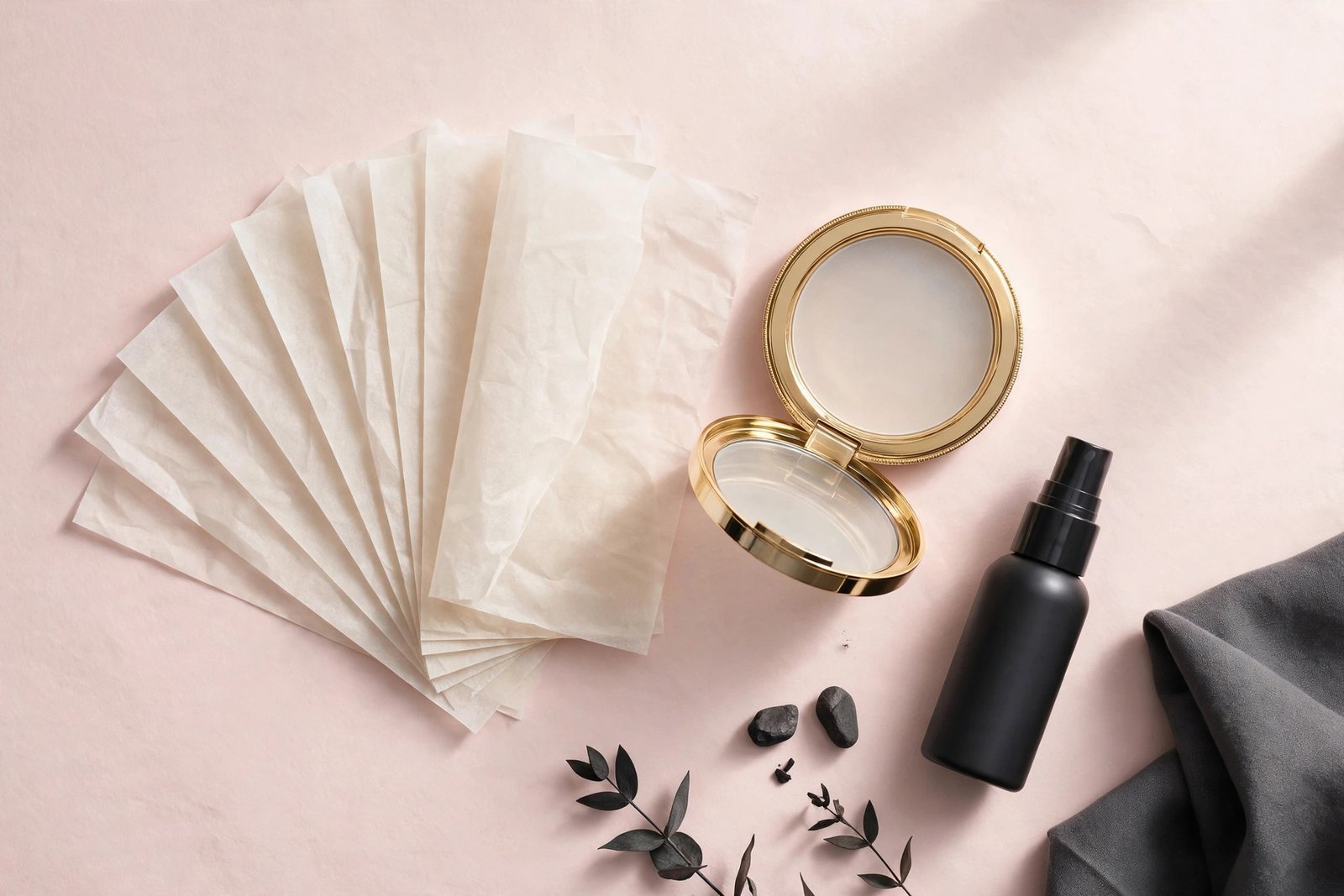
You do not need a full makeup bag — a small pouch with three items handles nearly every shine emergency:
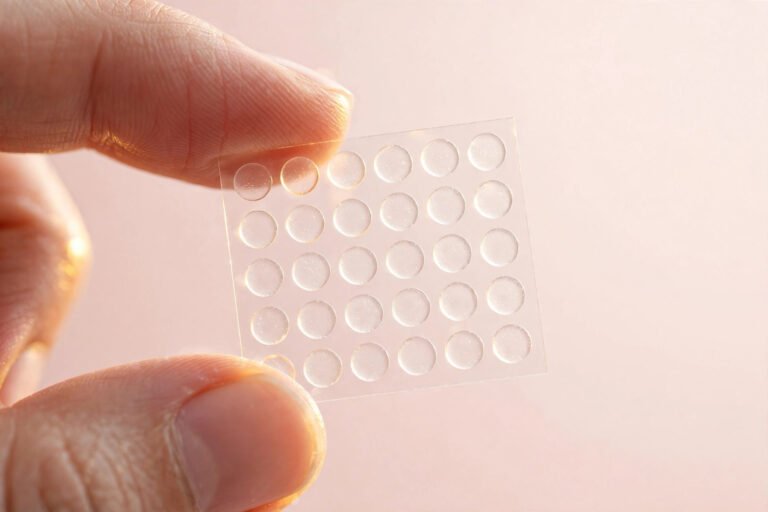
- Blotting papers or blotting sheets. The core tool. Look for plain absorbent sheets; powder-coated versions add coverage but can build up with repeated use.
- A pressed translucent powder compact with a puff. For touch-ups over makeup. Loose powder works at home but is impractical on the go.
- A mini setting spray (optional). A light mist after touch-ups re-melts everything together so you do not look powdered.
Keep the kit in your everyday bag, desk drawer, or car. The people with the best-looking skin at 5 PM are usually just the ones who touched up at 1 PM.
In a pinch: A clean tissue, paper toilet seat cover, or even a coffee filter blots oil in an emergency. They are not ideal for daily use (some can irritate), but they work when you are caught without supplies.
How to Blot Correctly (Technique Matters)
Most people blot wrong — they rub, which moves makeup, irritates skin, and stimulates more oil. The correct technique:
- Take one sheet and press it gently onto the shiniest area (usually the forehead or nose).
- Hold for 3-5 seconds — let the paper absorb; do not rub or drag.
- Lift straight up and check the sheet. Move to the next area with a fresh section or new sheet.
- Blot before powdering, always. Powder applied over unblotted oil mixes into a paste that cakes and breaks down within the hour. Blot first, then press a light layer of powder only where you blotted.
How often is too often? Blotting 1-3 times during the day is normal for oily skin. If you are blotting hourly, the issue is likely morning prep (see above) rather than technique — or over-cleansing that morning, which causes rebound oil.
Setting Products That Actually Last on Oily Skin
Not all setting products handle sebum equally:
- Translucent setting powder: The workhorse for oily skin. Silica-based formulas absorb oil particularly well. Apply with a damp sponge or puff pressed into the skin for maximum longevity.
- Setting spray: Best as a final seal over powder. Look for long-wear or matte-finish formulas; avoid dewy or “glow” sprays, which add shine on oily skin.
- Powder foundation for touch-ups: On very oily days, a light press of powder foundation over blotted skin refreshes coverage better than translucent powder alone.
- Mattifying primers (re-applied): A tiny amount of clear mattifying primer or anti-shine balm pressed over makeup on the T-zone can rescue a shiny afternoon without adding powder layers.
What to avoid: Layering powder repeatedly without blotting first (creates cake), using shimmery or luminous powders for touch-ups (amplifies shine), and re-applying liquid foundation midday (pills over existing layers).
For eye makeup specifically — which migrates fast on oily lids — how to make eyeshadow last on oily lids covers primer and setting techniques for the eye area.
7 Daily Habits That Reduce Midday Shine
- Stop touching your face. Hands deposit oil and bacteria all day. Consciously keeping hands away is one of the highest-impact free changes.
- Clean your phone screen daily. It presses against your cheek for minutes at a time, transferring oil and disrupting makeup on one side of the face.
- Do not re-cleanse at lunch. Splashing with water or re-washing strips the morning’s products and triggers rebound oil within the hour. Blot instead.
- Keep hair off your face. Hair products and natural scalp oils migrate onto the forehead. Clipping back fringe or using oil-absorbing sheets along the hairline helps.
- Manage heat exposure. If possible, avoid sitting in direct sun or under heating vents — warmth accelerates sebum surfacing. A small desk fan beats extra powder.
- Stay hydrated. Dehydration shows on skin quickly, and dehydrated skin overproduces oil. Keep water at your desk.
- Change pillowcases twice a week. Overnight oil and product buildup transfers back onto skin, starting each morning oilier than necessary.
Emergency Fixes for Shine Disasters
Shiny in photos: Step away, blot thoroughly, and press translucent powder into the T-zone. Phone flash photography exaggerates shine dramatically — a quick blot before group photos is always worth it.
Makeup sliding off by noon: Blot, then press a small amount of powder foundation over the worst areas rather than adding liquid products. If this happens daily, the foundation formula is wrong for your skin type — long-wear foundations for oily skin.
Shine with no makeup on: Blot, then mist with a hydrating (not dewy-glow) facial spray or apply a pea-sized amount of oil-free gel moisturizer to rehydrate. Bare skin that is freshly blotted can look flat; light hydration restores a healthy finish.
Oily eyelids ruining eye makeup by afternoon: Blot lids gently with a tissue, then press a touch of translucent powder or eyeshadow primer over the lid before reapplying shadow. Prevention (eye primer every morning) works far better than rescue.
Frequently Asked Questions
Is it bad to blot your face too much?
Blotting 1-3 times a day with gentle pressing is harmless. Problems come from aggressive rubbing (irritation, makeup disruption) or blotting as a substitute for proper morning prep. If you need to blot more than 3-4 times daily, revisit your primer, foundation, and setting routine — technique cannot compensate for products that are wrong for oily skin.
Should I use powder or blotting papers first?
Blotting papers first, always. They remove the oil; powder then sets the freshly blotted skin. Reversing the order mixes powder into surface oil, creating a cakey layer that breaks down faster and looks heavier with each touch-up.
Can I reapply sunscreen over makeup during the day?
Yes — and you should if you are in sustained sun. The least disruptive options are powder SPF (brushed over makeup), SPF setting sprays, or sunscreen sticks dabbed on high points. They do not replace a proper morning sunscreen layer, but they meaningfully extend protection. Avoid rubbing liquid sunscreen over makeup; it destroys the base.
Why is my face oilier in the afternoon than the morning?
Sebum accumulates continuously after your morning cleanse, and warmth, touching your face, stress, and makeup breakdown all accelerate visible shine as the day progresses. It is normal physiology, not a sign your routine failed. Consistent blotting-plus-powder touch-ups manage it; expecting zero afternoon shine sets an impossible standard.
Does drinking water reduce oily skin?
Drinking water does not directly reduce sebum production — oil output is driven by hormones, genetics, and skin barrier signals. But dehydration makes skin overproduce oil as compensation, so staying hydrated supports the overall balance. Think of water as supporting your routine, not replacing it.
The Bottom Line
Controlling oily skin throughout the day comes down to two phases: morning prep that slows oil breakthrough (mattifying primer, oil-free long-wear base, T-zone powder, setting spray) and a simple touch-up routine (blot first, then powder, pressed — never rubbed). Carry a three-item kit, keep your hands off your face, and resist the urge to re-cleanse midday.
For the foundation this strategy builds on, follow the complete skincare routine for oily skin, choose a foundation that survives oily skin, and lock in your base with the right setting spray vs setting powder.
Love this? Pin it for later!