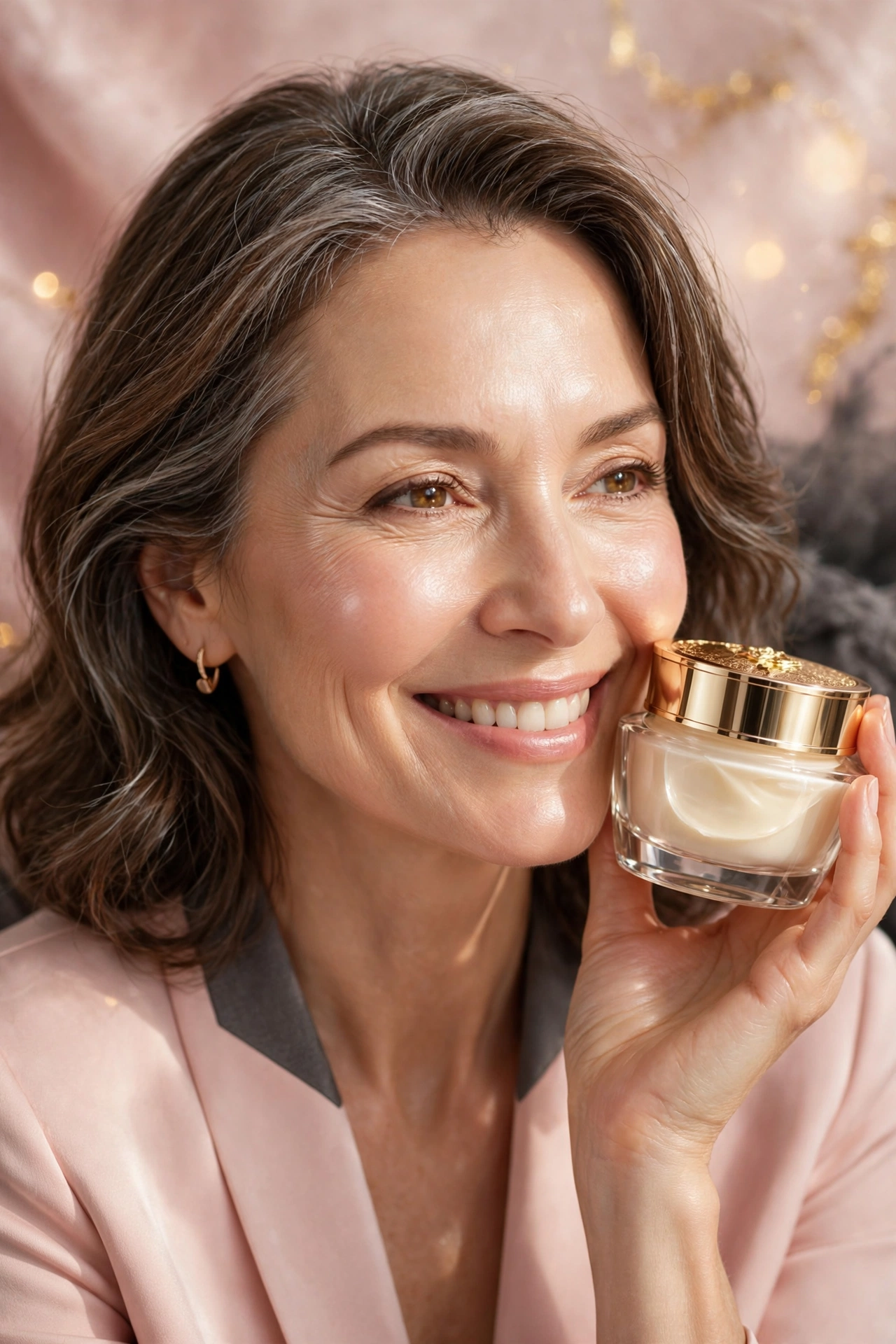
Skincare Routine for Women Over 50 (Simple & Effective)
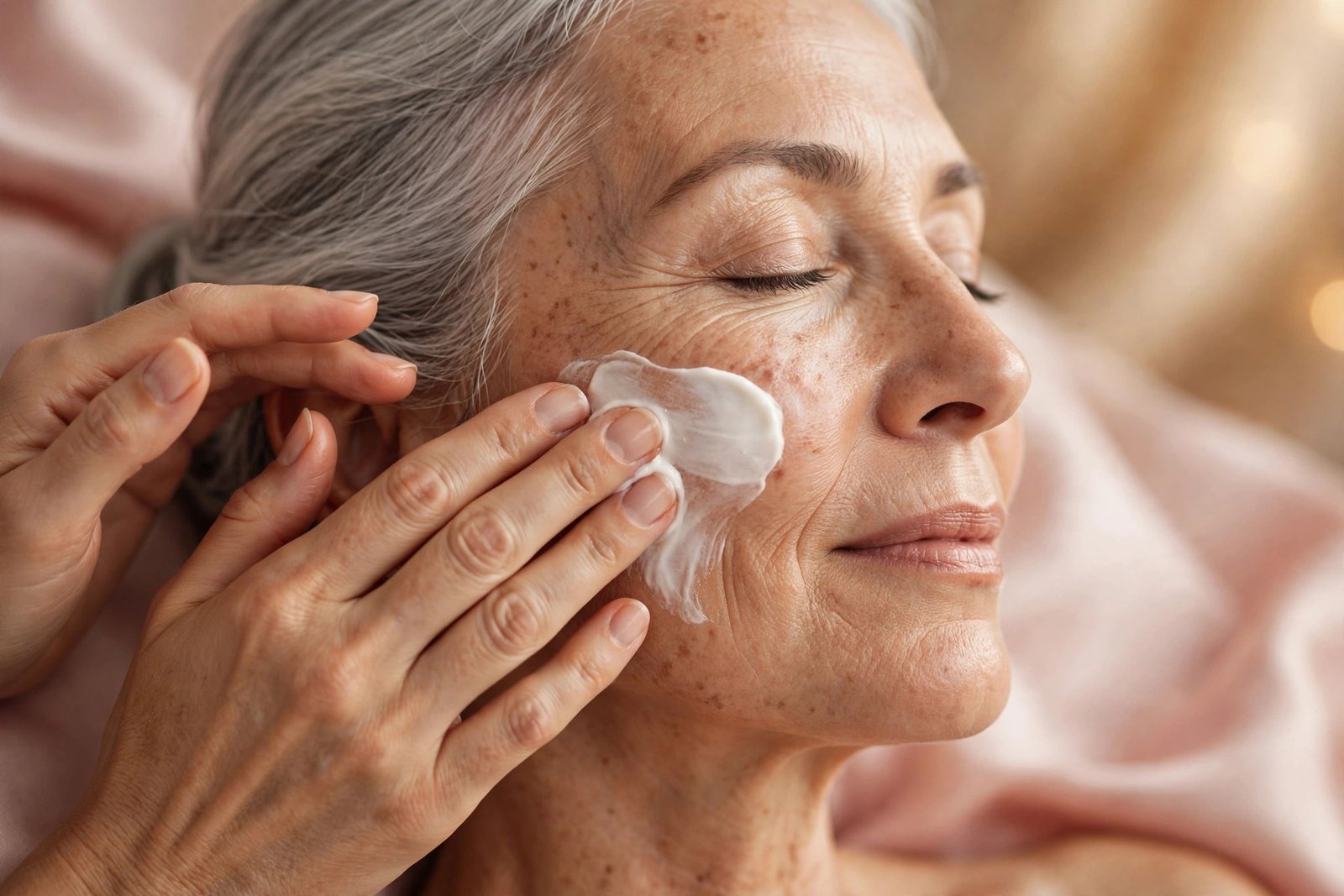
Somewhere past 50, skincare stops being about prevention and starts being about support. Your skin is drier, thinner, and less forgiving than it was a decade ago — and the 12-step routines that flood social media will overwhelm it (and you) for very little return. What mature skin actually needs is a short routine done consistently: gentle cleansing, serious hydration, barrier support, one or two well-chosen actives, and daily sunscreen.
This guide gives you exactly that — a simplified morning routine, a slightly richer night routine, and a weekly treatment step, all built around how skin over 50 actually behaves. If you want the full picture of why skin changes at this stage of life, start with the complete guide to menopause skin changes and what drives them; this article is the practical, do-it-daily companion to it.
Key Takeaways
- Keep it simple: 4–5 steps in the morning, 5–6 at night. Consistency beats complexity at this age.
- Hydration is the foundation — layer water-based hydration under richer moisture.
- Introduce actives (retinoid, vitamin C) one at a time and go slowly; mature skin irritates more easily.
- Daily SPF 30+ is non-negotiable and the highest-value anti-aging step you own.
- Give any routine 6–8 weeks before judging it; mature skin turns over slowly.
- Adjust seasonally — winter usually demands richer textures and sometimes an added facial oil.
What Skin Over 50 Needs Most
Before the routine itself, it helps to know what you’re optimizing for. After 50, skin typically produces less oil, holds less water, has a weaker barrier, and repairs itself more slowly. Collagen and elastin have declined, cell turnover has slowed (dead skin lingers, causing dullness), and sensitivity is up.
That translates into four priorities, in order:
- Gentle cleansing that doesn’t strip the little oil you have left.
- Hydration plus occlusion — water in, then a seal to keep it there.
- Barrier support — ceramides and niacinamide to rebuild resilience.
- Targeted actives — a retinoid for texture and lines, vitamin C for brightness, used patiently.
- Sun protection — every single morning, because UV damage compounds everything else.
Everything in the routines below serves one of these priorities. If a step doesn’t, it doesn’t belong in a simplified routine.
The Morning Routine (4–5 Steps)
Mornings are about protection: hydrate, defend against the day’s environmental damage, and shield from UV. Keep it light enough that makeup (if you wear it) sits well on top.
Step 1: Gentle cleanse (or just rinse)
You don’t need a deep clean in the morning. A splash of lukewarm water is enough for many women over 50; if your skin feels oily or you used a heavy night product, use a small amount of a milky or cream cleanser. Skip foaming cleansers — they strip mature skin and leave it tight before the day even starts.
Step 2: Hydrating serum
While skin is still slightly damp, apply a hydrating serum with hyaluronic acid or glycerin. Damp skin absorbs humectants better, and this step is what gives mature skin that plump, dewy feeling that heavier creams alone can’t deliver. One to two pumps is plenty — this isn’t a step where more product means more results.
Step 3: Vitamin C (optional but recommended)
A vitamin C serum in the morning provides antioxidant defense against pollution and UV-induced damage, plus gradual brightening of dark spots and uneven tone. If your skin is very sensitive, start with a gentler derivative formula rather than pure L-ascorbic acid, and introduce it on alternate mornings. Those building their first serious routine may want to read the beginner’s primer on anti-aging skincare fundamentals for how vitamin C fits alongside other actives.
Step 4: Moisturizer
Choose a cream, not a lotion — at this age, the richer texture earns its place. Look for ceramides, squalane, or shea butter on the ingredient list. Apply generously to face and neck (the neck is often the first place to show age, and it deserves the same products, not leftovers).
Step 5: Sunscreen SPF 30+
The final and most important morning step. Use a broad-spectrum SPF 30 or higher, about a quarter teaspoon for face and neck. Mineral or chemical is a personal preference — the one you’ll wear daily wins. If you wear makeup, sunscreen goes under it; many women over 50 find that a moisturizing sunscreen doubles nicely as a makeup primer.
The Night Routine (5–6 Steps)
Nights are for repair: remove the day thoroughly but gently, then give skin the hydration and actives it uses during sleep’s peak repair window.
Step 1: First cleanse — remove makeup and sunscreen
If you wore makeup or sunscreen (you did), start with a cleansing oil or balm. Massage it over dry skin for a full minute — this dissolves the day’s layers without tugging. Mature skin appreciates the massage itself, which boosts circulation.
Step 2: Second cleanse — gentle wash
Follow with a small amount of cream or milky cleanser on damp skin. Double cleansing sounds like a lot, but each step is gentle, and clean skin absorbs everything that follows far better. This is the routine step most worth keeping even on tired nights.
Step 3: Hydrating serum (again)
Same as morning — hyaluronic acid or glycerin on damp skin. Night is when you can be slightly more generous, since nothing needs to sit well under makeup.
Step 4: Retinoid (2–4 nights per week to start)
Retinoids are the most evidence-backed topical for mature skin: they support collagen, smooth texture, soften fine lines, and fade dark spots. But they also irritate, and skin over 50 is more vulnerable to that irritation. Start with a low-strength retinol twice a week, apply a pea-sized amount to dry skin (after moisturizer if you’re sensitive — this “buffering” slows absorption), and increase frequency only when your skin shows no redness or flaking. Expect 8–12 weeks before visible results. On non-retinoid nights, you can use a peptide serum instead if firmness is your focus.
Step 5: Rich night moisturizer
Night cream should be the richest product in your routine. Look for ceramides, peptides, and nourishing oils. If your skin still feels tight after moisturizing, that’s your signal to add a facial oil as a final occlusive layer — a few drops pressed over the cream seals everything in, especially in dry or winter air.
Step 6 (optional): Eye cream
The eye area is the thinnest skin on the face and shows age first. A dedicated eye cream with peptides or caffeine can help with puffiness and fine lines — but a good moisturizer applied carefully around the eyes does most of the work. This step is optional, not essential.
The Weekly Treatment
Once a week, give your skin a little extra:
- Gentle exfoliation: a mild AHA (lactic or mandelic acid at low strength) or an enzyme mask, left on per instructions. This lifts the dull layer of dead skin that accumulates with slow turnover. Once weekly is enough — over-exfoliation is the fastest way to damage mature skin’s already-thin barrier.
- Hydrating mask: a sheet mask or cream mask with hyaluronic acid and ceramides on a different night from exfoliation. Think of it as a deep-conditioning treatment for your face.
Don’t exfoliate and use a retinoid on the same night. Alternate them, and skip both if your skin feels sensitive that week — rest days are part of the routine too.
Adjusting for Your Skin Type
Dry skin: you’re the classic over-50 profile. Layer aggressively — hydrating toner, serum, cream, oil. Consider a humidifier in winter; dry indoor air undoes good skincare overnight.
Oily or combination skin: yes, this still exists after 50, especially through perimenopause. Use gel-cream textures instead of heavy creams, but don’t skip moisturizer — dehydrated oily skin overproduces oil to compensate. Niacinamide is particularly useful here for balancing oil and supporting the barrier.
Sensitive skin: introduce everything at half the recommended frequency, patch-test new products on the jawline, and keep fragrance-free as your default. If even gentle retinoids irritate, bakuchiol is a milder (though less proven) alternative worth discussing with your dermatologist.
Skin with dark spots: add vitamin C in the morning and consider niacinamide or azelaic acid for pigmentation. But manage expectations — fading established sun spots takes months of consistent use plus strict sunscreen. Anything that promises overnight spot removal is lying.
Common Mistakes Women Over 50 Make
- Using the same products as a decade ago. Your skin changed; your routine should too. That foaming cleanser and light gel moisturizer from your 40s are probably underperforming now.
- Adding too many actives at once. Retinoid plus vitamin C plus three acids equals irritation, not faster results. One new active at a time, always.
- Skipping sunscreen because “the damage is done.” It’s not — ongoing UV exposure continues to break down collagen and darken spots. Daily SPF protects the investment you’re making in every other product.
- Neglecting the neck, chest, and hands. These areas age visibly and get less product. Extend every step below the jawline and onto the backs of your hands.
- Expecting overnight results. Mature skin turns over slowly — give any routine a full 6–8 weeks. Constant product-switching is the enemy of progress.
If you’re starting from scratch with skincare basics, the step-by-step beginner routine to build your foundation covers the universal fundamentals; the routine above adapts them specifically for mature skin’s needs.
Frequently Asked Questions
How long until I see results from a new routine?
Hydration improvements show within days. Texture and brightness from exfoliation and vitamin C typically take 4–6 weeks. Retinoid results — smoother fine lines, firmer feel — generally need 8–12 weeks of consistent use. Mature skin is slower to turn over, so patience isn’t optional; it’s part of the method.
Do I really need both a morning and night routine?
Yes, because they do different jobs. Morning is protection (antioxidants, sunscreen); night is repair (retinoids, richer moisture). A single routine can’t do both well. But each one is short — together they take about ten minutes a day.
Can I use the same moisturizer morning and night?
You can, especially if it’s a good rich cream. Many women prefer a lighter texture in the morning (so makeup sits well) and a richer one at night, but one excellent moisturizer used twice daily beats two mediocre ones. Add sunscreen on top in the morning either way.
Is expensive skincare better for mature skin?
Not necessarily. Price correlates poorly with effectiveness — many affordable moisturizers contain the same ceramides and niacinamide as luxury ones. Spend your money on proven actives (a good retinoid, a stable vitamin C) and save on basics like cleansers, which rinse off anyway.
Should I still exfoliate if my skin is sensitive?
Gently and infrequently — once a week with a mild formula, or even every other week. Sensitive mature skin still benefits from removing the dull buildup of dead cells; it just can’t handle aggressive or frequent exfoliation. Enzyme-based exfoliants are often the kindest option.
What about makeup — does this routine work under it?
Yes — the morning routine is designed to layer well under makeup. Let sunscreen set for a few minutes before applying foundation, and choose hydrating rather than mattifying formulas if your base tends to settle into fine lines. For makeup specifically formulated for mature skin, see our makeup techniques and products for mature skin over 40.
Final Thoughts
The best skincare routine for women over 50 isn’t the longest or the most expensive — it’s the one you’ll actually do every day. Cleanse gently, hydrate generously, support your barrier, use one or two proven actives patiently, and protect it all with sunscreen every morning. That’s the whole formula. Start simple, stay consistent for two months, and let your skin — calmer, plumper, more even — make the case for the routine itself.
Love this? Pin it for later!