Menopause Skin Changes: What’s Happening & What Helps
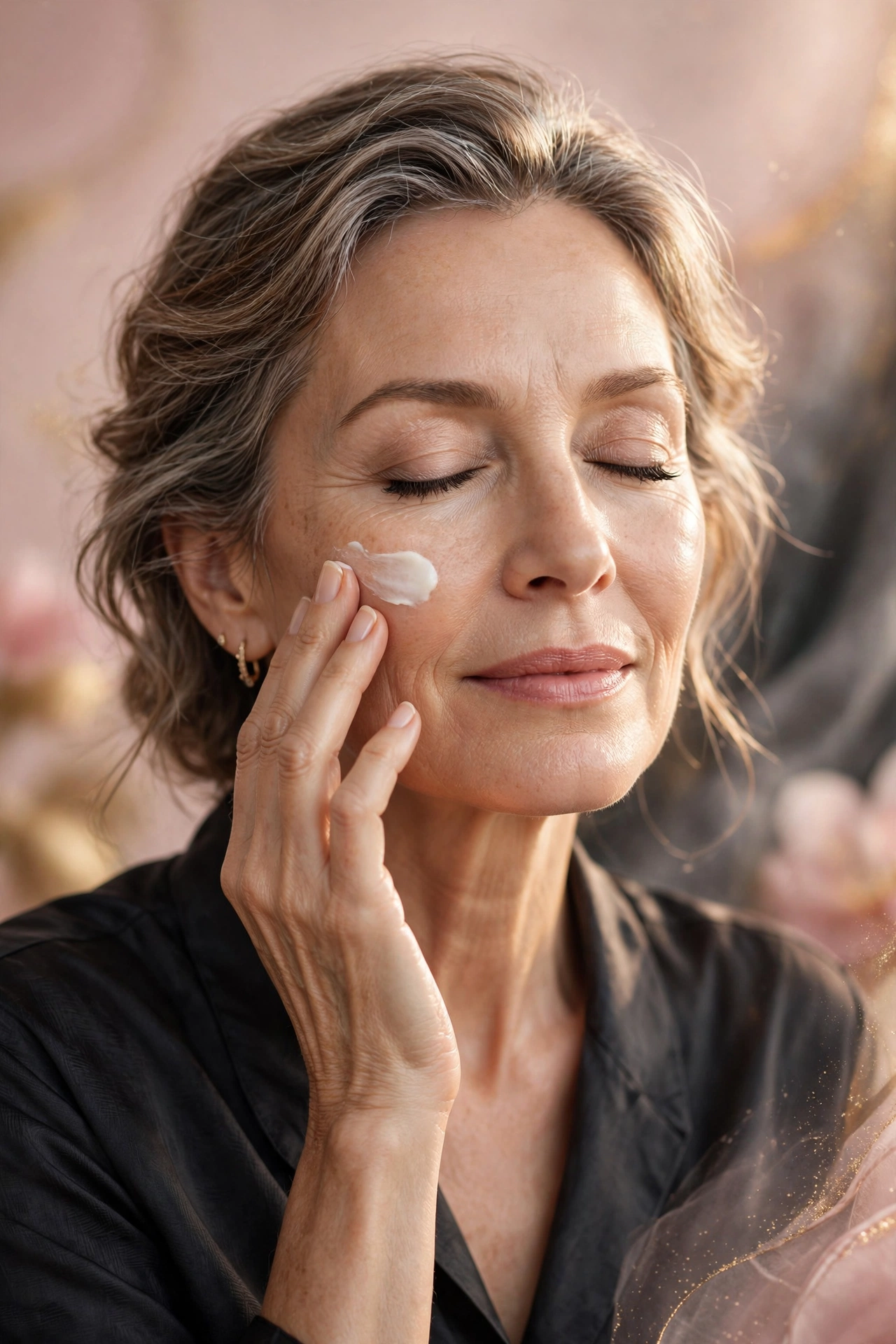
Sometime in the late 40s or early 50s, many women notice their skin has started playing by new rules. The moisturizer that worked for a decade suddenly isn’t enough. Fine lines deepen faster. The face looks a little less firm, a little duller — and nobody warned you it would happen this way, at this speed. What’s going on is hormonal: as estrogen declines through perimenopause and menopause, it takes a surprising amount of skin support with it.
This guide explains the skin changes of menopause in plain terms — what’s driving each one, which are cosmetic versus worth mentioning to your doctor, and the skincare approach that genuinely helps at every stage. It covers the whole transition, from the first hormonal wobbles of perimenopause through the post-menopausal years, with practical routines and ingredient guidance you can act on this week.
Key Takeaways
- Estrogen supports collagen, moisture, and barrier strength — its decline drives most menopause-related skin changes.
- Expect: dryness, increased sensitivity, thinning skin, sagging and volume loss, slower healing, and sometimes hormonal breakouts.
- A simpler, richer, barrier-first routine beats a complicated one for most menopausal skin.
- Retinoids, vitamin C, peptides, ceramides, and diligent sunscreen are the evidence-backed core of mature-skin care.
- Some changes (severe hair shedding, sudden breakouts, new moles) deserve a doctor’s visit, not just a product switch.
- Lifestyle — sleep, stress, nutrition, and smoking cessation — moves the needle more than any single serum.
What’s Happening Hormonally (and Why Skin Notices)
Estrogen isn’t just a reproductive hormone — skin is full of estrogen receptors, and estrogen quietly does a great deal of behind-the-scenes work: it supports collagen production, helps skin hold moisture by encouraging hyaluronic acid and healthy oil output, maintains skin thickness, and contributes to wound healing. When estrogen levels start fluctuating in perimenopause and then drop significantly at menopause, all of those systems downshift.
The result is that skin can lose up to around 30% of its collagen in the first five years after menopause, according to commonly cited dermatological estimates — a drop that’s much faster than ordinary chronological aging. Skin also thins, becomes drier as oil production decreases, and the barrier weakens, which is why products that once felt fine can suddenly sting. Understanding this hormonal root helps in two ways: it tells you the changes aren’t your fault or your skincare’s failure, and it points treatment toward the actual mechanisms — moisture, barrier repair, collagen support — rather than chasing symptoms with random products.
Perimenopause, the transitional phase that can start in the mid-40s and last several years, is often when women first notice the shifts: dryness that comes and goes, new sensitivity, skin that looks a little tired even with enough sleep. Post-menopause, the changes tend to be more consistent — but the good news is they’re also more predictable, which makes them easier to address systematically.
The Main Menopause Skin Changes, Explained
Dryness and Dehydration
The most universal complaint. Declining estrogen reduces both oil production and the skin’s natural moisturizing factors, so skin feels tight, rough, or flaky — often for the first time. This isn’t just surface dryness; it’s a structural reduction in the skin’s ability to hold water.
What helps: switch to a cream or oil-based cleanser instead of anything foaming; layer a hydrating serum (hyaluronic acid, glycerin) under a richer moisturizer; and consider adding a facial oil as an occlusive final step, especially in winter. A simple, effective over-50 routine you can follow morning and night builds these hydration layers into a routine that doesn’t take all morning.
Thinning and Increased Sensitivity
Estrogen helped keep skin thick and resilient. As it declines, skin becomes thinner and more reactive — it bruises more easily, products sting that never used to, and the skin under the eyes can look noticeably more fragile. This is also why wound healing slows: minor cuts and blemishes take longer to resolve.
What helps: simplify. Fewer active ingredients, introduced one at a time, lets you identify what your skin tolerates now. Fragrance-free, minimal formulas are your friend. Barrier-supporting ingredients — ceramides, niacinamide, squalane — help rebuild the skin’s defenses so it stops overreacting to everything.
Sagging, Volume Loss, and Deepening Lines
Collagen and elastin loss accelerates during the menopause transition, and fat pads in the face redistribute and shrink. The visible result: jowls soften the jawline, the area under the eyes looks hollower, nasolabial folds deepen, and the neck can develop crepiness. This is the change that bothers many women most, because it alters the face’s structure, not just its surface.
What helps: be realistic first — no cream rebuilds lost fat or reverses significant laxity. But retinoids are the best-evidenced topical for supporting collagen; peptides show promise; and consistent daily sunscreen prevents further UV-driven breakdown, which compounds hormonal collagen loss. For the ingredient shortlist that actually works for menopausal skin, focus on this evidence-backed core rather than trendy actives with thin data.
Dullness and Uneven Tone
Slower cell turnover means dead skin lingers longer, dulling the complexion. Sun damage accumulated over decades can also become more visible as skin thins and repair capacity drops — dark spots that were faint become more noticeable.
What helps: gentle exfoliation (a mild AHA or enzyme product once or twice weekly) brightens without the over-exfoliation that thin skin can’t tolerate. Vitamin C in the morning adds antioxidant protection and helps fade uneven tone. Always pair brightening efforts with sunscreen, or you’re undoing your own progress.
Adult Breakouts
Hormonal fluctuations — particularly the relative shift between estrogen and androgens as estrogen drops — can trigger breakouts in your 40s and 50s, often along the jawline and chin. It’s disorienting to deal with acne and wrinkles simultaneously, and mature skin handles harsh acne treatments poorly.
What helps: treat breakouts gently. Benzoyl peroxide at low concentrations or salicylic acid used sparingly, spot-applied rather than all over. Avoid drying the whole face to fight a few spots — the rest of your skin needs the moisture. The why breakouts happen in your 40s and how to treat them on mature skin goes deep on this specific problem.
Thinning Hair
Menopause-related hair changes deserve mention alongside skin, because they share a hormonal root: as estrogen falls, hair follicles can shrink, growth cycles shorten, and many women notice widening parts, reduced ponytail volume, or more shedding. It’s one of the most distressing menopause symptoms precisely because it feels so visible.
What helps: start with medical basics — sudden or severe shedding warrants a doctor’s visit to check thyroid, iron, and other causes, since not all midlife hair loss is menopausal. For hormonal thinning, dermatologists discuss options like topical minoxidil, and gentle hair care (less heat, no tight styles, scalp-friendly products) reduces breakage that makes thinning look worse. Read the full breakdown of menopausal hair thinning — causes and real solutions before buying anything.
Building Your Menopause Skincare Strategy
Step 1: Simplify Before You Add
The instinct when skin changes is to buy more products. Resist it. Menopausal skin responds best to a stripped-back routine of excellent basics: a gentle cleanser, a hydrating serum, a rich moisturizer, and daily sunscreen. Run this for two to three weeks before adding any active. If your skin calms down, you’ve learned something valuable — your old routine was overloading newly sensitive skin.
Step 2: Add Actives One at a Time
When you introduce a retinoid, vitamin C, or exfoliant, add only one new product every two to three weeks. This is how you learn what your skin tolerates and what it doesn’t — and it’s the difference between a routine that works and a cabinet of half-used products. Start retinoids slowly (two nights a week, low strength), because mature, drier skin is more prone to retinoid irritation than younger skin.
Step 3: Make Sunscreen Non-Negotiable
If menopausal skin has one true villain, it’s continued UV exposure compounding hormonal collagen loss. Daily broad-spectrum SPF 30+ is the highest-value step in any mature-skin routine — more impactful than any single anti-aging serum. Find a formula you’ll actually wear daily; the best sunscreen is the one that ends up on your face every morning. Our beginner-friendly anti-aging skincare primer covers how sunscreen, retinoids, and hydration work together as the core trio.
Step 4: Support Skin From the Inside Too
No supplement replaces a good routine, but a few lifestyle factors genuinely move the needle. Adequate protein supports the amino acid building blocks of collagen. Omega-3 fatty acids and overall good nutrition support barrier health. Sleep — often disrupted during menopause — is when skin does its repair work, so addressing sleep issues helps skin too. And smoking accelerates every aging process in skin; quitting is the single most powerful anti-aging intervention available.
Ingredients Worth Your Money (and Ones to Skip)
The evidence-backed core:
– Retinoids (retinol, retinal, or prescription tretinoin): the gold standard for collagen support, texture, and fine lines. Start low and slow.
– Vitamin C (L-ascorbic acid or derivatives): antioxidant protection plus brightening; use in the morning under sunscreen.
– Niacinamide: strengthens the barrier, calms redness, and is generally well tolerated by sensitive mature skin.
– Ceramides and fatty acids: rebuild the moisture barrier that estrogen decline weakens.
– Hyaluronic acid and glycerin: humectants that pull water into skin — always sealed in with moisturizer.
– Peptides: signal peptides show promising (though less robust than retinoid) evidence for firmness support.
Approach with caution:
– High-strength acids used too frequently — thin skin over-exfoliates easily. Keep AHAs gentle and infrequent.
– Harsh physical scrubs — microtears on thinning skin heal slowly. Enzyme or low-strength chemical exfoliation is kinder.
– Alcohol-heavy toners and astringents — they strip the little oil mature skin still produces.
– Fragrance and essential oils — common irritants for newly sensitive skin; fragrance-free is the safer default.
The complete ingredient guide for menopausal skin ranks these in detail with guidance on how to layer them without conflicts.
When to See a Doctor, Not Just Buy a Serum
Most menopause skin changes are normal and manageable with good skincare. But some signs warrant a professional evaluation:
- Sudden or severe hair shedding — could indicate thyroid issues, iron deficiency, or other treatable causes beyond menopause.
- New or changing moles and spots — skin cancer risk rises with age; anything new, changing, bleeding, or unusual should be checked by a dermatologist promptly.
- Severe, painful breakouts — prescription options exist that are gentler and more effective than drugstore experiments.
- Rashes, persistent redness, or eczema-like patches that don’t resolve — these may be conditions needing diagnosis, not cosmetic issues.
- Significant distress about the changes — if skin or hair changes are affecting your mental health, that’s a valid reason to seek help, including discussing hormone therapy options with your doctor.
A dermatologist who understands midlife skin can save you years of trial and error — and a lot of money on products that were never going to address the real issue.
What About Hormone Therapy and Skin?
Hormone replacement therapy (HRT) is sometimes reported to improve skin thickness, moisture, and elasticity — which makes sense given estrogen’s role in skin. But HRT is a significant medical decision with benefits and risks that go far beyond cosmetics, and it’s not prescribed for skin concerns alone. If you’re already discussing HRT with your doctor for menopause symptoms, skin changes are worth mentioning as part of the conversation. If you’re considering it primarily for skin, the evidence-based skincare approach in this guide is the appropriate first step.
Frequently Asked Questions
At what age do menopause skin changes start?
Most women notice the first changes during perimenopause, typically in the mid-to-late 40s — sometimes earlier. Dryness and new sensitivity are often the earliest signs. The changes tend to accelerate in the few years around the final menstrual period and continue gradually afterward.
Can skincare actually reverse menopause skin changes?
Skincare can significantly improve dryness, dullness, uneven tone, and the appearance of fine lines — retinoids, hydration, and sunscreen make a visible difference. But no topical product restores lost facial volume or reverses significant laxity; those structural changes are beyond what creams can do. Honest expectations lead to better choices (and less wasted money).
Is it too late to start a skincare routine at 55 or 60?
Not at all. Skin responds to good care at any age — hydration, barrier support, and sunscreen improve the look and feel of skin whether you start at 35 or 65. Retinoids also work on mature skin, though starting slowly matters more when skin is thinner and drier.
Why is my skin suddenly sensitive to products I’ve used for years?
Declining estrogen thins the skin and weakens its barrier, lowering your tolerance for ingredients — especially fragrance, acids, and retinoids at old strengths. This is normal. Switching to gentler formulas and reintroducing actives gradually usually solves it.
Should I change my moisturizer during menopause?
Very likely yes. Most women need to move up in richness: from lotion to cream, or from cream to cream-plus-oil. If your skin feels tight within an hour of moisturizing, your formula is no longer enough. Layering — hydrating serum under moisturizer, oil on top in dry weather — beats relying on a single product.
Do I still need sunscreen if I’m mostly indoors?
Yes. UVA rays penetrate window glass, and cumulative daily exposure — driving, sitting near windows, brief errands — adds up over years. Daily SPF 30+ on face, neck, and hands is the standard recommendation regardless of how much time you spend outside.
Can diet really affect menopausal skin?
Nutrition supports skin but doesn’t transform it. Adequate protein, healthy fats, and hydration help skin function well; extreme sugar intake is linked to glycation, which damages collagen. Think of diet as the foundation that lets your skincare work better — not a replacement for it.
Final Thoughts
Menopause changes skin from the inside out, and no amount of expensive cream changes the hormonal reality driving it. But understanding that reality is genuinely empowering: it tells you to stop blaming yourself, stop chasing trends, and build a simple, consistent routine around hydration, barrier support, collagen-friendly actives, and daily sun protection. The adjustment period can take a full skin cycle — around six to eight weeks — before new products show their true effect, so resist the urge to overhaul everything at once. Introduce one change at a time, watch how your skin responds, and keep what works. Skin at 50 and beyond has different needs than skin at 30 — meet it where it is, and it will look and feel its best. For the day-to-day version of everything in this guide, follow the simplified morning and night routine for women over 50 and give your skin a few consistent weeks to show you what good basics can do.
Love this? Pin it for later!