No-Mascara Makeup Look: Fresh Eyes, Zero Mascara
There’s a quiet rebellion happening in beauty: more and more people are skipping mascara entirely. Some do it because mascara irritates their eyes or smudges by noon. Contact lens wearers do it to avoid flakes landing on lenses. Others simply prefer the softer, fresher look that bare lashes give — a kind of “my eyes but better” effect that heavy mascara can’t replicate.
The no-mascara makeup look is not about doing less. It’s about redirecting the effort: instead of coating lashes, you build definition with tightlining, eyeshadow, curled lashes, and groomed brows. Done well, eyes look wide, bright, and polished — nobody misses the mascara. Here’s how to nail it.
Key Takeaways
- Curl lashes and tightline the upper lash line — these two steps replace most of what mascara does.
- Soft, blended eyeshadow in the crease adds depth that bare lashes alone can’t provide.
- Defined brows frame no-mascara eyes and keep the look intentional rather than unfinished.
- Brightening the waterline area and inner corner makes eyes look bigger without any lash product.
- This look is ideal for contact lens wearers, sensitive eyes, and anyone tired of midday smudging.
Contact lenses and eye makeup mix safely only with good hygiene. If you get persistent redness, pain, or blurred vision, remove your lenses and see an eye doctor — never push through irritation.
Why Skip Mascara?
People ditch mascara for practical reasons more often than aesthetic ones. Mascara is the eye product most likely to flake, smudge, and migrate — it’s the top source of the particles that end up in eyes and on contact lenses. For anyone who’s dealt with understanding why makeup irritates eyes, removing mascara from the equation eliminates the biggest offender in one move.
There’s also the maintenance factor. Mascara demands touch-ups, smudge checks, and careful removal every night. A no-mascara routine is faster in the morning and gentler at night. And aesthetically, bare lashes read as fresh and youthful — the look pairs naturally with dewy skin, flushed cheeks, and glossy lips for an overall “clean girl” effect that’s dominated recent trends.
That said, skipping mascara only works if you replace its defining power with something else. Bare lashes plus nothing reads as unfinished. Bare lashes plus tightlining, shadow, and brows reads as intentional. The steps below are the replacement system.
Step 1: Curl Your Lashes (Non-Negotiable)
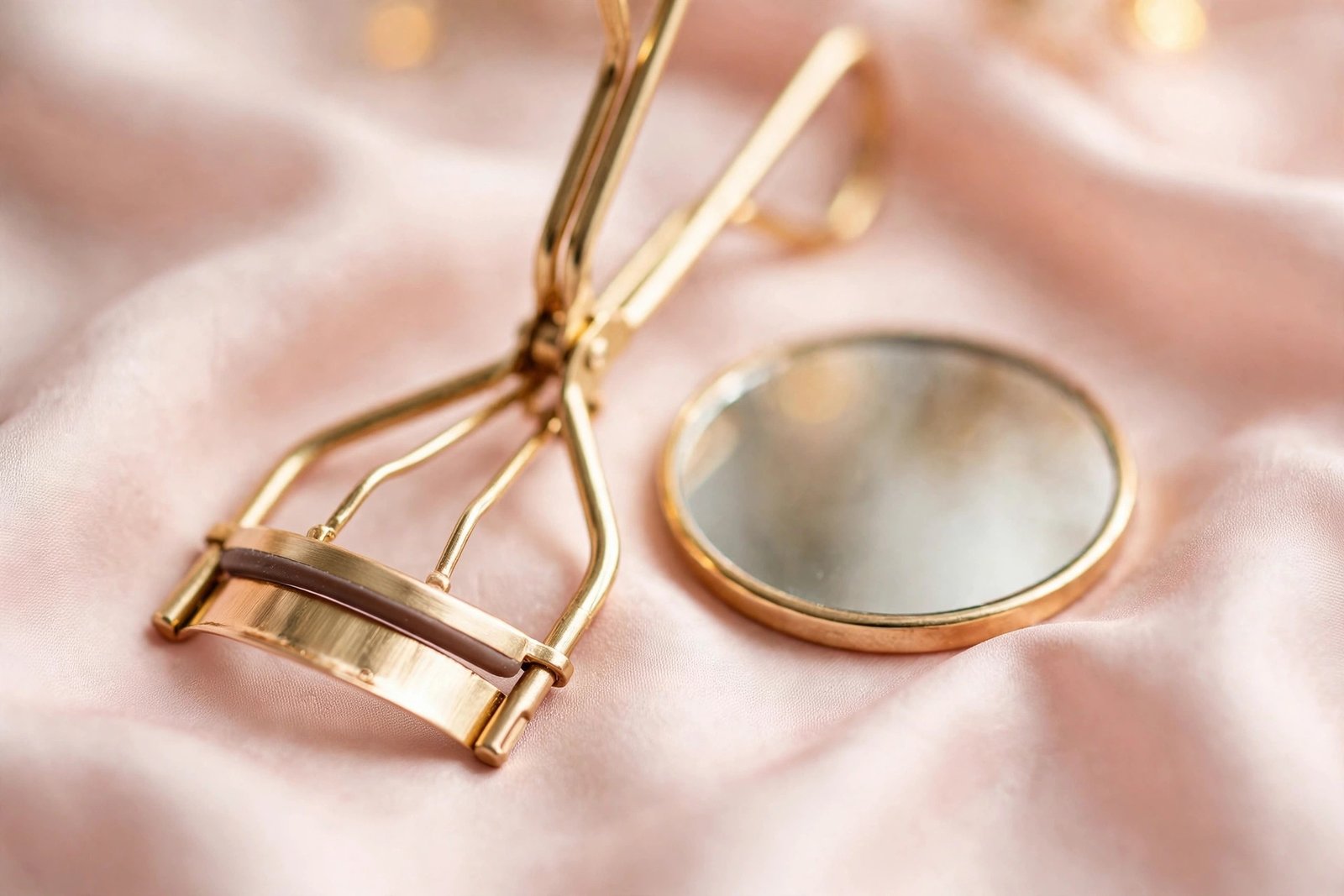
A lash curler is the single most important tool in a no-mascara routine. Curling lifts lashes, opens up the eye, and creates the upward flick that mascara normally fakes with coating. Without curl, straight lashes can cast a shadow over the eyes that makes them look smaller — which is exactly the problem mascara usually solves.
Technique matters: curl before any eye makeup, on clean dry lashes. Position the curler at the base of the lashes, squeeze gently for about five seconds, then move to the mid-shaft and give one more soft squeeze for a natural curve rather than a sharp crimp. Never curl after applying any product, and never tug — a gentle pulse is all you need.
For extra hold, warm the curler slightly with a hairdryer for a few seconds (test the temperature on your wrist first — it should feel warm, not hot). Some people also find that a heated lash curler holds the curl longer, though a classic metal curler works perfectly for most lash types.
Step 2: Tightline for Invisible Definition
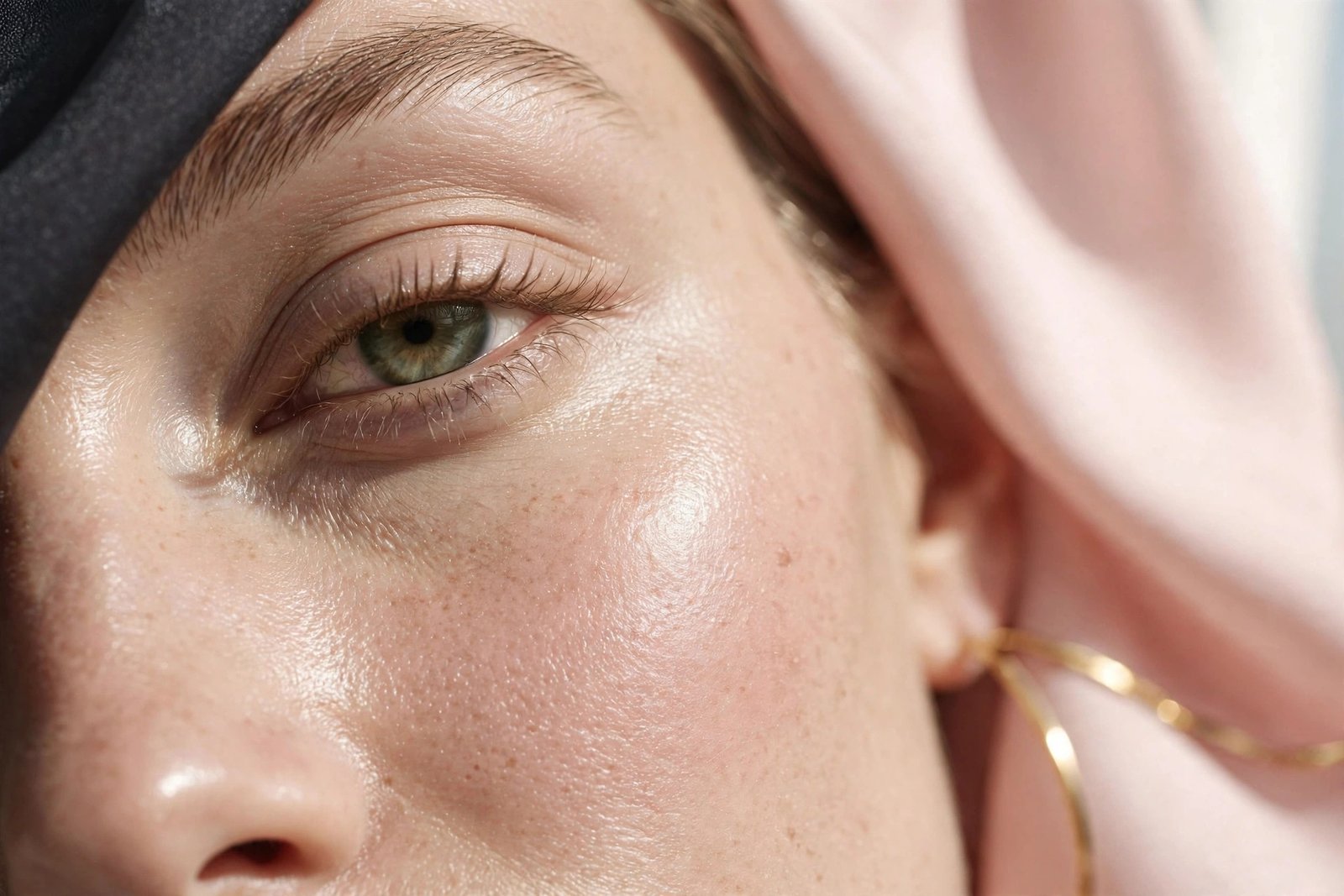
Tightlining — filling the gaps between the upper lashes at the lash line — is the secret weapon of the no-mascara look. It darkens the lash base so lashes look thicker and denser without any visible liner line. From a normal viewing distance, people register “defined eyes” without being able to tell how.
Use a waterproof pencil or gel liner and work it gently into the upper lash line, between the lash roots. Keep the pressure light and stay on the outer lash line, not the inner waterline — this keeps the technique comfortable even for sensitive eyes and safe liner tips for contact lens wearers. One pass is usually enough; the goal is a shadow at the lash base, not a drawn line.
If you wear contacts, tightlining is one of the safest liner techniques available, since product stays above the waterline where it can’t easily migrate onto a lens. For the full lens-safe picture, the makeup routine for contact lens wearers covers product choices across the whole routine.
Step 3: Build Depth With Eyeshadow
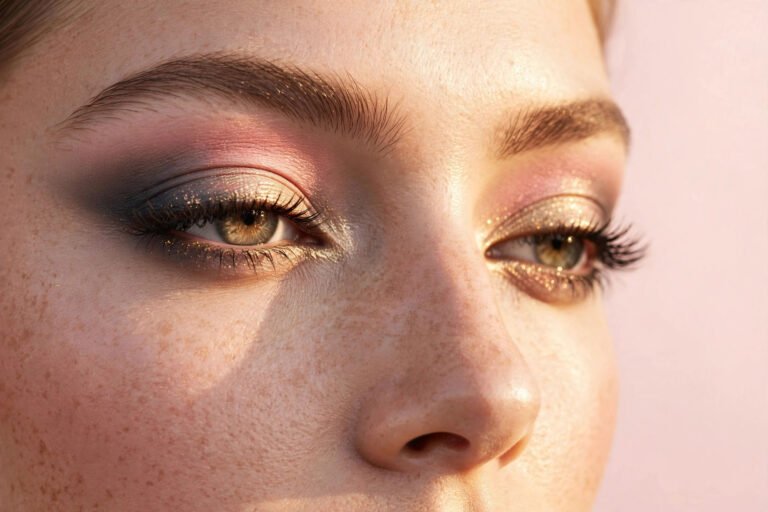
Without mascara, eyeshadow does the heavy lifting for dimension. The key is softness — harsh, graphic shadow without mascara can look unbalanced, while diffused, blended color looks effortlessly polished.
A simple three-shade approach works for most people:
- Transition shade: A matte shade close to your skin tone (or one step deeper) swept through the crease with a fluffy brush. This creates the socket definition that gives eyes shape.
- Lid shade: A soft satin or matte shade on the mobile lid, slightly deeper than the transition. Keep shimmer subtle — a satin finish catches light without the fallout risk of chunky shimmer.
- Outer corner depth: A deeper matte shade pressed into the outer V and blended inward. This is what creates the “finished eye” impression that mascara’s darkness usually provides.
Blend thoroughly — visible edges ruin the softness this look depends on. And keep the lower lash line in mind: a whisper of the transition shade along the lower lashes adds balance and prevents the top-heavy look that sometimes happens without mascara.
Step 4: Brighten the Inner Corner and Lower Waterline Area
Bare lashes can make eyes look smaller if you don’t compensate with brightness. A touch of light, matte eyeshadow or a nude pencil just at the inner corner opens the eyes dramatically. Keep it small and blended — a harsh white triangle looks dated, while a soft champagne glow looks fresh.
For the lower waterline, a nude or skin-toned pencil (rather than white) brightens without looking obvious. This trick is especially effective for anyone who finds dark lower liner too harsh without mascara to balance it. Skip black or dark liner on the lower waterline in a no-mascara look — without mascara on top, it tends to look stark and heavy.
Step 5: Define Your Brows
Brows are the frame, and in a no-mascara look the frame does more work. Groomed, filled brows give the eyes structure and make the whole face look intentional. You don’t need bold Instagram brows — just fill sparse areas with light, hair-like strokes and set with a clear or tinted brow gel.
Match the intensity to the rest of your look. A soft, natural brow pairs with the fresh aesthetic; going too bold on brows while keeping lashes bare can throw off the balance. The goal is harmony: defined but not dramatic.
Step 6: Keep the Rest of the Face Fresh
The no-mascara look shines brightest as part of an overall fresh-face aesthetic. Even, luminous skin keeps attention on the eyes without competing. A touch of blush on the cheeks and a sheer lip color complete the effect — the vibe is “healthy and awake,” not “done up.”
One caution: heavy, full-coverage foundation paired with bare lashes can look mismatched — the skin reads formal while the eyes read casual. If you love full coverage, add slightly more eye definition (deeper crease shade, stronger tightline) to keep everything in the same register. For glasses wearers adapting this look, the makeup guide for glasses wearers has tips on balancing eye definition behind frames.
Adapting the Look for Your Eye Shape
- Hooded eyes: Focus shadow slightly above the crease where it’s visible, and keep the lid shade light. Tightlining matters more than lid color here.
- Deep-set eyes: Keep the crease shade light-to-medium and avoid going too dark in the outer corner, which can make eyes recede further.
- Monolids: A gradient wash of color from lash line upward creates dimension without a crease. Tightlining plus a softly diffused deeper shade near the lashes works beautifully.
- Downturned eyes: Concentrate depth on the outer upper corner and lift with a slightly winged tightline. Keep lower-lash shadow minimal.
- Round or prominent eyes: Deeper outer-corner shading adds the structure that mascara’s darkness usually provides.
Preventing the “Unfinished” Problem
The most common complaint about going mascara-free is looking tired or unfinished. Almost always, the fix is one of these:
- Lashes aren’t curled. Uncurled bare lashes are the top reason the look falls flat. Curl is mandatory.
- No tightlining. Without darkened lash bases, eyes lack the anchor that mascara’s root coating provides.
- Skipping brows. Undefined brows plus bare lashes reads as “no makeup” rather than “no-mascara makeup.”
- Too little contrast. If everything is soft beige, add one deeper element — usually the outer corner or the tightline.
- Tired eyes underneath. Conceal dark circles properly; bare lashes draw more attention to the under-eye area, not less.
Anyone battling eyeliner that won’t stop smudging will appreciate that tightlining with a waterproof formula sidesteps most smudge issues — there’s simply less product in play.
When You Might Still Want Mascara
Honesty check: the no-mascara look isn’t for every occasion. For evening events, photography, or anytime you want maximum drama, mascara (or false lashes) still delivers impact that tightlining can’t match. There’s no virtue in suffering through a look that doesn’t serve the moment.
A good middle ground is the “mascara on top lashes only, one light coat” approach for dressier days, or clear mascara — which grooms and sets the curl without pigment, smudging, or fallout. Clear mascara is also a great gateway for contact lens wearers nervous about going fully bare: all of the grooming, none of the particles.
Frequently Asked Questions
Will I look tired without mascara?
Not if you replace its definition with curling, tightlining, and shadow. Most “tired” complaints come from skipping those steps, not from skipping mascara itself. Properly executed, the no-mascara look reads as fresh and awake — many people find it more flattering than heavy mascara.
Is the no-mascara look good for older eyes?
It’s often better. Heavy mascara can look harsh on mature eyes and emphasize fine lines when it smudges. The soft definition of tightlining plus blended shadow is more forgiving, and skipping mascara eliminates the raccoon-eye risk that bothers many women over 40. Just be sure to curl — lash curl lifts the whole eye area.
Can I do the no-mascara look with contact lenses?
Absolutely — it’s one of the best looks for lens wearers, since it removes the biggest source of lens-irritating fallout. Tightlining is lens-safe when done on the outer lash line with a smooth waterproof formula, and cream shadows produce minimal particles. Insert lenses before makeup as always.
What if my lashes are very light or sparse?
Light lashes are the hardest case for going mascara-free, but tightlining helps enormously — darkening the lash base creates the illusion of density even when individual lashes are pale. A lash tint (done professionally, lasting several weeks) is another excellent option: it darkens lashes semi-permanently with zero daily product. Some people also use a lash serum over time, though results vary and require consistent use.
Does clear mascara count as no-mascara?
Purists might say no, but functionally it belongs in the same family. Clear mascara grooms, separates, and holds a curl without pigment — meaning no smudging, no fallout, no raccoon eyes. For lens wearers and sensitive eyes, it’s the closest thing to a free lunch in eye makeup.
Conclusion
The no-mascara makeup look works because it redistributes definition instead of removing it: curled lashes for lift, tightlining for density, shadow for depth, brows for structure, brightness for openness. It’s faster, gentler on eyes and lenses, and — once the technique clicks — genuinely flattering. Try it for a week; many people find they only reach for mascara on special occasions afterward. And if your eyes have been begging for a break from flakes and smudges, this might be the routine change that finally gives them one.
Love this? Pin it for later!