Eyeliner With Contacts: Tips That Prevent Irritation
Lining your eyes when you wear contact lenses comes with a unique kind of anxiety: the fear that one smudge or flake will land on a lens and turn the rest of your day into a blurry, watery mess. Anyone who has felt gritty liner particles grinding against a lens mid-afternoon knows the misery. The good news is that eyeliner with contacts is completely manageable — the secret is picking the right formula, applying it in the right order, and knowing which techniques are lens-safe and which aren’t.
Most irritation comes down to particles. Powdery pencil liners and flaky gel formulas shed microscopic bits that migrate into the eye and sit on the lens surface. Smooth, waterproof, ophthalmologist-tested formulas don’t do this nearly as much. Combine the right product with lens-first application order and a few placement tweaks, and your liner stays put while your contacts stay comfortable all day.
Key Takeaways
- Always insert contact lenses BEFORE applying any eye makeup — never the reverse.
- Choose smooth, waterproof, ophthalmologist-tested formulas and skip glitter or fiber-heavy liners.
- Keep all eyeliner on the outside of the lash line; lining the inner waterline directly can transfer product onto lenses.
- Pencil liners should be well-sharpened and smooth-gliding — dry, tugging pencils shed the most particles.
- Remove eye makeup gently each night before taking lenses out, and never sleep in liner.
Contact lenses and eye makeup mix safely only with good hygiene. If you get persistent redness, pain, or blurred vision, remove your lenses and see an eye doctor — never push through irritation.
The Golden Rule: Lenses First, Makeup Second
Every safe routine for contact lens wearers starts the same way: wash your hands, insert your contact lenses, and only then reach for makeup. Applying liner before your lenses are in means your fingers — however clean — will pick up liner residue and transfer it straight onto the lens surface. Even a tiny smear of pigment on a lens causes hours of cloudy vision and irritation.
This ordering rule matters in reverse at night too. Remove your makeup first, then take out your lenses. Pulling a lens out through a ring of liner and mascara drags all of that product across the eye and onto the lens, which defeats the careful routine you followed in the morning. Make it a habit: lenses first on, makeup first off.
Choosing an Eyeliner That Won’t Irritate Contacts
Not all eyeliners are equally lens-friendly. Understanding what makes a formula risky helps you shop smarter.
What to look for
- Waterproof or water-resistant formulas: These set once and stay put, so they shed far fewer particles through the day than regular liners.
- Ophthalmologist-tested labeling: This means the product was evaluated for use near the eyes. It’s not a guarantee, but it’s a meaningful baseline.
- Smooth, creamy glide: A liner that deposits color in one pass is safer than a dry pencil that requires multiple scratchy passes over delicate skin.
- No glitter or sparkle: Glitter particles are the worst offenders for lens wearers. Even “eye-safe” glitter can end up on a lens and cause serious discomfort.
What to avoid
Fiber mascaras get most of the attention for fallout, but fiber-heavy liquid liners exist too — skip anything that advertises “lash-lengthening fibers” in a liner format. Kohl pencils that crumble are another problem; if your pencil leaves crumbs on the counter when you sharpen it, it will leave crumbs near your eyes too. And skip any liner with added fragrance near the eyes — fragrance is a known irritant and serves no purpose in an eye product.
A gentle mascara options for sensitive eyes pairs well with a smooth liner, since mascara fallout is the other major source of lens irritation. Choosing both products with lens wear in mind multiplies the comfort benefit.
The Best Liner Types for Contact Lens Wearers
Gel liner in a pot, applied with an angled brush, is many lens wearers’ favorite. It goes on precisely, sets quickly, and rarely flakes. The key is keeping the pot’s surface clean — reseal it promptly and replace it every six months or so, since cream products are magnets for bacteria.
Waterproof liquid liner with a felt tip or brush tip works well for wings and sharp lines, because it stays exactly where you put it. The caveat: some waterproof liquids crack and flake as they age. If your liquid liner starts shedding tiny dark flakes by midday, it has either expired or isn’t the right formula for you.
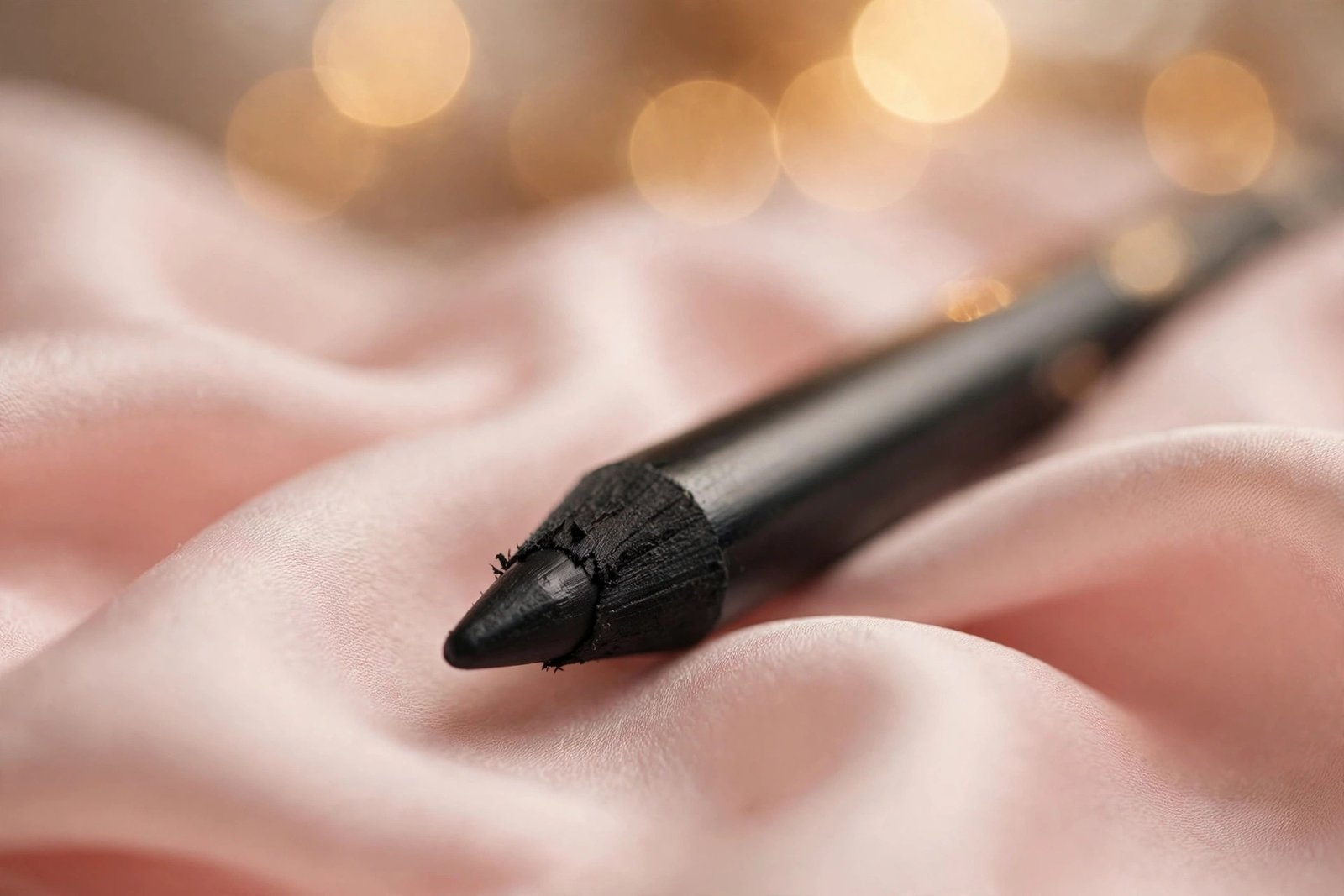
Well-sharpened pencil liner can work, but only the smooth, creamy kind — and only if you keep the tip clean and sharp. Retractable pencils are often smoother than wood pencils, but wood pencils can be sharpened to a hygienic fresh tip, which is a plus for lens wearers concerned about bacteria.
Tightlining: The Lens-Wearer’s Best Technique
Tightlining — filling in the tiny gaps between the lashes along the upper lash line — is arguably the ideal eyeliner technique for contact lens wearers. It defines the eyes beautifully without any product sitting on the waterline where it can migrate onto a lens. Here’s how to do it safely:
- Insert lenses first and let them settle for a minute before starting.
- Use a waterproof gel or pencil that glides without tugging — tugging pulls the lid and increases the chance of the tip touching the eye surface.
- Fill between the lashes on the upper lid only, working from the outer corner inward with short, gentle strokes.
- Stay on the lash line, not below it. The goal is pigment between lash roots, not on the inner rim.
- Set it with a matching eyeshadow pressed over the line if you want extra staying power — powder over liner reduces smudging.
Tightlining gives the illusion of thicker lashes without a visible liner line, and because the product sits above the waterline, the risk of it reaching your lenses is minimal. For anyone wondering how to stop mascara from smudging under eyes, the same above-the-waterline principle applies: keeping product away from the inner rim prevents most transfer problems.
Waterline Safety: What Lens Wearers Should Know
The waterline — the inner rim of the lid between the lashes and the eyeball — is the riskiest place to apply eyeliner when you wear contacts. Every blink presses that product directly against the lens. Dermatologists and optometrists generally advise against waterline liner for lens wearers, and if your eyes are sensitive, it’s the first thing to drop.
That said, some people with sturdy eyes do it without issues. If you choose to line your waterline:
- Use only a waterproof, ophthalmologist-tested pencil — never liquid or gel on the waterline.
- Apply it in one light pass; layering builds up a thick deposit that migrates faster.
- Skip it entirely on days your eyes feel dry, since dry eyes plus liner equal guaranteed discomfort.
- Never share waterline pencils, and sharpen (or twist up a fresh tip) before each use.
If waterline liner consistently irritates you, try the “outer waterline” compromise: line just outside the lash line on the lower lid instead. You get the defined look with far less product near the eye’s surface.
For those who wear glasses over contacts or alternate between the two, the complete guide to makeup for glasses wearers covers how liner placement changes when frames enter the picture.
Preventing Smudging Throughout the Day
Smudged liner isn’t just a cosmetic issue for lens wearers — migrated liner is irritating liner. A few habits keep your liner locked in place:
- Prime your lids. An eyeshadow primer grips liner and dramatically extends wear time, especially on oily lids.
- Set pencil liner with shadow. Pressing a matching powder eyeshadow over pencil liner acts like a seal.
- Blot, don’t rub. If your eyes water, press a tissue gently at the corner rather than dragging across the liner.
- Carry a clean cotton swab. For midday touch-ups, a dry swab cleans up smudges without adding more product near the lens.
- Avoid waterproof-remover overkill in the morning. Save the heavy-duty removers for nighttime; harsh rubbing in the morning irritates lids before the day even starts.
Hygiene Habits That Protect Your Eyes
Good hygiene is the unglamorous backbone of irritation-free liner wear. Replace pencil sharpeners when they dull (a dull sharpener drags bacteria into the pencil core). Never use saliva to wet a liner brush. Cap products tightly, and respect expiry dates — cream and liquid eye products generally last about six months after opening, and using them longer raises infection risk.
Never share eye makeup, and be wary of testers at beauty counters — if you must swatch a liner, test it on the back of your hand, never near your eyes. Wash your liner brushes weekly with gentle soap; an angled liner brush accumulates pigment and skin oils that can transfer bacteria to the lash line.
Removing Eyeliner Safely at Night
Removal matters as much as application. Use a gentle, oil-based or dual-phase eye makeup remover — oil dissolves waterproof formulas without harsh rubbing. Saturate a cotton pad, press it gently against the closed lid for 15–20 seconds to dissolve the liner, then wipe downward in one soft motion. Repeat rather than scrubbing.
Once all makeup is off, wash your hands again and remove your lenses. Clean and store them exactly as your eye doctor instructed — never “top off” old solution, and never rinse lenses in tap water. A thorough nighttime routine means you start every morning with clean lenses and calm eyes.
Frequently Asked Questions
Can I wear eyeliner every day with contacts?
Yes, as long as you use lens-friendly formulas, apply lenses before makeup, and remove everything gently each night. Many daily lens wearers line their eyes every day without issues. If you notice recurring irritation, take a short break from liner and reintroduce one product at a time to identify the culprit.
Is it safe to tightline with contacts in?
Tightlining is one of the safest liner techniques for lens wearers because the product stays on the lash line rather than the waterline. Use a smooth, waterproof formula, work gently without tugging the lid, and stop if you feel any scratching or discomfort.
Why does my eyeliner sting when I wear contacts?
Stinging usually comes from one of three sources: product migrating onto the lens (often from waterline application), an irritating ingredient like fragrance or glitter, or dry eyes making the lens surface more reactive. Switching to a waterproof formula, keeping liner off the waterline, and using rewetting drops can each help — but persistent stinging deserves an eye doctor’s opinion.
Should I switch to daily disposable lenses if I wear eyeliner?
Daily disposables can help because you start each day with a fresh, deposit-free lens. Many makeup wearers find disposables more comfortable than lenses that accumulate a month of cosmetic residue. Ask your eye doctor whether dailies suit your prescription and lifestyle.
Can I use waterproof eyeliner remover with contacts?
Remove your contacts before using any strong makeup remover, especially oil-based or dual-phase formulas. Residue from removers can coat lenses and cause prolonged blurriness. The safe order is always: remove makeup first, then remove lenses.
Conclusion
Eyeliner with contacts comes down to three habits: lenses before makeup, smooth waterproof formulas kept off the waterline, and gentle removal every night. Tightlining gives you definition with minimal risk, and good hygiene protects the eyes that make the whole routine possible. Once these habits are automatic, you’ll stop thinking about your lenses entirely — which is exactly how comfortable contact lens wear should feel. For the bigger picture, the safe makeup routine for contact lens wearers ties liner, mascara, and shadow into one lens-safe routine.
Love this? Pin it for later!