How to Add Volume to Fine Hair (11 Tricks That Work)
Fine hair falling flat by midday is one of the most common frustrations in the beauty world — and it’s rarely a problem with the hair itself. Fine hair isn’t thin hair; it describes the diameter of each strand. You can have a head full of fine hair that still looks limp if the strands cling together, lose lift at the roots, or get weighed down by products meant for coarser textures.
The good news: volume in fine hair is almost entirely a technique game. The right combination of washing, drying, cutting, and styling habits can transform how full your hair looks — and the effects can last all day, not just the first hour after styling. This guide walks through 11 tricks that stylists recommend for fine hair, from the shower onward.
If you’re just getting started with understanding your hair type, the complete guide to thin, fine hair covers the fundamentals first.
Key Takeaways
- Volume for fine hair starts in the shower: lightweight shampoo, conditioner on ends only, and cool rinses protect natural lift.
- How you dry matters more than what you use — flipping your part, rough-drying upside down, and lifting roots with a brush are the biggest wins.
- Strategic layers and the right haircut shape do half the work before any product touches your hair.
- Lightweight, targeted products beat heavy formulas every time; apply volumizers only at the roots.
- Touch-ups throughout the day (a quick scalp massage, a puff of dry shampoo) keep fullness alive until evening.
1. Shampoo the Roots, Condition the Ends Only
Most people apply conditioner like shampoo — from roots to tips. On fine hair, that’s a volume killer. Roots don’t need the extra slip and weight that conditioner provides; they need to stand away from the scalp. Concentrate conditioner from the mid-lengths to the ends only, where hair is older and genuinely needs moisture.
A related habit worth breaking: washing too often or too rarely. Overwashed fine hair loses its natural texture; underwashed hair goes flat at the crown from oil buildup. Most fine-haired people do best washing every other day, with the best dry shampoo for fine hair on non-wash days to refresh the roots in between.
2. Rinse With Cooler Water
Hot water opens the hair cuticle, which is great for a deep-conditioning treatment but not for lift. A cooler final rinse smooths the cuticle, which makes strands less likely to cling together and fall flat. You don’t need an ice-cold rinse — just turn the temperature down for the last 30 seconds. The difference in root body is noticeable once hair is dry.
3. Flip Your Part While Hair Is Damp
This is one of the simplest tricks in this list and one of the most effective. When hair is nearly dry, flip your part to the opposite side — or at least change where your part sits. Roots trained in one direction lie flat; moving the part forces them to lift against their usual pattern, which creates instant fullness at the crown.
For even more lift, try parting hair down the middle of the opposite side from your usual one every few days. Alternating trains the roots to stay upright rather than defaulting to flat.
4. Rough-Dry Upside Down Before Touching a Brush
Don’t reach for the round brush while hair is dripping wet. Instead, flip your head forward and rough-dry with your fingers, keeping the dryer moving constantly. This removes the bulk of the moisture while gravity pulls the roots away from the scalp — exactly the opposite of the flat position they take when dried upright against the head.
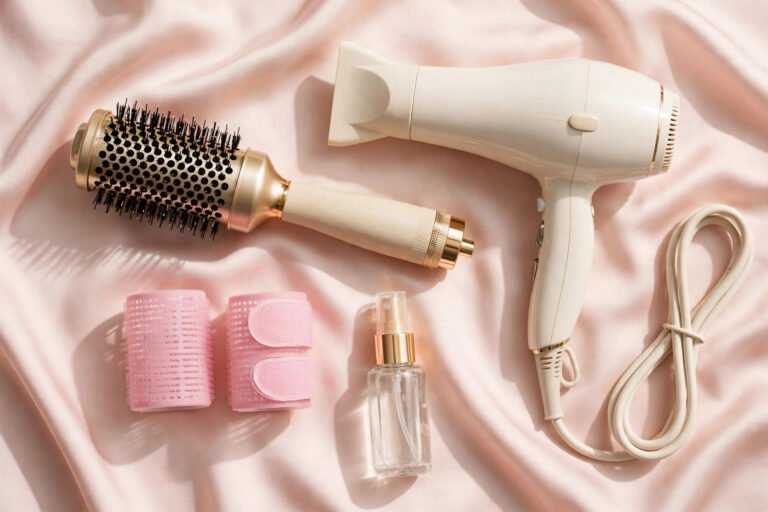
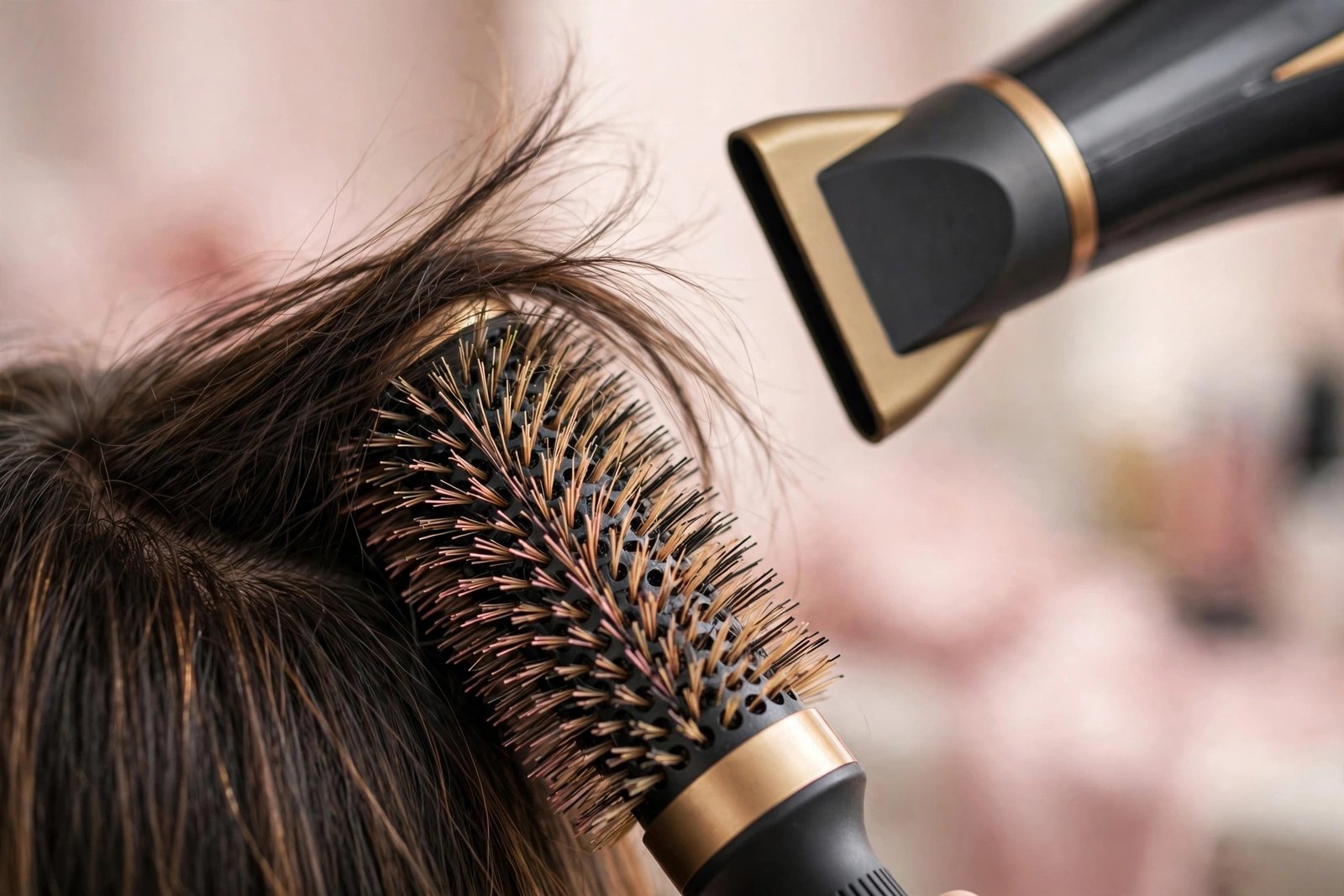
Once hair is about 80% dry, flip back up and finish with a round brush to smooth the lengths and polish the roots. This two-step sequence is the foundation of a salon-style blowout at home, and it’s where most of the volume in a professional blowout actually comes from.
5. Dry the Roots First, in the Opposite Direction
If you only remember one blow-dry rule, make it this: the roots determine everything. Direct the dryer’s airflow at the roots first, blowing them in the opposite direction from where they will ultimately fall. Hair that cools in the lifted position holds its shape much longer than hair blasted in its final position.
Use a nozzle attachment to concentrate airflow, and keep the dryer moving so no section overheats. Fine hair heats up quickly, so moderate heat with a finishing cool shot is the sweet spot.
6. Use a Lightweight Volumizing Mousse at the Roots
A pea-to-golf-ball amount of lightweight mousse, worked through damp roots only, gives fine hair the grip and structure it lacks naturally. The key word is lightweight — heavy mousses and creams coat fine strands and pull them down. Apply to roots with fingertips while hair is damp, then dry as described above.
Choosing the right formula matters enormously for fine hair, which is why a curated list helps. The top volumizing products for fine hair that add body without weight breaks down the lightweight picks worth trying.
7. Add a Root-Lifting Powder or Spray After Drying
Once hair is fully dry, dust a small amount of volumizing powder or mist a root-lifting spray right at the crown and part line. These products work by adding micro-texture to the roots so strands can’t slide flat against each other. Massage in gently with fingertips for the most natural-looking lift.
The common mistake is over-application. Start with less than you think you need — a light dusting — because fine hair shows buildup quickly and too much product can make roots look chalky instead of full.
8. Try a Strategically Layered Haircut
A haircut does as much for volume as any styling trick. Blunt, one-length cuts let fine hair hang as a single heavy curtain, while long, face-framing layers and a slightly rounded silhouette encourage the hair to sit away from the head. Ask your stylist for layers that start around the chin or cheekbones for movement, and avoid razor-thin ends, which make fine hair look wispy.
Shorter styles — a blunt bob with soft internal layering, a textured lob — often read fuller than long, unlayered hair on fine textures. The complete guide to thin, fine hair goes deeper into haircut choices that maximize fullness.
9. Backcomb Gently — Then Smooth Over the Top
Teasing still works, but the modern version is subtle. Take a one-inch section at the crown, hold it straight up, and use a fine-tooth comb to push hair down toward the scalp in two or three short strokes — never saw back and forth, which damages fine strands. Then smooth an unteased layer over the top so the finish looks soft and natural.
Because fine hair is more fragile than coarse hair, reserve this for special occasions rather than daily use, and always use a light touch.
10. Sleep on a Silk or Satin Pillowcase
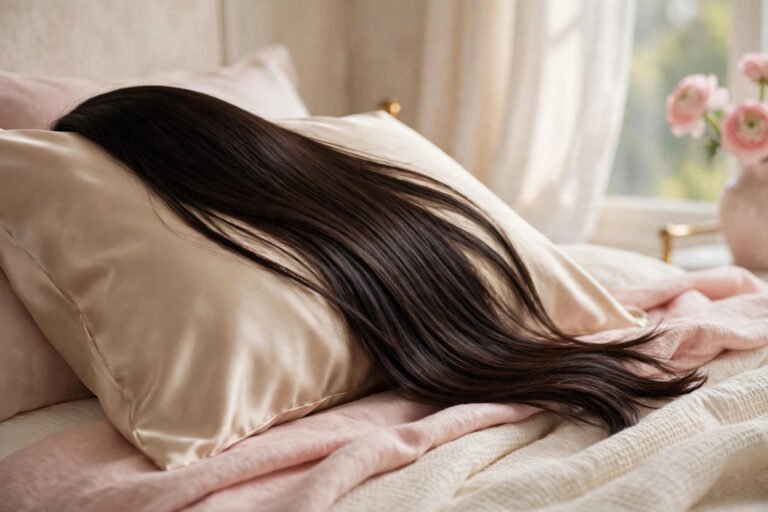
Overnight friction flattens whatever volume you built during the day. Cotton pillowcases grip the hair and compress it flat; silk or satin lets hair glide, preserving root lift and reducing frizz. Gathering hair into a loose, high bun (a “pineapple”) on top of the head before sleep keeps the roots lifted while you sleep.
Morning after, flip your head forward, shake gently at the roots, and apply a touch of dry shampoo to revive any areas that flattened overnight.
11. Get Regular Trims to Remove Split, Stringy Ends
Split ends on fine hair are more than a cosmetic issue — they make the bottom half of your hair look stringy and thin, which drags down the whole silhouette. Trimming every 8 to 12 weeks keeps ends blunt and full-looking, which makes hair look thicker from roots to tips.
Between trims, minimize heat damage with a heat protectant and avoid aggressive brushing when hair is wet, since wet fine hair stretches and snaps easily. If you’re noticing more shedding than usual alongside flatness, the complete guide to hair fall control can help you sort out whether breakage or shedding is the culprit.
Frequently Asked Questions
Why does my fine hair go flat so quickly after styling?
Usually it’s one of three things: too much product (fine hair needs very little), oil buildup at the roots weighing strands down, or styling in the direction the hair wants to lie flat. Washing roots well, using lightweight products, and drying roots against their natural fall all extend how long volume lasts.
Is fine hair the same as thin hair?
No. Fine describes the diameter of each individual strand, while thin describes density — how many strands you have. You can have fine hair that’s dense, or coarse hair that’s thin. Volume tricks help both, but the techniques differ slightly; the complete thin and fine hair guide explains the distinction in detail.
Does layering really help fine hair look thicker?
Yes, when done strategically. Well-placed layers remove just enough weight for hair to lift at the roots while keeping the ends looking full. The wrong kind of layers — too many, too short, or razor-thinned — can make fine hair look wispier, so a stylist who understands fine textures matters.
Can diet or supplements add volume to fine hair?
No supplement changes your hair’s natural diameter, but deficiencies in iron, protein, or certain vitamins can increase shedding, which reduces density and makes hair look flatter overall. If hair is thinning beyond its usual texture, the complete guide to hair fall control covers when to look into underlying causes.
What’s the fastest way to add volume to fine hair in 5 minutes?
Flip your part, apply dry shampoo or root powder at the crown, massage the roots with your fingertips, and finish with a cool blast from the dryer pointed at the roots. That combination takes under five minutes and reliably revives flat hair.
The Bottom Line
Adding volume to fine hair isn’t about fighting your texture — it’s about working with it. Lightweight products, root-focused drying, strategic layers, and a few daily habits create fullness that looks natural and lasts. Pick two or three tricks from this list to start, master them, then layer in more. Your hair doesn’t need to change; the approach just needs to match the hair you have.
Love this? Pin it for later!