Best Sunscreen for Teenagers: Teen-Friendly SPF Types With No White Cast
If there’s one skincare battle parents and teens both lose, it’s sunscreen. Teens skip it because it feels greasy, leaves a white cast, stings their eyes, or pills under makeup. And yet sunscreen is the single most impactful skincare step a teenager can take — UV damage accumulates over a lifetime, and the habits built now shape skin health for decades.
The good news: sunscreen formulas have improved dramatically. Today’s best sunscreen options for teenagers are lightweight, affordable, and genuinely pleasant to wear — no ghostly cast, no heavy grease. The trick is knowing which type of formula to look for, because not all sunscreens are teen-friendly.
This guide breaks down sunscreen by formula type (not brand hype), explains what “broad-spectrum SPF 30” actually means, and shares practical strategies for getting a teenager to wear SPF every single day. No testing claims, no sponsored picks — just honest, research-based guidance.
Sunscreen is step three of our [skincare routine for teens → skincare-routine-for-teens], and it pairs with the lightweight hydration from our [best moisturizer for teen skin → best-moisturizer-for-teen-skin] guide.
Key Takeaways
- Teens need broad-spectrum SPF 30 or higher, applied every morning.
- The best sunscreen for teenagers is one they’ll actually wear: lightweight, no white cast, affordable.
- Gel, fluid, and stick formulas tend to suit teen skin better than thick creams.
- Mineral and chemical filters both work — choose based on skin sensitivity and cast concerns.
- Most people under-apply: teens need about a full finger-length of product for the face.
- Reapply every 2 hours outdoors; a powder or spray SPF makes school-day touch-ups realistic.
- Sunscreen doesn’t cause acne when you choose oil-free, non-comedogenic formulas.
Why Sunscreen Matters More for Teens Than They Think
Here’s the stat worth sharing with a skeptical teenager: the majority of lifetime sun exposure happens before age 18 for many people, simply because teens spend more time outdoors — sports, school, hanging out. UV damage is cumulative and largely invisible until years later, when it shows up as dark spots, uneven texture, and premature aging.
There’s also a short-term argument teens actually care about: sun exposure worsens acne marks. Those red or brown spots left behind after a breakout (post-inflammatory hyperpigmentation) darken and linger much longer without sun protection. Daily SPF is genuinely one of the fastest ways to help old blemish marks fade.
Sunscreen Basics: What the Label Means
- SPF 30+: Blocks about 97% of UVB rays (the burning rays). Higher numbers offer marginally more protection, but proper application matters far more than SPF 50 vs. 100.
- Broad-spectrum: Protects against both UVB (burning) and UVA (aging, deeper damage). Non-negotiable — always check for this.
- Water-resistant: Lasts through sweat and swimming for 40–80 minutes (the label will specify). Not waterproof — reapplication is still required.
- Non-comedogenic / oil-free: Won’t clog pores. Essential for acne-prone teen skin.
The Best Sunscreen Types for Teenagers
1. Lightweight Gel Sunscreens — Best for Oily Teen Skin
Water-based gel SPFs are the top pick for oily, acne-prone teens. They absorb in seconds, leave a natural or matte finish, and don’t add shine to an already-shiny T-zone. Many are formulated with oil-absorbing ingredients and layer cleanly under makeup. If your teen’s #1 complaint is “sunscreen makes me greasy,” this is the category to try first.
2. Fluid / Serum Sunscreens — Best for a Barely-There Feel
Ultra-fluid SPF formulas feel like a light serum rather than a cream. They spread easily (which helps with getting enough product on), leave minimal residue, and work well under makeup. These are often the easiest “gateway” sunscreens for teens who’ve sworn off SPF entirely because of heavy formulas they tried as kids.
3. Tinted Mineral Sunscreens — Best for No White Cast on Deeper Skin Tones
Traditional mineral sunscreens (zinc oxide, titanium dioxide) are notorious for white cast, which is a dealbreaker for medium and deep skin tones. Tinted mineral formulas solve this: iron oxides in the tint offset the whiteness while adding a touch of evening-out coverage many teens appreciate. They’re also a good choice for sensitive or reactive skin, since mineral filters sit on top of skin rather than absorbing into it.
4. Chemical Sunscreens with Modern Filters — Best Lightweight Everyday Option
Chemical (organic) filters absorb UV and convert it to heat. Modern chemical sunscreens are typically the most cosmetically elegant — truly invisible on all skin tones, lightweight, and affordable. They’re an excellent everyday choice for teens without sensitive skin. (Note: a small number of people are sensitive to certain chemical filters like oxybenzone; if stinging or redness occurs, switch to a mineral formula.)
5. Sunscreen Sticks — Best for Reapplication and Sports
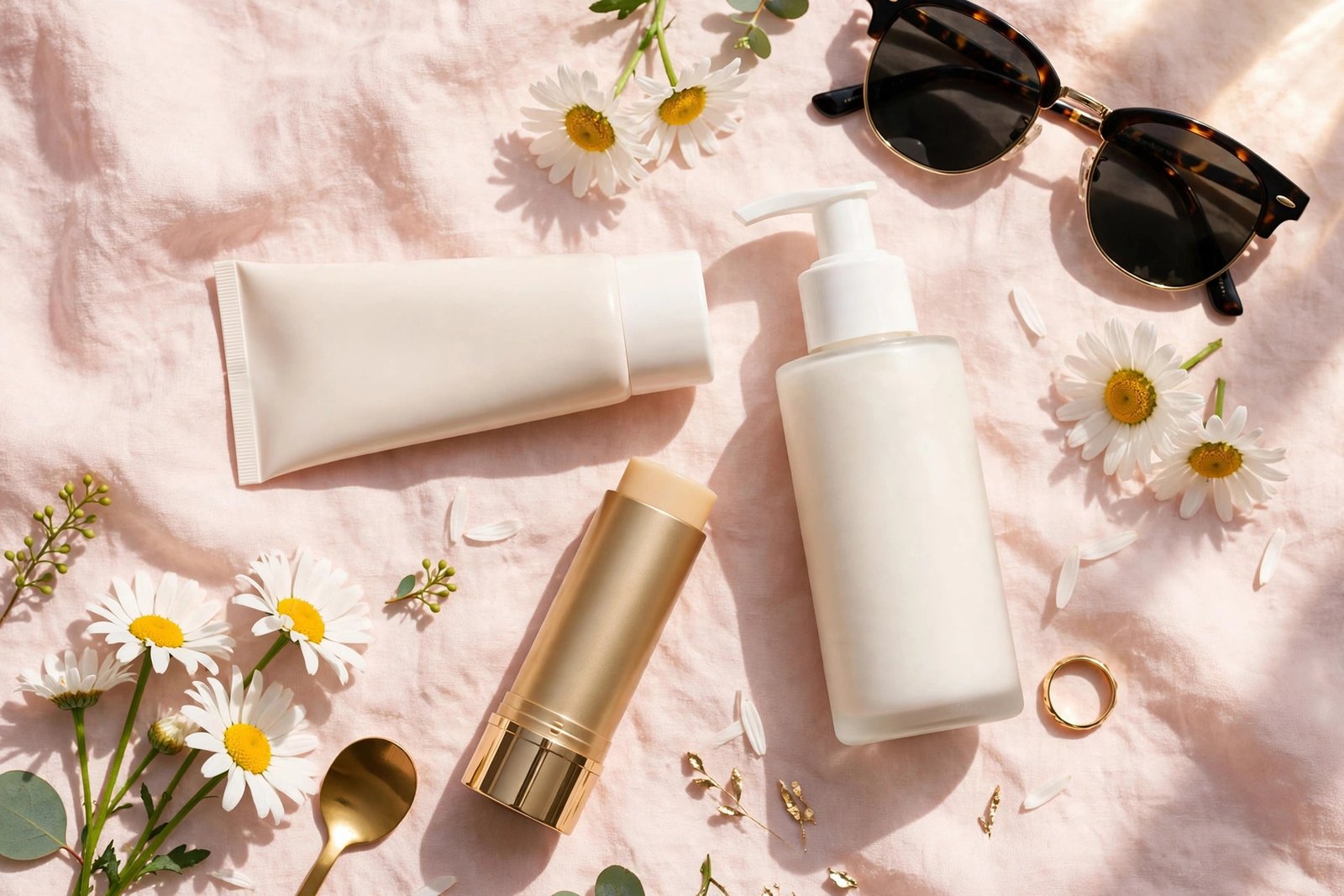
Twist-up SPF sticks are a teen game-changer for two scenarios: reapplying over makeup (no mess, no ruined base) and sideline/bag-friendly touch-ups during sports. They’re compact, spill-proof, and easy for younger teens to use independently. Use them for reapplication rather than the first full morning application — it’s hard to get complete, even coverage with a stick alone.
6. SPF Powders and Sprays — Best for School-Day Touch-Ups
Brush-on mineral SPF powders and fine-mist sprays make midday reapplication realistic for teens who won’t excuse themselves to reapply a cream. Powders double as shine control (a bonus for oily skin), while sprays work over bare skin. Neither replaces a proper morning base layer, but both beat zero reapplication.
7. Affordable Drugstore Formulas — Best for the Budget
Here’s the truth the beauty industry won’t advertise: price doesn’t predict protection. All sunscreens sold in regulated markets must meet the same SPF testing standards whether they cost $8 or $48. Many excellent teen-friendly options live at the drugstore. For a teen who goes through product quickly (as they should — generous application uses product fast), affordable is smart.
Mineral vs. Chemical: Which Is Better for Teens?
Both protect effectively when used correctly. The practical differences:
| Mineral | Chemical | |
|---|---|---|
| How it works | Sits on skin, reflects/scatters UV | Absorbs into skin, absorbs UV |
| White cast | More likely (tinted versions fix this) | Rarely |
| Best for | Sensitive, reactive, very young skin | Oily skin, deeper skin tones, under makeup |
| Feel | Can be thicker | Usually lighter |
For most teens, the “best” type is whichever one they’ll wear daily without complaint. If mineral works for their skin and tone, great. If only a weightless chemical fluid gets worn, that’s the winner — worn sunscreen always beats the “perfect” sunscreen sitting in a drawer.
How Much to Apply (Teens Almost Always Under-Apply)
Studies consistently show people apply about a quarter to half of the tested amount of sunscreen — which means an SPF 30 applied thinly performs more like SPF 8. Teach teens the two-finger rule: squeeze a line of sunscreen along the full length of the index and middle fingers. That’s roughly the right amount for face and neck.
Other application tips:
– Apply 15 minutes before going outside (for chemical sunscreens especially).
– Don’t forget ears, the back of the neck, and the tops of hands.
– Reapply every 2 hours outdoors, and immediately after swimming or heavy sweating.
– At school, a midday powder or stick touch-up is a realistic compromise.
Getting a Teen to Actually Wear Sunscreen
The best formula in the world fails if it stays in the bottle. Strategies that work:
- Let them choose. Take your teen to the store (or browse together online) and let them pick the texture and format. Ownership drives compliance.
- Solve their specific complaint. Greasy? Try a gel. White cast? Try a tinted mineral or chemical fluid. Stings eyes? Try a mineral stick around the eye area.
- Make it effortless. Keep sunscreen next to the toothbrush, in the sports bag, and by the front door. Friction kills habits.
- Connect it to what they care about. Acne marks fading faster is a more motivating argument for most teens than “preventing wrinkles in 30 years.”
- Model it. Teens who see a parent apply SPF daily are far more likely to adopt the habit.
Sunscreen and Acne: What Teens Worry About
“Sunscreen breaks me out” is the most common teen objection — and it’s usually a formula problem, not a sunscreen problem. Heavy, fragranced, or comedogenic sunscreens can indeed clog pores. The fix: oil-free, non-comedogenic, fragrance-free formulas in gel or fluid textures. If breakouts persist, the sunscreen may not be the culprit — check the full routine against our guide to [skincare mistakes teens should avoid → skincare-mistakes-teens-should-avoid].
Also worth knowing: some acne treatments (benzoyl peroxide, adapalene, AHAs) increase sun sensitivity, making daily SPF even more important during treatment. Our [how to treat teenage acne → how-to-treat-teenage-acne] guide covers this in detail.
Frequently Asked Questions
What SPF should teenagers use?
Broad-spectrum SPF 30 or higher for daily use. SPF 30 blocks about 97% of UVB rays when applied generously. Higher SPFs (50+) are fine and offer a small margin of error for under-application, but no sunscreen compensates for using too little.
Is sunscreen safe for young teens and pre-teens?
Yes. Sunscreen is safe and recommended for children over 6 months old, and daily use should be a habit well before the teen years. For younger teens with sensitive skin, mineral formulas (zinc oxide/titanium dioxide) are often the gentlest starting point.
Can teens use the same sunscreen as adults?
Usually yes — sunscreen isn’t age-specific the way retinoids are. The main consideration is cosmetic: teens tend to prefer lighter, less greasy formulas than the rich creams marketed to adults. Sharing a family sunscreen is fine if the teen will actually wear it.
Does sunscreen expire?
Yes — typically 3 years from manufacture, and the expiration date is printed on the bottle. Expired sunscreen may not provide the labeled protection. Also discard sunscreen that’s been baking in a hot car all summer; heat degrades the formula.
Should teens wear sunscreen indoors or on cloudy days?
UVA rays penetrate clouds and windows, so daily morning application is the simplest rule — no weather-based decisions required. If a teen is indoors all day away from windows, reapplication isn’t critical, but the morning layer should still go on as habit.
Do teens with dark skin need sunscreen?
Absolutely. While melanin provides some natural protection (roughly equivalent to SPF 13), it’s not enough to prevent UV damage, hyperpigmentation, or skin cancer. Everyone needs sunscreen regardless of skin tone — and modern no-cast formulas mean there’s no excuse tied to appearance.
Daily sunscreen is the highest-leverage habit in teen skincare — cheap, simple, and protective for decades. Find the formula type your teen will actually wear, keep it where they’ll see it, and let the habit do the work. For the complete routine it fits into, see our [skincare routine for teens → skincare-routine-for-teens], and compare with oil-focused options in our [best sunscreens for oily, acne-prone skin → best-sunscreens-oily-acne-prone-skin-no-white-cast] guide.
skincare routine for teens
best moisturizer for teen skin
how to treat teenage acne
skincare mistakes teens should avoid
best sunscreens for oily, acne-prone skin
Love this? Pin it for later!