Best Hairstyles for Men by Face Shape (With Photos)
The right haircut can sharpen your jawline, balance your proportions, and make your whole face look more defined. The wrong one can do the opposite. The difference usually comes down to one thing most men never think about: face shape. A great barber instinctively considers it, but walking in knowing exactly what suits your face shape puts you in control of the result. This guide breaks down the best hairstyles for men by face shape — what to ask for, what to avoid, and how to style each cut at home. If you are building your overall grooming routine, pair this with our complete men’s hair care and styling guide for product and maintenance basics.
Key Takeaways
- Most faces fall into one of five shapes: oval, round, square, oblong/long, or heart. A mirror and a tape measure are enough to find yours.
- The universal rule: add height where the face is wide, and add width where the face is long — hairstyles that balance proportions flatter everyone.
- Oval faces suit almost anything, including longer styles. Round faces benefit from height on top and shorter sides. Square faces look best with softened edges or sharp structure, depending on preference.
- Oblong faces should avoid excess height on top; heart faces look balanced with volume at the jawline.
- Bringing a reference photo and using clear barber terminology (“taper,” “textured crop,” “scissor cut”) gets better results than vague requests.
How to Determine Your Face Shape
Before choosing a cut, you need to know your shape. Stand in front of a mirror with your hair pulled back (or wet it down) and look at the proportions of your forehead, cheekbones, and jaw.
The Mirror Method
Trace the outline of your face on the mirror with a washable marker, then step back and look at the shape. Is it wider than it is tall? Does the jaw angle sharply, or curve softly? Is the forehead the widest point, or are the cheekbones? This quick method is surprisingly accurate.
The Measurement Method
For a more precise answer, measure three distances with a flexible tape measure: forehead width (temple to temple), cheekbone width, and jawline width (corner to corner), plus the length from hairline to chin. Then match your numbers to the profiles below:
- Oval: Length is greater than width; jaw is softly rounded and narrower than the cheekbones.
- Round: Length and width are nearly equal; full cheeks with a soft, curved jawline.
- Square: Forehead, cheekbones, and jaw are roughly equal in width; strong angular jaw.
- Oblong/Long: Length is noticeably greater than width; forehead and jaw are similar in width with a long chin.
- Heart: Forehead is the widest point; the face narrows to a pointed or narrow chin.
- Diamond: Cheekbones are the widest point; forehead and jaw are both narrow. (Diamond faces generally follow heart-face guidance.)
Once you know your shape, you can match a cut to it instead of guessing. For more on this logic, see our detailed haircuts for face shapes guide.
Best Hairstyles for Oval Faces
Oval is the most versatile face shape in men’s grooming — proportions are naturally balanced, so almost any cut works. The goal is simply not to disturb that balance: avoid heavy fringes that hide the forehead and shorten the face, since oval faces already have ideal proportions.
Flattering Cuts for Oval Faces
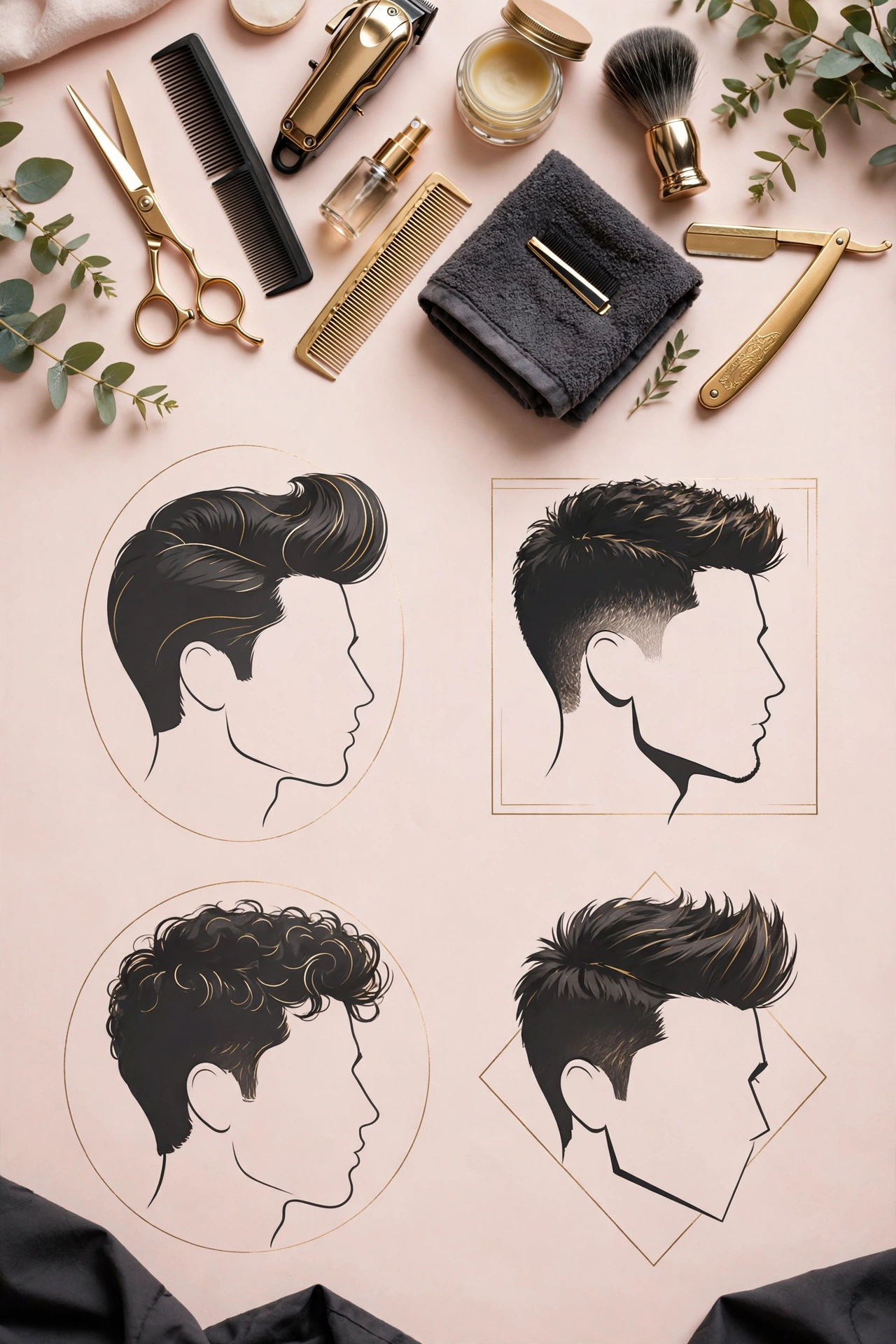
- Classic taper with length on top: Short back and sides with 3–5 inches on top, swept back or to the side. Ask for a “classic scissor cut with a tapered neckline.”
- Textured quiff: Volume at the front with tapered sides. Works well for medium to thick hair.
- The side part: A timeless choice — neat on the sides, parted with a comb, finished with a medium-hold pomade.
- Longer styles: Oval faces carry man buns, longer layers, and curtains better than most shapes, because extra length doesn’t throw off the balance.
What to Avoid
Heavy, straight-across fringes that cover the forehead can make an oval face look shorter and rounder. If you like fringe, keep it textured and swept to the side rather than blunt.
Best Hairstyles for Round Faces
Round faces need structure and height. The aim is to elongate: volume on top, kept-slim sides, and defined lines that create angles where the face is soft.
Flattering Cuts for Round Faces
- Textured crop with height: Short sides (a fade or taper) with 2–3 inches of textured length on top, styled upward or forward with matte clay.
- Pompadour or quiff: Classic volume on top draws the eye upward and lengthens the face visually.
- Side part with a hard part line: The defined part adds structure; keep the sides neat.
- Faux hawk: Height down the center with short sides — a bold option that works with the elongation rule.
What to Avoid
Bowl cuts, long all-over-one-length hair, and center parts tend to emphasize roundness. Beards can help here — a beginner’s beard grooming guide explains how facial hair adds jaw definition that complements these cuts.
Styling Tips for Round Faces
Use a matte product (clay or paste) rather than high-shine pomade, which flattens the look. Blow-dry the top upward with a vent brush before applying product — the lift is what creates the elongating effect. Our step-by-step guide to styling men’s hair covers blow-drying technique in detail.
Best Hairstyles for Square Faces
Square faces already have the strong jawline most men want, so the styling question is one of emphasis: sharpen the angles with a crisp cut, or soften them with texture. Both work — it depends on the look you prefer.
Flattering Cuts for Square Faces
- Undercut: Short, disconnected sides with longer hair on top. The contrast highlights the jawline.
- Textured crop: Softens strong angles while keeping a masculine edge.
- Buzz cut with a skin fade: Shows off the bone structure completely. Best with some facial hair to avoid looking overly severe.
- Classic side part: Neat, professional, and lets the natural jawline do the talking.
What to Avoid
Very long hair that falls flat around the face can widen the appearance of an already wide jaw. If you wear it long, add layers and keep it off the face.
Best Hairstyles for Oblong and Long Faces
For oblong faces, the rule flips: avoid adding height on top, and add width at the sides instead. Anything that makes the face look longer is the enemy here.
Flattering Cuts for Oblong Faces
- Side-swept fringe: Hair swept across the forehead shortens the face visually — one of the most effective tricks for long faces.
- Textured crop with fringe: Short sides, but with the top worn forward rather than up.
- Medium-length layers: Hair that sits at or below the ears adds width at the sides.
- Buzz cut: Removing length entirely removes the elongation problem — a clean, low-maintenance fix.
What to Avoid
High pompadours, tall quiffs, and spiky styles add vertical inches you don’t need. Keep volume controlled and directed forward or to the side.
Best Hairstyles for Heart and Diamond Faces
Heart faces are widest at the forehead and narrow at the chin. The goal is to add fullness at the jawline and reduce width at the forehead.
Flattering Cuts for Heart Faces
- Medium-length textured styles: Length around the ears and jaw adds width where it’s needed.
- Side part with volume at the sides: Avoid slicked-back styles that expose the full forehead.
- Longer fringe: Covers a wide forehead and balances the narrow chin.
- Beard or stubble: Facial hair fills out a narrow jawline beautifully — see our beard grooming guide for beginners for shaping tips.
What to Avoid
Slicked-back hair and very short sides emphasize the forehead-to-chin imbalance. Keep some softness around the face.
What to Tell Your Barber
Knowing your face shape only helps if you can communicate it. Most barbers appreciate specific language. Here is a script that works:
- State the shape: “I have a round face, so I want something that adds height on top.”
- Name the cut: Use real terms — taper fade, textured crop, scissor cut, undercut, hard part.
- Give lengths: “About two inches on top, tapered to a one on the sides” beats “short on the sides.”
- Show a photo: Save 2–3 reference photos on your phone. A picture resolves ambiguity that words can’t.
Also be honest about your routine: if you won’t blow-dry every morning, say so. A good barber will steer you toward a cut that works with air-drying. For product choices once you’re home, the men’s hair care and styling guide breaks down which products suit which hair types.
Common Mistakes Men Make With Haircuts
- Copying a celebrity’s cut without the same face shape. The cut you love on an actor with a square jaw can look entirely different on a round face.
- Ignoring hair texture. Fine hair won’t hold a tall quiff the way thick hair will, regardless of face shape. Texture is the second filter after shape.
- Keeping the same cut for years. Faces change — weight shifts, hairlines move. Reassess your shape and cut every year or two.
- Skipping maintenance. Most men’s cuts look best for 3–5 weeks. Book the next appointment before you leave the chair.
Frequently Asked Questions
How do I know my face shape for sure?
Pull your hair back, look in a mirror, and compare your forehead, cheekbone, and jaw widths plus face length against the profiles in this guide. For certainty, measure with a flexible tape. Most people fall clearly into one category; if you’re between two, choose styling advice from both.
What is the most attractive face shape for men?
There is no universally “best” shape — attractiveness research generally points to symmetry and clear bone structure, which every face shape can achieve with the right cut. Square and oval faces are often cited in media, but a well-chosen cut flatters any shape.
Can I change my face shape with a haircut?
You can’t change the bone structure, but a haircut changes perceived proportions significantly. Height on top elongates a round face; width at the sides balances a long one; softening the edges changes how angular a square face reads. The visual difference is real, even though the underlying shape stays the same.
How often should men get a haircut?
Most short men’s cuts hold their shape for 3–5 weeks before the sides grow out and the silhouette softens. Fades and tight tapers need touching up closer to every 3 weeks; longer styles can go 6–8 weeks. Regular trims also keep split ends from traveling up the shaft.
Should I grow a beard to suit my face shape?
Facial hair is one of the most powerful face-shape tools available: it adds width to a narrow jaw (heart faces), length to a round face, and softness to a square jaw. The beginner’s beard grooming guide covers shaping for each face type.
What hairstyle suits a man with a big forehead?
Side-swept fringes, textured crops worn forward, and curtains all reduce the visible forehead. Avoid slicked-back styles and high fades that expose the hairline fully. If the hairline is receding rather than just high, shorter cuts generally look better than comb-overs.
Final Thoughts: Match the Cut to the Face, Not the Trend
Trends come and go, but proportions don’t. The best hairstyles for men by face shape follow one simple principle: balance. Add height where the face is wide, add width where the face is long, and let your natural structure shine through. Figure out your shape once, learn the cuts that suit it, and every future barber visit gets easier — no more gambling on a haircut and hoping it works. Bring reference photos, use clear terminology, and be honest about how much styling you’ll actually do. Do that, and you’ll walk out with a cut that looks like it was made for your face — because it was.
Love this? Pin it for later!