Travel Beauty Essentials: The Complete Packing Guide
Most people pack beauty for travel the same way: they stare at their bathroom shelf, panic, and throw half of it into a bag. Then they carry fifteen products they never touch, can’t find the one they actually need, and learn nothing for the next trip. There’s a better way.
This is a complete system — not a list — for travel beauty. It covers what to pack for different trip lengths, how to handle liquids and security, what to skip entirely, and how to keep your skin, hair, and makeup looking good when everything about your routine is disrupted. Whether you’re doing a weekend carry-on or a three-week journey, the logic is the same: fewer products, chosen on purpose, packed in the right order.
Key Takeaways
- Build your travel kit from a core routine (cleanse, moisturize, protect) and add only what the trip specifically demands.
- Multipurpose products are the single biggest space saver — every product that does two jobs removes one item from the bag.
- The TSA 3-1-1 rule is simple once you decode it: one quart bag, 3.4 oz containers or smaller — and solid products skip it entirely.
- Decanting into travel containers beats buying travel sizes: it’s cheaper, less wasteful, and lets you bring the products you actually use.
- Skin and hair react to travel itself (dry cabin air, different water, changed climate) — your packing should plan for that, not just replicate your home routine.
The Core Philosophy: Pack for the Trip, Not for Home
Your home routine is the starting point, not the packing list
Nobody needs their entire ten-step routine on a four-day trip. The question isn’t “what do I use at home?” — it’s “what happens to my skin and hair if I skip this for X days?” For most products, the honest answer is: nothing. Your skin will not collapse because you left the second serum at home.
The 80/20 of travel beauty
Roughly 80% of your visible result comes from about 20% of your products: cleanser, moisturizer, sunscreen, and whatever your hair needs to not look chaotic. Everything else is optimization. On a trip, optimization products are the first things to cut — unless the trip is special (a wedding, a beach week, a ski trip), in which case a few targeted additions earn their space.
Every product must earn its place
A useful test: for each product you’re about to pack, name the specific bad thing that happens if you leave it behind. “My skin gets tight by noon” is a reason. “I might want it” is not. This one question removes more clutter from travel bags than any packing hack ever invented.
The Universal Core Kit
Whatever the trip, these are the non-negotiables — the products that cover the fundamental needs of skin and hair. Think of this as the chassis; everything else is optional equipment bolted on top.
Cleanser
Pack one cleanser that works for your skin type, full stop. For most travelers, a gentle cream or gel cleanser covers both morning and night. Micellar water fans can swap it for a small bottle — it doubles as a makeup remover, which is one fewer product. Avoid packing both a morning and an evening cleanser; on the road, one good cleanser used twice does the job.
Moisturizer
Your skin loses moisture faster when you travel — airplane cabins sit at roughly 10–20% humidity, and hotel air conditioning isn’t much kinder. Pack a moisturizer one step richer than what you use at home. If you normally use a light lotion, bring a cream. That single upgrade handles most travel-induced dryness without adding any new products.
Sunscreen
Sunscreen is non-negotiable on every trip, including city trips and winter travel. UV exposure doesn’t pause because you’re sightseeing indoors half the day — and travel days involve more incidental outdoor time than normal life. A travel-friendly sunscreen pick from the best multipurpose beauty products that layers well under makeup saves you a separate product.
Lip balm
Lips show travel dehydration first and recover slowest. One good lip balm with SPF covers chapped lips, windburn, and sun protection in a single tiny tube. It lives in your pocket or personal item, not in the packed bag — you’ll need it on the plane.
Hair basics
One shampoo, one conditioner, one styling product that handles your hair’s main problem (frizz, flatness, dryness). That’s the hair kit for most trips. If your hair is long or color-treated, add a leave-in conditioner — it’s small, solid-adjacent, and prevents the damage that different water and hotel dryers inflict. For a deeper dive on keeping hair healthy away from home, see how to protect hair when traveling.
Packing by Trip Length
The weekend trip (1–3 nights)
For a weekend, the core kit plus decanted minis is the entire plan. Decant cleanser, moisturizer, and shampoo into small containers — you need milliliters, not ounces, for three days. Add one lipstick or tint if you wear makeup, your sunscreen, and go. The whole kit should fit in a single quart bag with room to spare. Anything that doesn’t fit in the quart bag doesn’t come.
The week-long trip (4–7 nights)
A week allows one layer of additions: a treatment product (an exfoliant or a sheet mask or two), a second styling product if your hair needs it, and a small makeup capsule if you wear a full face. This is also the trip length where solid-format products start earning serious space — solid perfume, shampoo bars, and solid deodorant free up liquid allowance for the things that genuinely need to be liquid.
The long trip (2+ weeks)
For extended travel, think in systems rather than products. Bring full-size (or near-full-size) versions of the core kit, plus a plan for replenishment: know which of your products are available at your destination, and which you’d need to ship or stock up on. Long trips are also where routine flexibility pays off — your skin may adjust to a new climate within a week, so pack a “climate pivot” product (a richer cream for dry climates, a lighter gel for humid ones) rather than guessing wrong and suffering for three weeks.
The Multipurpose Strategy
What makes a product truly multipurpose
A real multipurpose product replaces two products without compromising either job. A tinted moisturizer with SPF replaces foundation and sunscreen. A lip-and-cheek tint replaces two color products. Coconut oil is not a multipurpose product — it’s a compromise that does several jobs badly. Be honest about whether the dual-use version performs as well as the two singles; if it doesn’t, you’re not saving space, you’re degrading your routine.
The highest-value swaps
- Tinted SPF moisturizer replaces foundation + sunscreen + moisturizer on low-makeup days.
- Lip-and-cheek tint replaces lipstick + blush.
- Micellar water replaces cleanser + makeup remover.
- Hair oil works as a frizz tamer, a split-end smoother, and (in a pinch) a body moisturizer for dry patches.
- A good BB or CC cream can replace primer + foundation on travel days when you want coverage without the full routine.
For a curated list of products that genuinely pull double duty, see the best multipurpose beauty products.
Where multipurpose backfires
Multipurpose fails when the two jobs conflict. A shampoo-conditioner combo is the classic example — it cleans and conditions worse than either alone, and for anyone with specific hair needs it’s a downgrade. The same goes for “3-in-1” face products that claim to cleanse, exfoliate, and moisturize. Use multipurpose where the jobs are compatible (color + moisture, cleanse + remove makeup) and keep specialists where they matter (your one treatment product, your hair’s key need).
Liquids, Security, and the Quart Bag
The 3-1-1 rule, decoded
The TSA rule: each passenger may bring liquids, gels, and aerosols in containers of 3.4 ounces (100 ml) or less, all fitting in one quart-sized clear bag. “3” is the container size, “1” is one bag per person, “1” is one bag per… well, the mnemonic is imperfect, but the rule is simple. Everything liquid-ish must fit in that one bag, and the bag must close.
If this is your first time packing a beauty kit for air travel, the detailed walkthrough at TSA-friendly beauty kit packing covers the rule, the exceptions, and a packing order that gets through security without repacking at the bin.
Solid products are the cheat code
Solid products — shampoo bars, conditioner bars, solid perfume, solid deodorant, powder foundation, blush sticks used dry — don’t count as liquids at all. They go in the bag outside the quart bag, they never leak, and they take up less space. Converting even three liquid products to solid format can be the difference between fitting in the quart bag and not. This is the single highest-leverage packing move in travel beauty.
Decanting done right
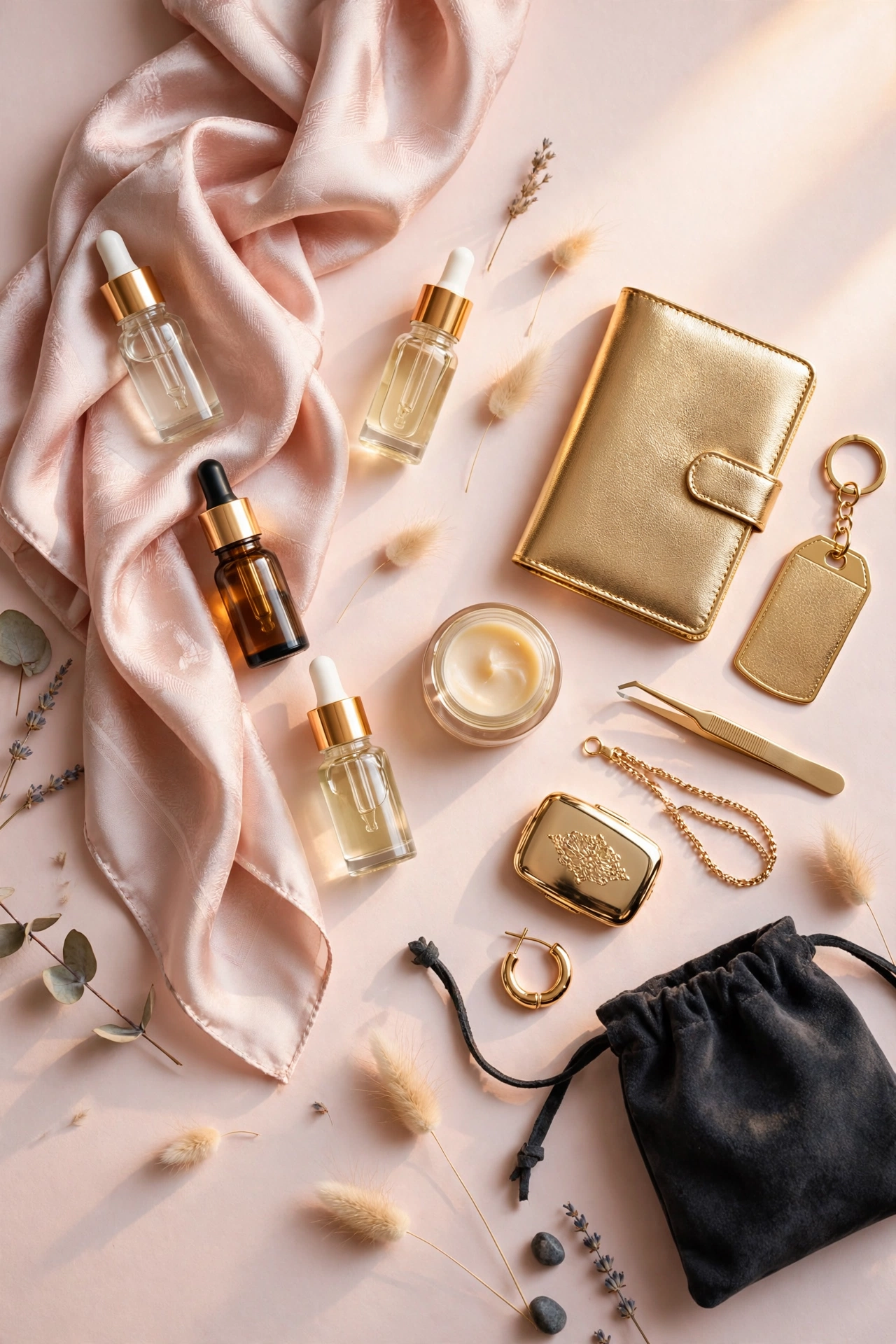
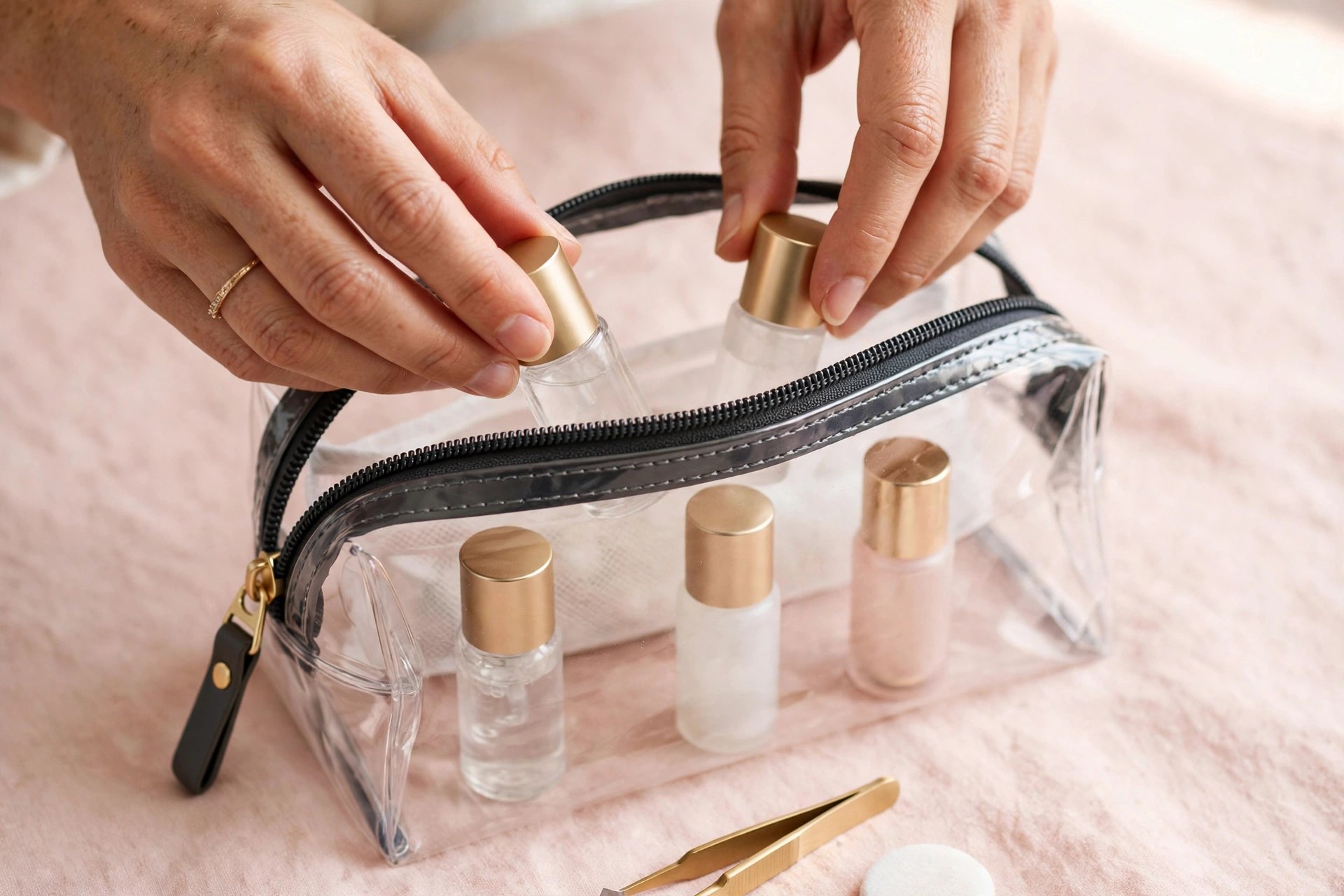
Buy a set of small silicone squeeze tubes and tiny jars once, and reuse them forever. Decant from your full-size products — this is cheaper than travel sizes, produces less waste, and means you travel with products your skin already trusts. Label everything (a strip of tape and a pen is fine). And decant more than you think you need for the first two days of buffer — running out of cleanser on day three of a trip is a worse outcome than carrying an extra half-ounce.
What to buy at your destination
Some products are better bought on arrival: anything bulky and cheap (body lotion, basic shampoo if your hair tolerates it), anything you use a lot of (sunscreen on a beach trip), and anything destination-specific (after-sun, insect-bite care). This is also a good excuse to try local products — some of the best beauty discoveries happen in foreign pharmacies.
In-Flight Beauty: What Actually Helps
The cabin environment
Airplane cabins are brutally dry — humidity often drops to 10–20%, drier than most deserts. Your skin loses moisture fast, your lips crack, and your eyes dry out. The standard advice (“drink water”) helps your body but does almost nothing for your skin directly; topical moisture is what matters.
The in-flight routine
Keep it minimal and do it once, mid-flight on long hauls:
- Cleanse (or wipe with micellar water) if you’re wearing makeup — don’t layer hydration over a full face.
- Hydrating mist or essence — a light layer of water-based hydration.
- Moisturizer — seal it in with something richer than usual.
- Lip balm — reapply every couple of hours.
- Hand cream — hands dry out fast in cabins too.
Skip sheet masks on the plane unless you’re comfortable with the social aspect — they’re effective, but a good moisturizer does 80% of the job without the spectacle. The full routine with product timing is covered in the in-flight skincare routine.
What to keep in your personal item
Not in the overhead bin — in the bag under the seat: lip balm, hand cream, a travel moisturizer, facial mist if you use one, and any prescription skincare. Everything else can go in the checked or overhead bag. The rule is simple: if you’ll need it before landing, it rides with you.
Climate Adjustments
Hot and humid destinations
Humidity is your friend for skin (free moisture) and your enemy for hair (frizz) and makeup (melting). Pack lighter: gel moisturizer instead of cream, waterproof or long-wear makeup formulas, anti-frizz hair products, and blotting papers — which weigh nothing and save your makeup by midday. Skip heavy occlusive products; in humidity they just sit on the skin.
Cold and dry destinations
Cold air holds less moisture, indoor heating strips more, and wind adds irritation. This is where the richer moisturizer earns its keep, plus a facial oil or balm for extra protection, a heavy-duty lip treatment, and hand cream (hands crack first in cold, dry air). If you’re heading somewhere wintry for the holidays specifically, holiday travel skincare essentials covers the seasonal specifics.
Altitude and sun intensity
Mountains and high-altitude destinations intensify UV — thinner atmosphere means stronger sun, and snow reflects it back up. Pack higher-SPF sunscreen than usual, reapply more often, and don’t forget lip SPF and sunglasses-area protection (the skin around the eyes burns easily at altitude). A hat does more for your face than any product.
Makeup Packing: The Travel Capsule
The everyday travel face
For most trips, a five-product face covers everything: tinted moisturizer or BB cream, concealer, one blush/bronzer, mascara, and one lip product. That’s a complete polished look in five items. Add an eyebrow product if your brows need it — brows frame the face and photograph well, which matters on trips.
The event upgrade
If the trip includes a wedding, a nice dinner, or photos you care about, add a small upgrade kit: a proper foundation (or a fuller-coverage concealer), one eyeshadow (a single shimmer shade does more than a palette on the road), eyeliner, and a bolder lip. Keep it separate from the daily kit so you’re not digging through event makeup on a sightseeing morning.
What to leave behind
Full eyeshadow palettes (you’ll use two shades), backup products (“in case I run out” — you won’t, on a normal trip), anything you haven’t used in the last month at home (travel won’t change that), and fragile compacts without cases. If a product needs babying to survive the trip, it stays home.
Hair on the Road
The hotel hairdryer problem
Hotel hairdryers are universally underpowered and overheat-prone. If your hair genuinely needs heat styling, consider a compact travel dryer — modern ones are small and far more effective. Otherwise, plan heatless styles for travel days: braids, buns, twists, or just well-conditioned air-drying. Your hair will thank you for the break.
Water differences
Different cities have different water — harder water can leave hair feeling coated or dry, and some travelers notice the difference immediately. A clarifying shampoo used once mid-trip resets buildup, and a leave-in conditioner buffers against unfamiliar water. If your hair is color-treated, this matters more: unfamiliar water plus sun is the fastest route to faded color.
Protective styling for active trips
Beach, hiking, or adventure travel beats up hair: sun, salt, wind, and helmets. Protective styles (braids, buns, twists) keep hair contained and reduce damage, a leave-in with UV protection helps, and a hat or scarf does the heavy lifting. Rinse hair with fresh water after swimming whenever possible — salt and chlorine do their damage in the hours after exposure, not during.
What to Skip Entirely
Some products never earn their place in a travel kit, no matter the trip:
- Full-size anything (unless it’s a 2+ week trip) — decant everything.
- Products you’re “trying out” — travel is not the time to test new skincare. An unfamiliar product plus travel stress is how bad reactions happen far from your dermatologist.
- Duplicates — one cleanser, one moisturizer, one sunscreen. Not a “backup.”
- The entire nail kit — one polish color and a file, or nothing. Nobody’s examining your cuticles on vacation.
- Expensive fragrance in full bottles — decant into a travel atomizer or go solid. Losing or breaking a full perfume bottle is a trip-ruining expense.
- Anything that leaks easily — if a product has a history of leaking, it doesn’t travel. Put it in a sealed bag or leave it.
Packing Order and Organization
The layering system
Pack in reverse order of need: things you’ll need last (event makeup, treatment products) go at the bottom; things you’ll need first (cleanser, moisturizer, sunscreen for the travel day) go on top. Your quart bag of liquids should be packed last and most accessibly — it comes out at security, so it should be the easiest thing to grab.
Leak prevention
Every liquid gets its own small sealed bag or a wrap of cling film under the cap — pressure changes in flight make caps loosen and bottles weep. Squeeze excess air out of tubes before closing. Put the whole liquids bag inside a second sealed bag if you’re checking it; one leaky shampoo can ruin everything it touches.
The “first night” pouch
Pack a small separate pouch with just what you need for the first night and morning: cleanser, moisturizer, toothbrush, deodorant, lip balm. When you arrive tired at 11 PM, you grab one pouch instead of unpacking the whole kit. This tiny bit of organization pays off on every single trip.
Frequently Asked Questions
How do I fit everything in one quart bag?
Decant into small containers, convert what you can to solids, and be ruthless about the “earn its place” test. Most people’s full routine fits in a quart bag once decanted — the bag looks small, but 3.4 oz containers are bigger than you think, and you need far less product per trip than you imagine.
Can I bring full-size products in checked luggage?
Yes — the 3-1-1 rule applies only to carry-ons. In checked bags, liquids can be full-size (with some airline-specific limits on aerosols and alcohol-based products). But checked bags get lost, so keep at least two days of essentials in your carry-on regardless.
What’s the best way to pack makeup brushes?
A brush roll or a hard-shell brush case. Don’t toss brushes loose in a bag — bent bristles stay bent, and powder brushes pick up debris. For short trips, consider whether you need brushes at all: fingers apply cream products well, and one dual-ended brush can handle most powder work.
Should I change my skincare routine for travel?
Simplify it, don’t reinvent it. Keep your core (cleanse, moisturize, protect) with products your skin knows, and adjust only the weight of your moisturizer for the destination climate. Travel is the worst time to introduce new actives — stressed, dehydrated skin reacts unpredictably.
How do I handle contact lenses and eye products when traveling?
Pack a spare pair of lenses or glasses (non-negotiable — losing your only pair on a trip is miserable), travel-size solution, and keep eye drops in your personal item for dry cabins. Lens solution counts toward the quart bag if it’s over 3.4 oz, though medically necessary liquids have exceptions — declare them at security.
What about perfume — how do I travel with fragrance?
Decant into a small travel atomizer (5–10 ml is plenty for most trips) or switch to a solid perfume, which skips the liquids rule entirely and can’t break or leak. Never travel with a full glass perfume bottle unless it’s in checked luggage wrapped like it’s made of hope.
Your Travel Beauty System, Summarized
The whole guide in one packing session: start with the universal core kit (cleanser, richer moisturizer, sunscreen, lip balm, hair basics). Add only what the trip length and destination demand. Convert liquids to solids wherever you can. Decant everything into small containers. Keep flight essentials in your personal item and a first-night pouch packed separately. Skip anything you wouldn’t miss.
Travel beauty isn’t about bringing less for the sake of minimalism — it’s about bringing exactly the right things, so you look good on the move without hauling your bathroom shelf across the world. Build the system once, refine it after each trip, and packing becomes a fifteen-minute job instead of an hour-long negotiation with yourself.
Love this? Pin it for later!