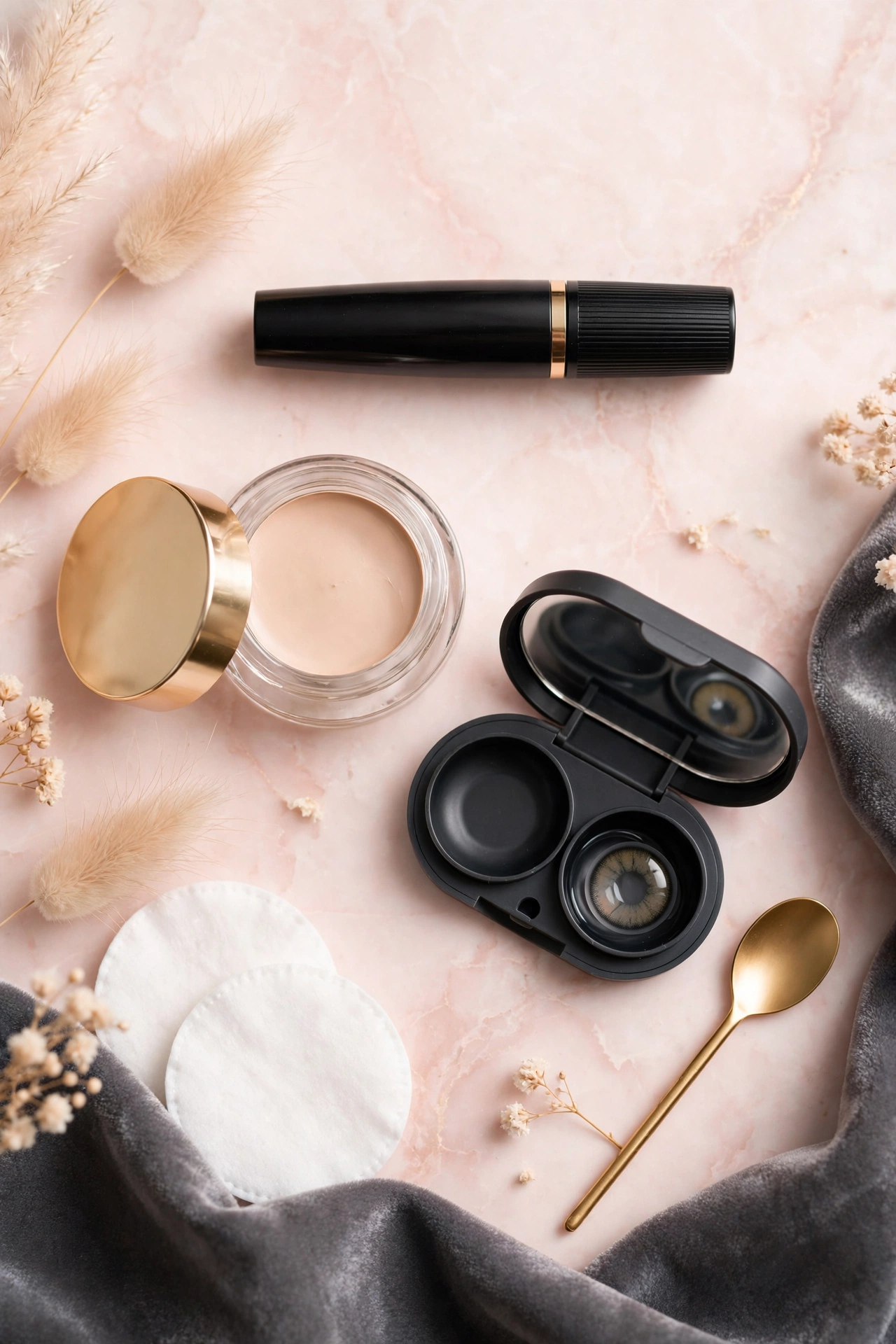
Makeup for Contact Lens Wearers: The Safe Routine
Wearing contacts and wearing makeup at the same time is completely doable — millions of people do it every day. But it requires a different rulebook than makeup on bare eyes. The eye area is already a sensitive zone, and contact lenses add another variable: anything that flakes, smudges, or migrates can end up trapped between your lens and your cornea, causing irritation at best and infection at worst. The good news is that a safe routine isn’t complicated. It’s mostly about the right application order, choosing lens-friendly formulas, and building hygiene habits that protect your eyes.
This guide walks through the complete safe routine for contact lens wearers: what to apply before and after inserting your lenses, which product types are safest for each step, the specific formulas to avoid, and the daily habits that keep both your makeup and your lenses comfortable all day. It applies whether you wear daily disposables, biweeklies, or monthlies, and whether your eyes are naturally sensitive or not.
- Key Takeaways
- Insert your lenses before applying makeup, and remove them before taking makeup off — this order prevents most contamination.
- Choose oil-free, fragrance-free formulas and avoid waterproof products on the eyes — waterproof formulas require harsh removers and are harder to get fully off.
- Tubing mascaras and ophthalmologist-tested formulas are the safest bets for the lash line.
- Never tightline or line the waterline if it causes irritation — keep liner on the outer lash line instead.
- Replace eye makeup on schedule (mascara every 3 months) and never share eye products.
- Hairspray, powder, and aerosol products should be applied with eyes closed, and lenses should already be in.
Contact lenses and eye makeup mix safely only with good hygiene. If you get persistent redness, pain, or blurred vision, remove your lenses and see an eye doctor — never push through irritation.
The Golden Rule: Application Order
The single most important habit for contact lens wearers is getting the order right. It eliminates the majority of makeup-related lens problems.
Insert Lenses First, Remove Them First
Put your lenses in before you apply any makeup. This way, your fingers touch your eyes only once, with clean washed hands, before any cosmetic residue is in play. Inserting lenses after makeup risks dragging foundation, powder, or eyeshadow particles onto the lens surface and then trapping them against your eye all day.
Take your lenses out before you remove your makeup. At the end of the day, remove lenses with clean hands first, then start your makeup removal routine. Removing makeup while lenses are in exposes them to removers, oils, and loosened pigment — all of which can coat the lens or irritate the eye. This order also protects against the most common complaint: makeup remover stinging. Remover stings far less on lens-free eyes, and you can be thorough without worrying about what the remover does to your lenses.
The full daily sequence looks like this: wash hands → insert lenses → apply makeup → (day passes) → wash hands → remove lenses → remove makeup → cleanse face. Memorize it once and it becomes automatic.
Why Order Matters More Than Products
Many lens wearers hunt for the perfect “safe” mascara while still inserting lenses after their makeup is done. Product choice matters, but contaminated fingers and makeup-coated lenses cause more irritation than any single formula. Ophthalmologists consistently point to hygiene and handling as the top factors in contact-lens comfort for makeup wearers. Get the order right first, then optimize your products.
Choosing Lens-Friendly Products
Not every product in your makeup bag is lens-friendly. The goal is formulas that stay put, don’t flake, and wash off easily.
Foundations and Base Products
Oil-free and non-comedogenic foundations are the standard recommendation for contact lens wearers, because oils can migrate into the eyes and blur lenses. Mineral or powder foundations are generally fine, but apply them with eyes closed and a light hand near the eye area — loose powder drifting into eyes is a common irritant. If you wear powder foundation or setting powder, press it on rather than buffing it in circular motions near the eyes.
Cream foundations are usually well tolerated as long as they’re fragrance-free. Avoid heavy glitter or shimmer in products applied near the eyes — glitter particles are a classic cause of corneal micro-scratches in lens wearers. Save the shimmer for the cheeks and high points, away from the lash line.
Eyeshadow: Creams Over Powders
Cream and liquid eyeshadows are the safest choice for contact lens wearers because they don’t produce fallout. Powder shadows — especially loose ones — shed particles that can land on lenses during application. If you prefer powder shadows, press the color on with a flat brush instead of sweeping it, tap off excess before touching the brush to your lid, and apply with your eyes closed during the initial placement.
Baked or pressed shimmer shadows are a middle ground: less fallout than loose powder, more staying power than standard powder. Whatever you choose, look for formulas labeled ophthalmologist-tested. And skip glitter eyeshadows entirely — glitter is the number one cosmetic particle eye doctors warn lens wearers about.
Eyeliner: What Goes Where Matters
Pencil and gel eyeliners are generally well tolerated on the outer lash line. Liquid liner is also fine if it dries quickly and doesn’t flake — smudge-proof formulas are ideal. The danger zone is the waterline (the inner rim of the lid). Lining the waterline deposits product directly against the lens surface and the tear film, which can cause blurring, irritation, and blocked oil glands over time. If your eyes tolerate waterline liner, keep it minimal and remove it thoroughly at night; if you notice any blurring or discomfort, move your liner to the outer lash line only. More detailed strategies are covered in a dedicated guide to eyeliner tips for contact lens wearers.
Kohl pencils that crumble easily are worth avoiding — the crumbly bits migrate. Sharpen pencils before each use for a clean, precise line with less debris.
Mascara: The Most Important Choice
Mascara sits closest to the lens of any product, so it deserves the most care. Tubing mascaras are widely considered the best option for contact lens wearers: they form water-resistant polymer “tubes” around each lash that don’t flake or smudge, and they slide off with warm water and gentle pressure — no harsh remover needed. Standard mascaras with fibrous, lengthening formulas are the riskiest because the fibers shed into the eyes.
Look for mascaras labeled ophthalmologist-tested, hypoallergenic, and fragrance-free. Avoid waterproof mascara: it requires oil-based or dual-phase removers that leave residue, and the tugging needed to remove it stresses both lashes and eyes. A full rundown of safe formulas is in the guide to the best mascara for contact lens wearers.
Apply mascara with a light hand on the lower lashes or skip them — lower-lash mascara flakes downward into the eyes more easily. And never pump the wand in the tube: pumping pushes air in, dries the formula out, and breeds bacteria faster.
Blush, Bronzer, and Setting Sprays
Cheek products rarely cause lens problems, but apply them before leaning close to the mirror if you use loose powders, and keep the brush away from the eye area. Setting sprays are generally safe — just close your eyes fully while spraying and wait a moment before opening them. Aerosol hairspray is the bigger offender: always close your eyes, and ideally apply it before inserting lenses or with lenses already settled and eyes shut tight. Hairspray mist on lenses creates a film that’s uncomfortable and hard to rinse off.
Hygiene Habits That Prevent Infections
Product choice is only half the equation. These habits are what separate comfortable lens wearers from those who battle recurring irritation.
Wash Hands Before Touching Your Eyes
This sounds obvious, but makeup routines create constant hand-to-face contact. Wash your hands with soap and water before inserting lenses, and again before removing them. Moisturizer, hand cream, and even some soaps leave residue on fingers — apply hand products after your lenses are in, or rinse hands well after applying them. If you must touch your eyes during the day (repositioning a lens, wiping a tear), wash or sanitize your hands first.
Keep Applicators Clean
Mascara wands, eyeliner pencils, and eyeshadow brushes all collect bacteria. Never share eye makeup with anyone — eye infections transfer easily through shared products. Sharpen eyeliner pencils regularly (the shaving action removes the contaminated outer layer). Replace mascara every 3 months without exception; it’s the product with the shortest safe lifespan because the dark, moist tube is an ideal environment for bacteria. Wash eyeshadow brushes weekly with gentle soap and let them dry fully.
Don’t Sleep in Makeup or Lenses (Unless Prescribed)
Sleeping in eye makeup lets pigment and bacteria sit against the eye all night, and sleeping in lenses not approved for overnight wear dramatically raises infection risk. The combination is worse than either alone. Build a non-negotiable end-of-day routine: lenses out, makeup off, lenses stored in fresh solution. If you wear extended-wear lenses approved for overnight use, still remove your makeup every night — the lenses may stay in, but the makeup must come off.
Watch Your Water Exposure
Never rinse lenses in tap water, and avoid getting tap water directly in your eyes while lenses are in — tap water can carry microorganisms that cause serious eye infections in lens wearers. This matters for makeup routines too: don’t “rinse” your eyes with water to clear makeup fallout while lenses are in. Remove the lens first, then rinse.
What to Avoid Entirely
Some products and practices are simply not worth the risk for contact lens wearers.
- Glitter and loose shimmer near the eyes: particles scratch lenses and irritate corneas. Keep glitter on the cheeks, body, or lips only.
- Waterproof eye makeup: requires harsh removers, encourages tugging, and leaves residue that films over lenses.
- Expired eye makeup: old mascara and eyeliner are infection risks. Mascara: 3 months. Liquid liner: 3–6 months. Pencil liner: up to 2 years if sharpened regularly. Cream shadows: 6–12 months.
- Lash tints, dyes, and at-home lash lifts performed without professional care — chemical burns near lenses are serious. If you want these services, see a licensed professional and discuss your lens wear first.
- Sharing eye products with anyone, ever.
- Applying makeup in a moving vehicle: one bump and a mascara wand or liner pencil is in your eye. This is dangerous for everyone, but lens wearers face higher injury risk.
- “Baking” powder under the eyes: the heavy powder application and long setting time increase the chance of particles migrating onto lenses.
If your eyes sting, water, or blur after applying a particular product, stop using it — don’t assume you’ll “get used to it.” Persistent irritation is a signal, not a phase.
Troubleshooting Common Problems
My Lenses Feel Dry or Gritty After Makeup
Dryness is the most common complaint. Powder products near the eyes absorb moisture from the tear film. Switch to cream formulas near the eyes, cut back on powder, and consider preservative-free rewetting drops approved for contact lenses. If dryness is constant, talk to your eye doctor — the lens material or fit may need adjusting, not just the makeup.
My Vision Blurs After Applying Makeup
Blurring usually means something got on the lens: oil from foundation, cream shadow, or liner residue. If it happens once, remove the lens, rinse it with fresh solution, and reinsert. If it happens regularly with the same product, that product is depositing on your lenses — replace it with a less migratory formula. Persistent blurring that doesn’t clear after rinsing deserves an eye doctor visit.
My Eyes Get Red by Evening
Evening redness often comes from a full day of minor irritants accumulating: powder fallout, mascara micro-flakes, and general lens dryness. Tighten up your routine — cream shadows, tubing mascara, outer-lash-line-only liner — and see if the redness fades. If redness comes with pain, discharge, or light sensitivity, remove your lenses and see an eye doctor promptly. Those are infection warning signs, not cosmetic annoyances.
Makeup Gets on My Lenses During Application
This is almost always an order or technique issue. Confirm you’re inserting lenses before makeup, applying powder products with eyes closed, and not lining the waterline. For mascara, look down into a mirror placed below you — this angles the lashes away from the lens surface during application. Understanding why makeup irritates eyes and how to fix it can help you trace the exact culprit in your routine.
The Lens-Wearer’s Daily Makeup Routine (Step by Step)
Here’s the full safe routine in order:
- Wash hands thoroughly with soap; dry with a lint-free towel.
- Insert lenses. Check each lens for tears or debris before inserting.
- Skincare and primer as usual — keep heavy creams away from the immediate eye area.
- Foundation (oil-free preferred), applied with eyes closed near the eye zone.
- Cream eyeshadow or pressed shadow applied with a pressing motion; tap off excess first.
- Eyeliner on the outer lash line; skip or minimize the waterline.
- Mascara — tubing formula, upper lashes first, light hand on lower lashes. Look down into a low mirror.
- Blush, bronzer, highlight on the cheeks and face — shimmer away from the eyes.
- Setting spray with eyes fully closed.
- Hairspray last (if used), eyes closed.
Evening: wash hands → remove lenses → store in fresh solution → remove makeup with a gentle remover → cleanse → skincare. Never reverse the lens-removal and makeup-removal steps.
For days when your eyes feel sensitive or tired, a no-mascara makeup look gives you a polished eye without any product near the lash line — a good fallback that keeps your lenses comfortable.
Frequently Asked Questions
Can I wear contacts and do a full smoky eye?
Yes, with adjustments. Use cream or pressed shadows instead of loose powders, keep the darkest shades on the outer lash line rather than the waterline, and finish with a tubing mascara. The smoky effect comes from blending, not from fallout-heavy products — so you can get the look without the particles.
Is it safe to wear eyeliner on my waterline with contacts?
It depends on your eyes. Some lens wearers tolerate waterline liner fine; others get blurring and irritation. If you try it, use a freshly sharpened pencil or a smudge-proof gel, keep it minimal, and remove it thoroughly at night. At the first sign of consistent irritation, move the liner to the outer lash line. When in doubt, ask your eye doctor.
Which is better for lens wearers: daily disposables or monthlies?
Dailies are generally the most makeup-friendly option because you start each day with a fresh, deposit-free lens. Any makeup residue that reaches a daily lens gets thrown away that night. With biweeklies and monthlies, deposits accumulate over the wearing period, so meticulous cleaning and lens-friendly products matter even more.
Can I use makeup remover while wearing contacts?
It’s best to remove your lenses first. If you must clean up a small makeup smudge while lenses are in, use a cotton swab dampened with a gentle, oil-free remover and keep it away from the eye surface — never flood the eye with remover. Full makeup removal should always happen after the lenses are out.
Are “natural” or “clean” mascaras safer for contact lens wearers?
Not automatically. “Natural” isn’t a regulated safety term, and some natural mascaras contain plant fibers or essential oils that irritate eyes more than conventional formulas. Look for specific claims instead: ophthalmologist-tested, hypoallergenic, fragrance-free — and prefer tubing formulas. The guide to mascara for sensitive eyes explains which claims actually matter.
My eye doctor said to stop wearing eye makeup. Is that permanent?
Usually not. Eye doctors sometimes recommend a makeup break during an infection, severe dry eye flare, or while adjusting to new lenses. Once the issue resolves, most people return to makeup with a safer routine. Follow your doctor’s timeline — and take the break as a chance to audit your products’ expiry dates.
Conclusion
Makeup for contact lens wearers comes down to three pillars: the right order (lenses in first, out first), lens-friendly formulas (tubing mascara, cream shadows, no glitter near the eyes), and strict hygiene (clean hands, fresh products, no sharing). None of this requires giving up the looks you love — it just means building your routine around your eyes’ safety instead of against it. Start with the safe routine above, upgrade your mascara to a lens-safe mascara pick, and your lenses will stay as comfortable at 8pm as they were at 8am.
Love this? Pin it for later!