Color Corrector vs Concealer: What’s the Difference?
Walk down any makeup aisle and you’ll spot two products that look suspiciously similar: color correctors in shades of green, peach, and purple, and concealers in skin-tone shades. They both promise to hide imperfections, so it’s no wonder beginners ask — are they the same thing? Do you need both?
The short answer: they solve different problems. Color correctors neutralize discoloration using color theory, while concealers cover what remains with an opaque, skin-toned finish. Understanding which one your skin actually needs (and in what order to use them) is the difference between a flawless base and a cakey mess. Let’s break it down.
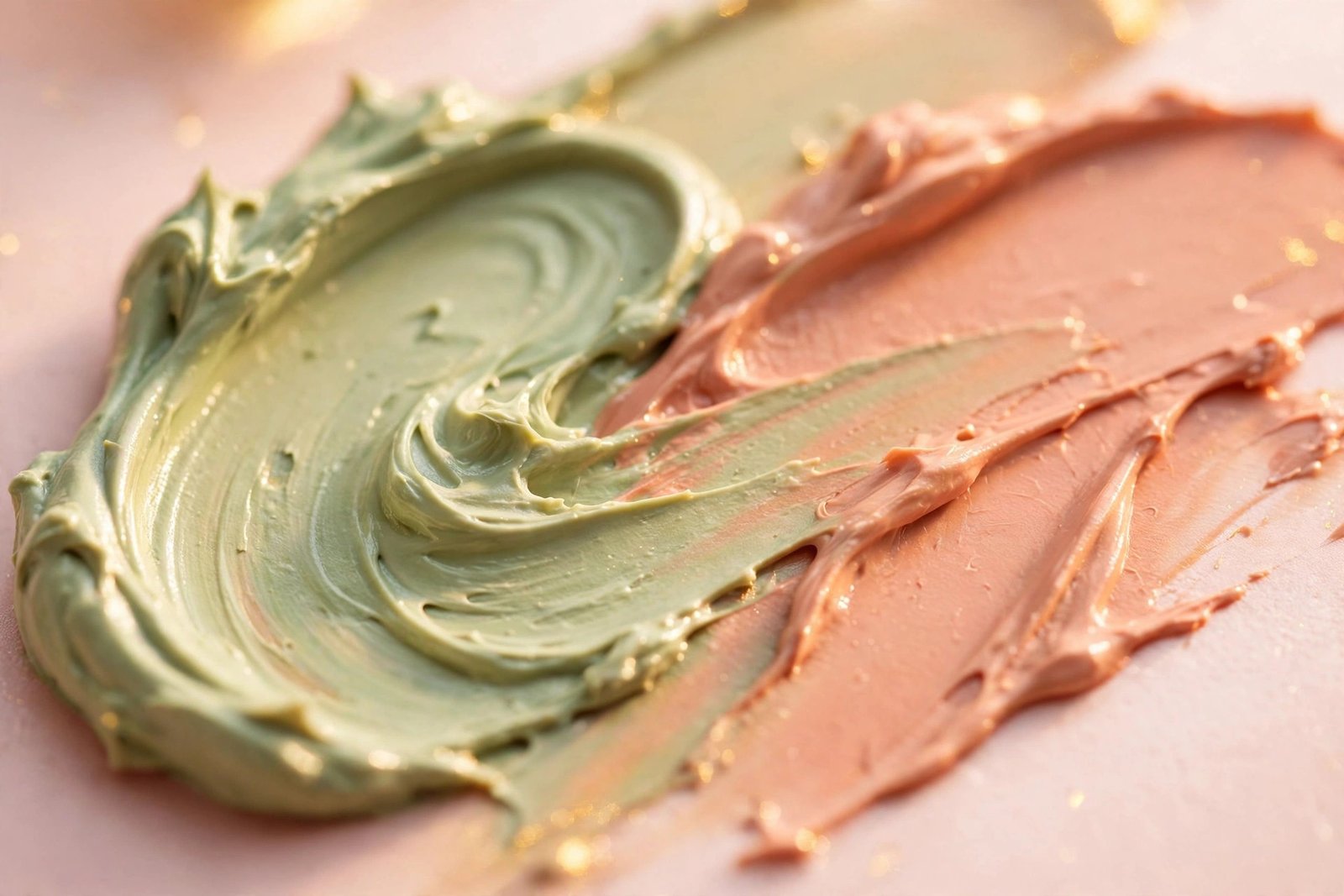
Key Takeaways
- Color correctors come in bright, non-skin shades (green, peach, purple) that cancel out specific types of discoloration through color theory.
- Concealers come in skin-tone shades and cover imperfections with opaque pigment that matches your skin.
- Correctors go on first (before foundation), concealers go on after (or instead of foundation).
- For mild discoloration, one product is often enough — you don’t always need both.
- Using too much corrector is the #1 beginner mistake; a sheer layer is all you need.
What Is a Color Corrector?
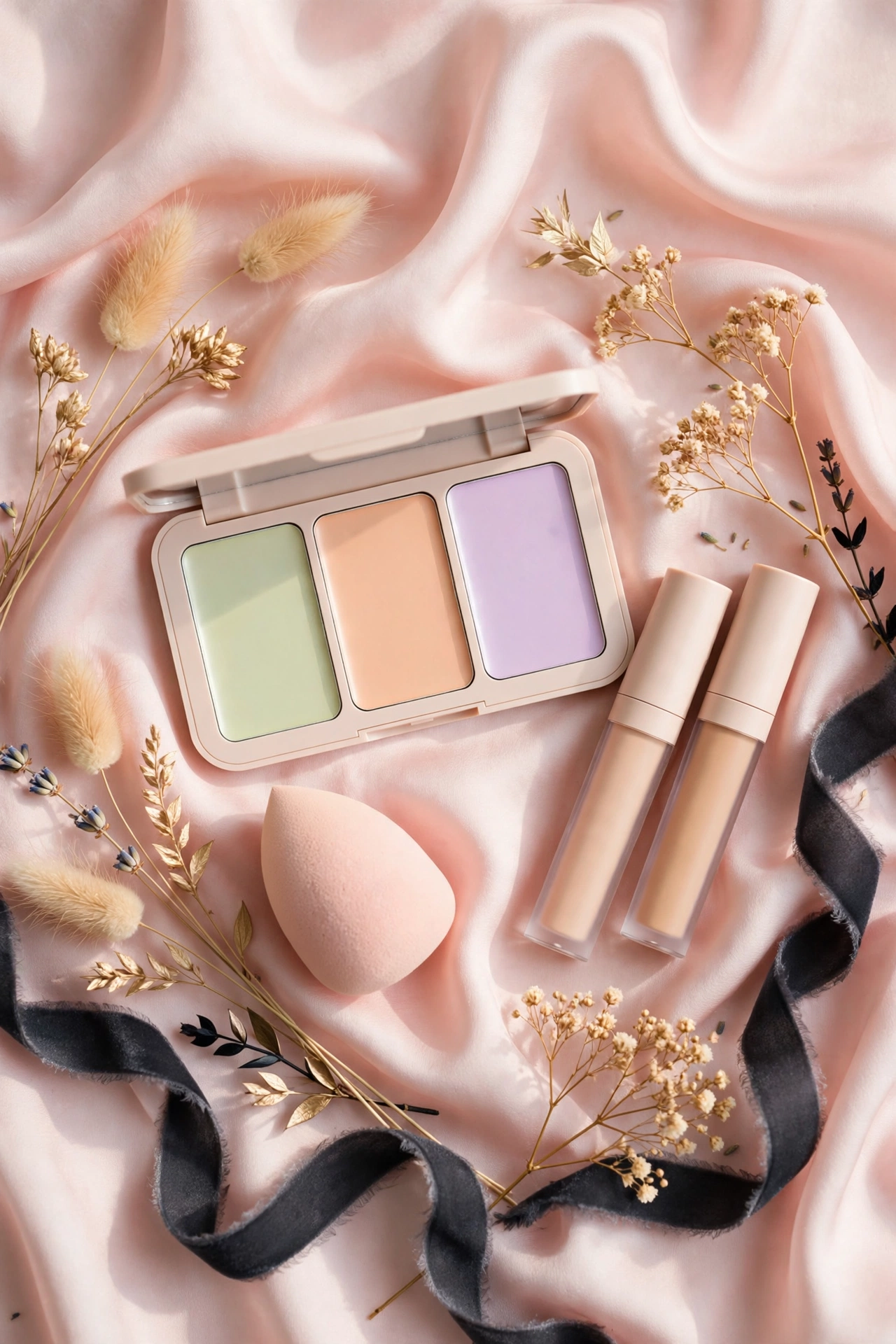
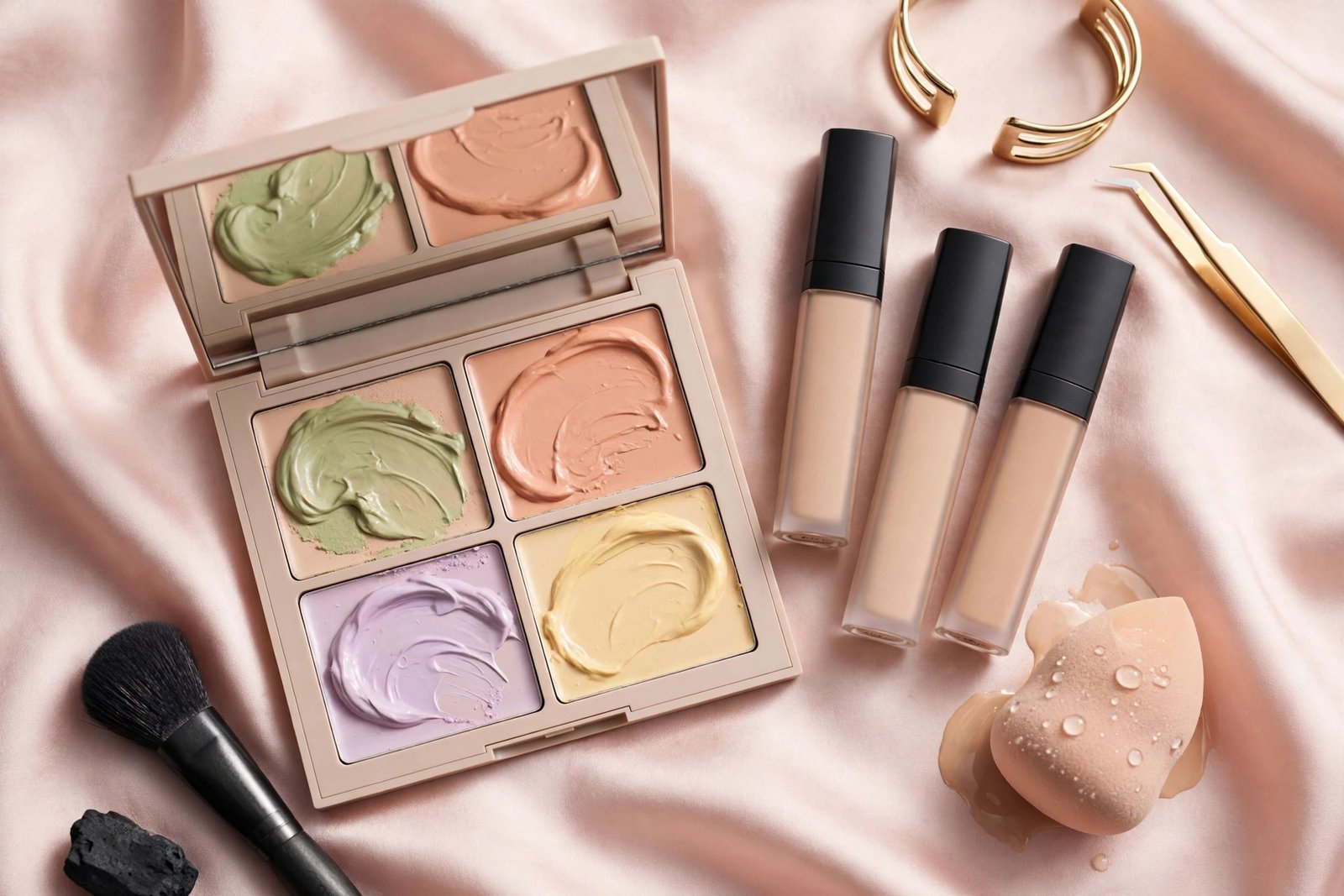
A color corrector is a pigmented product — liquid, cream, or stick — that comes in non-skin tones like green, peach, orange, purple, and yellow. Its job is to neutralize a specific color problem on your skin before you apply foundation or concealer. The concept comes from the color wheel: colors opposite each other cancel out when layered.
For example, green sits opposite red on the color wheel, so a sheer layer of green corrector neutralizes redness from breakouts, rosacea, or irritation. Peach or orange sits opposite blue and purple, so those shades cancel out dark under-eye circles and hyperpigmentation. For a complete shade-by-shade walkthrough, see our beginner’s guide to color correcting.
Correctors are meant to be worn sheer and blended thoroughly — they’re a first layer, not the final coverage. When used correctly, the colored tint should virtually disappear under foundation, leaving behind only neutralized, even-looking skin.
What Is a Concealer?
A concealer is an opaque, skin-toned product designed to cover blemishes, dark spots, and dark circles directly. It works by depositing concentrated pigment that closely matches your skin tone (or sits one shade lighter for brightening under the eyes), creating a veil over whatever you’re hiding.
Unlike correctors, concealers are designed to be seen — or rather, to be invisible because they match your skin. Modern concealers come in full-coverage formulas for spots and lightweight, hydrating formulas for the delicate under-eye area. Because they match your skin tone, concealers blend into the rest of your base without requiring another layer on top to hide them.
Color Corrector vs Concealer: The Real Differences
Here’s how the two products compare side by side:
| Feature | Color Corrector | Concealer |
|---|---|---|
| Shade | Non-skin tones (green, peach, purple, yellow) | Skin-tone shades |
| Purpose | Neutralizes discoloration via color theory | Covers with matching pigment |
| Application order | Before foundation | After foundation (or blended into it) |
| Coverage level | Sheer to medium | Medium to full |
| Needs a layer on top | Yes — always follow with foundation or concealer | No — it’s the final coverage step |
| Best for | Strong discoloration (redness, dark circles, sallowness) | Blemishes, spots, general evening-out |
They work in layers, not in isolation
Think of the two as a team: the corrector does the color-balancing heavy lifting on severe discoloration, and the concealer (or foundation) finishes the job by unifying everything to your skin tone. If you apply a green corrector on an angry breakout and stop there, you’ll look green. If you apply only concealer on that same breakout, you may need so much product to hide the redness that it cakes. The corrector-plus-concealer combination lets each product do less, which is why the result looks more natural.
Application order matters
The correct sequence is: skincare → primer → color corrector → foundation → concealer → setting. Corrector always goes under foundation because its bright tint needs to be covered by a skin-tone product. Concealer goes over (or instead of) foundation because it’s already skin-toned. Reversing this order — putting concealer under corrector — gives you tinted patches peeking through your base.
Do You Actually Need Both?
Not always. Whether you need both products depends on the severity of the discoloration you’re covering:
- Mild redness or faint dark circles: A good concealer alone is usually enough. Save the corrector step.
- Intense redness (rosacea, active breakouts): A green corrector first lets you use far less concealer afterward. Here’s how to use green concealer for redness correctly for the full technique.
- Deep dark circles with blue or purple tones: A peach or orange corrector underneath concealer prevents the grayish cast that happens when you pile skin-tone product over blue-toned skin. This matters even more for deeper skin tones — see how to color correct dark circles by undertone.
- Everyday minimal makeup: If you’re doing a no-makeup look, neither may be needed — tinted moisturizer and spot-concealing often suffice.
A common beginner trap is buying both products and using both every day out of habit. Start with just a concealer, and add a corrector only for the specific concern that concealer alone can’t handle.
How to Use Each One Correctly
Applying color corrector
- Apply to clean, moisturized skin (or over primer).
- Use a tiny amount — a pea-sized dot is plenty for the whole face area you’re treating.
- Dab (don’t swipe) onto the discolored area only, keeping it targeted. Feather the edges so there’s no harsh line.
- Blend with a damp sponge or clean fingertip until the color looks sheer and diffused.
- Follow with foundation or concealer over the top to bring it back to your skin tone.
The biggest mistake beginners make is applying corrector like concealer — thick, opaque, everywhere. Corrector should look almost translucent once blended. If you can clearly see the green or peach after blending, you’ve used too much.
Applying concealer
- After foundation (so you cover only what still shows through), dot concealer onto blemishes or under the eyes.
- For blemishes, use a shade matching your skin tone exactly; for under-eyes, one shade lighter adds brightness.
- Pat to blend with a fingertip, brush, or sponge — pressing motions, not dragging.
- Set the under-eye area lightly with powder to prevent creasing.
If you skipped corrector and your concealer isn’t covering dark circles well, the answer usually isn’t more concealer — it’s adding a thin corrector layer underneath first.
Common Mistakes Beginners Make
- Using corrector as concealer: Wearing green or peach corrector without foundation on top leaves visible tinted patches.
- Wrong shade of corrector: Lavender on dark circles does nothing (purple neutralizes yellow/sallow tones, not blue/purple tones). Match the shade to the color of the problem, not your skin.
- Too much product: Both products cake when over-applied. Thin layers always look better than one thick one.
- Skipping skin prep: Corrector and concealer both cling to dry patches. Moisturizer first makes everything blend smoothly.
- Using the same formula for eyes and face: Heavy matte concealers meant for blemishes will crease under eyes; hydrating formulas won’t cover a spot well. One product rarely does both jobs perfectly.
For more foundation-level basics, our step-by-step makeup guide for beginners walks through the full routine order.
Frequently Asked Questions
Can I use a color corrector as a concealer?
Not effectively. Correctors aren’t skin-toned, so on their own they leave a visible colored tint. They must be layered under foundation or concealer to look natural. A concealer, on the other hand, can be worn alone for spot coverage.
Do I put color corrector before or after foundation?
Before. Corrector neutralizes discoloration on bare skin (or over primer), and foundation evens everything out on top. Concealer goes after foundation.
What’s the difference between a color corrector and a tinted primer?
They overlap: color-correcting primers (green or peach tinted) do a lighter version of what correctors do, all over the face. Correctors are more concentrated and targeted to specific areas. If your redness is all-over rather than spotty, a tinted primer may replace a corrector entirely.
Can beginners skip color correcting altogether?
Absolutely. Color correcting is an advanced-ish step that solves specific problems. Plenty of people get a flawless base with just foundation and concealer. Add correcting only if you notice a particular discoloration that keeps showing through.
Why does my green corrector show through my foundation?
Usually one of two things: you applied too much corrector, or your foundation is too sheer to cover it. Blend the corrector down to a sheer wash first, then use a medium-coverage foundation over it — or spot-conceal the area with a skin-tone concealer before the rest of your base.
Conclusion
Color correctors and concealers aren’t competitors — they’re two different tools. Correctors cancel out strong discoloration using color theory and always sit under your foundation; concealers cover with skin-matching pigment and finish the job. You don’t always need both, but knowing what each one does (and the order they go in) saves you from the cakey, tinted-patch look that frustrates so many beginners.
Start simple: master concealer first, then add one corrector shade for your most stubborn concern. Want the full picture? Our color correcting guide for beginners breaks down every shade and where it goes.
Love this? Pin it for later!