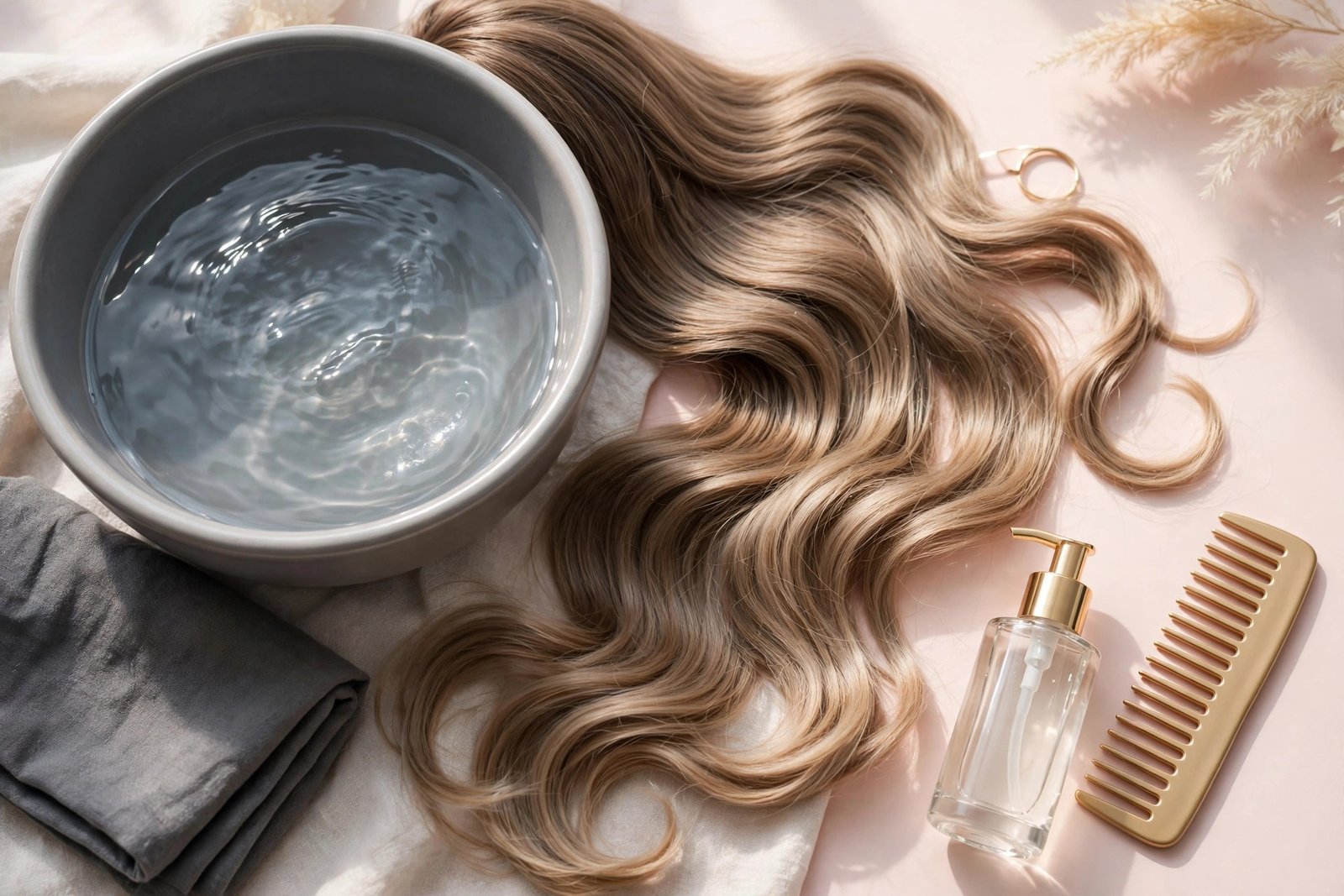
How to Wash Hair Extensions Without Ruining Them
Hair extensions can look incredible — but they don’t take care of themselves. Unlike the hair growing out of your scalp, extensions receive no natural oils to keep them soft and shiny. Every wash either protects your investment or quietly shortens its lifespan. The good news is that washing hair extensions correctly is easy once you know the type-specific rules, and it only adds a few minutes to your routine.
If you’re brand new to extensions, start with our complete guide to hair extensions for beginners to understand the different types before you wash them.
Key Takeaways
- Wash clip-in extensions every 15–20 wears; wash semi-permanent extensions (tape-in, sew-in) every 1–2 weeks.
- Always wash with sulfate-free, alcohol-free products and lukewarm water.
- Never rub, twist, or pile extensions on top of your head — smooth products through in one direction.
- Brush extensions gently before and after washing, starting from the ends.
- Air-drying is safest; if you blow-dry, use low heat and a heat protectant.
- Keep conditioner and oils away from tape-in bonds, keratin tips, and weft stitching.
Why Extensions Need Special Washing
Extensions Don’t Get Natural Oils
Your scalp produces sebum that travels down each hair strand, conditioning your natural hair between washes. Extensions — whether human hair or synthetic — get none of that. This is why they dry out faster than your real hair and why conditioner matters more for them, not less.
Human hair extensions need gentle moisture replenishment. Synthetic extensions can’t absorb conditioning products at all, so washing them is really about removing buildup without roughing up the fibers.
Common Ways Washing Ruins Extensions
The fastest ways to wreck extensions during a wash:
- Aggressive scrubbing: Rubbing, twisting, or balling extensions up causes tangling and matting that may be irreversible.
- Hot water: Opens the cuticle on human hair and can deform synthetic fibers, causing frizz and dullness.
- Sulfate-heavy shampoos: Strip moisture from human hair extensions and loosen adhesive bonds on tape-ins and glue-ins.
- Conditioner on the bonds: Silicone-heavy or oily products dissolve tape-in adhesive, loosen keratin bonds, and cause sew-in wefts to slip.
- Rough towel-drying: Rubbing with a towel creates frizz and tangles; pressing or squeezing gently is the way.
- Brushing while soaking wet without care: Wet extensions stretch and snap more easily than wet natural hair.
If you haven’t decided which extension type suits you yet, our clip-in vs tape-in extensions comparison breaks down cost, damage risk, and maintenance side by side.
What You’ll Need Before You Wash
Gather these first — washing goes wrong fastest when you’re hunting for a brush mid-shower with wet extensions in your hands:
- Sulfate-free, alcohol-free shampoo (labeled safe for extensions or color-treated hair)
- Moisturizing conditioner or deep conditioning mask
- Wide-tooth comb or loop brush designed for extensions (no ball-tipped bristles that snag)
- Lukewarm water — never hot
- Microfiber towel or old cotton T-shirt for gentle drying
- Leave-in conditioner or light serum (for human hair extensions)
- Extension-safe detangler (especially useful for synthetic fibers)
A note on product choice: Clarifying shampoos, dandruff shampoos, and anything with high alcohol content are off-limits for extension washing. These strip human hair extensions of the little moisture they have and can damage synthetic fibers or weaken bonds.
How to Wash Clip-In Hair Extensions (Step by Step)
Clip-ins are the easiest to wash because you take them out first — no bonds, no wefts to protect.
Step 1: Remove and Detangle
Take every weft out of your hair. Lay them flat and gently brush from the ends upward with a loop brush, working out every tangle before water touches them. Wet tangles are harder to undo.
Step 2: Prepare a Lukewarm Basin
Fill a sink or basin with lukewarm water. Add a small amount of sulfate-free shampoo and swirl to mix. You don’t need hot water or lots of product — extensions have no scalp oil to cut through.
Step 3: Submerge and Gently Cleanse
Place the wefts in the water and let them soak for 3–5 minutes. Then hold each weft by the top (the clip band) and smooth shampoo down the strands in one direction. Never swirl or ball them — imagine you’re stroking the hair downward.
Step 4: Rinse Thoroughly
Drain the basin and rinse under cool-to-lukewarm running water, still stroking downward. Leftover shampoo residue causes dullness and stiffness, so rinse until the water runs clear.
Step 5: Condition Mid-Lengths to Ends
Apply conditioner from the mid-lengths to the ends, avoiding the clip bands and the top of the wefts where stitching holds them together. Let it sit 3–5 minutes (a deep conditioning mask once a month works wonders), then rinse.
Step 6: Dry Flat and Brush
Lay the wefts on a microfiber towel, gently press out excess water, and let them air-dry flat. Once fully dry, brush gently from ends upward. Apply a pea-sized amount of leave-in serum to the ends if they’re human hair.
New to wearing clip-ins? Our step-by-step guide to putting in clip-in extensions shows the right way to section and blend them.
How to Wash Tape-In and Sew-In Extensions
Semi-permanent extensions stay in your head while you wash, so the process protects the attachment points as much as the hair.
Pre-Wash Prep
Brush your hair thoroughly before stepping into the shower — dry detangling prevents mats from forming during the wash. Check tape-in bonds for any lifting or slipping, and note any sew-in wefts that feel loose.
The Wash Method
- Wet your hair gently with lukewarm water, letting it flow downward rather than flipping your head upside down.
- Apply sulfate-free shampoo to your scalp and massage with your fingertips — not your nails. Let the suds run down the lengths; don’t scrub the extension hair itself.
- Rinse well, keeping the hair flowing in one direction.
- Apply conditioner from mid-lengths to ends only. This is the critical rule: keep conditioner, masks, and oils at least 2 inches away from tape-in bonds, keratin tips, and sew-in stitching. Oil and silicone break down adhesives.
- Rinse completely with cool water.
After the Wash
Squeeze excess water out gently with a microfiber towel — never twist. Detangle with a wide-tooth comb, starting at the ends and working up, holding the roots for support so you don’t pull on the bonds. Air-dry whenever possible; if you must blow-dry, use low heat on the bonds and medium heat elsewhere, always with a heat protectant.
What NOT to do: Don’t go to bed with wet extensions (matting risk), don’t pile your hair on top of your head to shampoo it, and don’t use dry shampoo excessively at the roots — buildup loosens tape-ins over time.
How to Wash Synthetic Hair Extensions
Synthetic extensions need a different approach because the fibers can’t absorb conditioning products.
- Use a basin wash like clip-ins, even if you wore them as a clip set — synthetic hair is easier to control off-head.
- Use lukewarm water and a small amount of gentle shampoo, or better yet, a wig/extending-safe wash made for synthetic fibers.
- Skip regular conditioner — it doesn’t absorb and can leave a coating that dulls the fibers. A light synthetic-safe detangling spray after washing works better.
- Air-dry only. Most synthetic extensions (except heat-friendly fibers) can’t handle a blow dryer — heat melts or frizzes them permanently.
- Brush with a wide-tooth comb once dry, not while wet.
How Often Should You Wash Hair Extensions?
Overwashing is just as damaging as underwatering your extension care. The right frequency depends on the type:
| Extension type | Wash frequency |
|---|---|
| Clip-in (human hair) | Every 15–20 wears |
| Clip-in (synthetic) | Every 10–15 wears |
| Tape-in | Every 1–2 weeks |
| Sew-in / weaves | Every 1–2 weeks |
| Keratin / fusion bonds | Every 2–3 days to weekly |
| Halo | Every 15–20 wears |
Between washes, a light dry shampoo at the roots (away from bonds) and gentle daily brushing keep extensions fresh. If extensions start smelling musty or feel coated, you’ve waited too long — don’t try to stretch the interval further.
Mistakes That Shorten Extension Lifespan
- Using drugstore 2-in-1 shampoo-conditioner — too harsh and poorly balanced for extension hair.
- Sleeping on damp extensions — causes matting, mildew smell, and bond loosening.
- Swimming without protection — chlorine and salt water dry out human hair extensions and tangle synthetics. Wear a swim cap or braid extensions and rinse immediately after.
- Applying oil near the bonds — coconut oil and argan oil migrate upward and dissolve tape adhesive. If you use oils to protect your natural hair from shedding, our guide to the best oils for hair fall explains which ones to use and how to apply them safely away from extension bonds.
- Skipping the brush-before-wash step — minor tangles become matted disasters once wet.
- Washing in too-hot water — lukewarm always; hot water is extension enemy number one.
Frequently Asked Questions
Can I wash hair extensions with regular shampoo?
You can in an emergency, but regular shampoos with sulfates will dry out human hair extensions and may loosen tape-in or glue bonds over time. A sulfate-free, extension-safe shampoo is a small investment that noticeably extends how long your extensions look good.
How do you wash hair extensions without tangling?
Brush thoroughly before water touches them, keep strands flowing in one direction, never twist or ball them up, and don’t flip your head upside down. Washing clip-ins in a basin rather than on your head gives you the most control.
Can I use conditioner on tape-in extensions?
Yes — but only from the mid-lengths down. Keep conditioner, hair masks, and oils well away from the tape bonds. Product residue near the adhesive is the most common reason tape-ins slip prematurely.
Why do my extensions feel dry after washing?
Usually one of three causes: a sulfate-heavy shampoo stripped them, you skipped conditioner, or you’re overwashing. Try a sulfate-free shampoo, add a deep conditioning mask every few washes, and stretch your wash interval to the recommended frequency for your extension type.
How long do hair extensions last with proper washing?
Quality human hair clip-ins can last 6–12 months with proper washing and care. Tape-ins and sew-ins typically last 6–8 weeks per install before needing reapplication, and gentle washing helps them reach the full lifespan.
Can I blow-dry hair extensions?
Human hair extensions: yes, on low-to-medium heat with a heat protectant. Synthetic extensions: only if they’re labeled heat-friendly — otherwise air-dry only. For tape-ins and bonds, keep direct high heat away from the attachment points.
Conclusion
Washing hair extensions the right way comes down to a few consistent habits: the right products, lukewarm water, gentle one-direction motion, and keeping conditioner away from bonds. Treat wash day as maintenance for an investment, and your extensions will stay soft, shiny, and natural-looking for their full lifespan — instead of turning into a tangled replacement bill.
Once washing is second nature, the next skill is getting the application right: learn how to put in clip-in extensions step by step for a seamless, undetectable blend every time.
Love this? Pin it for later!