Gua Sha Benefits for Skin: What It Can (and Can’t) Do — Honest Guide
Search for gua sha benefits for skin and you will find two extremes: breathless claims that it “sculpts your face like surgery” and skeptics who call it an expensive placebo. The truth, as usual, sits in the middle. Gua sha does several genuinely useful things — and it definitely does not do several things it is often credited with.
This guide gives you the honest picture: the benefits with the most plausible explanations behind them, an upfront note on the state of the evidence, and a clear-eyed list of the myths to ignore. If you are deciding whether gua sha is worth your time, this is the article to read first — and if you decide to try it, our [gua sha guide for beginners → gua-sha-guide-for-beginners] will walk you through the technique step by step.
Key Takeaways
- The most credible gua sha benefits: reduced puffiness, improved circulation (glow), muscle tension relief, and stress reduction.
- Clinical evidence for facial gua sha is limited — benefits are traditionally claimed and mechanistically plausible, not proven in large trials.
- Gua sha cannot slim bone structure, remove fat, erase wrinkles, or replace skincare actives.
- Visible de-puffing can happen after one session; subtler benefits build over weeks of consistent practice.
- Benefits depend entirely on technique: correct direction, light pressure, and facial oil are non-negotiable.
- Sensitive skin can still enjoy gua sha with feather-light pressure — but skip it over breakouts, sunburn, or irritation.
A Quick Note on the Evidence (Read This First)
Honesty matters here, so let us be direct: there are very few high-quality clinical trials on facial gua sha specifically. Most of the research on gua sha studied the traditional body-scraping practice for pain relief, not the gentle facial version used in skincare.
That does not mean the reported benefits are imaginary. Many of them have plausible physiological mechanisms — lymphatic drainage, increased blood flow, muscle relaxation — that are well understood in massage therapy generally. And centuries of traditional use plus millions of modern users reporting similar effects count for something.
The right way to think about gua sha benefits: traditionally claimed and mechanistically plausible, but not clinically proven. Expect real but subtle effects, not transformations. Anyone promising dramatic before-and-afters from gua sha alone is selling something.
Benefit 1: Reduced Puffiness (the Strongest Claim)
This is the benefit with the best explanation behind it — and the one most users notice first.
Morning facial puffiness is largely pooled lymphatic fluid. Your lymphatic system has no central pump; it relies on muscle movement and external pressure to circulate. Slow, directional gua sha strokes — especially the non-negotiable downward sweeps along the neck — manually encourage that fluid toward the lymph nodes and away from the face.
The result: a visibly less puffy face, particularly around the eyes, cheeks, and jawline. Many people see a difference after a single 5-minute morning session. The effect is temporary (fluid re-accumulates through the day), which is exactly why a consistent routine matters — see our guide on [how often to use gua sha → how-often-should-you-use-gua-sha] for scheduling.
If puffiness is your main concern, gua sha pairs beautifully with other morning strategies in our [de-puffing routine → how-to-depuff-your-face-morning].
Benefit 2: Improved Circulation and Glow
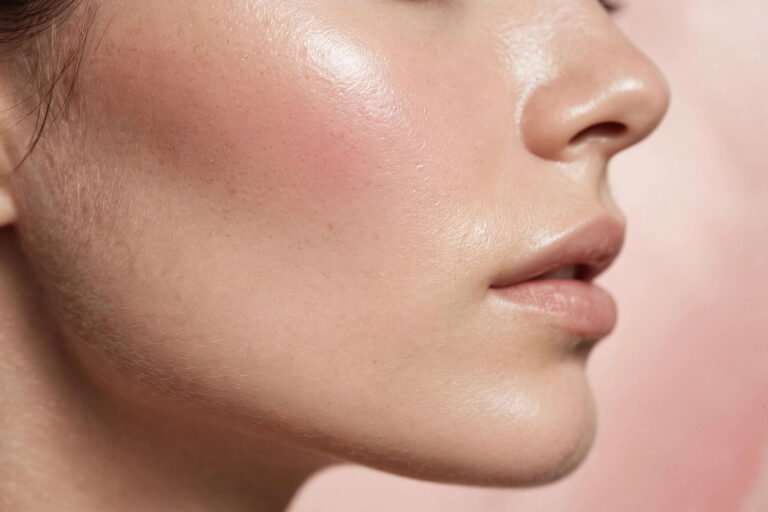
Right after a gua sha session, skin typically looks flushed and rosy. That is increased blood flow to the surface — the same reason your cheeks pink up after a brisk walk. Better circulation gives skin a livelier, more awake appearance that reads as “glow.”
This is also one reason gua sha is often done before makeup or photos: the freshness is immediate. It will not permanently change your skin tone or texture, but as a pre-event ritual it is genuinely effective — and far cheaper than most glow-boosting products.
Benefit 3: Muscle Tension Relief
This benefit is underrated and, for many people, the most valuable. The face holds remarkable tension: clenched jaws from stress, furrowed brows from concentration, tight temples from screen time. Over time, chronic tension in the masseter muscles can even make the jawline look wider and more squared.
Slow gua sha strokes over the jaw, temples, and forehead function as a targeted massage, coaxing those muscles to release. People often do not realize how tense their jaw is until a gua sha session melts it. If you grind your teeth or clench during the day, this alone may be worth the ritual.
Benefit 4: Stress Reduction and Ritual
Do not dismiss this as fluff. A few slow, deliberate minutes of facial massage in the evening measurably downshifts many people — it is mindful, tactile, and screen-free. Lower stress is good for skin in its own right: stress hormones are linked to breakouts, dullness, and impaired barrier function.
Gua sha will not fix your life, but a calming nightly ritual is a legitimate wellness benefit, and it is one of the main reasons people stick with the practice long after the novelty fades.
Benefit 5: Better Product Absorption (Probably)
Massage increases local blood flow and warms the skin, which may modestly improve absorption of the oil or serum you apply before gua sha. This is plausible but unproven for gua sha specifically — and it cuts both ways. Increased absorption means you should avoid using strong actives (retinoids, high-strength acids, vitamin C serums) immediately before gua sha, since enhanced penetration can mean enhanced irritation. Use a simple, gentle facial oil for the massage itself, then apply actives afterward if they are part of your routine.
What Gua Sha Cannot Do: Myths to Ignore
Honest skincare means knowing the limits. Gua sha does not:
- Slim your bone structure or “reshape” your face. Bone does not move under a stone tool. Temporary de-puffing can create a slimmer look, but your underlying structure is unchanged.
- Melt facial fat. No massage technique removes fat cells. Claims about “melting double chins” are fiction.
- Erase wrinkles or fine lines. Gua sha does not stimulate meaningful collagen production. It can temporarily plump skin via circulation and relax expression lines caused by tension — but it is not an anti-aging treatment.
- Detox your skin. “Detox” is a marketing word, not a physiological process gua sha performs. Lymphatic drainage moves fluid; it does not pull toxins from your pores.
- Replace skincare. Gua sha is a complement to cleansing, moisturizing, and sun protection — never a substitute. The least glamorous habits remain the most important.
If a viral video shows a dramatic facial transformation attributed solely to gua sha, assume lighting, angles, weight changes, or filters are doing the heavy lifting.
Who Benefits Most (and Who Should Be Careful)
Best candidates: People with morning puffiness, visible fluid retention, jaw or temple tension, dull-looking skin that perks up with circulation, or anyone who wants a calming skincare ritual.
Use caution or skip it if you: have active acne or rosacea flares (never stroke over inflamed areas), sunburn, eczema patches, very thin or fragile skin, or a bleeding/clotting condition. If you have had recent injectables (Botox, fillers), wait until your provider clears facial massage — typically at least two weeks.
Sensitive skin note: Sensitive skin is not an automatic disqualifier — but the margin for error is smaller. Use feather-light pressure, keep sessions short (around 5 minutes), and stop at the first sign of lingering redness. The gentle-first philosophy in our [sensitive skin routine guide → sensitive-skin-routine-guide] applies directly: introduce slowly, watch how your skin responds, and prioritize calm over intensity.
How to Maximize the Real Benefits
The benefits above only materialize with correct technique. The short version:
- Always use facial oil — dry dragging causes friction and undoes the good.
- Stroke in the right direction — outward and upward on the face, downward on the neck.
- Keep pressure light to medium — comfort, never pain.
- Start with the neck — drainage needs an open pathway.
- Be consistent — 3–4 sessions per week beats occasional marathons.
Our full [gua sha guide for beginners → gua-sha-guide-for-beginners] covers each of these in detail with a complete step-by-step routine.
Frequently Asked Questions
Is there scientific proof that gua sha works?
High-quality clinical trials on facial gua sha are limited. The reported benefits — less puffiness, better circulation, relaxed muscles — are plausible based on how massage and lymphatic drainage work, and widely experienced, but not proven in large studies. Treat claims accordingly.
How long do gua sha results last?
De-puffing typically lasts several hours — often through most of the day. Tension relief can last longer, especially with regular practice. Nothing about gua sha is permanent, which is why consistency matters.
Can gua sha make my face slimmer permanently?
No. It can temporarily reduce fluid-related puffiness and relax a tense jaw, creating a slimmer appearance for hours. It cannot change bone structure or remove fat.
Is gua sha better than just using my fingers?
The tool’s smooth, broad edge covers more area with even pressure and less friction than fingertips, and the cool surface feels pleasant. Fingers work in a pinch, but the tool is more effective and more comfortable for most people.
Does gua sha help with double chin?
It can temporarily reduce fluid-related fullness under the chin through lymphatic drainage, but it cannot remove submental fat. Persistent fullness there is a matter for weight, genetics, or professional treatments — not a stone tool.
Can I use gua sha if I have rosacea?
During a flare, no. When skin is calm, some people with mild rosacea tolerate very gentle gua sha — but heat, friction, and pressure are all rosacea triggers, so proceed cautiously or skip it. When in doubt, ask your dermatologist.
Gua sha earns its place in a skincare routine not through miracles but through modest, repeatable wins: a less puffy morning face, looser jaw muscles, a few calm minutes at the end of the day. Go in with honest expectations, use proper technique from our [gua sha guide for beginners → gua-sha-guide-for-beginners], schedule sensibly with our [frequency guide → how-often-should-you-use-gua-sha], and you will get exactly what gua sha can actually give.
gua sha guide for beginners
how often to use gua sha
morning de-puffing routine
sensitive skin routine guide
Love this? Pin it for later!