How Often Should You Exfoliate Your Face? (By Skin Type)
If you’ve ever wondered how often you should exfoliate your face, you’re not alone — it’s one of the most common skincare questions out there, and the answer isn’t one-size-fits-all. Exfoliate too often and you risk redness, stinging, and a damaged skin barrier. Exfoliate too rarely and dead skin builds up, leaving your complexion dull and your other products less effective.
The sweet spot depends on your skin type, the kind of exfoliant you’re using, and how your skin responds. This guide breaks it all down so you can exfoliate with confidence — starting slow and adjusting from there.

Why Bother Exfoliating Your Face?
Your skin naturally sheds dead cells every day — roughly 30,000 to 40,000 cells per minute, in fact. But as you age (and with sun exposure, dry air, and other stressors), that natural shedding process slows down. Dead cells linger on the surface, and that’s when problems start.
Regular, gentle exfoliation helps by:
- Brightening dull skin — removing the dead cells that make skin look tired
- Unclogging pores — preventing the buildup behind blackheads and breakouts
- Smoothing texture — softening rough patches and flaky areas
- Helping products absorb better — serums and moisturizers work better without dead skin blocking them
- Fading dark spots gradually — supporting cell turnover can improve post-acne marks over time
That said, exfoliation is a “goldilocks” step. More is not better. The goal is to support your skin’s natural renewal — not strip it.
Chemical vs. Physical Exfoliants: What’s the Difference?
Before talking frequency, it helps to know what you’re working with. There are two main types of exfoliants, and they behave very differently.
Chemical Exfoliants
These use acids or enzymes to dissolve the bonds between dead skin cells so they shed naturally. The most common types:
- AHAs (alpha hydroxy acids) — like glycolic acid and lactic acid. Water-soluble, work on the skin’s surface. Best for dullness, uneven tone, and fine lines. Lactic acid is the gentler option.
- BHAs (beta hydroxy acids) — salicylic acid is the main one. Oil-soluble, so it can get inside pores. Best for oily, acne-prone skin, blackheads, and congestion.
- PHAs (polyhydroxy acids) — like gluconolactone and lactobionic acid. Similar to AHAs but with larger molecules, so they penetrate more slowly. Best for sensitive skin types trying acids for the first time.
- Enzymes — from fruit sources like papaya (papain) and pineapple (bromelain). Very gentle surface exfoliation, good for sensitive skin.
Chemical exfoliants are generally the dermatologist-preferred option because they’re more even and controllable than scrubs.
Physical Exfoliants
These manually buff away dead cells through friction:
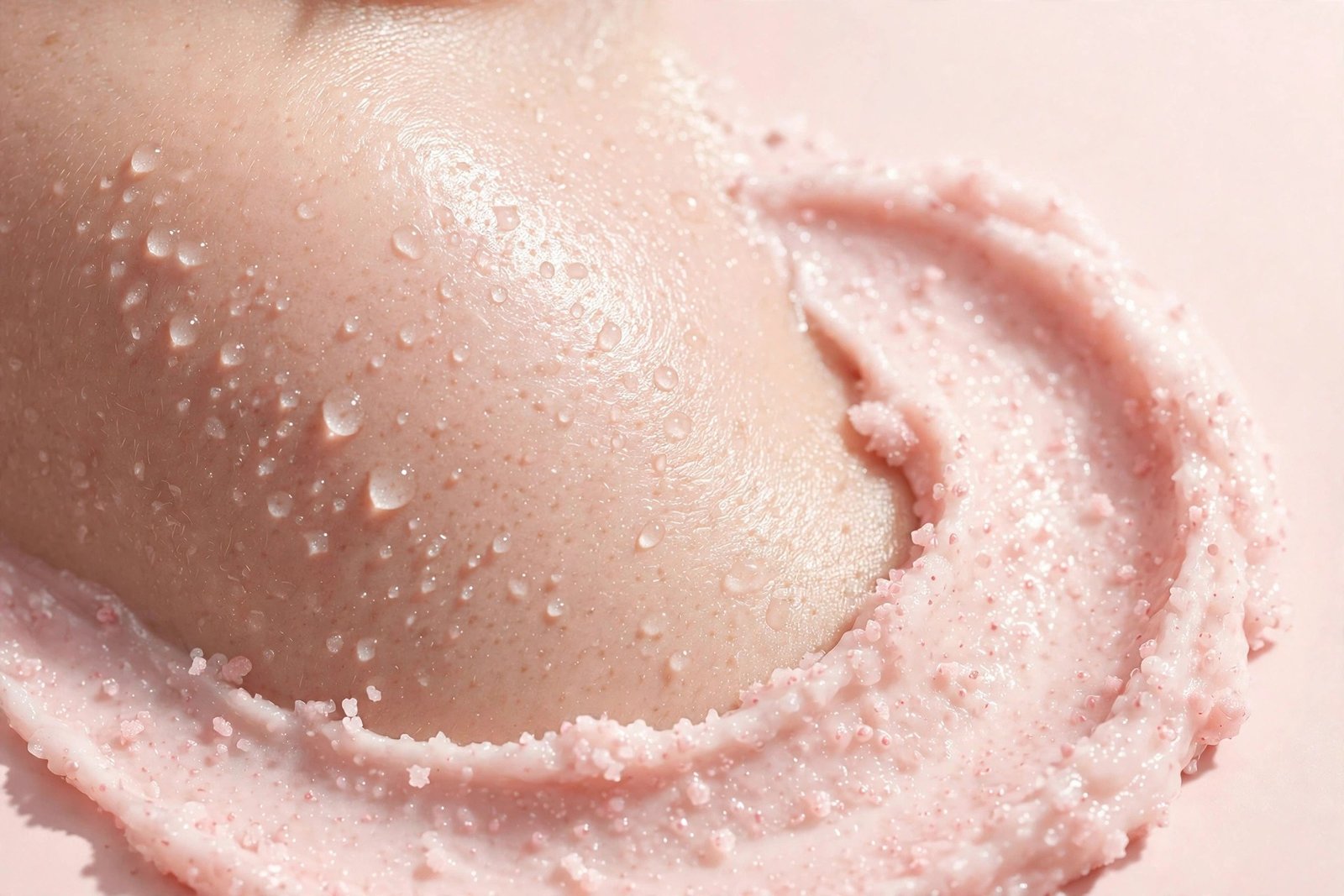
- Scrubs with fine particles (sugar, jojoba beads)
- Exfoliating brushes or cleansing devices
- Washcloths or konjac sponges
Physical exfoliation can work, but it’s easier to overdo — pressing too hard or using a harsh scrub can create micro-tears in the skin. If you prefer physical exfoliation, choose something gentle, use light pressure, and don’t use it as often as you would a mild chemical exfoliant.
Bottom line: For most people, a gentle chemical exfoliant used at the right frequency gives the best results with the least risk of irritation.
How Often Should You Exfoliate? A Guide by Skin Type
Here’s the part you came for. These are starting guidelines — always adjust based on how your skin responds. When in doubt, start with less.
Oily Skin: 2–3 Times Per Week
Oily skin tolerates exfoliation well since extra sebum provides a buffer. Start with 2 times per week using a BHA (salicylic acid), which is oil-soluble and targets clogged pores. Work up to 3 times per week after a few weeks if your skin stays comfortable. If skin feels tight or looks stripped rather than glowy, scale back.
Dry Skin: 1–2 Times Per Week
Dry skin has a weaker moisture barrier, so go gentle: start with once per week using a mild AHA like lactic acid (which also hydrates) or a PHA. Work up to twice per week only if comfortable. Always follow with a rich moisturizer, and skip exfoliation on days when skin already feels tight or flaky.
Sensitive Skin: Once a Week (or Every 10 Days)
Sensitive skin is the most reactive, so patience is everything. Start with once a week using the gentlest option — a PHA or enzyme exfoliant — and patch test on your jawline first. Very reactive skin may do better at once every 10 days. Skip exfoliation during flare-ups or whenever skin feels irritated.
Combination Skin: 1–2 Times Per Week
For an oily T-zone with normal-to-dry cheeks, 1–2 times per week is the sweet spot. You can apply a BHA mainly on the T-zone and go lighter on drier cheeks — or use a gentle AHA all over for both dullness and texture without over-stripping.
Normal Skin: 2 Times Per Week
If your skin is neither particularly oily nor dry nor sensitive, you’re in the easy category:
- Twice a week with either an AHA or BHA (choose based on your main concern — dullness favors AHA, congestion favors BHA)
- This is enough to maintain brightness and smooth texture without pushing it
Quick-Reference Frequency Chart
| Skin Type | Starting Frequency | Max Frequency |
|---|---|---|
| Oily | 2x per week | 3x per week |
| Dry | 1x per week | 2x per week |
| Sensitive | 1x per week | 1x per 10 days |
| Combination | 1–2x per week | 2x per week |
| Normal | 2x per week | 2–3x per week |
Remember: these are guidelines, not rules. Your skin’s response is the real authority. And if you’re building your full routine from scratch, our beginner’s step-by-step skincare routine shows exactly where exfoliation fits among cleanser, treatment, moisturizer, and sunscreen.
7 Signs You’re Exfoliating Too Much
Over-exfoliation is one of the most common skincare mistakes — and it creeps up gradually. Watch for:
- Persistent redness — flushed skin hours after your routine
- Stinging or burning — products that used to feel fine now sting
- Tight, “squeaky” feeling — stripped rather than clean
- Unusual dryness or flaking — over-exfoliating can cause the flakiness you’re trying to fix
- Increased breakouts — a damaged barrier lets irritants in
- Shiny, waxy-looking skin — over-polished, not a healthy glow
- Heightened sensitivity — reacting to things you normally tolerate
If you notice several of these, stop all exfoliating actives and switch to a minimal routine: gentle cleanser, simple moisturizer, sunscreen. Focus on barrier repair for 2–4 weeks before reintroducing anything. Our guide on how to repair a damaged skin barrier walks through the full reset process step by step.
How to Start Exfoliating Safely: A Beginner Plan
If you’re new to exfoliation, don’t just pick a strong peel and go for it. Here’s a safe, gradual way to begin:
Week 1–2: Patch Test and Go Slow
Choose a gentle formula (a low-percentage lactic acid or PHA is ideal for beginners). Patch test on your jawline, wait 24 hours, then exfoliate once in the first week, in the evening, followed by moisturizer.
Week 3–4: Assess and Adjust
If skin feels calm, add a second evening per week. Keep the rest of your routine simple — this isn’t the time to also start retinol or vitamin C. Comfortable and smooth the morning after is good; tight or red means slow down.
Week 5+: Find Your Rhythm
- Settle into the frequency that matches your skin type (see the chart above)
- Stick with one exfoliant — layering multiple acids is a fast track to over-exfoliation
- Always wear sunscreen during the day (exfoliation can increase sun sensitivity)
Golden Rules for Safe Exfoliation
- One active at a time when starting out — don’t combine exfoliating acids with retinol or strong vitamin C until your skin is well-adjusted
- Evening only — exfoliate at night so your skin can recover while you sleep, and so sun sensitivity is less of an issue
- Moisturize after — always follow with a good moisturizer to support your barrier
- Skip it when irritated — after sunburn, waxing, breakouts that are raw, or any time your skin feels “off,” give exfoliation a rest
- Read the label — a “daily” exfoliating cleanser plus a twice-weekly acid treatment can quietly add up to over-exfoliation
If you’re also using other actives like niacinamide or vitamin C, our guide on layering vitamin C and niacinamide covers how to combine treatment products without irritating your skin — the same “introduce slowly” principles apply.
Frequently Asked Questions
Can I exfoliate every day?
For most people, no. Daily exfoliation is too much for all but the most resilient, oily skin types. Most dermatologists recommend 1–3 times per week depending on skin type. And remember that “daily” exfoliating cleansers plus a twice-weekly acid treatment add up — count everything.
Should I exfoliate in the morning or at night?
Night is generally better. Your skin does much of its repair work while you sleep, and exfoliating in the evening avoids increased sun sensitivity during the day. If you exfoliate at night, just make sure you’re diligent about sunscreen the next morning.
Can I use retinol and exfoliate in the same routine?
It’s best not to use them on the same night, especially when you’re starting out — both increase cell turnover and the combination can easily over-exfoliate. A common approach is alternating nights (exfoliant one evening, retinol the next), with rest nights in between. Once your skin is well-adjusted, some people tolerate both, but alternating remains the safer long-term strategy.
Does exfoliation help with acne?
It can help with clogged pores and blackheads — salicylic acid (BHA) is particularly useful since it’s oil-soluble. But over-exfoliating acne-prone skin can make breakouts worse by damaging the barrier. Be gentle, and see a dermatologist if breakouts are persistent or severe.
How long does it take to see results from exfoliating?
You may notice smoother, brighter skin after the first couple of uses. But meaningful improvements in tone and texture typically take 4–8 weeks of consistent use — roughly one full skin cell turnover cycle. If you see no improvement after two months, the product may not be the right fit.
Key Takeaways
- How often should you exfoliate your face? 1–3 times per week depending on skin type: oily skin tolerates 2–3x, dry and sensitive skin does best with 1x, combination and normal skin around 1–2x.
- Start slow. Begin once a week with a gentle formula, then increase only if your skin stays calm and comfortable.
- Chemical exfoliants (AHAs, BHAs, PHAs) are generally more even and predictable than physical scrubs.
- Watch for over-exfoliation signs — redness, stinging, tightness, flaking, and new breakouts mean it’s time to pause and repair.
- Always follow with moisturizer and wear sunscreen during the day, since exfoliation increases sun sensitivity.
- Less is more. Exfoliation supports your skin’s natural renewal; it shouldn’t sting or require recovery time.
Love this? Pin it for later!