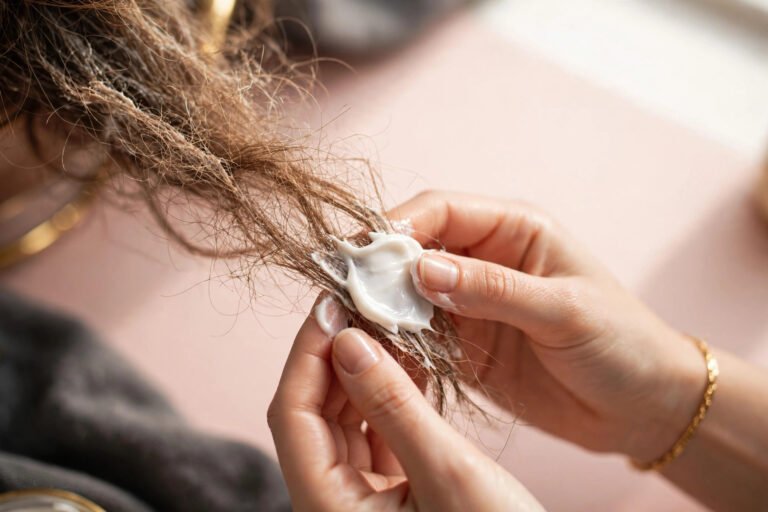
How to Co-Wash Curly Hair (Step-by-Step for Beginners)
If your curls feel dry and frizzy no matter how much conditioner you use, your shampoo may be the problem. Traditional shampoos rely on sulfates — strong cleansers that strip natural oils — and for curly hair, which already loses moisture faster than straight hair, that stripping leads to dullness, breakage, and undefined curls. Co-washing (short for “conditioner washing”) flips the script: instead of a sulfate shampoo, you cleanse with a dedicated conditioner that lifts dirt and sweat while depositing moisture back into the hair.
Co-washing isn’t new. The Curly Girl Method popularized it years ago, and stylists specializing in textured hair have recommended it as the foundation of a gentle curly hair washing routine for decades. Done correctly, co-washing leaves curls softer, shinier, and more defined between wash days. Done wrong — with the wrong product or poor technique — it leaves hair limp, greasy, and coated in residue.
This guide walks you through the full co-wash routine for beginners: what to use, the exact steps, how often to co-wash, and how it fits alongside occasional clarifying shampoos so buildup never takes over.
Key Takeaways
- Co-washing cleanses curly hair with a lightweight conditioner instead of sulfate shampoo, adding moisture rather than stripping it.
- Co-wash 1–2 times per week; rotate in a clarifying shampoo every 3–4 weeks to prevent buildup.
- The most common beginner mistakes are skipping the scalp massage, using too much product, and never clarifying.
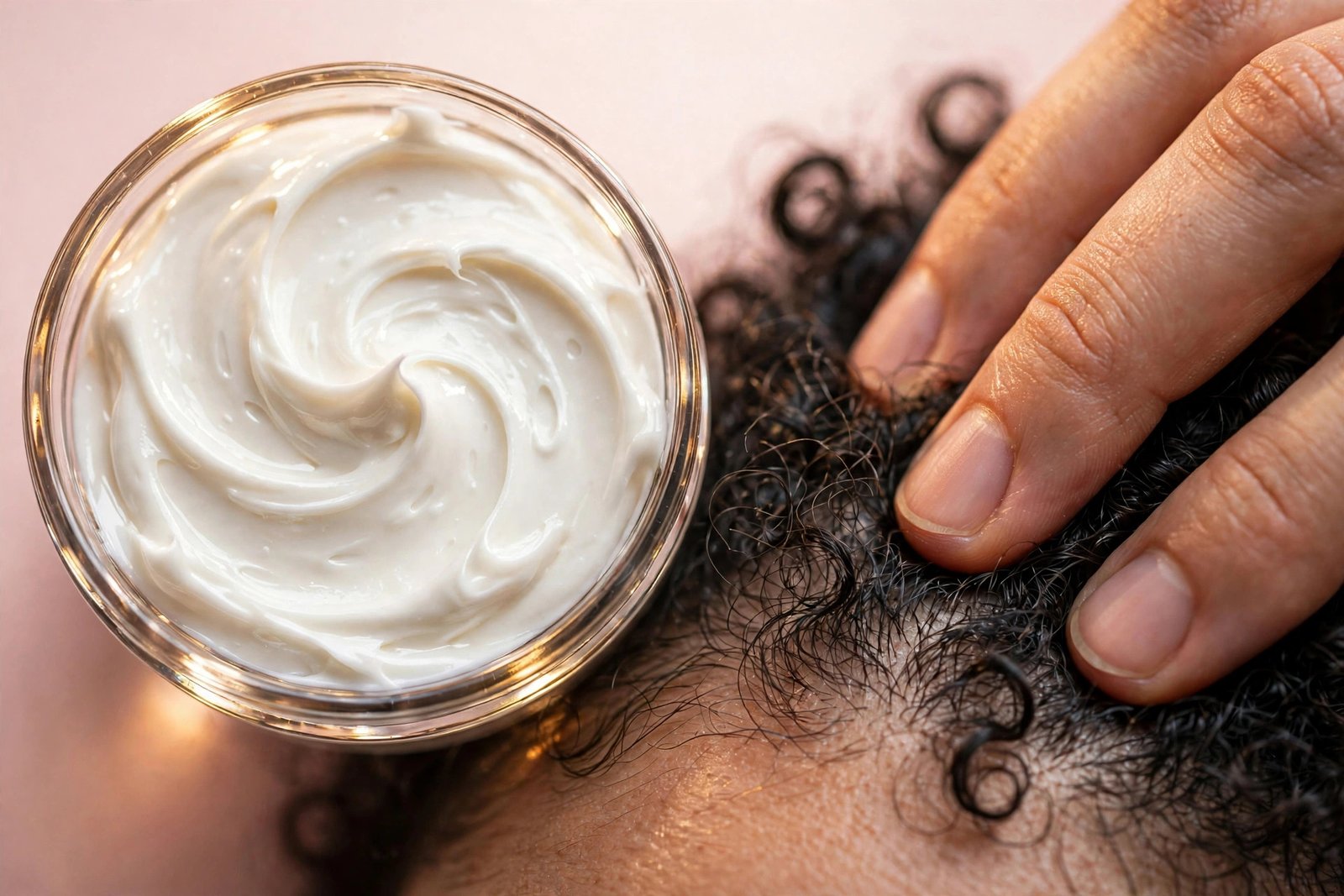
- A true co-wash formula (not regular conditioner) contains light cleansing agents designed to lift dirt without foam.
What Is Co-Washing, Exactly?
Co-washing means washing your hair with conditioner instead of shampoo. But there’s an important distinction: a purpose-made co-wash product is not the same as the everyday conditioner you’d use after shampooing. True co-wash formulas contain mild cleansing ingredients — gentle surfactants in much lower concentrations than shampoo, plus ingredients like cocamidopropyl betaine — that dissolve sweat, light oils, and water-soluble product residue without the heavy foam of a sulfate cleanser.
Regular conditioner, by contrast, is designed to coat the hair and smooth the cuticle. Using it as a wash can leave a coating that builds up over time, which is why beginners who co-wash with the wrong product often end up with lanky, greasy hair. Look for products labeled “co-wash” or “cleansing conditioner” for best results.
Co-Wash vs. Shampoo vs. Clarifying
Not every wash needs to be the same. Here’s how the three methods compare and when to use each — for the full breakdown, see this guide to co-washing versus clarifying:
| Method | What it does | Best for |
|---|---|---|
| Co-wash | Gently lifts dirt and sweat, adds moisture | Regular weekly cleansing for curls |
| Sulfate-free shampoo | Deeper cleanse without stripping | When hair feels heavier than usual |
| Clarifying shampoo | Removes stubborn buildup and silicones | Once every 3–4 weeks, or after heavy product use |
The three methods work as a team. Co-washing is your everyday driver, sulfate-free shampoo is the middle ground, and clarifying is the occasional deep reset. A consistent scalp care routine keeps everything in balance.
Who Should Co-Wash (and Who Shouldn’t)
Co-washing works best for:
– Curly, coily, and wavy hair (types 2C–4C) — these hair types lose moisture quickly and benefit most from gentle cleansing.
– Dry or color-treated hair — less stripping means longer-lasting color and softer ends.
– People with dry scalps — fewer harsh cleansers can calm tightness and flaking.
It may not suit:
– Very fine or low-density hair — co-washing can weigh fine curls down; lighter formulas and less frequent use help.
– Very oily scalps — if your scalp gets greasy within 24 hours, you may need shampoo more often.
– Hard-water households — mineral deposits don’t dissolve with co-wash alone, so you’ll need regular clarifying.
If you’re unsure which camp you’re in, check how to tell when your hair needs a proper shampoo for signs your current routine needs adjusting.
The Beginner Co-Wash Routine: Step by Step
Step 1: Fully Saturate Your Hair
This step gets skipped more than any other. Soak your hair completely with warm water — every strand, from roots to ends. Water does most of the actual cleansing work; the co-wash just helps lift what’s loose. Hair that isn’t fully wet won’t cleanse evenly, and product won’t distribute well.
Step 2: Section and Apply
Divide your hair into 4–6 sections (more sections for thicker or longer hair). This prevents tangles and makes sure every part of your scalp gets attention. Apply a generous amount of co-wash to your scalp first — about a golf-ball-sized amount per section for medium-density hair, more for thick hair. Work it in with the pads of your fingertips (never your nails).
Then, pull the remaining product down through your lengths. The ends of curly hair are the oldest and driest part, so they deserve the moisture — but the cleansing action should happen mainly at the scalp.
Step 3: Massage for a Full 3–5 Minutes
This is the single most important part of the routine. Without shampoo’s foam, the mechanical action of your fingertips does the cleaning. Massage in small circular motions, moving across your entire scalp — hairline, crown, sides, nape. Spend at least 3 minutes; stylists recommend up to 5 for thick or very textured hair.
If your arms get tired, a silicone scalp massager helps. It exfoliates gently and boosts circulation without scratching.
Step 4: Detangle While the Product Is In
With the co-wash still in your hair, detangle section by section using a wide-tooth comb or your fingers, starting from the ends and working up to the roots. The slip from the co-wash makes detangling far gentler than dry brushing, which is a major breakage culprit for curly hair. Never rush this step — most wash-day breakage happens during careless detangling.
Step 5: Rinse Thoroughly
Rinse with warm (not hot) water until the water runs completely clear, then keep rinsing for another 30 seconds. Incomplete rinsing is the number-one cause of the “co-washing made my hair greasy” complaint. Lift sections as you rinse so water reaches the scalp underneath — residue hides where hair lies flat against the head.
Step 6: Condition and Style as Usual
After a co-wash, you still need a regular rinse-out conditioner on your lengths — the co-wash cleansed, but it didn’t deliver deep moisture. Apply conditioner from mid-length to ends, detangle again lightly if needed, then rinse. Follow with your usual leave-in, cream, and gel.
How Often Should You Co-Wash?
There is no universal schedule — hair density, scalp oil production, and styling habits all matter. General guidelines:
- Most curly hair: co-wash 1–2 times per week.
- Very dry or coily hair: up to 3 times per week works well.
- Fine or wavy hair: once per week, alternating with a light sulfate-free shampoo.
The Clarifying Rotation
Co-washing alone can’t remove everything. Silicones (from heat protectants and some styling products), mineral deposits from hard water, and heavy butters accumulate over time no matter how well you massage. That’s why every 3–4 weeks, you need a clarifying wash — a stronger shampoo designed to strip buildup without being used often enough to dry hair out.
Signs it’s clarifying time: curls feel limp or coated, products seem to “sit” on hair instead of absorbing, or your scalp itches despite regular co-washing. Learn the full checklist of signs of product buildup on your scalp so you know exactly when to reset. After clarifying, always follow with a deep conditioner to replace the moisture the stronger cleanser removed.
Common Co-Washing Mistakes Beginners Make
1. Using regular conditioner as a co-wash. As covered above, standard conditioners are designed to coat, not cleanse. Over weeks, that coating becomes buildup.
2. Skipping the long massage. A quick 30-second scrub doesn’t clean anything. The 3–5 minute massage is non-negotiable — it’s doing the job foam would do in a traditional shampoo.
3. Never clarifying. Some co-wash devotees go months without a deep cleanse, then wonder why their curls went limp. Buildup is inevitable; scheduled clarifying prevents it. A dedicated clarifying shampoo routine keeps the rotation honest.
4. Applying too much product. More co-wash doesn’t mean more clean. Start with the recommended amount and add water to help it spread — water improves distribution far better than extra product.
5. Rinsing too quickly. If your hair still feels slippery or coated after rinsing, you haven’t rinsed enough. When in doubt, rinse longer.
6. Ignoring the scalp. Co-washing is a scalp treatment first and a hair treatment second. Product applied only to the lengths while the scalp gets a token rub leads to itchy, flaky scalps. Keep your scalp care routine intentional.
Co-Washing and the Curly Girl Method
Co-washing is a core pillar of the Curly Girl Method, which also avoids sulfates, silicones, and drying alcohols. If you follow the method strictly, pair your co-wash with silicone-free styling products — silicones can’t be removed by co-wash alone and require sulfates to dissolve, which defeats the purpose. Check ingredient lists for anything ending in “-cone,” “-conol,” or “-xane” and avoid them unless you’re clarifying regularly.
Frequently Asked Questions
Can I co-wash every day?
Daily co-washing is usually unnecessary and can over-moisturize hair (a condition called hygral fatigue, where hair becomes mushy and stretches too much). Most curl types do best with 1–3 co-washes per week. Refresh second-day curls with a water-and-leave-in spray instead.
Will co-washing make my hair grow faster?
Co-washing doesn’t change your growth rate — growth happens at the follicle, unaffected by washing method. But by reducing breakage from harsh cleansing, co-washing helps you retain length, which makes hair appear to grow faster.
Can I co-wash if I work out and sweat a lot?
Yes. Sweat is water-soluble and rinses out easily — a thorough water rinse plus a light co-wash after workouts works well. Save the full massage routine for your main wash days and do quicker co-washes after the gym.
Does co-washing work for wavy hair?
It can, but wavies are the most likely to find co-washing too heavy. Use a lightweight co-wash formula, focus product at the scalp, and alternate with a gentle shampoo to keep waves from falling flat.
How do I know if co-washing isn’t working for me?
Give it a full 2–4 weeks (one full clarifying cycle) before judging. If after that your scalp is persistently itchy, your hair feels coated no matter how well you rinse, or your curls have lost their pattern, co-washing may not suit your hair — a regular proper curly hair wash routine with sulfate-free shampoo might be the better fit.
The Bottom Line
Co-washing curly hair is simple once the technique clicks: saturate fully, massage the scalp for 3–5 minutes, detangle with the product in, rinse longer than you think necessary, and clarify every few weeks. The biggest beginner error isn’t the product — it’s rushing the process. Slow down, give your scalp the massage time it needs, and your curls will reward you with the softness and definition that made co-washing famous in the first place.
Love this? Pin it for later!