How to Sanitize Makeup Products (Safe and Simple)
Your makeup collects bacteria every time you use it — from fingers, brushes, and the air itself. Sanitizing your products periodically keeps that bacterial load low and your skin safer. But sanitizing has limits: it refreshes products that are still within their safe lifespan, and it can never rescue something that’s already expired.
This guide covers the safe, simple methods for sanitizing powders, lipsticks, pencils, and palettes — plus the products you should never try to salvage. For the timelines that tell you what’s still worth keeping, check the expiration chart first.
Key Takeaways
- Sanitizing reduces surface bacteria; it cannot reset an expired product’s safety clock.
- 70% isopropyl alcohol is the go-to sanitizer for powders and hard surfaces.
- Never try to sanitize mascara, liquid liner, or anything used during an infection — toss those.
- Sanitize powders every few months and pencils before each use.
What Sanitizing Can and Can’t Do
Let’s be clear about expectations. Sanitizing kills bacteria on the surface of a product. It does not:
- Restore broken-down preservatives inside the formula
- Fix changes in smell, texture, or color
- Make an expired product safe again
- Remove contamination that has penetrated deep into liquids or creams
Think of it as hygiene maintenance for products that are still fresh, not a rescue operation for products that have turned. If a product is past its safe window, throw it away using the full expiry guide — no amount of alcohol spray changes that.
What You’ll Need
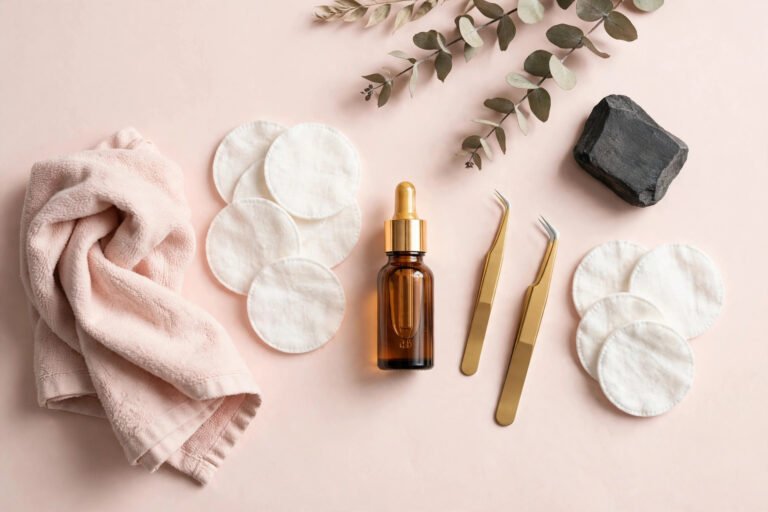
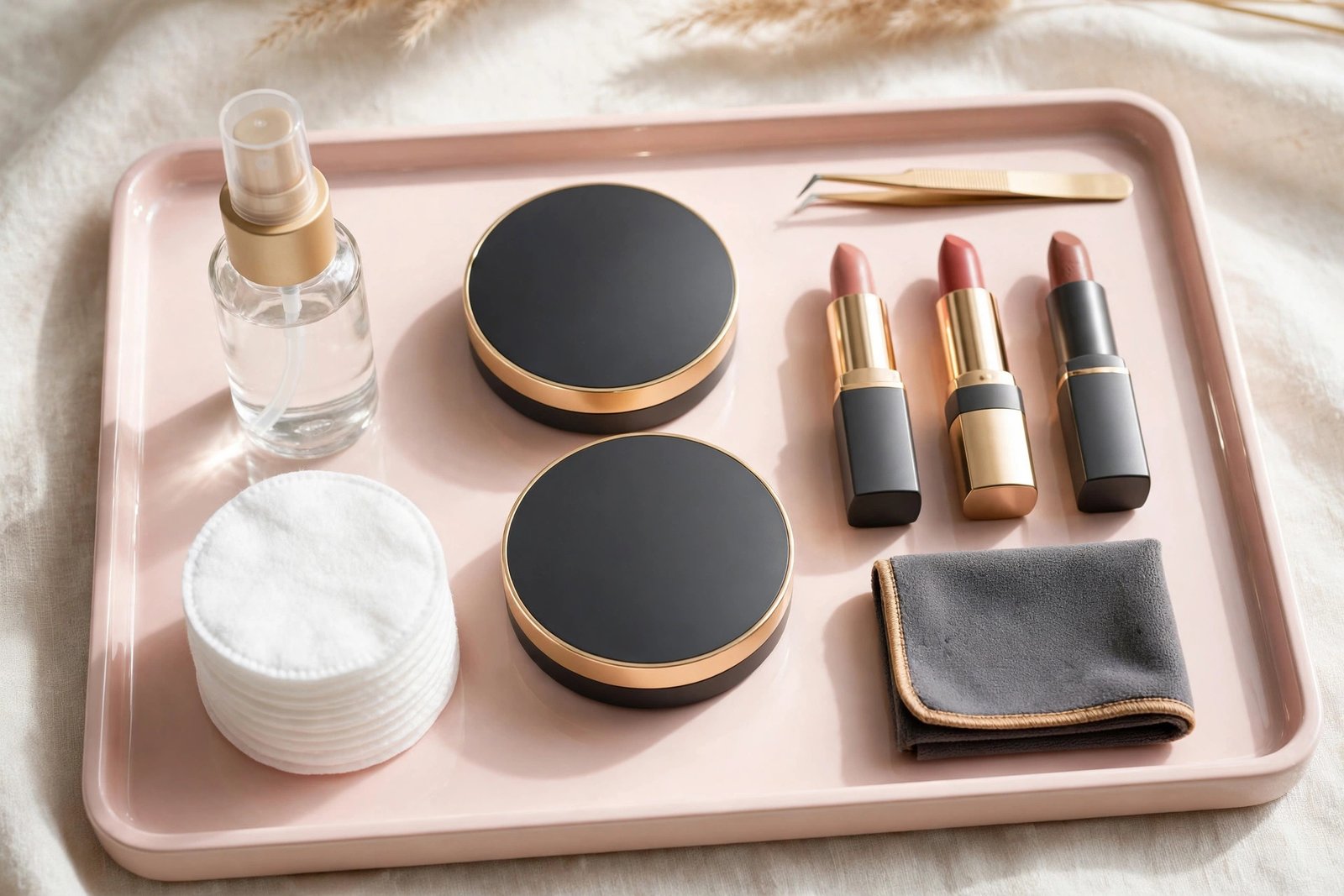
A small sanitizing kit lives happily in any vanity drawer:
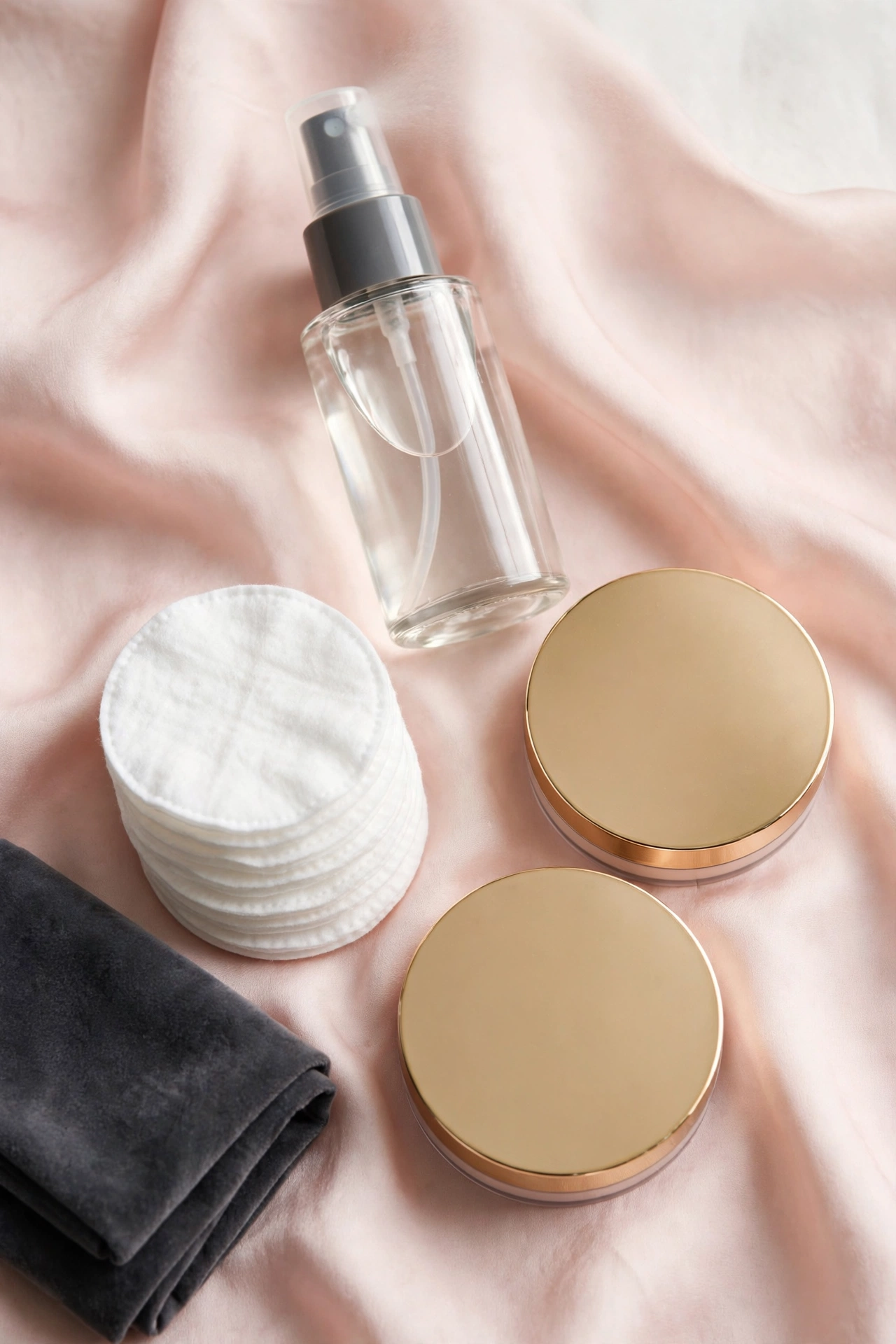
- 70% isopropyl alcohol in a fine-mist spray bottle (the 70% concentration disinfects better than 90%+ because the water content helps it penetrate cell walls)
- Clean tissues or cotton pads
- A pencil sharpener (dedicated to makeup, cleaned regularly)
- Cotton swabs for detail work
- A clean, dry surface to work on
That’s it. No special equipment, no expensive solutions.
How to Sanitize Powder Products
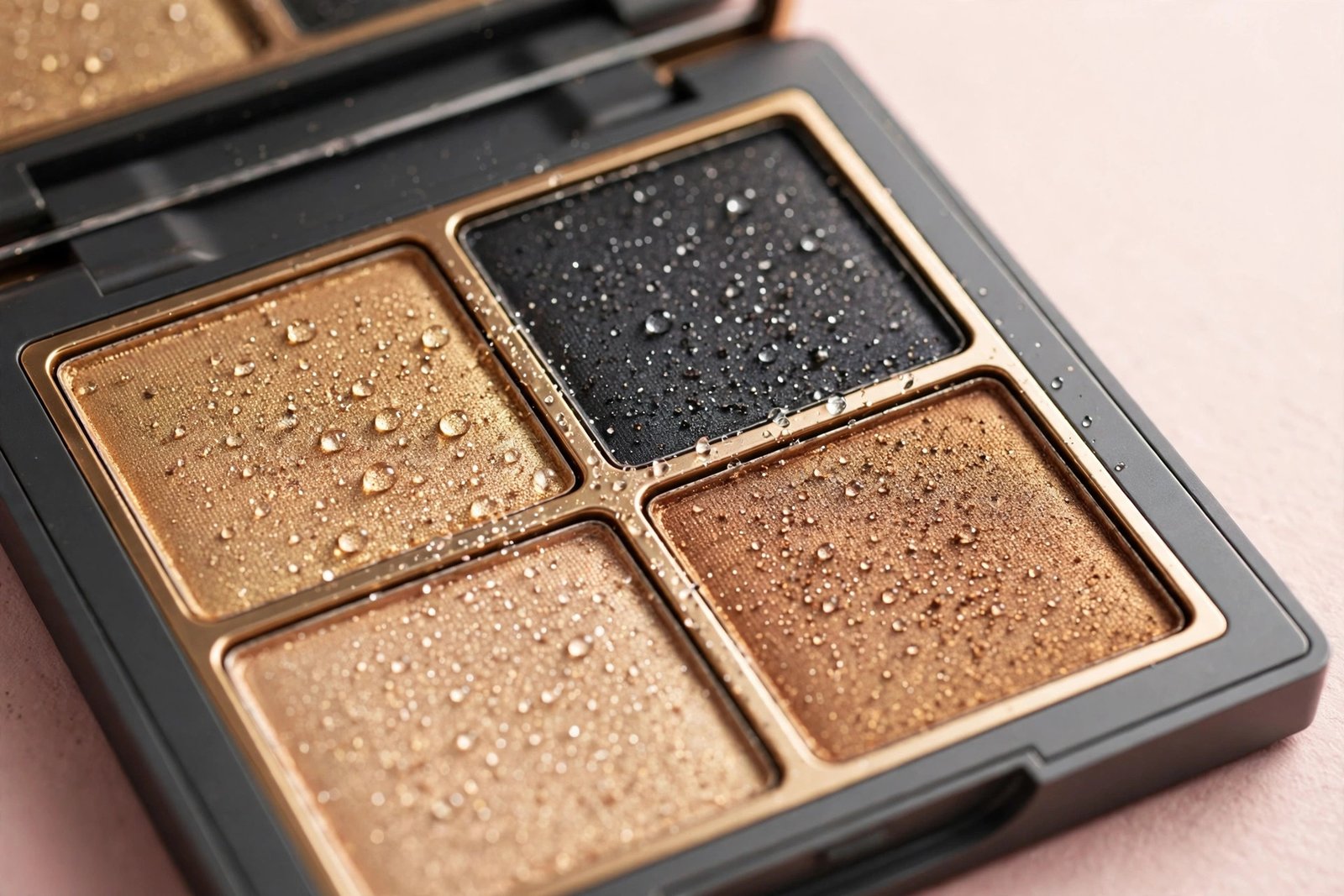
Pressed powders, blush, bronzer, highlighter, and powder eyeshadow are the easiest and most worthwhile products to sanitize — their hard, dry surfaces take disinfectant well.
- Wipe the surface. Gently sweep a clean tissue across the powder to remove the top layer of oils, skin cells, and loose debris. For palettes, do this pan by pan.
- Mist with 70% isopropyl alcohol. Hold the spray bottle 6–8 inches away and give the surface a light, even mist. You want damp, not soaked — one or two spritzes per pan is plenty.
- Let it air-dry completely. Leave the compact open in a clean area for 15–30 minutes until fully dry. Don’t close it damp, and don’t blow on it.
- Repeat every 2–3 months, or after anyone else has used the product.
This method also removes “hard pan” — the shiny, hardened film that forms when oils build up on powder surfaces — restoring color payoff. If performance doesn’t bounce back after sanitizing, the product is likely just old.
How to Sanitize Lipsticks and Lip Liners
Lip products touch your mouth, so they deserve regular attention:
- Wipe the bullet. Twist the lipstick up and gently wipe the entire surface with a clean tissue to remove the outer layer.
- Mist or dip. Lightly mist with 70% isopropyl alcohol, or dip the tip in a small cap of alcohol for a few seconds.
- Air-dry with the cap off for 10–15 minutes before recapping.
- For lip liners and lip pencils, sharpen before each use — sharpening physically removes the contaminated outer layer, which is more effective than any spray.
Important: if you’ve used a lip product during a cold sore outbreak or any mouth infection, don’t sanitize it — throw it away. Surface disinfection isn’t reliable against viruses that may have penetrated the formula. The same applies to lip glosses with doe-foot applicators: you can wipe the wand with alcohol, but the tube’s interior can’t be sanitized, so replace gloss on schedule regardless.
How to Sanitize Eye Pencils (and What Not To)
Eye pencils — eyeliner and brow pencils — are sanitized the same way as lip pencils: sharpen before every use. A clean sharpener blade shaves away the used, contaminated surface and exposes fresh product underneath.
- Clean your sharpener regularly with alcohol and a cotton swab; a dirty sharpener re-contaminates every pencil.
- Never use saliva to wet a pencil tip. It introduces mouth bacteria directly onto a product bound for your eyes.
- Do not attempt to sanitize mascara, liquid eyeliner, or cream/gel liners in pots. Their formulas can’t be surface-disinfected, and anything that touched an infected eye must be discarded outright.
Sanitizing Cream Products and Palettes
Cream blush, cream eyeshadow, and cream contour products are trickier — their soft, moist surfaces absorb alcohol unevenly, and you can’t wipe away a neat top layer.
- For cream products in pans or compacts, a very light alcohol mist on the surface followed by full air-drying is acceptable maintenance within their lifespan.
- For cream products in jars, always use a clean spatula or the back of a washed hand rather than fingers — prevention beats sanitizing here.
- Pump packaging is inherently the most hygienic; keep the nozzle clean with an alcohol-dampened cotton swab.
If a cream product has changed in smell or texture, sanitizing won’t save it — that’s expiration, not surface contamination.
Sanitizing Your Makeup Bag and Storage
Products don’t live in isolation. A grimy makeup bag re-contaminates everything inside it:
- Empty the bag completely.
- Shake out loose powder and debris.
- Wipe the interior with a cloth dampened with 70% isopropyl alcohol (check the bag’s material first — alcohol can damage some leathers and coatings).
- Let it air-dry fully before repacking.
- Wash brush rolls and fabric pouches in the laundry per their care labels.
Do this every month or two, and always after traveling.
What to Never Try to Sanitize
Some products should never be “saved” — when they’re done, they’re done:
- Mascara and liquid eyeliner past 3 months — toss, don’t sanitize.
- Anything used during an eye infection, stye, or cold sore — discard immediately.
- Products with changed smell, texture, or color — that’s formula breakdown, not surface dirt.
- Dried-out products revived with water or saliva — adding moisture to a preservative-depleted formula just feeds bacteria. Never do this.
- Shared products you can’t verify the history of — when in doubt, throw it out.
Your tools matter just as much as your products: dirty brushes undo all your sanitizing work, and sponges need their own wash routine.
A Simple Sanitizing Schedule
| How often | What to do |
|---|---|
| Before each use | Sharpen eye and lip pencils |
| Weekly | Wipe lipstick bullets; clean sharpener |
| Monthly | Wipe down makeup bag interior; mist frequently used powders |
| Every 2–3 months | Full powder palette sanitizing session |
| Twice a year | full makeup-bag audit and declutter |
Sanitizing When You Travel
Travel exposes your kit to extra heat, humidity, and handling — all of which accelerate bacterial growth. Pack a small spray bottle of 70% isopropyl alcohol and a few cotton pads in your toiletry bag. Wipe lipstick bullets and mist your most-used powder pan once during a week-long trip, and always let products cool down before sealing your makeup bag after a hot day out.
Frequently Asked Questions
Can I use hand sanitizer instead of isopropyl alcohol?
Not ideally. Hand sanitizers contain moisturizers, fragrances, and gelling agents that leave residue on makeup and can irritate skin and eyes. Plain 70% isopropyl alcohol is cheaper, cleaner, and more effective for this purpose.
Will alcohol damage my makeup?
A light mist on hard surfaces (powders, lipstick bullets, pencil wood) is safe when allowed to dry fully. Don’t soak products, don’t use it on cream formulas regularly, and keep it away from products with special coatings or magnetic palettes’ adhesives.
How do professionals sanitize makeup on clients?
Makeup artists sanitize between every client: alcohol-misting powders and palettes, sharpening pencils, scraping lipstick onto a sanitized palette with a spatula (never applying the bullet directly), and using disposable mascara wands — one dip per eye, then discarded. You can borrow these habits for your own kit.
Can sanitizing extend a product past its expiration date?
No. Sanitizing manages surface bacteria on products that are still within their safe lifespan. Once preservatives have failed and the formula has degraded, the product is unsafe regardless of surface disinfection. Expiry dates are hard limits.
Conclusion
Sanitizing your makeup is one of the simplest hygiene habits you can build: a bottle of 70% isopropyl alcohol, a tissue, and a few minutes every month keep your powders, lipsticks, and pencils safer to use. Pair it with sharpened pencils, clean tools, and honest expiry dates, and your whole kit stays in trustworthy shape.
Just remember the golden rule — sanitizing maintains fresh products; it never resurrects expired ones. When something’s past its time, let it go with the complete expiry guide. Your skin is worth more than any product.
Love this? Pin it for later!