How to Choose a Wig for Beginners: A Complete Guide
Buying your first wig can feel overwhelming. Cap types, lace fronts, synthetic versus human hair, density numbers, cap sizes — the terminology alone is enough to make a beginner close the tab. But choosing a wig is really just five decisions made in the right order, and once you understand each one, the whole process gets straightforward.
This guide walks through every choice a first-time wig buyer faces, with realistic budget ranges and the mistakes beginners make most often — so your first wig looks natural and feels comfortable instead of sitting in a drawer.
Not sure a wig is right for you versus extensions? Our beginner’s guide to hair extensions compares all the ways to add length and volume.

Key Takeaways
- Decide synthetic vs human hair first: synthetics cost $30–$150 and need no styling; human hair costs $150–$800+ and styles like your own hair.
- Cap type matters most for naturalness: lace front wigs give a realistic hairline; glueless and headband wigs are best for beginners.
- Measure your head before ordering — most wigs come in petite, average, and large, and average fits most people.
- A beginner budget of $50–$200 gets you a quality synthetic or entry-level human hair wig.
- Choose a color close to your natural shade for your first wig; bold changes are easier once you know what fits you.
Step 1: Decide Between Synthetic and Human Hair
This is the biggest decision and it affects everything else — price, styling, lifespan, and daily effort.
Synthetic Wigs
Synthetic wigs are made from man-made fibers engineered to look and move like hair. They’re the most popular choice for first wigs, and for good reason:
- Price: $30–$150 for a quality synthetic — affordable enough to experiment.
- Ready to wear: They come pre-styled and hold their shape wash after wash. What you see is what you get.
- Low maintenance: No restyling needed after washing; air-dry and the style returns.
- Lifespan: 3–6 months of regular wear before fibers lose their luster.
Downsides: Most synthetic wigs can’t be heat-styled (only “heat-friendly” fibers can, up to about 350°F). The shine can look slightly artificial on very cheap options, and they can’t be dyed.
Human Hair Wigs
Human hair wigs are made from real donated hair and behave like your own hair:
- Styling freedom: Curl them, straighten them, dye them — everything works.
- Natural look and feel: The most realistic option, especially in motion and close-up.
- Lifespan: 1–3 years with proper care.
- Price: $150 for short entry-level wigs to $800+ for long, dense, virgin hair units.
Downsides: They need styling after every wash (they don’t hold a style on their own), require more maintenance, and cost significantly more.
Beginner recommendation: Start with a quality synthetic lace-front wig unless you specifically need heat styling or color customization. You’ll learn what you like about fit and style before investing $300+.
Step 2: Choose Your Cap Type
The “cap” is the base the hair is attached to. Cap type determines how natural the wig looks, how breathable it is, and how hard it is to put on.
Lace Front Wigs
A lace front has a sheer lace panel along the front hairline where individual hairs are hand-tied. This creates the most natural-looking hairline of any cap type — you can part it and it looks like hair growing from your scalp. Most beginners should start here. They typically cost $50–$300 depending on the hair type.
Full Lace Wigs
The entire cap is lace, so you can part the hair anywhere and wear high ponytails. More natural versatility, but more expensive ($150–$800+) and more delicate. Overkill for most first wigs.
Glueless / Headband Wigs
These use combs, adjustable straps, or a built-in headband instead of adhesive. No glue, no gel, no fuss — they’re the easiest wigs to put on and take off daily. Ideal if you want zero learning curve. Human hair headband wigs run $100–$250.
Classic Cap (Wefted) Wigs
The most affordable option ($30–$100): hair is sewn onto elastic wefts. Less breathable and less natural at the part, but a fine entry point if budget is the top priority.
Closure vs Frontal (for wig customization)
If you hear these terms: a closure is a small lace piece (4×4 or 5×5 inches) covering the crown area; a frontal is a larger lace piece (13×4 or 13×6 inches) spanning ear to ear. Frontals give more parting freedom; closures are easier for beginners to manage and cheaper.
Step 3: Measure Your Head and Pick a Cap Size
A wig that doesn’t fit will slide, give you headaches, or look bulky — and no amount of styling fixes a bad fit. Measure before you buy:
- Circumference: Wrap a soft measuring tape around your head, starting at your front hairline, going behind your ears, and around the nape. Average: 21.5–22.5 inches.
- Front to nape: Measure from your front hairline over the crown to the nape of your neck.
- Ear to ear (over top): Measure from one ear, over the crown, to the other ear.
Most wigs come in three sizes:
| Size | Circumference | Fits |
|---|---|---|
| Petite | 20.5–21.5″ | Smaller heads |
| Average | 21.5–22.5″ | Most people |
| Large | 22.5–23.5″ | Larger heads |
Tips: If you have a lot of natural hair, braid it flat or wear a wig cap to compress it before measuring. Most first-time buyers fit an “average” cap with adjustable straps — when in doubt, average with adjustability beats guessing.
Still weighing extensions instead of a wig? See how the main extension types compare in our clip-in vs tape-in extensions breakdown before deciding.
Step 4: Pick the Right Length, Density, and Color
Length
For your first wig, stay within 2–4 inches of your natural hair length. Drastic length changes draw attention to the wig itself; a natural-length first wig lets you focus on fit and comfort. Lengths are measured from the crown down, so a 14-inch wig falls around shoulder length on most people.
Density
Density is how thick the wig is, expressed as a percentage (100% = natural fullness):
- 130%: Natural everyday fullness — the safest beginner choice.
- 150–180%: Glamorous volume; great for special occasions but can look heavy daily.
- 200%+: Very dramatic; not recommended for a natural first wig.
Beginners almost always do best with 130% density — it looks like healthy natural hair rather than an obvious wig.
Color
Choose a shade close to your natural color for your first wig. Matching is easier than you think: most brands photograph well, and a shade within one level of your own hair reads natural even if the match isn’t perfect. Save the platinum blonde or burgundy experiment for wig number two, when you already know your size and preferred cap.
Planning to customize the color yourself? Read our beginner’s guide to dyeing hair at home for the basics of color application before attempting it on a wig.
Step 5: Set a Realistic Budget
Here’s what quality actually costs in 2026 — and where beginners waste money:
- $30–$80: Decent synthetic wigs; fine for occasional wear, but hairlines and shine can look artificial.
- $80–$150: The sweet spot for first synthetic wigs — good lace fronts, realistic fibers, comfortable caps.
- $150–$300: Entry-level human hair (shorter lengths, processed hair) or premium synthetics.
- $300–$800+: Quality human hair wigs with natural density and long lifespans.
Where beginners waste money: buying the cheapest wig available (it looks cheap and discourages you), or buying a $500 human hair wig before knowing their size or preferred style. Start mid-range, learn your preferences, then invest.
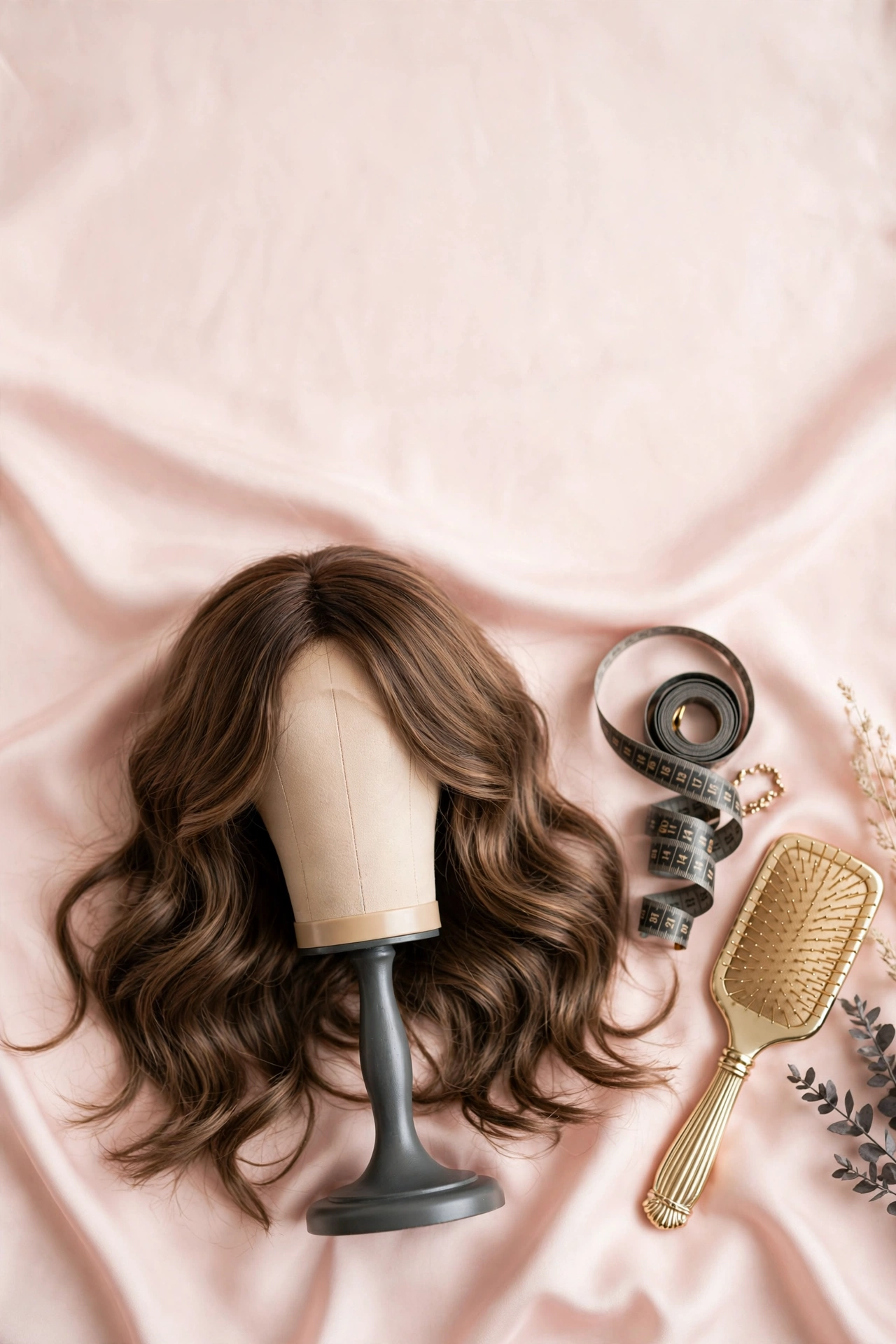
Also budget for basics: a wig stand ($10–$15) to maintain the shape, a wig cap or two, and a wide-tooth comb or wig brush. These small accessories make a real difference in how long your wig lasts.
Beginner Mistakes to Avoid
- Skipping the measurement: Ordering “average” without measuring leads to sliding, headaches, or a bulky look.
- Choosing too-long, too-thick hair: Ultra-long, 180%+ density wigs scream “wig” on a first-timer. Start natural.
- Ignoring the hairline: A thick, straight-across hairline with no baby hairs looks fake. Look for pre-plucked hairlines or learn to pluck a few strands yourself.
- Forgetting about your natural hair underneath: Long thick natural hair needs to be braided flat or cornrowed, or the wig sits too high and looks bulky.
- Buying from unknown sellers with no reviews: Stick to retailers with real customer photos and reviews, especially for human hair wigs where quality varies enormously.
- Using regular hair products on synthetic wigs: Regular shampoos and heat tools damage synthetic fibers. Use synthetic-safe products and air-dry.
How to Make Your First Wig Look Natural
Once you’ve chosen well, these finishing touches sell the realism:
- Pluck the hairline lightly for a gradual, natural density at the front.
- Tint the lace to match your skin tone with foundation or lace tint spray.
- Cut the lace close to the hairline, leaving 1–2mm — don’t cut into the hairline itself.
- Add baby hairs along the front if your wig has them, or create a few with a small brush and edge control.
- Blend with your edges: A bit of your own hairline showing, styled with edge control, bridges the gap between wig and skin.
Frequently Asked Questions
How do I know what wig size I am?
Measure your head circumference with a soft tape measure around your hairline, behind your ears, and around your nape. Most adults measure 21.5–22.5 inches, which is “average.” Always measure before ordering — guessing is the top cause of poor fit.
Are synthetic wigs good for beginners?
Yes — they’re the best starting point for most beginners. Quality synthetics ($80–$150) look natural, come pre-styled, need minimal maintenance, and let you learn about fit and style before investing in human hair.
What’s the difference between a lace front and a full lace wig?
A lace front has lace only along the front hairline; a full lace wig has lace over the entire cap, allowing parting anywhere and updos. Full lace costs more and is more delicate — lace front is the better beginner choice.
How long does a wig last?
Synthetic wigs last 3–6 months of regular wear. Human hair wigs last 1–3 years with proper care. Lifespan depends on wear frequency, washing habits, heat styling, and storage (always on a stand, away from direct sunlight).
Can I sleep in my wig?
It’s not recommended. Sleeping in a wig causes tangling, friction damage, and shortens its lifespan significantly. Take it off at night and store it on a wig stand or in a silk bag.
Will a wig damage my natural hair?
A properly fitted wig worn with a wig cap shouldn’t damage your hair. Problems come from wigs that are too tight (traction on edges), glue applied directly to hairlines repeatedly, or neglecting the hair underneath — keep your natural hair moisturized and give your scalp regular breaks.
Conclusion
Choosing your first wig comes down to five decisions: synthetic or human hair, cap type, size, style details, and budget. Get those right — especially the measurement and a realistic density — and your first wig will look natural enough that nobody asks questions.
Start with a quality synthetic lace front in a natural length and color, learn what you love about it, and upgrade to human hair later if you want more styling freedom. The perfect first wig isn’t the most expensive one — it’s the one that fits well and makes you feel like yourself. For a deeper look at the alternative route, explore our complete hair extensions guide for beginners to see if extensions might suit your goals better.
Love this? Pin it for later!