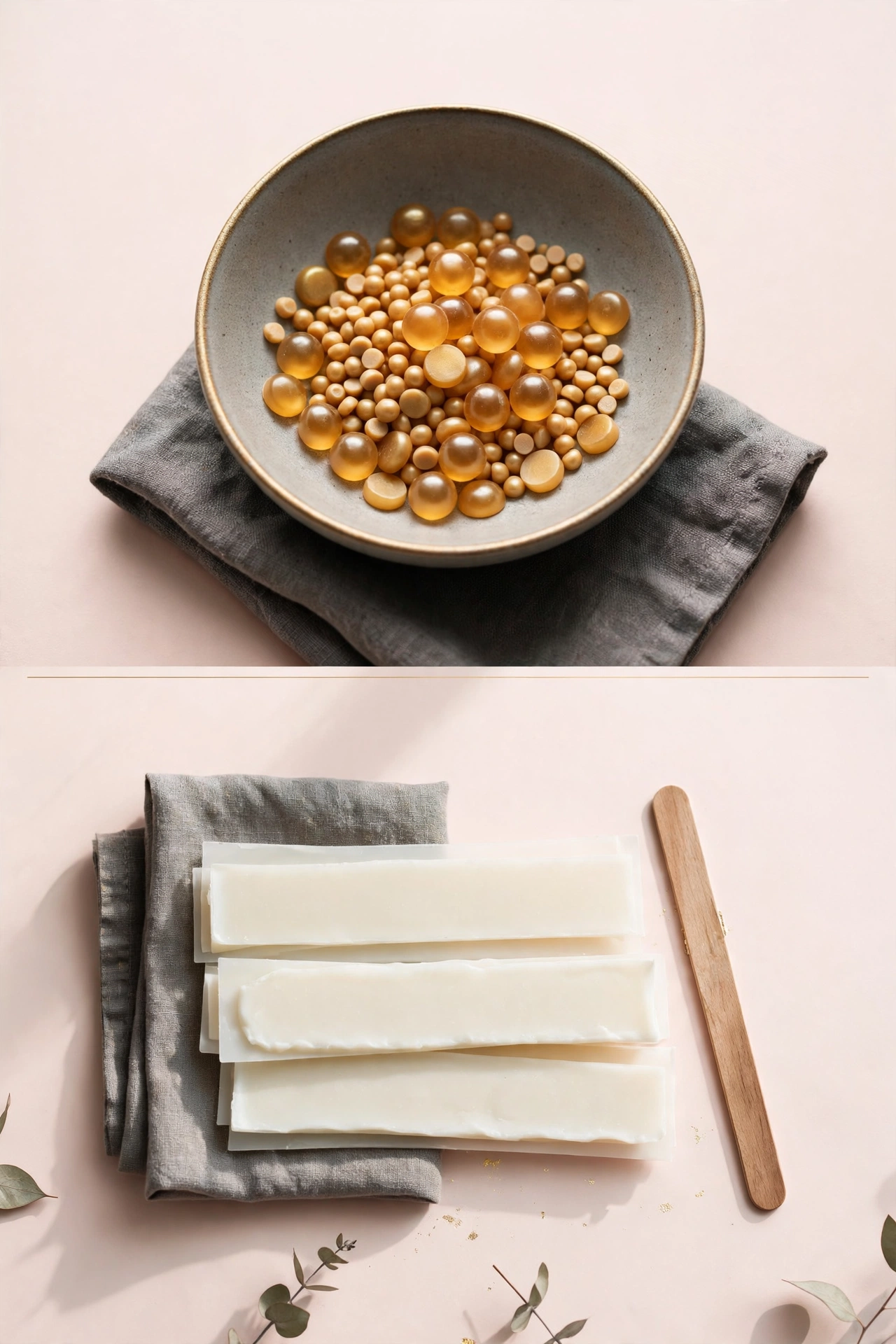
Hard Wax vs Soft Wax: Which Should You Use?
Walk into any beauty supply store or browse waxing kits online and you will face the same question: hard wax or soft wax? The two look similar in the tub but behave very differently on your skin — and choosing the wrong one for the area you are waxing is one of the most common reasons beginners have a bad first experience.
This guide breaks down the hard wax vs soft wax debate clearly: what each type is, how each one works, exactly when to use which, the best choice for every body area, and the honest pros and cons of both. By the end, you will know which wax belongs in your kit — and why many experienced at-home waxers keep both on hand. If you are new to waxing entirely, start with our complete beginner’s guide to at-home waxing for the full technique walkthrough, and see our best at home waxing kits for beginners when you are ready to buy.
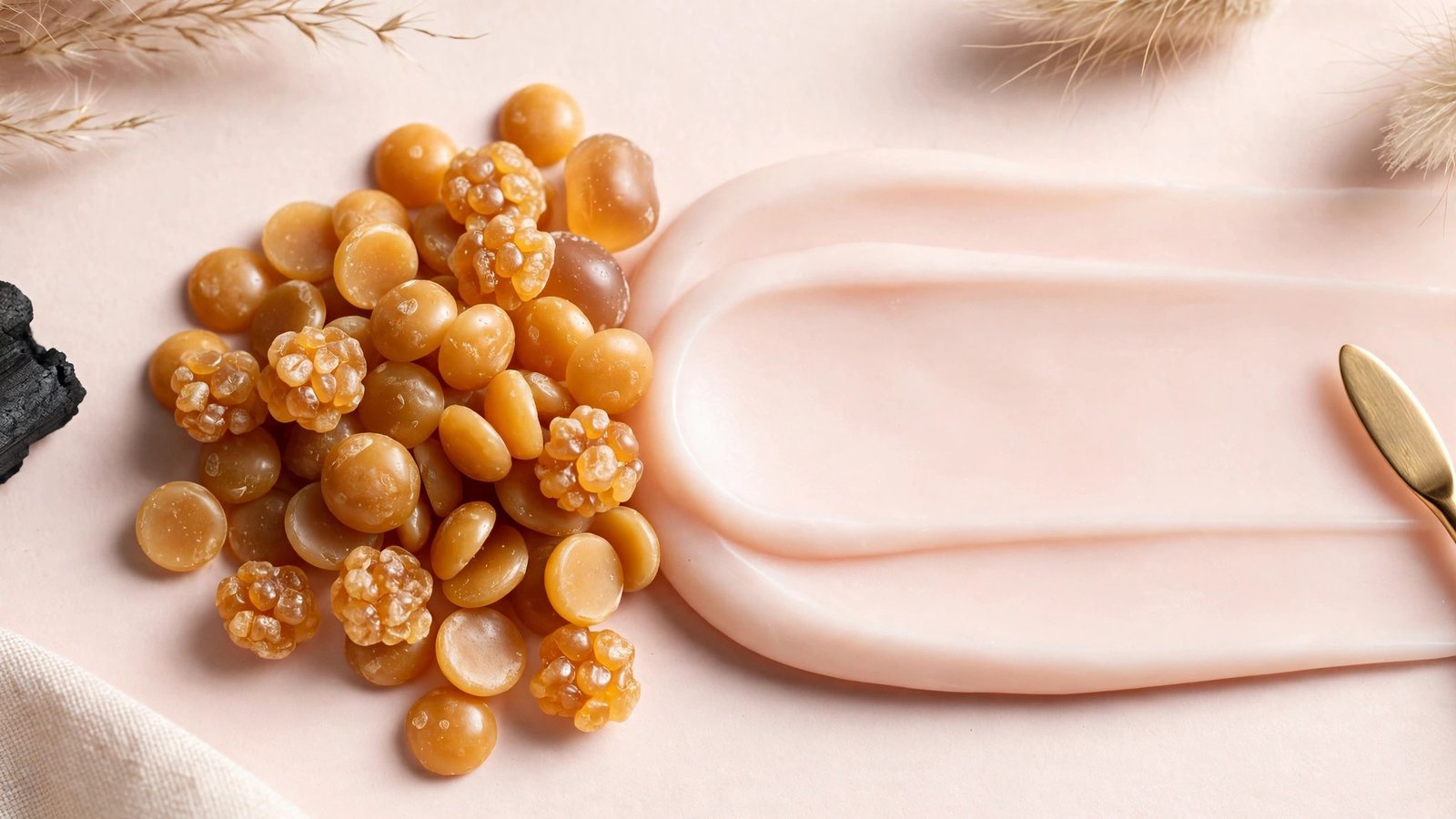
What Is Hard Wax?
Hard wax — also called stripless wax — is applied warm in a relatively thick layer, left to cool and harden on the skin, and then pulled off directly with your fingers. No cloth strip needed: the wax itself becomes the strip.
The key to hard wax is how it behaves as it cools. As it hardens, it shrink-wraps around each individual hair shaft while adhering only lightly to the skin’s surface. When you pull, the wax lifts away carrying the hairs, with minimal tugging on the surrounding skin. This is why estheticians consider hard wax the gentler option and the standard choice for sensitive areas.
Hard wax typically comes as beads, blocks, or tablets that you melt in a wax warmer (microwaveable versions exist too). It is applied at a slightly lower working temperature than soft wax, which also reduces burn risk. The main skill to learn is timing: pull too early while it is still soft and it will stretch and leave residue; wait too long and it becomes brittle and cracks. Most formulations give you a comfortable 30–60 second window.
What Is Soft Wax?
Soft wax — also called strip wax — is applied warm in a thin layer and removed with a cloth (muslin) or non-woven paper strip pressed on top. The strip bonds to the wax, and you pull the strip to remove everything at once.
Soft wax stays soft — it never hardens on the skin. Because it is removed with a strip, it adheres to both the hair and the top layer of skin cells, which gives it a mild exfoliating effect. On sturdy skin like legs and arms, this is harmless and even leaves skin feeling extra smooth. It is the wax most commonly used in salons for large body areas because it is fast: thin application, strip on, strip off, move on.
Soft wax comes in tins, tubes, and roll-on cartridges, plus pre-waxed strips that need no heating at all. The technique to master is application thickness — too thick and it will not bond to the strip properly; too thin and patchy. The strip removal itself is straightforward: press firmly, smooth down in the direction of growth, then pull fast against growth, parallel to the skin.
Hard Wax vs Soft Wax: Head-to-Head Comparison
Here is how the two stack up across the factors that matter most:
| Factor | Hard Wax | Soft Wax |
|---|---|---|
| Removal method | Hardens and pulls off directly, no strip | Removed with cloth/paper strip |
| Skin adhesion | Low — grips hair more than skin | Higher — grips hair and surface skin cells |
| Pain level | Generally lower, especially on sensitive areas | Generally higher on sensitive areas |
| Best for | Face, underarms, bikini area, coarse hair | Legs, arms, back, chest — large areas |
| Speed | Slower (cooling time per section) | Faster (no waiting for wax to set) |
| Residue | Minimal; lifts off cleanly when timed right | Can leave sticky residue; needs post-wax oil |
| Reapplication | Can go over the same area again more safely | Avoid double-waxing the same spot |
| Learning curve | Timing the pull takes practice | Strip technique is intuitive |
| Cost | Slightly higher per session | Slightly lower per session |
| Cleanup | Easy — hardened bits peel off | Stickier — oil needed for residue |
Neither wax is universally “better.” They are different tools for different jobs, which is why the by-area guidance below matters more than any general winner.
By Body Area: Which Wax Should You Use Where?
Face (Brows, Upper Lip, Chin)
Winner: hard wax. Facial skin is thin and sensitive, and the areas around the brows and mouth bruise and lift easily. Hard wax’s low skin adhesion makes it far safer here. Many people find that even gentle soft wax leaves their upper lip red and irritated for hours, while hard wax calms within minutes. Use small applicator sticks and work in tiny sections. (Curious about alternatives for brows? Our eyebrow threading vs waxing compares the two methods.)
Underarms
Winner: hard wax. Underarm hair grows in multiple directions, the skin is thin and folds easily, and the area is prone to irritation. Hard wax handles the multidirectional growth well because you can work in tiny sections following each growth pattern, and its gentleness suits the delicate skin. Expect this area to take practice — it is awkward to see and reach, so use a mirror and keep sections very small.
Bikini Area
Winner: hard wax, decisively. Coarse hair plus thin, sensitive skin is exactly the scenario hard wax was designed for. It grips the strong hairs firmly while sparing the delicate skin. Our dedicated guide to waxing the bikini area at home walks through the full section-by-section technique with pain-management tips.
Legs
Winner: soft wax (with hard wax as a fine alternative). Legs are large, the skin is relatively sturdy, and speed matters — soft wax with strips covers ground fast. The mild exfoliating effect is a bonus here. That said, if you only want to buy one wax, hard wax works perfectly well on legs too; it just takes longer per session.
Arms
Winner: soft wax. Same logic as legs — large, sturdy area where speed wins. Arm hair is usually finer, so soft wax removes it easily with minimal discomfort.
Back and Chest
Winner: soft wax. These are large areas where strip wax is dramatically faster. (You will likely want a partner’s help reaching your back regardless of wax type.)
Summary Cheat Sheet
- Face, underarms, bikini: hard wax
- Legs, arms, back, chest: soft wax (hard wax works too, just slower)
- If buying only one: hard wax is the more versatile beginner choice since it handles sensitive areas safely and still works on legs
Pros and Cons of Hard Wax
Pros:
– Gentler on skin — adheres to hair more than skin, reducing pain, redness, and bruising
– Better for sensitive areas (face, underarms, bikini) and coarse hair
– No strips needed — less waste and fewer supplies
– Can be reapplied to the same area more safely if a few hairs remain
– Lower working temperature reduces burn risk
– Less sticky residue when timed correctly
Cons:
– Slower — each section needs 30–60 seconds to cool and harden
– Timing takes practice — too early leaves residue, too late cracks
– Uses more wax per section, so it costs slightly more
– Less efficient for very large areas like full legs
– Can be tricky on very fine, vellus hair (peach fuzz), which it sometimes fails to grip
Pros and Cons of Soft Wax
Pros:
– Fast — ideal for covering large areas quickly
– Intuitive technique — most beginners get the strip motion right away
– Thin application means a little wax goes a long way (economical)
– Mild exfoliating effect leaves sturdy skin feeling very smooth
– Widely available in convenient formats: tins, roll-ons, and pre-waxed strips
– Excellent grip on fine hair
Cons:
– Adheres to skin as well as hair — more painful and irritating on sensitive areas
– Higher risk of bruising and skin lifting on thin or delicate skin
– Should not be applied twice to the same spot in one session
– Leaves stickier residue requiring post-wax oil cleanup
– Less suitable for coarse hair in sensitive areas (the bikini scenario)
Which Should a Beginner Start With?
If you are buying your first wax and plan to wax multiple areas, start with hard wax. The reasoning is simple: a beginner’s biggest risks are pain, irritation, and skin lifting, and hard wax minimizes all three. It is forgiving on the sensitive areas where beginners most want good results, and it works acceptably on legs too — you will just spend a bit more time per session.
Start with an easy area (lower legs) to learn the cooling-and-pull timing, then move to underarms or bikini line once the motion feels natural. Many at-home waxers eventually add soft wax and strips for legs once they are comfortable, keeping hard wax for everything sensitive. There is no rule against owning both — in fact, that is what most experienced DIY waxers do.
One exception: if you know you will only ever wax your legs and arms, soft wax or even pre-waxed strips are the simpler, faster choice, and there is no need to learn hard wax timing at all.
Whichever you choose, the fundamentals from our beginner’s guide to at-home waxing apply equally: 1/4-inch hair, clean dry powdered skin, wrist-tested temperature, taut skin, and proper aftercare. And regardless of wax type, exfoliating 48 hours after your session is the key to avoiding ingrowns — see our how to prevent ingrown hairs after waxing for the full routine.
Key Takeaways
- Hard wax hardens on the skin and pulls off without a strip, gripping hair more than skin — gentler and best for face, underarms, and bikini area.
- Soft wax is removed with a cloth strip, adheres to skin cells too, and is faster and more economical — best for legs, arms, back, and chest.
- By area: hard wax for face, underarms, and bikini; soft wax for legs, arms, back, and chest.
- Hard wax pros: less pain and irritation, safer on sensitive skin, no strips needed, lower burn risk. Cons: slower, timing takes practice, slightly pricier.
- Soft wax pros: fast, intuitive, economical, good on fine hair. Cons: more painful on sensitive areas, higher bruising/skin-lifting risk, stickier cleanup.
- Beginners waxing multiple areas should start with hard wax; legs-and-arms-only beginners can go straight to soft wax or pre-waxed strips.
Frequently Asked Questions
Can I use hard wax on my legs?
Absolutely. Hard wax works fine on legs — it is just slower than soft wax because each section needs cooling time. If you already own hard wax for sensitive areas, there is no need to buy a second product for legs unless speed matters to you.
Why does my hard wax keep breaking instead of pulling off cleanly?
This usually means you waited too long and the wax became brittle, or the layer was too thin. Apply it slightly thicker (about a nickel’s thickness), create a thicker gripping edge, and pull when it is firm but still flexible — typically 30–60 seconds after application. If it cracks, you can apply a fresh layer over it.
Is soft wax bad for sensitive skin?
Not “bad,” but it is harsher than hard wax because it adheres to surface skin cells. On sturdy areas like legs, most skin tolerates it well. On the face, underarms, or bikini area, sensitive skin often reacts with prolonged redness or irritation — which is why hard wax is recommended for those zones.
Can I use the same wax warmer for hard and soft wax?
Yes — wax warmers simply melt wax; the wax type is determined by the product you put in, not the warmer. Just clean the warmer pot between different wax types, and never mix hard and soft wax together in the same pot.
Which wax hurts less?
Hard wax generally hurts less, particularly on sensitive areas, because it pulls less on the surrounding skin. On legs, the difference is smaller. Technique matters as much as wax type: taut skin, small sections, and a fast parallel pull reduce pain with either wax.
Do pre-waxed strips count as soft wax?
Yes — pre-waxed strips use a soft-wax-style formula pre-applied to a strip. They are the most beginner-friendly soft wax option since there is no heating or spreading involved. They work best on legs and arms; they are not ideal for the bikini area or face.
Love this? Pin it for later!