How to Apply Eyeshadow on Hooded Mature Eyes: A Lifted, Easy Technique
Hooded eyes — where the lid folds over the crease so part of the mobile lid disappears when eyes are open — become more common with age as skin loses firmness. The frustration is real: you spend ten minutes on eyeshadow, open your eyes, and most of it vanishes into the fold. But hooded mature eyes are not a problem to fix — they just need a different technique than the cut-crease tutorials made for deep-set, non-hooded eyes.
The core principle of eyeshadow on hooded mature eyes is simple: place color where it shows when your eyes are open. That means working above the natural crease, keeping shimmer strategic, and defining the lash line rather than loading the lid. This guide walks through the full technique step by step. For how eye makeup fits into your whole face, see our complete makeup routine for mature skin over 40, and to keep the under-eye area smooth while you work, our crease-proof concealer guide pairs well with this tutorial.
First: Understand Your Hooded Eye Shape
Not all hooded eyes are identical, and knowing your version helps you place color correctly:
- Slight hood: The crease is visible but a small fold of skin sits above it. Standard techniques mostly work with minor adjustment.
- Moderate hood: The fold covers the crease when eyes are open, but the mobile lid is visible when eyes are closed or looking down.
- Deep hood: The fold extends close to the lash line, leaving very little visible lid space when eyes are open.
The key test: look straight into a mirror with a neutral expression. Wherever your natural crease disappears under the fold is where standard tutorials stop working — and where this technique starts. Work with your eyes open for placement, checking in the mirror as you go. Applying eyeshadow only with eyes closed is the number-one reason hooded-eye makeup disappears.
The Tools and Products That Make It Easier
You do not need a huge kit — just the right basics:
- Eyeshadow primer: Non-negotiable for mature hooded lids. It prevents creasing in the fold and keeps color true for hours. Our eyeshadow primer explainer covers whether you need one (you do, for this eye shape).
- A fluffy blending brush: For soft transition shades. Stiff, dense brushes deposit too much color in one spot.
- A smaller crease brush: For controlled placement in the outer corner.
- A flat shader brush or fingertip: For pressing shimmer onto the lid.
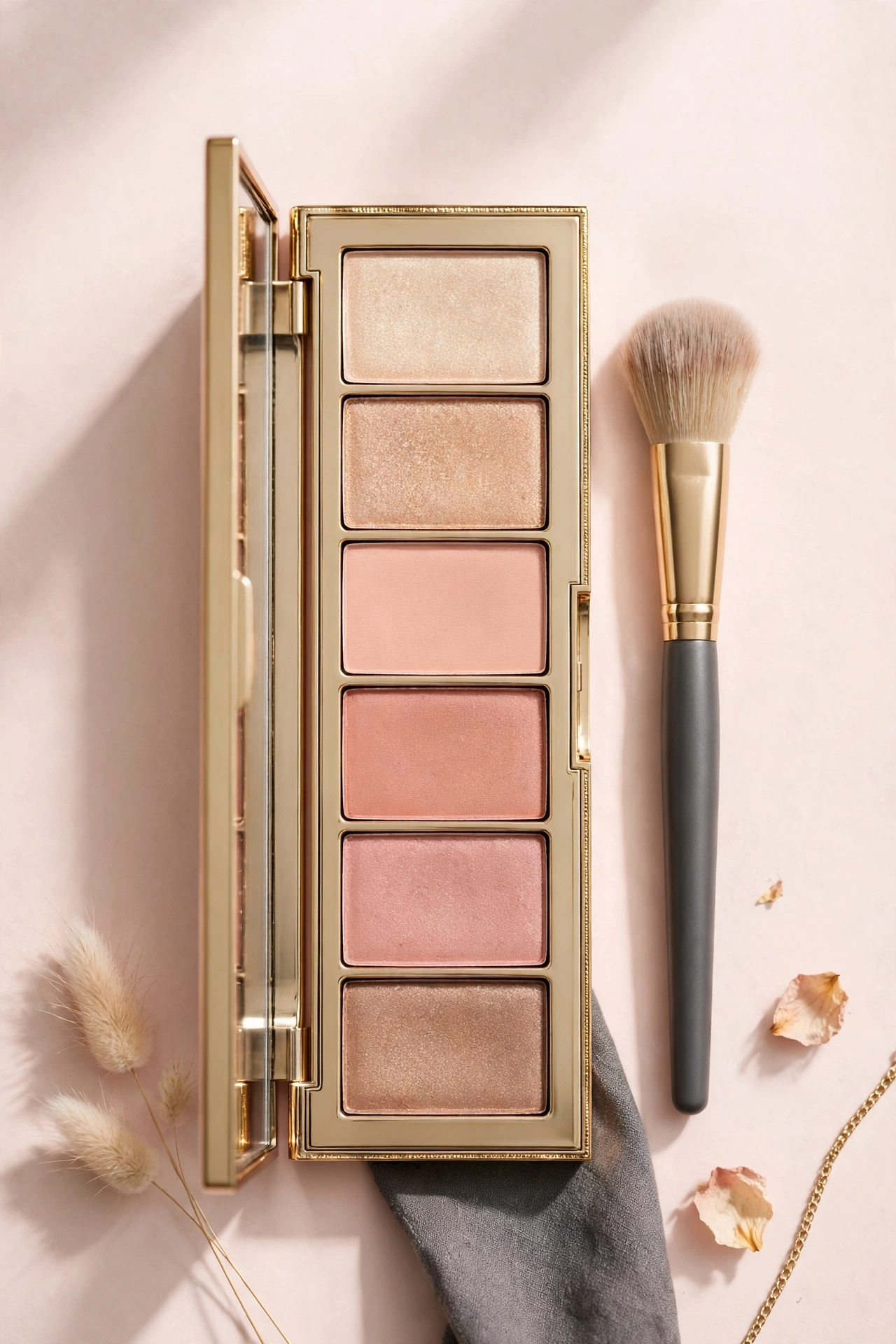
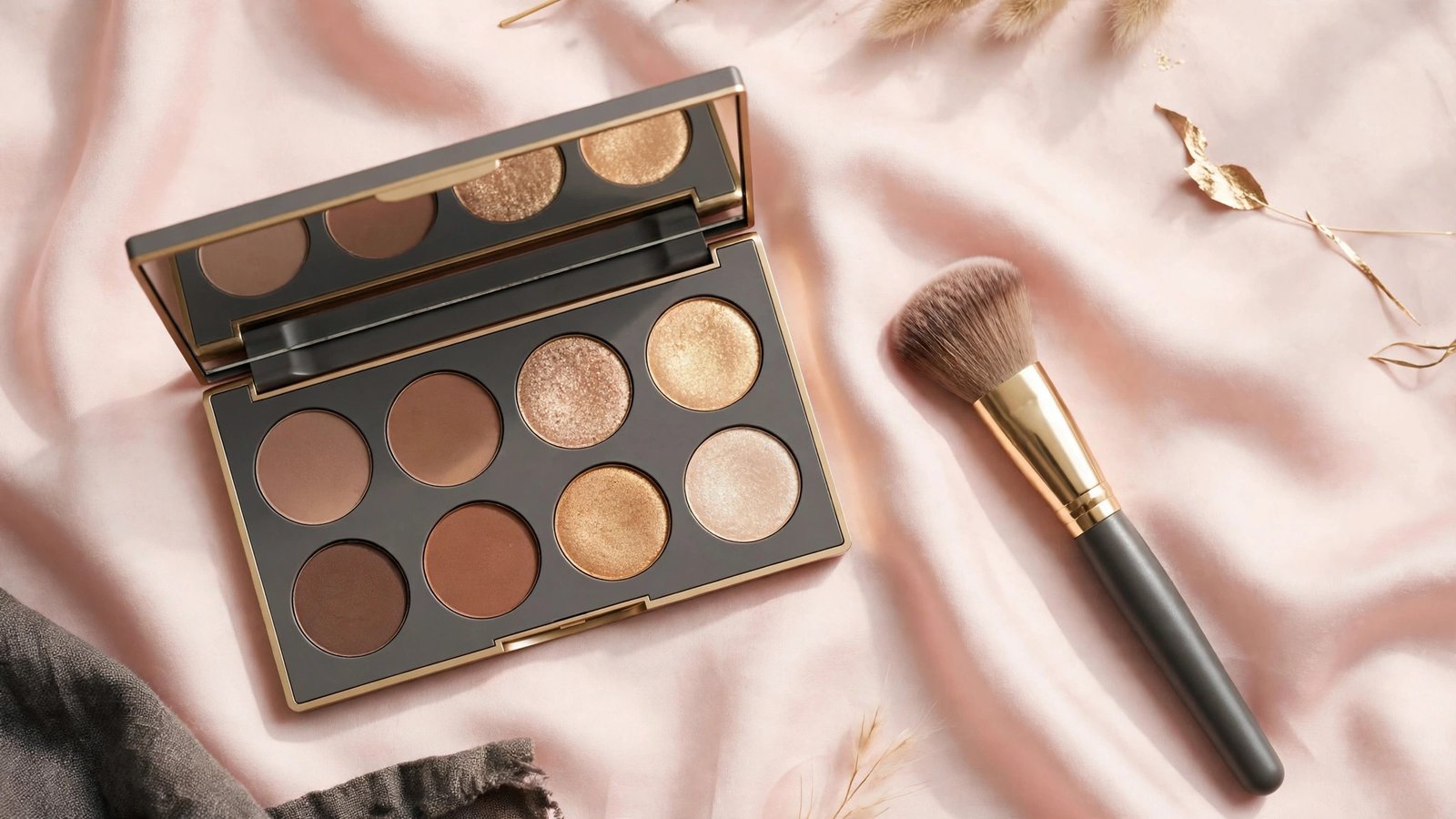
- Matte transition shade: A soft matte in a warm taupe or soft brown, one to two shades deeper than your skin tone.
- Light shimmer: A champagne or soft gold for the lid center and inner corner.
- Deeper matte: For the outer corner and lash-line definition.
If you are shopping for formulas that behave on lid folds, our best eyeshadows for hooded eyes roundup focuses on exactly that, and beginners can start with the eyeshadow guide for beginners.
Step-by-Step: The Lifted Hooded-Eye Technique
Step 1: Prime the Entire Lid
Apply eyeshadow primer from lash line to brow bone and let it set for 30 seconds. On mature lids, primer does double duty: it grips the shadow and smooths the texture of the lid so color goes on evenly instead of patchy. For oily lids that eat eyeshadow by noon, our how to make eyeshadow last on oily lids has extra staying-power tips.
Step 2: Place the Transition Shade ABOVE the Crease
This is the technique that changes everything. With eyes open and looking straight ahead, sweep your matte transition shade in windshield-wiper motions slightly above your natural crease — onto the brow bone area where the hood sits. Because this color lives above the fold, it stays visible when your eyes are open, creating the illusion of a higher, more lifted crease.
Blend softly upward toward the brow bone, keeping the deepest concentration right at that above-the-crease line. The blend should fade out — no harsh edges anywhere near the brow.
Step 3: Add Lid Color (Keep It Light)
With eyes open, press your light shimmer or satin shade onto the visible lid space — the area between the lash line and the fold. On deep hoods this area is small, and that is fine: a bright, light color here opens the eye. Keep shimmer to the center of the lid and the inner corner; shimmer stretched across the whole lid can emphasize crepey texture on mature skin.
Step 4: Define the Outer Corner — and Lift It
Using your smaller brush, place the deeper matte shade in the outer third of the eye, blending upward and outward toward the tail of the brow — never downward. This upward diagonal is what creates lift. Keep the color above the lash line; dragging it down emphasizes droopiness. Think of it as a soft, diffused sideways “V” hugging the outer corner.
Step 5: Brighten the Inner Corner and Brow Bone
A touch of light shimmer or matte highlight in the inner corner wakes up the whole eye. Under the brow bone, use a matte skin-tone shade rather than shimmer — shimmer on the brow bone can highlight texture on mature skin. Blend the transition shade up into it so there is no visible line.
Step 6: Tightline Instead of Heavy Liner
For hooded mature eyes, tightlining — filling in the upper waterline and the base of the lashes — defines the eye without eating up precious lid space the way a thick liner wing does. It makes lashes look fuller and eyes more defined with zero visible line. If you want a wing, keep it small and angle it upward, drawing it with eyes open so the hood does not distort it. Our eyeliner guide for beginners covers the basics, and best eyeliners for hooded eyes focuses on formulas that do not transfer onto the hood.
Step 7: Curl, Then Mascara
Curl lashes before mascara — lifted lashes open hooded eyes more than any shadow technique. Apply mascara focusing on the roots with an upward wiggle; lengthening formulas generally flatter mature lashes more than heavy volumizing ones. If mascara migrates onto your lids or under-eyes, our how to stop mascara smudging has fixes.
What to Avoid on Hooded Mature Eyes
- Cut creases: The sharp, carved-out crease trend is designed for visible lid space. On hooded eyes it disappears into the fold and can look harsh.
- Dark shadow all over the lid: A full lid of dark color makes hooded eyes look smaller and heavier. Keep depth to the outer corner.
- Shimmer on textured areas: Shimmer on the brow bone or across crepey lids emphasizes texture. Keep it centered on the smoothest part of the lid.
- Thick liner with eyes closed: A wing drawn with eyes closed will look completely different — usually distorted — when the hood settles over it. Always check liner with eyes open.
- Skipping the lower lash line entirely: A whisper of the transition shade smudged along the lower lashes balances the eye. Just keep it soft and minimal — heavy lower liner drags the eye down.
Adapting the Technique: Day to Evening
Everyday: Transition shade above the crease, light satin on the lid, tightline, mascara. Five minutes, and it reads as polished without effort.
Evening: Deepen the outer corner with a richer matte, add a touch more shimmer to the lid center, and smudge a soft dark shadow along the upper lash line instead of tightlining for more drama. The placement rules do not change — only the intensity.
Blending is the whole game: If you take one skill from this guide, make it blending. Harsh edges are what make hooded-eye makeup look heavy; soft, diffused edges are what make it look lifted. Our how to blend eyeshadow for beginners breaks the motion down further.
Key Takeaways
- The golden rule for hooded mature eyes: place color where it shows with eyes open — especially the transition shade, which goes slightly above the natural crease.
- Eyeshadow primer is essential to prevent creasing in the lid fold on mature skin.
- Keep shimmer to the lid center and inner corner; use mattes for the transition, outer corner, and brow bone.
- Blend the outer corner upward and outward for lift — never drag color downward.
- Tightline instead of heavy liner to define eyes without consuming lid space; draw any wing with eyes open.
- Avoid cut creases, all-over dark lids, and thick liner drawn with eyes closed.
Frequently Asked Questions
Where should the crease color go on hooded eyes?
Slightly above your natural crease, onto the area where the hood sits. With eyes open and looking straight ahead, sweep a soft matte transition shade in windshield-wiper motions just above the fold. This keeps the color visible and creates the illusion of a higher, lifted crease.
Should mature hooded eyes wear shimmer eyeshadow?
Yes, but placed strategically. A light shimmer on the center of the lid and inner corner brightens and lifts. Avoid shimmer across the entire lid, on the brow bone, or over crepey texture, where it emphasizes unevenness. Matte shades are more forgiving everywhere else.
Why does my eyeshadow disappear when I open my eyes?
Because the hood folds over the mobile lid, hiding any color placed only on the lid itself. The fix is placing your transition and definition shades above the natural crease where they remain visible, and checking all placement with eyes open in the mirror.
Is tightlining better than eyeliner for hooded eyes?
For most hooded mature eyes, yes. Tightlining defines the lash line and makes lashes look fuller without using up visible lid space or risking transfer onto the hood. If you love a wing, keep it small, angle it upward, and draw it with eyes open.
What eyeshadow colors are most flattering for mature hooded eyes?
Warm neutrals — soft taupe, warm brown, champagne, soft bronze. These shades add dimension without harshness and are forgiving on textured lids. Save very dark shades for the outer corner only, and keep the lid itself light to maximize the appearance of openness.
How do I keep eyeshadow from creasing on mature lids?
Use an eyeshadow primer, stick to thin layers, set the primer with a skin-tone matte shadow before adding color, and avoid overly creamy shadow formulas that migrate. Primer plus thin, well-blended layers solves most creasing on mature hooded lids.
Love this? Pin it for later!