Copper Peptides for Skin: Benefits, Mixing Rules & Realistic Results
Copper peptides have quietly become one of the most talked-about anti-aging ingredients in skincare — praised for supporting firmer, healthier-looking skin without the irritation of retinoids. But they are also one of the most misunderstood: conflicting advice about what to mix them with, inflated claims about what they can do, and confusion about how they actually work.
This guide gives you the honest picture: what copper peptides do according to the research, what they cannot do, exactly what not to mix them with, how to use them correctly, and realistic timelines. If you are exploring the current generation of trending actives, our azelaic acid benefits for skin covers another well-researched multi-tasker worth knowing.
What Are Copper Peptides?
Copper peptides are small protein fragments bound to copper ions. The most studied and commonly used in skincare is GHK-Cu (glycyl-L-histidyl-L-lysine copper complex), a naturally occurring complex found in human plasma, saliva, and urine. Its levels decline significantly with age — by age 60, circulating GHK levels are a fraction of what they were at 20.
In skincare, GHK-Cu is included in serums typically at concentrations around 1–2%. The theory is straightforward: supplying skin with a complex it naturally produces — but makes less of over time — supports the processes that keep skin firm, resilient, and healthy-looking. Unlike retinoids, which force faster cell turnover, copper peptides work by signaling: they communicate with skin cells to support repair and maintenance functions.
What Copper Peptides Do: The Evidence
1. Support Collagen and Elastin Production
The headline benefit. Research — including human studies — indicates GHK-Cu can stimulate the synthesis of collagen and elastin, the structural proteins that keep skin firm and bouncy. It also appears to support glycosaminoglycans (like hyaluronic acid) in the skin. This is the basis for the firmness claims: over months of use, skin may look plumper and feel more resilient.
Be precise about what this means: copper peptides support the skin’s own production processes. They do not inject collagen, and the effect is gradual and modest compared to professional treatments. Think “skin looks healthier and slightly firmer over months,” not “face-lift in a bottle.”
2. Antioxidant and Anti-Inflammatory Activity
GHK-Cu has demonstrated antioxidant properties, helping neutralize free radicals from UV and pollution exposure. It also shows anti-inflammatory effects, which is part of why it is often recommended for stressed or post-procedure skin. This dual action — protecting while supporting repair — makes it a reasonable long-term maintenance ingredient.
3. Support Wound Healing and Skin Repair
Copper peptides were first studied in wound-healing contexts, where GHK-Cu showed an ability to support tissue remodeling. In cosmetic use, this translates to a reputation for helping skin recover — after over-exfoliation, minor irritation, or professional treatments. Many people use copper peptide serums specifically during “barrier repair” phases of their routine.
4. May Improve Skin Density and Fine Lines Over Time
Longer-term use has been associated with improved skin density and softening of fine lines in small studies. The effect is subtle and requires patience — this is a months-long ingredient, not a weeks-long one. Fine dehydration lines respond faster (partly through improved hydration and barrier support); deeper expression lines will not be meaningfully changed by any topical peptide.
What Copper Peptides Cannot Do
Honest expectations are essential with this ingredient, because marketing often oversells it:
- They will not replace retinoids for anti-aging. Retinoids remain the gold standard for photoaging with far more extensive evidence. Copper peptides are a gentler complement or alternative for those who cannot tolerate retinoids — not an upgrade.
- They will not lift sagging skin. No topical product meaningfully tightens significantly lax skin; that requires professional procedures.
- They do not work overnight. Visible firmness changes need 8–12 weeks minimum, with continued improvement over 6+ months.
- They are not exfoliants, brighteners, or acne treatments. For texture, see mandelic acid vs glycolic acid; for dark spots, azelaic acid.
What NOT to Mix With Copper Peptides
This is the most confusing part of copper peptide use, so here it is plainly:
Vitamin C (Especially L-Ascorbic Acid) — Keep Separate
The most widely cited conflict. Copper ions can oxidize L-ascorbic acid (pure vitamin C), degrading both ingredients — the vitamin C loses potency, and the copper peptide complex can be destabilized. Do not layer them in the same routine. The standard solution: vitamin C in the morning, copper peptides at night. This separation avoids the interaction entirely.
Note: this concern applies specifically to L-ascorbic acid. More stable vitamin C derivatives are less reactive, but separating them by time of day remains the simplest safe approach.
Strong Acids in the Same Routine — Use Caution
AHAs (glycolic, lactic, mandelic) at low pH can interfere with peptide stability when layered directly. If you use both, apply them at different times of day or on alternate nights — for example, copper peptides on non-exfoliation nights. Our lactic acid benefits guide covers gentle exfoliation scheduling that works around peptide nights.
Retinoids — Separate by Time
Copper peptides and retinoids are both long-game anti-aging ingredients, and many people want both. They can coexist in a routine, but not in the same application step — the combination increases irritation risk without added benefit. A common split: retinoid nights and copper peptide nights on alternating evenings, or retinoid at night with copper peptides in the morning (away from vitamin C).
For a broader reference on ingredient conflicts, see our The Ordinary products you should not mix — the underlying principles apply regardless of brand.
What Pairs Well
- Hyaluronic acid and hydrating toners: Safe, complementary hydration support.
- Niacinamide: Compatible and synergistic for barrier support.
- Ceramide moisturizers: An ideal follow-up that reinforces the barrier while peptides do their signaling work.
- Azelaic acid: Generally compatible; many use azelaic acid in the morning and copper peptides at night.
How to Use Copper Peptides in Your Routine
Application Basics
- Apply to clean, dry skin after cleansing (and after any hydrating toner, before heavier serums).
- Use a pea-sized amount for the full face — more is not better with signaling ingredients.
- Follow with moisturizer to seal everything in.
- Start once daily (evenings are simplest, keeping mornings free for vitamin C). Twice daily is fine once tolerated, but once daily is enough for most people.
The Blue Tint Is Normal
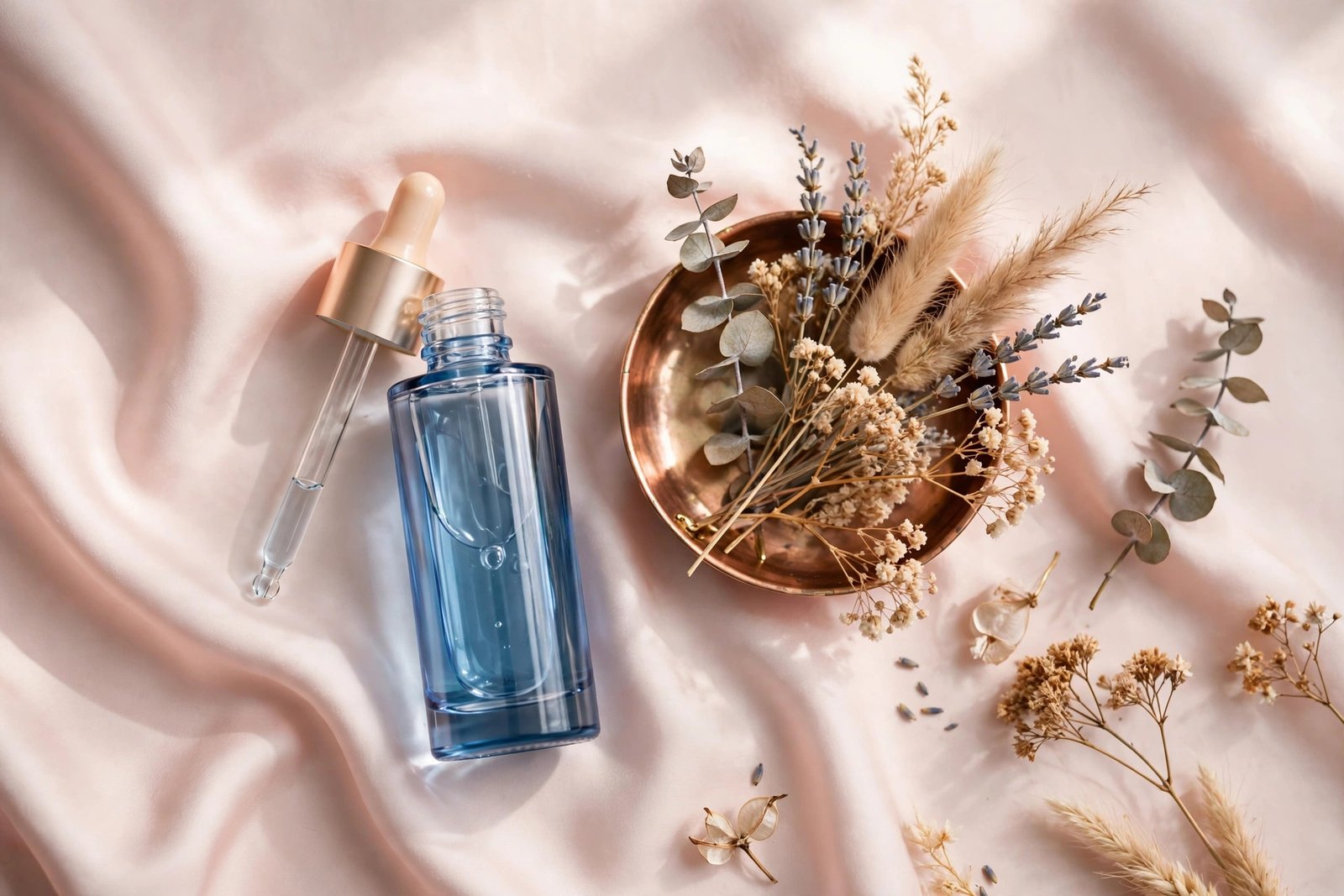
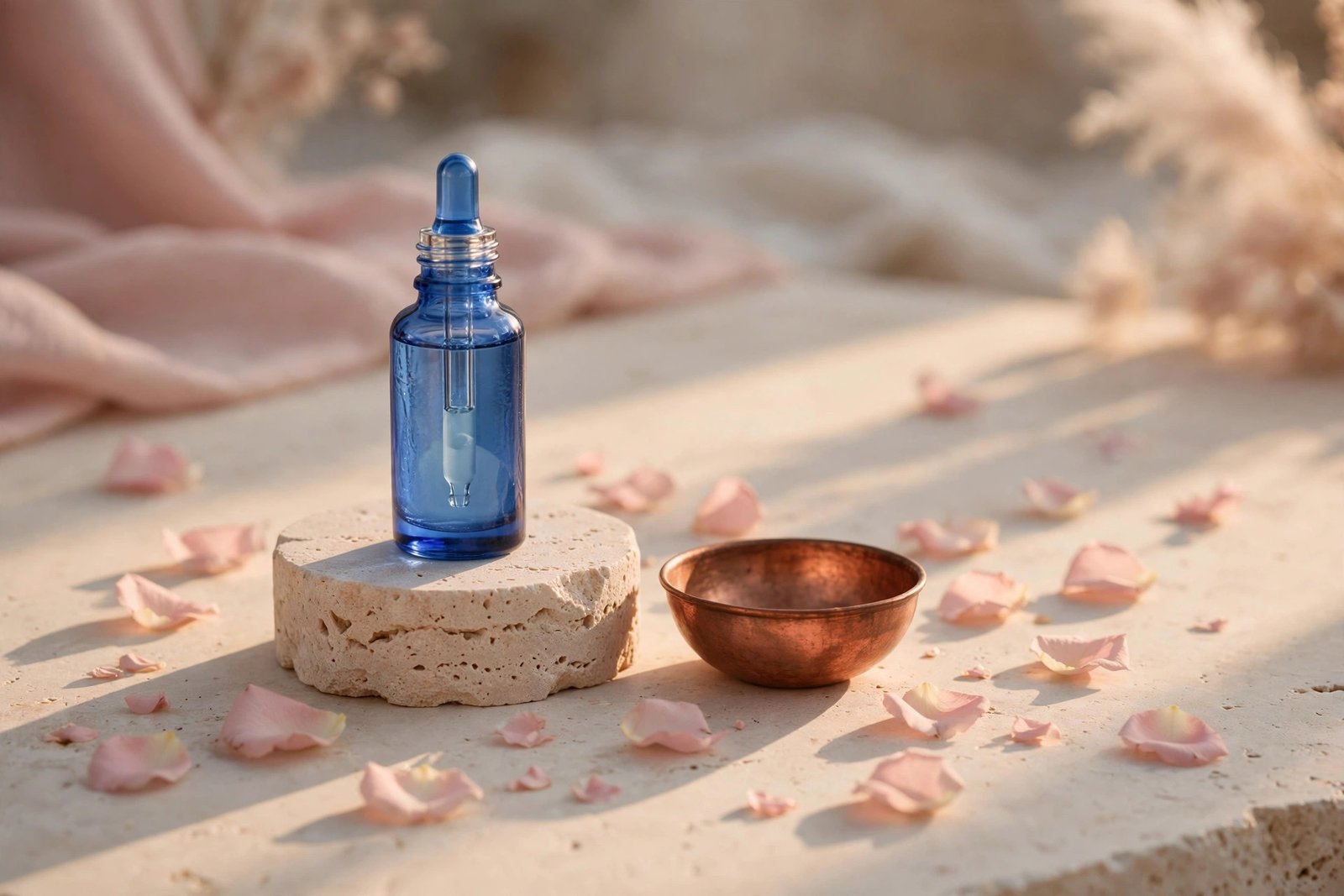
Copper peptide serums are naturally blue or blue-green from the copper complex. This is expected and not a sign of spoilage. It absorbs without tinting skin blue under normal use amounts — if you notice a tint, you are applying too much.
Sample Evening Routine
- Gentle cleanser
- Hydrating toner (optional)
- Copper peptide serum
- Moisturizer
On alternate nights, swap step 3 for your retinoid or exfoliating acid. Keep vitamin C strictly in the morning routine.
Realistic Expectations and Timeline
- Weeks 1–4: Little visible change. Skin may feel slightly more hydrated; the blue serum feels novel. This is normal.
- Weeks 4–8: Subtle improvements in skin texture and calmness for some users. Do not judge yet.
- Weeks 8–12: The earliest point to assess firmness and fine-line changes. Take progress photos in consistent lighting.
- 6+ months: Continued gradual improvement with consistent use. This is a maintenance ingredient that rewards patience.
Who benefits most: People in their 30s and beyond focused on prevention and gradual firmness support; those who cannot tolerate retinoids and want a gentler long-term anti-aging step; anyone in a barrier-repair phase who wants an active that supports recovery without irritation.
Who should skip it: Anyone expecting dramatic or fast anti-aging results; those on a tight budget who have not yet covered the basics (sunscreen, moisturizer, and one proven active like a retinoid or azelaic acid deliver more visible change per dollar).
Choosing a Copper Peptide Product
- Look for GHK-Cu on the ingredient list — it is the researched complex. Vague “peptide blend” labels without specified peptides are less meaningful.
- Concentration around 1–2% is the typical effective range in cosmetic serums.
- Opaque, airtight packaging protects the formula from light and air degradation.
- No added fragrance — unnecessary and a potential irritant, especially in a leave-on anti-aging serum.
- Price sanity check: Copper peptides are legitimately more expensive to formulate than basic serums, but extreme luxury markups do not buy better GHK-Cu. Mid-range options from reputable brands are fine.
Key Takeaways
- Copper peptides (GHK-Cu) are signaling ingredients that support collagen, elastin, and skin repair processes — a gentle, long-term anti-aging approach.
- Evidence supports firmness, antioxidant, and wound-healing benefits, but effects are gradual and modest — 8–12 weeks minimum to assess.
- Do NOT layer with L-ascorbic acid vitamin C in the same routine; use vitamin C in the morning, copper peptides at night.
- Keep separate from strong AHAs and retinoids by time of day or alternate nights; they pair well with hyaluronic acid, niacinamide, and ceramides.
- The natural blue tint is normal; a pea-sized amount on clean, dry skin followed by moisturizer is all you need.
- They complement — but do not replace — retinoids, and no topical peptide lifts significantly sagging skin.
Frequently Asked Questions
Can I use copper peptides with retinol?
Yes, but not in the same application. Alternate them — retinoid one night, copper peptides the next — or use copper peptides in the morning and retinol at night (keeping vitamin C out of that morning routine). This gives you both long-game ingredients without the irritation of stacking them.
Why can’t I mix copper peptides with vitamin C?
Copper ions can oxidize L-ascorbic acid (pure vitamin C), which degrades the vitamin C and can destabilize the peptide complex — meaning both ingredients work less well. Separating them by 12 hours (vitamin C AM, peptides PM) avoids the interaction completely. This is a chemistry issue, not a skin-safety issue.
How long do copper peptides take to work?
Longer than most actives. Allow 8–12 weeks minimum before assessing firmness or fine-line changes, with continued gradual improvement over 6+ months. Anyone promising visible lifting in two weeks is selling marketing, not science. Progress photos in consistent lighting are the best way to track such gradual change.
Are copper peptides safe for sensitive skin?
Generally, yes — they are non-exfoliating, non-irritating for most people, and their anti-inflammatory properties can actually suit reactive skin. As with any active, patch test first. If your skin is currently compromised (stinging from basic products), repair your barrier before adding any active, including peptides.
Do copper peptides expire or go bad?
Like all actives, they degrade over time — faster with heat, light, and air exposure. A serum that has shifted dramatically in color, developed an off smell, or passed its expiration date should be replaced. Opaque, airtight packaging and cool, dark storage extend potency.
Love this? Pin it for later!