Mandelic Acid vs Glycolic Acid: Which AHA Is Right for You?
Glycolic acid and mandelic acid are both alpha hydroxy acids (AHAs) — chemical exfoliants that dissolve the bonds between dead skin cells to reveal smoother, brighter skin. But they behave quite differently on the face. Glycolic acid is the powerhouse: fast, dramatic, and occasionally irritating. Mandelic acid is the gentle giant: slower, steadier, and far kinder to sensitive and darker skin tones.
Choosing between them comes down to your skin type, your tolerance for irritation, and what you are trying to fix. This guide compares mandelic acid vs glycolic acid across molecule size, gentleness, hyperpigmentation risk, and best use cases, so you can pick the right AHA with confidence. For broader context on gentle exfoliation, our azelaic acid benefits for skin covers another multi-tasking option that pairs well with a mild acid routine.
Mandelic Acid vs Glycolic Acid: Quick Comparison
| Feature | Glycolic Acid | Mandelic Acid |
|---|---|---|
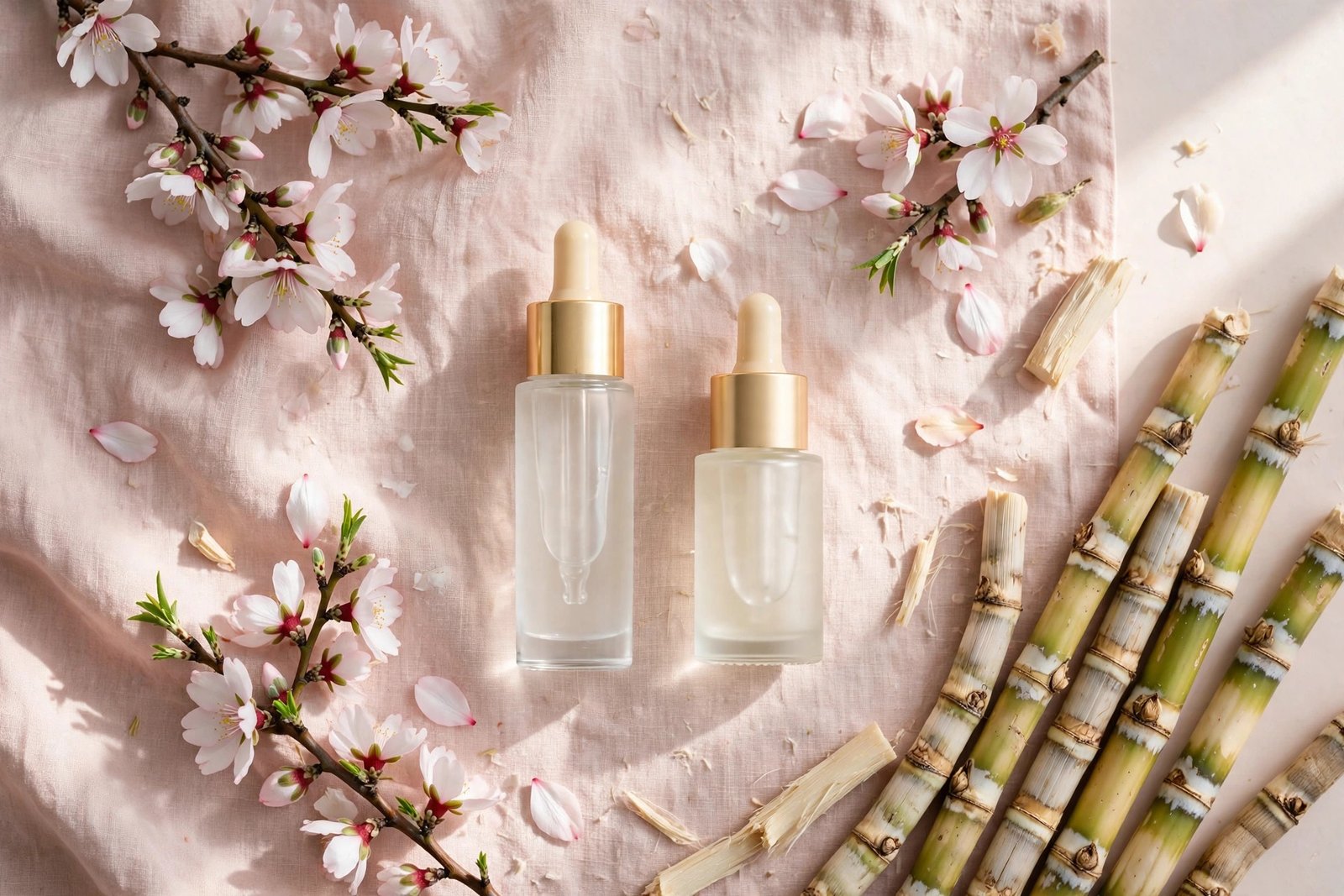
| Source | Sugar cane | Bitter almonds |
| Molecule size | Smallest AHA (fast, deep penetration) | Largest AHA (slow, gradual penetration) |
| Exfoliation strength | Strong | Mild to moderate |
| Speed of results | Fast (days to weeks) | Gradual (weeks) |
| Irritation risk | Moderate to high | Low |
| Best for | Resilient, oily, sun-damaged skin | Sensitive, rosacea-prone, darker skin tones |
| Hyperpigmentation risk | Higher (can trigger PIH if overused) | Lower |
| Typical strengths | 5–30% (higher = peels) | 5–10% |
| Antibacterial bonus | Minimal | Yes — helpful for acne |
Molecule Size: Why It Matters
The single biggest difference between these two AHAs is molecular size, and it explains almost everything about how they behave.
Glycolic acid has the smallest molecule of any AHA. Small molecules penetrate skin quickly and deeply, which is why glycolic acid delivers such fast, visible results — smoother texture and brighter tone can appear within days. The downside of that rapid penetration is irritation: redness, stinging, and peeling are common, especially at higher percentages or with frequent use.
Mandelic acid has the largest molecule of any AHA. It penetrates slowly and stays closer to the skin’s surface, exfoliating gradually rather than aggressively. The result is a much lower irritation profile — most people experience little to no stinging — with steady improvement over weeks rather than overnight transformation.
Neither is objectively “better.” Fast penetration is an advantage when you want dramatic resurfacing and your skin can handle it; slow penetration is an advantage when your barrier is delicate or you want consistent, low-drama maintenance.
Gentleness: The Decisive Factor for Sensitive Skin
If your skin is sensitive, reactive, rosacea-prone, or easily irritated, mandelic acid is the clear winner. Its slow penetration means:
- Minimal stinging on application
- Very low risk of over-exfoliation
- Usable more frequently (many people tolerate it daily at low percentages)
- Safer for compromised or recovering barriers
Glycolic acid, by contrast, demands respect. Even experienced users can overdo it — the classic mistake is using a strong glycolic product too often, stripping the barrier, and ending up with redness and sensitivity that takes weeks to repair. If you choose glycolic acid, start at a low percentage (5–8%), use it 1–2 times per week, and increase frequency only if your skin stays calm.
For sensitive skin types who want exfoliation without the gamble, mandelic acid — or a hydrating AHA like lactic acid — is the safer entry point.
Hyperpigmentation Risk and Darker Skin Tones
This is where the choice genuinely matters for safety, not just comfort.
Any exfoliant carries some risk of post-inflammatory hyperpigmentation (PIH) — dark marks triggered by inflammation — but the risk scales with irritation. Because glycolic acid penetrates fast and irritates more easily, it carries a higher PIH risk, particularly for medium to deep skin tones where melanocytes are more reactive. Over-exfoliation with glycolic acid can create the very dark spots you were trying to fade.
Mandelic acid’s gentle, gradual action makes it one of the safest AHAs for darker skin tones. It still exfoliates and brightens, but with far less inflammatory trigger. For hyperpigmentation concerns in deeper skin, mandelic acid (or non-acid brighteners like azelaic acid) is the more prudent choice.
The non-negotiable rule for both: daily sunscreen. Exfoliation increases sun sensitivity, and UV exposure will darken hyperpigmentation faster than any acid can fade it. No sunscreen, no brightening results — regardless of which AHA you choose.
Acne: Which AHA Helps More?
Both AHAs help with acne by keeping pores clear of dead-cell buildup, but mandelic acid has an extra advantage: it is antibacterial. Research suggests mandelic acid can inhibit acne-associated bacteria, giving it a dual action against breakouts that glycolic acid lacks.
That said, glycolic acid’s stronger exfoliation can be more effective for stubborn clogged pores and blackheads in resilient, oily skin. The practical guidance:
- Sensitive or inflamed acne-prone skin: Mandelic acid — calmer, antibacterial, less likely to aggravate active breakouts.
- Oily, resilient skin with clogged pores: Glycolic acid at moderate strength — stronger pore-clearing power.
- Persistent or cystic acne: Neither AHA is a primary treatment. See our complete guide to getting rid of acne for a full routine approach.
Anti-Aging and Texture: Where Glycolic Acid Leads
For fine lines, sun damage, and rough texture, glycolic acid’s deep penetration is a genuine advantage. It stimulates collagen-supporting processes more effectively than larger-molecule AHAs, and its resurfacing effect on photoaged skin is well documented. If your primary goals are anti-aging and texture refinement — and your skin tolerates actives well — glycolic acid delivers more dramatic results.
Mandelic acid still improves texture and tone, just more gradually. Think of it as the maintenance option: steady, sustainable improvement without the peaks and valleys of stronger exfoliation.
How to Choose: A Decision Guide
Choose mandelic acid if you:
– Have sensitive, reactive, or rosacea-prone skin
– Have medium to deep skin tone and worry about hyperpigmentation
– Are new to chemical exfoliants
– Want a gentle daily or near-daily exfoliant
– Have inflamed or easily aggravated acne
Choose glycolic acid if you:
– Have resilient, non-sensitive skin
– Have oily skin with stubborn clogged pores or blackheads
– Want the fastest visible results on texture and sun damage
– Are targeting fine lines and photoaging
– Already tolerate AHAs well and want to level up
Consider alternating if you fall in between: mandelic acid for regular maintenance, with a low-strength glycolic treatment once a week for deeper resurfacing. Just do not use both on the same day.
How to Use Each AHA Safely
Regardless of which you choose, the same safety principles apply:
- Start low and slow. Begin with the lowest available percentage, 1–2 times per week in the evening.
- Patch test first. Apply to a small area of the jawline and wait 24 hours.
- Apply to dry skin. Damp skin increases penetration and irritation.
- Moisturize after. Always follow with moisturizer to support the barrier.
- Sunscreen every morning. Non-negotiable with any exfoliant.
- Do not stack acids. Do not layer AHAs with retinoids, benzoyl peroxide, or other exfoliants in the same routine. For more on risky combinations, see our The Ordinary products you should not mix.
Signs you are over-exfoliating: persistent redness, stinging when applying normally gentle products, tightness, flaking, or new breakouts in unusual places. If this happens, stop all actives and focus on barrier repair (gentle cleanser, moisturizer, sunscreen) for 1–2 weeks.
Key Takeaways
- Glycolic acid has the smallest AHA molecule: fast, deep penetration, dramatic results, and higher irritation risk.
- Mandelic acid has the largest AHA molecule: slow, gentle exfoliation with minimal stinging and a much lower irritation profile.
- For sensitive skin, rosacea-prone skin, and darker skin tones concerned about hyperpigmentation, mandelic acid is the safer choice.
- For resilient, oily skin targeting clogged pores, sun damage, and fine lines, glycolic acid delivers stronger, faster results.
- Mandelic acid’s antibacterial properties give it an edge for inflamed, sensitive acne-prone skin.
- Whichever you choose: start low, go slow, moisturize after, and wear sunscreen every morning.
Frequently Asked Questions
Can I use mandelic acid and glycolic acid together?
Not in the same routine — layering two AHAs significantly increases irritation and over-exfoliation risk. If you want both, alternate them on different days (for example, mandelic acid most evenings, glycolic acid once a week). Most people do better picking one primary AHA and sticking with it.
Which AHA is best for beginners?
Mandelic acid, by a wide margin. Its large molecule size means slow penetration and minimal irritation, making it forgiving while you learn how your skin responds to chemical exfoliation. A 5% mandelic acid used 2–3 times per week is a gentle, effective starting point.
Is mandelic acid safe for darker skin tones?
Yes — mandelic acid is considered one of the safest AHAs for medium to deep skin tones because its gentle action carries a lower risk of triggering post-inflammatory hyperpigmentation. Glycolic acid can be used on darker skin too, but requires more caution: lower percentages, less frequency, and strict sunscreen use.
How long does it take to see results from mandelic acid?
Longer than glycolic acid — expect 4 to 8 weeks of consistent use before judging results on texture and tone, and 8 to 12 weeks for hyperpigmentation. The trade-off for this patience is minimal irritation along the way. If you need faster results and your skin is resilient, glycolic acid works in days to weeks.
Can I use AHAs with vitamin C or niacinamide?
Niacinamide pairs fine with AHAs and can even help buffer irritation. Vitamin C (especially L-ascorbic acid) combined with AHAs in the same routine increases irritation risk for many people — the safer approach is vitamin C in the morning, AHA in the evening. Our ingredient mixing guide covers these combinations in detail.
Love this? Pin it for later!