Korean Double Cleansing Method: The Complete Beginner’s Guide
Double cleansing sounds like a marketing invention — wash your face twice? — but it’s one of the most practical ideas Korean skincare ever exported. The logic is simple: the stuff on your face at the end of the day comes in two types (oil-based and water-based), and no single cleanser removes both properly.
This guide covers the complete Korean double cleansing method: why it works, the exact steps, which oil cleansers and second cleansers suit your skin type, the technique details that make or break it, and the mistakes beginners make. It’s step one of our Korean skincare routine for beginners — and arguably the step everything else depends on.
What Is Double Cleansing?
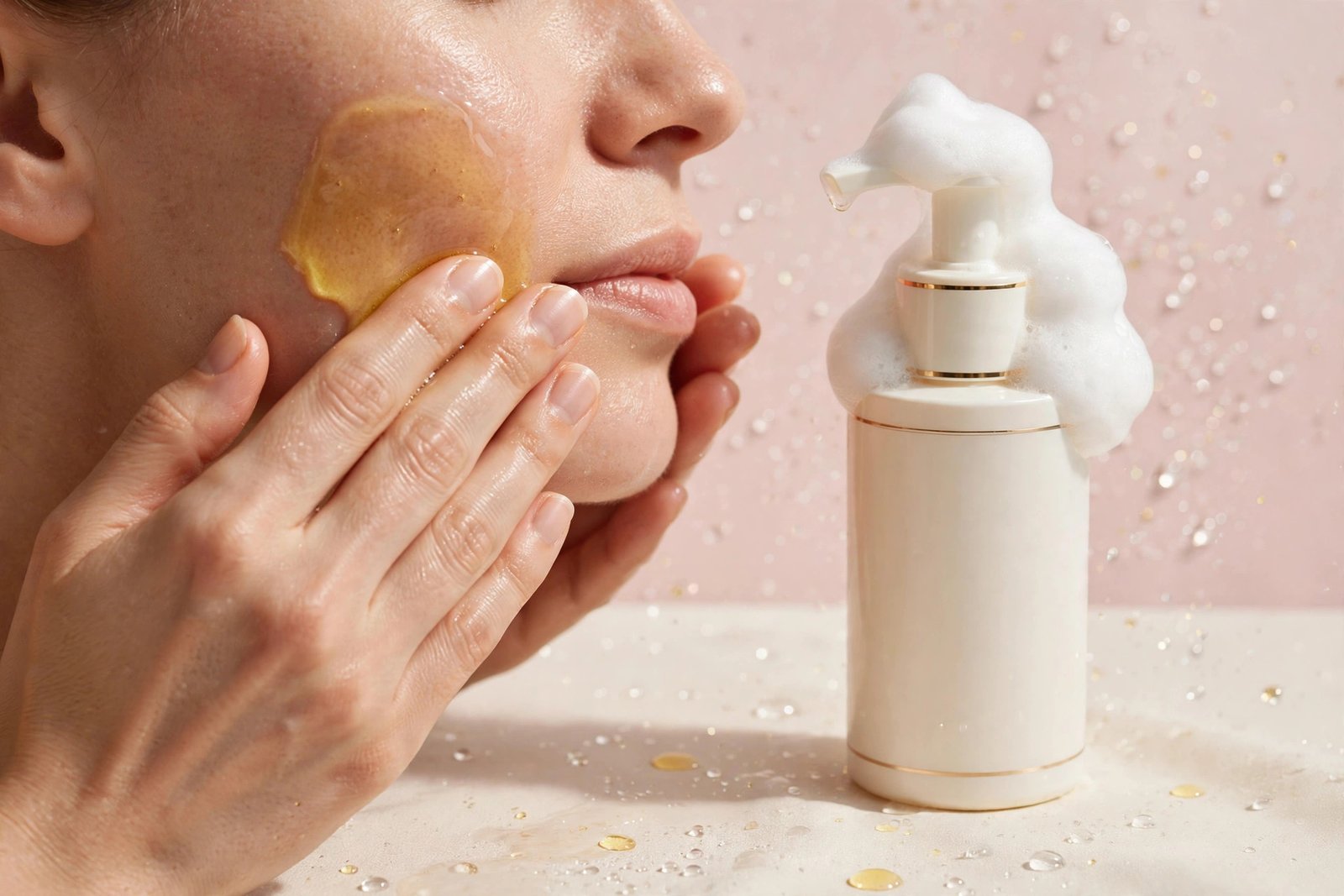
Double cleansing means washing your face in two stages with two different types of cleanser:
- First cleanse: An oil-based cleanser (cleansing oil or cleansing balm) dissolves oil-based buildup — sunscreen, makeup, excess sebum, and pollution particles.
- Second cleanse: A water-based cleanser (gel, foam, or cream cleanser) removes water-based residue — sweat, dirt, and whatever the oil cleanser left behind.
The principle is “like dissolves like.” Oil-based debris dissolves in oil; water-based debris dissolves in water. A single cleanser forces a compromise: either it’s strong enough to cut through sunscreen (and too harsh for daily use) or gentle enough for daily use (and too weak to fully remove sunscreen). Two specialized cleansers sidestep the compromise entirely.
When to double cleanse: Every evening, without exception — that’s when the day’s sunscreen, makeup, and grime need removing. In the morning, a single gentle cleanse (or even just lukewarm water for dry skin) is enough, since overnight buildup is minimal.
Why It Matters More Than You Think
Cleansing is the least glamorous step in any routine and the one people rush most. But consider what happens when cleansing is inadequate: sunscreen residue and sebum sit on the skin overnight, mixing with the treatment products you carefully apply. Pores stay congested. Expensive serums penetrate a film of grime instead of clean skin.
Conversely, consider what happens with harsh single cleansing: the barrier gets stripped nightly, skin compensates by overproducing oil or becoming sensitized, and people blame their moisturizer or serum for problems their cleanser caused.
Double cleansing solves both failure modes at once — thorough removal without harshness. It’s the reason K-beauty routines can layer so many products successfully: every layer goes onto genuinely clean, un-stripped skin.
For a broader look at cleansing technique beyond the Korean method, see our general guide on how to double cleanse.
The First Cleanse: Oil Cleansers and Cleansing Balms
Cleansing Oils
What they are: Liquid oils (or oil blends) in pump bottles. You massage them over dry skin, where they dissolve makeup and sunscreen on contact.
Best for: Most skin types, including oily skin — a persistent myth says oily skin should avoid oil cleansers, but oil dissolving oil is precisely how you clear excess sebum without stripping. They’re also the most efficient makeup removers in the category.
What to look for: An oil that emulsifies — when you add water, it should turn milky white and rinse away cleanly. Non-emulsifying oils (plain coconut oil, olive oil) leave a greasy film and can clog pores; proper cleansing oils are formulated to rinse off completely. Lightweight oils like sunflower, jojoba, or synthetic esters suit oily skin; richer blends suit dry skin.
Cleansing Balms
What they are: Solid-to-oil formulas in jars or tubes. You scoop a coin-sized amount, warm it between your palms, and massage it over dry skin, where it melts into an oil.
Best for: Dry and normal skin types, heavy makeup wearers, and anyone who finds liquid oils messy. Balms tend to feel more luxurious and are excellent at dissolving long-wear and waterproof makeup.
What to look for: The same emulsification requirement — it must turn milky with water and rinse clean. Balms in tubes are more hygienic than jars; if you use a jar, use the included spatula rather than fingers.
Oil vs. Balm: Which Should You Choose?
Honestly, either works — the cleansing mechanism is identical. Choose based on preference and skin type:
– Oily/combination skin: Cleansing oil (lighter, rinses cleanest)
– Dry skin: Cleansing balm (richer, more comfortable)
– Heavy makeup: Either, but balms have a slight edge on waterproof formulas
– Travel: Balms (no spill risk) or oil in a pump bottle with a lock
The Second Cleanse: Water-Based Cleansers
The second cleanser does the detail work on skin the oil has already cleared. Because it’s not fighting through sunscreen and sebum, it can be genuinely gentle.
Types, by skin type
- Gel cleansers: Lightweight, low-foam. The default recommendation for oily and combination skin — effective without stripping.
- Foam cleansers: Rich lather. Popular in K-beauty; choose low-pH (around 5.5) formulas. High-pH foaming cleansers (the squeaky-clean kind) are the ones that damage barriers — the foam itself isn’t the problem, the pH is.
- Cream/milk cleansers: Non-foaming, lotion-like. Best for dry and sensitive skin — they clean without any tight feeling.
- Powder/enzyme cleansers: Water-activated powders with enzymes like papain. A gentle daily-exfoliating option for dull or textured skin, used as the second cleanse 2–3 times per week rather than daily.
The pH rule
Skin’s natural pH sits around 4.5–5.5 (slightly acidic). Cleansers near this range clean without disrupting the acid mantle; high-pH cleansers (many traditional soaps sit at 9–10) strip it. Low-pH second cleansers (5.0–6.0) are one of the simplest upgrades a beginner can make. Check product pages for pH claims — Korean brands commonly advertise them.
The Step-by-Step Technique
Technique matters as much as product choice. Here’s the full method:
First cleanse (60 seconds)
- Start with dry hands on a dry face — water first dilutes the oil and weakens its dissolving power. (Yes, even if you’re wearing no makeup.)
- Pump 1–2 pumps of oil (or a grape-sized amount of balm warmed between palms).
- Massage over your entire face for a full 60 seconds — forehead, nose, chin, jawline, and around (not in) the eyes. Use gentle circular motions. You’ll feel gritty bits dissolving out of congested pores; that’s normal and satisfying.
- Wet your hands and massage for another 15–20 seconds — the oil should turn milky white (emulsification). This is the step beginners skip, and it’s what lets the oil rinse clean instead of leaving film.
- Rinse thoroughly with lukewarm water — not hot, which strips, and not cold, which doesn’t rinse oil well.
Second cleanse (30–60 seconds)
- On damp skin, work a small amount of your water-based cleanser into a lather (in your hands first for foam types).
- Massage gently for 30–60 seconds. Focus on the T-zone and anywhere congestion appears.
- Rinse thoroughly — at least 15–20 splashes or a full 15 seconds under gentle running water. Cleanser residue left on skin is a quiet cause of irritation and breakouts.
- Pat dry with a clean towel. Don’t rub.
Total time: About two minutes. That’s the entire investment.
Double Cleansing by Skin Type
Oily / acne-prone skin: Lightweight emulsifying cleansing oil + low-pH gel cleanser. This combination clears excess sebum thoroughly without the stripping that triggers rebound oil production. Avoid the temptation to use harsh acne cleansers as your second cleanse — gentle is more effective long-term.
Dry skin: Cleansing balm + cream or milk cleanser. Keep water lukewarm, keep the second cleanse to 30 seconds, and move to toner immediately while skin is still damp to lock in hydration.
Sensitive skin: Fragrance-free cleansing oil + fragrance-free cream cleanser. Patch test both. Keep massage pressure feather-light — mechanical irritation from enthusiastic rubbing is a real (and avoidable) problem.
Combination skin: Cleansing oil + low-pH foam or gel cleanser. Spend extra second-cleanse time on the oily T-zone and go lighter on dry cheeks.
7 Beginner Mistakes That Ruin Double Cleansing
- Skipping the emulsification step. Adding water to turn the oil milky before rinsing is what makes it rinse clean. Without it, oil residue stays on the skin — the number one cause of “oil cleansing broke me out.”
- Using non-emulsifying kitchen oils. Coconut oil, olive oil, and similar aren’t formulated to rinse off skin. They leave film that clogs pores. Use actual cleansing oils.
- Scrubbing hard. Pressure doesn’t clean better — contact time does. Aggressive rubbing irritates skin and breaks capillaries over time.
- Double cleansing in the morning too. Unnecessary for most people and a fast track to over-cleansing. Morning: one gentle cleanse.
- Using hot water. Feels satisfying, strips the barrier. Lukewarm always.
- Not rinsing enough. Both cleansers need thorough rinsing. Residue from either step causes the irritation people blame on the products.
- Expecting instant decongestion. Blackheads and sebaceous filaments loosen gradually over weeks of consistent double cleansing — not in one dramatic session. Anyone promising instant pore vacuuming is selling fiction.
What About Makeup Wipes and Micellar Water?
Makeup wipes: Convenient but inferior — they smear makeup around as much as remove it, the rubbing irritates skin, and they leave residue. Fine for travel emergencies; not a daily method.
Micellar water: A legitimate first-cleanse alternative for light makeup days. It’s gentler than wipes and effective on light sunscreen and makeup. But for full-coverage makeup, waterproof formulas, or heavy sunscreen, a proper oil cleanser or balm dissolves more completely. Think of micellar water as double cleansing’s lighter-duty cousin.
Key Takeaways
- Double cleansing = oil-based cleanser first (dissolves sunscreen, makeup, sebum), then water-based cleanser (removes sweat, dirt, residue).
- Double cleanse every evening; mornings need only a single gentle cleanse.
- Your oil cleanser or balm must emulsify (turn milky with water) to rinse clean — non-emulsifying oils clog pores.
- Choose your second cleanser by skin type and keep it low-pH (around 5.5); gentle beats harsh.
- Technique essentials: dry hands on dry face, 60 seconds of massage, emulsify before rinsing, lukewarm water, rinse thoroughly.
- Give it 2–4 weeks of consistent use before judging — decongestion is gradual.
FAQ
Can double cleansing cause breakouts?
It shouldn’t, when done correctly. Breakouts from double cleansing almost always trace to one of three errors: a non-emulsifying oil leaving residue, inadequate rinsing, or a too-harsh second cleanser disrupting the barrier. Fix the technique before blaming the method.
Do I need to double cleanse if I don’t wear makeup?
Yes, if you wear sunscreen — and daily sunscreen is the foundation of the whole routine. Sunscreen is specifically formulated to adhere to skin through sweat and water; a single gentle cleanser often can’t fully remove it. The oil cleanse dissolves it properly.
Is double cleansing bad for dry or sensitive skin?
No — it’s actually ideal for them, because it cleans thoroughly without requiring harsh cleansers. The key is product choice: a gentle balm or oil plus a cream cleanser, lukewarm water, light pressure, and moisturizing immediately after while skin is damp.
How long should double cleansing take?
About two minutes total: 60 seconds for the oil cleanse (plus emulsification), 30–60 seconds for the second cleanse, plus rinsing. If it’s taking five minutes, you’re overdoing it.
Can I use the same cleanser twice instead of two different ones?
That misses the point. The method works because oil-based and water-based cleansers dissolve different types of debris. Using the same water-based cleanser twice just cleans the same way twice — it won’t remove oil-based buildup any better the second time.
Love this? Pin it for later!