How to Get Rid of Chest Acne for Clear, Confident Skin
Learning how to get rid of chest acne starts with understanding why the chest breaks out in the first place. The chest is a sweat-trapping zone: sports bras, tight tops, and necklaces press fabric and metal against warm, oily skin for hours, creating exactly the clogged-pore conditions acne needs. Add in sunscreen, moisturizer, and hair conditioner migrating down the neck, and it is no surprise this area is one of the most common body breakout zones.
The good news: chest acne responds beautifully to the same proven routine as [body acne in general → how-to-get-rid-of-body-acne], with a few chest-specific tweaks around friction and sweat. Most mild to moderate chest breakouts clear within six to twelve weeks of consistent treatment.
Key Takeaways
- Chest acne is driven by trapped sweat, friction from sports bras and straps, and products migrating down from the neck and hair.
- Change out of sports bras and sweaty tops promptly, and wash bras after every wear.
- Salicylic acid body wash with 30 to 60 seconds of contact time is the best daily treatment for chest breakouts.
- Benzoyl peroxide 2 to 3 times weekly targets red, inflamed chest pimples.
- Keep necklaces clean and avoid heavy, comedogenic products on the chest area.
- See a dermatologist for cystic or widespread breakouts that do not improve after 12 weeks.
Why Does the Chest Break Out?
The chest has dense oil glands, and unlike your back, it spends all day pressed against fabric. The main chest-specific triggers are:
Sports Bras and Tight Tops
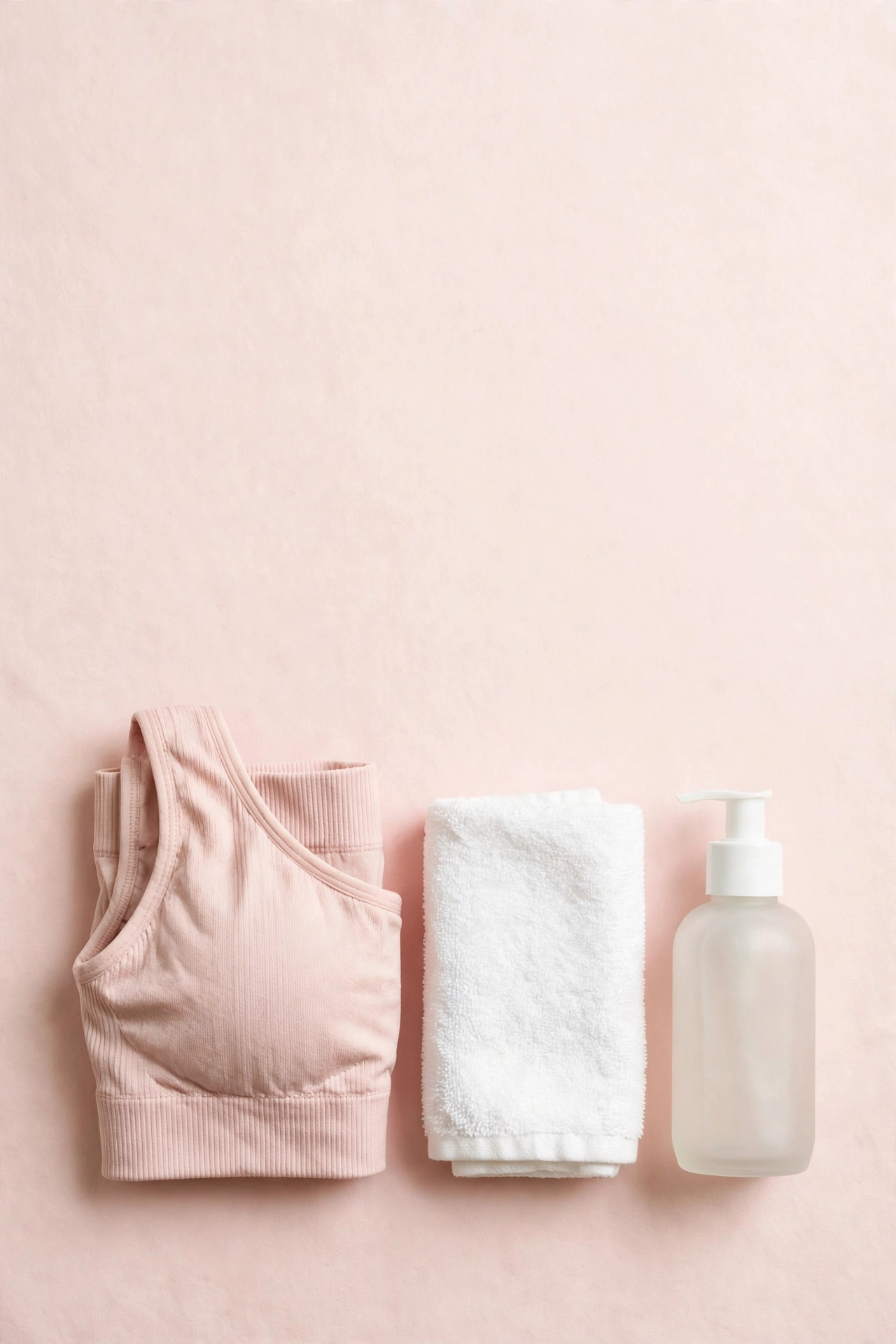
Sports bras are the number one chest-acne culprit. They trap heat and sweat directly against the skin for the duration of a workout — and often for the errands, coffee run, and drive home afterward. Rewearing an unwashed sports bra compounds the problem by pressing dried sweat, oil, and bacteria back into your pores. Non-breathable synthetic fabrics can make it worse.
Fix: Change out of your sports bra as soon as practical after exercising, and wash sports bras after every single wear. If you work out daily, own enough bras to rotate. Look for moisture-wicking fabrics, but even the best fabric does not substitute for a prompt change.
Sweat and Heat
The valley between the breasts and the upper chest trap sweat all day, especially in warm weather or under layered clothing. Sweat itself does not cause acne, but sweat sitting on oily, product-covered skin for hours clogs pores effectively.
Fix: A quick rinse of the chest after workouts and hot days, plus a light dusting-friendly routine (no heavy powders that cake into pores), keeps the area breathable. Choose breathable tops when you can.
Friction From Straps, Necklaces, and Bags
Necklaces resting on the chest, bag straps crossing the torso, and even seat belts create acne mechanica — breakouts caused by pressure and rubbing. These often show up as clusters right where the strap or chain sits.
Fix: Clean necklaces regularly (sweat and lotion build up on metal), and rotate bag sides so one spot does not take constant friction.
Products Migrating Down
Moisturizers, sunscreens, serums, and especially hair conditioner slide down the neck and upper chest and settle into pores. Heavy, comedogenic formulas are the worst offenders.
Fix: Apply facial products with a boundary in mind — stop at the jawline unless the product is non-comedogenic. And always wash your body after rinsing conditioner, the single most effective shower-order change for body breakouts.
The Chest Acne Treatment Routine
Chest skin is thinner and more sensitive than back skin, so the routine is the same proven formula dialed to a gentler setting.
Step 1: Cleanse With Salicylic Acid
Use a [salicylic acid body wash suited to acne-prone skin → best-body-wash-for-acne-prone-skin] on the chest daily. Massage it in and leave it on for 30 to 60 seconds before rinsing — this contact time is what lets the acid actually work inside pores. If you prefer a leave-on option, a salicylic acid body spray can reach the upper chest easily.
Step 2: Add Benzoyl Peroxide 2 to 3 Times Weekly
For red, inflamed chest pimples, a 5 percent benzoyl peroxide wash used a few times a week kills acne bacteria and calms inflammation. Rinse thoroughly — it bleaches fabric — and let the skin dry before dressing. If the chest area feels dry or stingy, drop to once weekly and moisturize well.
Step 3: Moisturize Lightly
Do not skip this step. A light, non-comedogenic, fragrance-free lotion keeps the skin barrier healthy so actives do not cause irritation. Apply while the skin is slightly damp after showering.
What Not to Do on the Chest
- Do not scrub. The chest is thinner-skinned than the back; rough exfoliating gloves and gritty scrubs cause irritation that looks worse than the original breakouts.
- Do not pick. Chest pimples scar and mark easily, and the area is often visible in summer clothing. Hands off.
- Do not layer heavy oils or butters. Coconut oil, cocoa butter, and thick body butters are comedogenic for many people — save them for below the chest if you love them.
Chest Acne Prevention Habits
Treatment clears current breakouts; these habits stop the next round:
- Shower soon after workouts. A full shower is ideal, but a quick chest rinse with your acne wash works on busy days.
- Wash sports bras after every wear. Non-negotiable during an active breakout.
- Rotate bags and straps. Do not let one strap press the same spot daily.
- Clean necklaces weekly. A quick wipe removes the lotion and sweat film that irritates the skin underneath.
- Choose breathable fabrics. Cotton and moisture-wicking materials beat non-breathable synthetics for all-day wear.
- Wash pillowcases twice weekly. Your chest presses against your pillow when you sleep on your side.
Make Sure It Is Actually Acne
Two common chest-area impostors are worth ruling out:
- Fungal acne (Malassezia folliculitis): Itchy, uniform tiny bumps that do not respond to standard acne treatments and often flare in heat and humidity. If your “acne” is intensely itchy and uniform, mention fungal acne to a dermatologist — it needs antifungal treatment, not benzoyl peroxide.
- Ingrown hairs: Bumps along the lower chest or where you shave or wax, often with a visible trapped hair. These need exfoliation and better hair-removal technique, covered in [our ingrown hair prevention guide → how-to-prevent-ingrown-hairs-after-shaving].
Chest Acne and Your Cycle: The Hormonal Connection
If your chest breakouts reliably flare in the week before your period, hormones are likely involved. In the luteal phase of the cycle, progesterone rises and estrogen dips, which can increase oil production and make pores more reactive — and the chest, with its dense oil glands, shows it clearly.
You cannot change your hormones with a body wash, but you can plan around them:
- Preempt the flare. In the week before your expected period, be extra consistent with your salicylic acid wash and change out of sweaty clothes promptly. Prevention during the high-risk window beats treating the flare after.
- Do not escalate aggressively. Hormonal flares are temporary; doubling your actives during the flare week usually just adds irritation. Stay the course.
- Track the pattern. If flares are severe, cyclical, and unresponsive to topicals after three months, note the pattern and bring it to a dermatologist or your doctor — hormonal treatments are an option for truly hormonal acne, but that is a medical conversation, not a skincare-aisle decision.
Cycle-related chest breakouts are extremely common and not a sign that anything is wrong. They just need a routine that holds steady through the month.
When to See a Dermatologist
Book an appointment if your chest acne is cystic (large, painful, deep lumps), covers a wide area, has not improved after 12 weeks of consistent over-the-counter treatment, or is leaving scars. A dermatologist can prescribe stronger topicals or discuss hormonal options if breakouts track with your cycle.
Frequently Asked Questions
Why do I only get acne on my chest and not my face?
The chest has its own trigger profile — trapped sweat, sports-bra friction, and product migration — that your face does not share. It is completely normal for body zones to break out independently of the face.
Can sports bras really cause chest acne?
Yes. A sweaty, unwashed sports bra worn for hours presses bacteria, oil, and friction against the skin — one of the most common and fixable causes of chest breakouts.
How long until chest acne clears?
Expect visible improvement in 4 to 6 weeks and significant clearing in 8 to 12 weeks with a consistent salicylic acid or benzoyl peroxide routine. Chest skin heals a bit faster than back skin.
Should I exfoliate chest acne with a scrub?
No. Physical scrubs irritate chest skin. Chemical exfoliants like salicylic acid do the unclogging work without the damage.
Can I use the same acne wash on my chest and back?
Yes. One good [acne body wash → best-body-wash-for-acne-prone-skin] works for both areas — just use a gentler touch and shorter contact time on the chest if it feels sensitive.
Does chest acne mean my hormones are imbalanced?
Not necessarily. Most chest acne is driven by sweat, friction, and clogged pores. Hormones can play a role, especially with cyclical flares, but start with the topical routine before assuming a hormonal cause.
Chest acne is one of the most treatable body breakouts because its triggers are so fixable: fresher sports bras, quicker post-sweat rinses, and a simple salicylic acid routine do most of the work. Pair this routine with the broader [body acne guide → how-to-get-rid-of-body-acne] for full coverage, and choose your cleanser from [the best body washes for acne-prone skin → best-body-wash-for-acne-prone-skin] to make sure your daily wash is pulling its weight.
body acne pillar guide
best body wash for acne-prone skin
back acne deep dive
preventing ingrown hairs
Love this? Pin it for later!