How to Exfoliate Your Body Properly: Chemical vs Physical Guide
Exfoliation is the single most transformative step in body skincare — and the one most people get wrong. Too little, and dead skin builds up into dullness, rough patches, clogged follicles, and ingrown hairs. Too much, and you damage the skin barrier, triggering redness, sensitivity, and paradoxically rougher skin.
Done properly, exfoliation reveals smoother, brighter, more even-toned skin, helps moisturizers absorb better, prevents ingrown hairs, and dramatically improves concerns like [strawberry legs → how-to-get-rid-of-strawberry-legs] and [keratosis pilaris → keratosis-pilaris-treatment-arms-guide]. This guide covers exactly how to exfoliate your body properly: the two methods, how to choose between them, correct technique, frequency by skin type, and the mistakes to avoid.
Exfoliation is step two of a complete [body skincare routine for smooth skin → body-skincare-routine-guide] — cleanse first, exfoliate, then moisturize and treat.
Key Takeaways
- Body exfoliation removes dead skin cells, revealing smoother, brighter skin and clearer follicles.
- Chemical exfoliants (AHAs/BHAs) are generally gentler and more even than physical scrubs — dermatologists’ first choice.
- Exfoliate 2–3 times per week; daily exfoliation damages the skin barrier for most people.
- Never exfoliate sunburned, broken, irritated, or freshly shaved skin.
- Always moisturize immediately after exfoliating — exfoliated skin loses moisture fast.
- Introduce chemical exfoliants gradually: once weekly at first, then build up.
Chemical vs Physical Exfoliation: The Honest Comparison
Chemical Exfoliation
Chemical exfoliants use acids or enzymes to dissolve the bonds holding dead skin cells together, allowing them to shed evenly. For body skin, the main players are:
- AHAs (alpha-hydroxy acids): Lactic acid (gentle, hydrating — great for dry or sensitive skin), glycolic acid (stronger, great for rough texture and dullness), mandelic acid (gentlest, good for sensitive skin).
- BHAs (beta-hydroxy acids): Salicylic acid (oil-soluble, penetrates into follicles — ideal for clogged pores, body acne, and ingrown hairs).
- PHAs (poly-hydroxy acids): Gluconolactone and lactobionic acid — the gentlest option, suitable for very sensitive skin.
- Enzymes: Papaya and pineapple enzymes dissolve dead cells very gently; good for sensitive skin but slower-acting.
Chemical exfoliants come as body lotions, serums, pads, masks, and peels. The lotion format is the most practical for body use — you apply it like moisturizer and it works over hours. Many of the [best body lotions for dry bumpy skin → best-body-lotion-for-dry-bumpy-skin] are chemical exfoliant lotions that combine this step with moisturizing.
Pros: Even application, no friction or micro-tears, works inside follicles (BHAs), can be left on for continuous gentle action, better for sensitive and bumpy skin.
Cons: Increases sun sensitivity (AHAs), requires sunscreen diligence, can sting on broken skin, takes weeks to show full results.
Physical Exfoliation
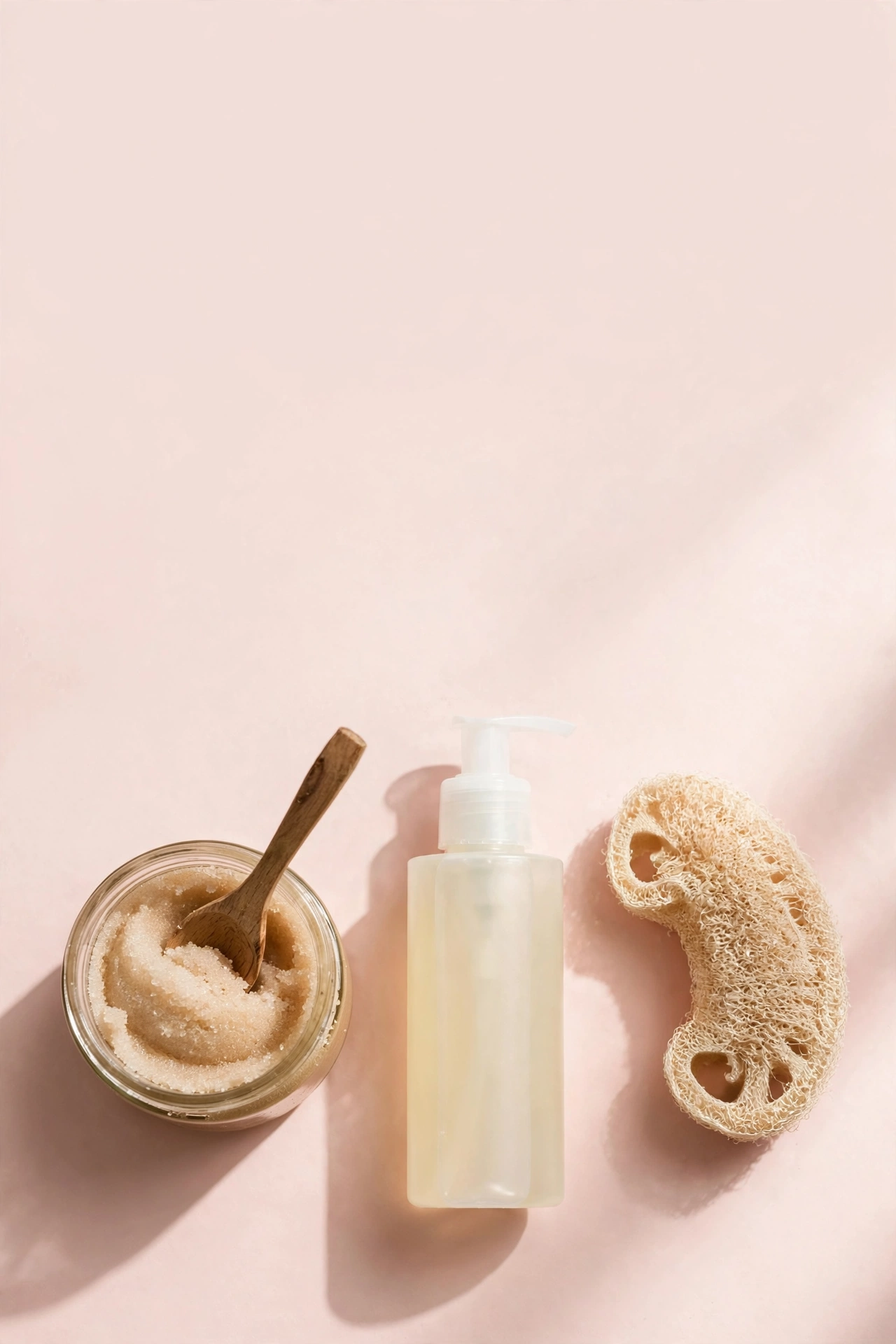
Physical exfoliation uses friction to manually remove dead cells: body scrubs (sugar, salt, coffee), exfoliating gloves or mitts, dry brushes, loofahs, and washcloths.
Pros: Immediate smoothness you can feel, satisfying ritual, no sun-sensitivity concerns, inexpensive (a [DIY sugar scrub → how-to-make-sugar-scrub-at-home] costs almost nothing).
Cons: Easy to overdo — uneven pressure causes micro-tears and irritation, can’t reach inside follicles, harsh scrubs (large salt crystals, walnut shells) can damage skin, not ideal for sensitive, acne-prone, or KP-prone skin.
The Verdict
Dermatologists generally recommend chemical exfoliation as the primary method for body skin, with gentle physical exfoliation as an occasional supplement — not the other way around. If you love scrubs, keep them gentle (fine sugar over coarse salt), use light pressure, limit to once a week, and never use them as your only exfoliation method if you have specific concerns like bumps or clogged follicles.
How to Exfoliate Each Body Area Properly
Different areas have different skin thickness and sensitivity. One approach doesn’t fit all:
Arms and legs: The most forgiving areas. Either method works well. AHA/BHA lotions 2–3 times weekly are ideal; add a gentle scrub once weekly if you enjoy it. These are the key areas for treating [strawberry legs → how-to-get-rid-of-strawberry-legs] and [arm bumps → keratosis-pilaris-treatment-arms-guide].
Back, chest, and shoulders: Thicker skin that tolerates stronger exfoliation. Salicylic acid body wash or spray-on BHA treatments work well here, especially for body acne. A long-handled soft brush helps reach the back.
Feet: The thickest skin on the body — heels and soles can handle stronger treatment. Urea creams (20–40%), foot peels, and pumice stones (used gently on wet skin) are all effective. Exfoliate feet 2–3 times weekly, then moisturize heavily and wear socks.
Hands: Moderate exfoliation keeps hands smooth and helps hand cream absorb. A gentle AHA hand cream or weekly scrub is plenty — hands get enough incidental exfoliation from daily activity.
Neck, chest (décolletage), and inner arms: Thinner, more sensitive skin. Use gentler products (lactic acid over glycolic), lighter pressure, and lower frequency (1–2 times weekly).
Bikini area: Very sensitive. Stick to gentle chemical exfoliants (lactic acid or PHA) 1–2 times weekly to prevent ingrown hairs. Avoid harsh scrubs and strong acids here.
Never exfoliate: Sunburned skin, open cuts or wounds, active rashes or eczema flares, freshly waxed skin (wait 48 hours), or skin treated with prescription retinoids without your dermatologist’s guidance.
Frequency Guide by Skin Type
| Skin Type | Chemical Exfoliation | Physical Exfoliation |
|---|---|---|
| Normal | 2–3x per week | 1x per week |
| Dry | 1–2x per week (lactic acid preferred) | 1x per week, gentle |
| Oily / acne-prone | 2–3x per week (salicylic acid preferred) | 1x per week, gentle |
| Sensitive | 1x per week to start (PHA or lactic acid) | Every 2 weeks, very gentle |
| KP-prone / bumpy | Daily AHA or urea lotion (this is treatment, not over-exfoliation) | 1x per week max, gentle |
The KP exception deserves emphasis: a daily low-strength AHA or urea lotion is a treatment for keratosis pilaris, not over-exfoliation — it’s the standard dermatologist recommendation. See the full [KP treatment routine → keratosis-pilaris-treatment-arms-guide] for details.
The Correct Technique, Step by Step
For chemical exfoliant lotions (the recommended primary method):
1. Shower and cleanse as normal with lukewarm water.
2. Pat skin so it’s slightly damp, not dripping.
3. Apply the AHA/BHA lotion evenly to target areas — a thin, even layer is enough.
4. Wait 1–2 minutes for absorption.
5. Follow with your regular moisturizer if skin feels like it needs more hydration (many AHA lotions are moisturizing enough alone).
6. In the morning, apply SPF 30+ to any treated areas that will see sun.
For body scrubs:
1. Soak in warm (not hot) water for 3–5 minutes to soften skin.
2. Apply the scrub to wet skin — never dry skin.
3. Massage in gentle circular motions with light pressure. Let the product do the work; pressing harder doesn’t exfoliate better, it just irritates.
4. Spend about 30 seconds per area — no marathon scrubbing sessions.
5. Rinse thoroughly with lukewarm water.
6. Pat dry and moisturize within 3 minutes, while skin is still damp.
For exfoliating gloves or mitts:
1. Use on wet, soaped skin in the shower.
2. Light pressure, circular motions — the texture of the glove provides the exfoliation, not your force.
3. Replace gloves every 3–4 weeks and let them dry completely between uses.
For dry brushing:
1. Always on dry skin, before showering.
2. Use a natural-bristle brush, gentle pressure, long strokes toward the heart.
3. 2–3 minutes total is plenty.
4. Shower afterward to wash away loosened cells, then moisturize.
7 Exfoliation Mistakes That Damage Skin
- Exfoliating every day. The most common mistake. Skin needs recovery time between sessions — daily exfoliation thins the barrier and causes chronic irritation.
- Combining multiple exfoliants. Using an AHA lotion plus a scrub plus an exfoliating body wash is triple exfoliation. Pick one primary method per session.
- Scrubbing harder for better results. Pressure doesn’t equal effectiveness — it equals irritation. Chemical exfoliants need no pressure at all; physical ones need only light pressure.
- Exfoliating right before or after shaving. Both are forms of exfoliation. Doing them back-to-back over-exfoliates. Space them at least 24 hours apart — exfoliate the day before you shave, not the same day.
- Skipping moisturizer afterward. Freshly exfoliated skin loses water rapidly. Moisturizing within minutes isn’t optional — it’s half the benefit.
- Using facial-strength peels on the body (or body-strength on the face). Professional-strength peels belong with professionals. Over-the-counter body products are formulated for body skin thickness.
- Exfoliating irritated or sunburned skin. Exfoliation on compromised skin causes pain, prolongs healing, and risks scarring. Wait until skin is fully healed.
Signs You’re Over-Exfoliating
Watch for these warning signs and scale back if they appear: persistent redness, stinging or burning when applying normally gentle products, skin that feels tight or “shiny” in an unnatural way, increased sensitivity, flaking or peeling beyond the first week of a new product, and breakouts in areas that don’t normally break out. The fix is simple: stop all exfoliation for 1–2 weeks, focus on gentle cleansing and rich moisturizing, then restart at half the previous frequency.
Frequently Asked Questions
Should I exfoliate before or after shaving?
Exfoliate the day before you shave, not the same day. Pre-shave exfoliation lifts hairs and clears dead cells for a closer shave — but doing both in one session over-exfoliates. If you must do them the same day, use only the gentlest option (a soft washcloth, not acids or scrubs) and moisturize generously.
Can I exfoliate every day if I use a gentle product?
For most people, no — even gentle daily exfoliation accumulates into barrier damage over weeks. The exception is low-strength daily AHA/urea lotions used as KP treatment, which dermatologists do recommend daily. When in doubt, 2–3 times weekly is the safe standard.
Is it better to exfoliate in the morning or at night?
Night is slightly better for chemical exfoliants (they work undisturbed for hours, and any mild redness fades by morning). Physical exfoliation works any time. What matters far more than timing is consistency and always following with moisturizer.
Do I need to exfoliate if I have sensitive skin?
Yes, but gently and less often. Sensitive skin still accumulates dead cells — it just needs the mildest effective approach: PHA or lactic acid products once weekly, no harsh scrubs, and careful moisturizing afterward. Skipping exfoliation entirely often leaves sensitive skin looking dull and feeling rough.
What’s the difference between a body scrub and a chemical exfoliant lotion?
A scrub removes dead cells mechanically through friction during a single shower session. A chemical exfoliant lotion dissolves dead cells over hours of wear, works more evenly, and reaches inside follicles. Lotions are the better primary method; scrubs are a nice occasional supplement.
Proper exfoliation is the engine of smooth body skin — it’s what makes every other step of your [body skincare routine → body-skincare-routine-guide] work better, from moisturizer absorption to the fading of [strawberry legs → how-to-get-rid-of-strawberry-legs] and [KP bumps → keratosis-pilaris-treatment-arms-guide]. Choose chemical over physical as your primary method, respect the 2–3 times weekly frequency, always moisturize after, and let consistency do the rest.
body skincare routine for smooth skin
strawberry legs treatment
keratosis pilaris treatment
best body lotions for bumpy skin
DIY sugar scrub recipe
Love this? Pin it for later!