Do You Need Heat Protectant? What Happens Without It
If you’ve ever straightened, curled, or blow-dried your hair and wondered whether that extra spray bottle is actually doing anything, you’re not alone. Heat protectant is one of those products that many people skip — usually because they’re not sure it matters, or because they’re worried it’ll make their hair greasy.
Here’s the short answer: yes, you need heat protectant if you use any heat on your hair. Flat irons, curling wands, and blow dryers all reach temperatures high enough to damage your hair’s structure, and heat protectant is the simplest way to reduce that damage.
This guide breaks down exactly what heat protectant does, what happens to your hair when you skip it, the different types available, and how to use them correctly. If you’re building a complete hair care routine from scratch, start with our hair care routine for beginners guide — heat protection is one piece of a bigger picture.
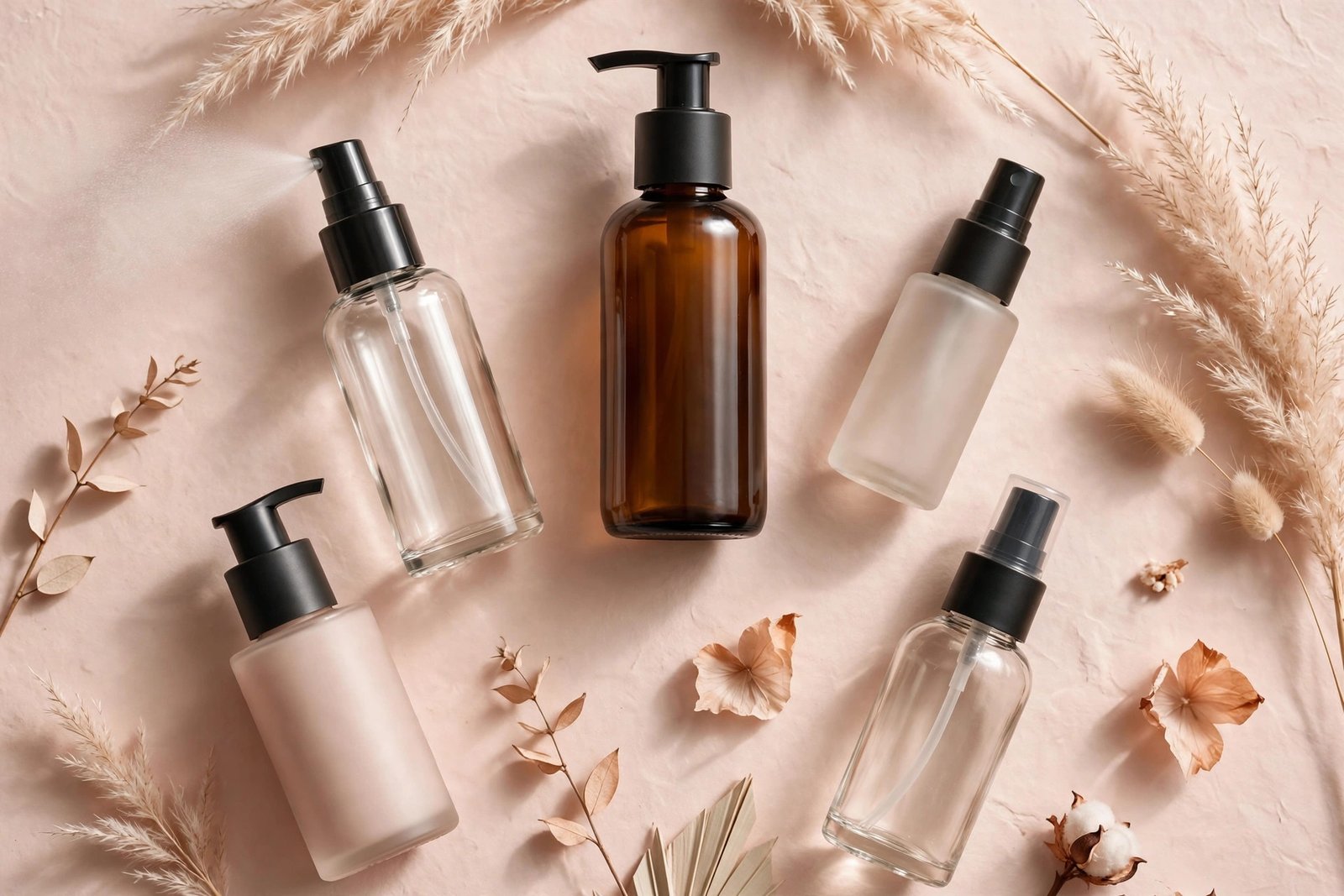
What Heat Protectant Actually Does
Heat protectant products create a thin barrier between your hair and the hot styling tool. Most formulas rely on silicones (like dimethicone) or heat-activated polymers that coat each strand and do three main things:
1. They slow down heat transfer. Instead of the full blast of a 200°C flat iron hitting your hair shaft instantly, the protective layer distributes the heat more gradually. This gives your hair a better chance of surviving the pass without the inner structure breaking down.
2. They lock in moisture. Heat styling evaporates the water inside your hair shaft very quickly. That sudden moisture loss is what causes the dry, straw-like feeling after repeated straightening. Heat protectants help seal moisture in so less of it escapes during styling.
3. They reduce friction. Dragging a hot flat iron down your hair creates friction, which roughs up the cuticle (the outer layer of each strand). A smoother glide means less mechanical damage on top of the heat damage.
It’s worth being honest about what heat protectant can’t do: it doesn’t make heat styling damage-free. No product can fully block the effects of 200°C+ temperatures on hair protein. What it does is significantly reduce the damage — think of it like sunscreen. Sunscreen doesn’t make sun exposure harmless, but it meaningfully lowers the harm.
The temperature problem
To understand why this matters, it helps to know the numbers. Hair keratin — the protein your hair is made of — starts to degrade at around 150°C (300°F). Most flat irons and curling wands operate between 180°C and 230°C (350–450°F). Blow dryers on high heat can reach similar temperatures at the nozzle.
So every time you style without protection, you’re exposing your hair to temperatures well above the point where its structure begins to break down. A heat protectant doesn’t change the temperature of your tool, but it changes how that heat interacts with your hair.
What Happens to Your Hair Without Heat Protectant
Skipping heat protectant once won’t ruin your hair. But skipping it regularly — especially if you heat style several times a week — leads to cumulative damage that’s hard to reverse. Here’s what that looks like:
Dryness and brittleness
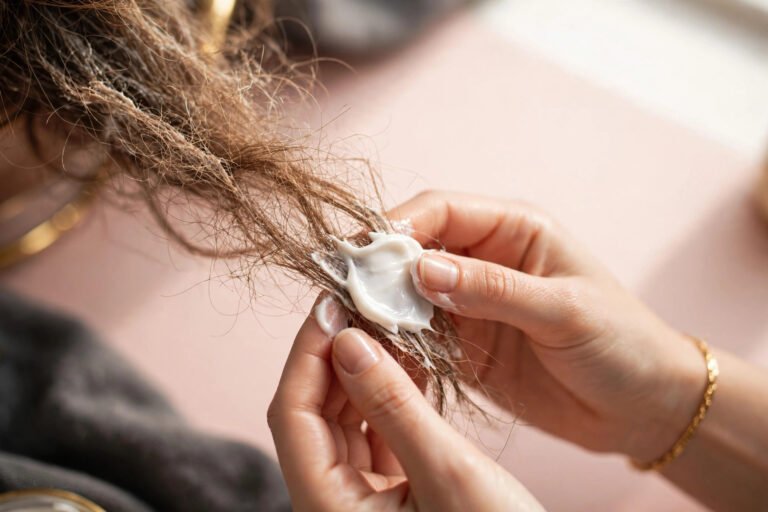
The most common result. Without a protective barrier, heat evaporates moisture from inside the hair shaft faster than your hair can handle. Over time, your hair loses its natural elasticity and starts feeling dry and rough, even right after conditioning. If your hair feels like straw no matter what products you use, unprotected heat styling is a likely culprit.
Split ends and breakage
When the cuticle (the protective outer layer) is repeatedly damaged by heat, it lifts and cracks. Once the cuticle is compromised, the inner cortex is exposed, and the strand splits — sometimes all the way up the shaft. You’ll notice more split ends, shorter broken pieces around your crown, and hair that seems like it “won’t grow” past a certain length. (It is growing — it’s just breaking off at the same rate.)
That burnt smell
If your hair smells burnt after straightening, that’s not normal — it’s a sign of heat damage happening in real time. That smell comes from overheated hair protein, and it’s your hair telling you the temperature is too high, the protectant is missing, or both. We cover this in detail in our guide on why hair smells burnt after straightening.
Color fading
If you color your hair, unprotected heat styling accelerates color loss. Heat opens the cuticle, which allows color molecules to escape more easily. That expensive salon color will fade noticeably faster if you’re flat-ironing without protection every few days.
Loss of curl pattern
For wavy and curly hair, repeated unprotected heat styling can permanently loosen or destroy your natural curl pattern — a phenomenon sometimes called “heat training,” though “heat damage” is more accurate. Once the protein bonds that create your curl are broken by excessive heat, they don’t always bounce back.
Dullness
Healthy hair reflects light because the cuticle lies flat and smooth. Damaged, lifted cuticles scatter light instead, which is why heat-damaged hair looks dull and matte no matter how much shine serum you apply on top.
Types of Heat Protectants: Spray vs Cream vs Serum
Not all heat protectants are the same, and choosing the wrong type for your hair can leave it greasy, weighed down, or still unprotected. Here’s how the three main formats compare:
Heat protectant sprays
Best for: Fine to medium hair, frequent stylers, blow-drying
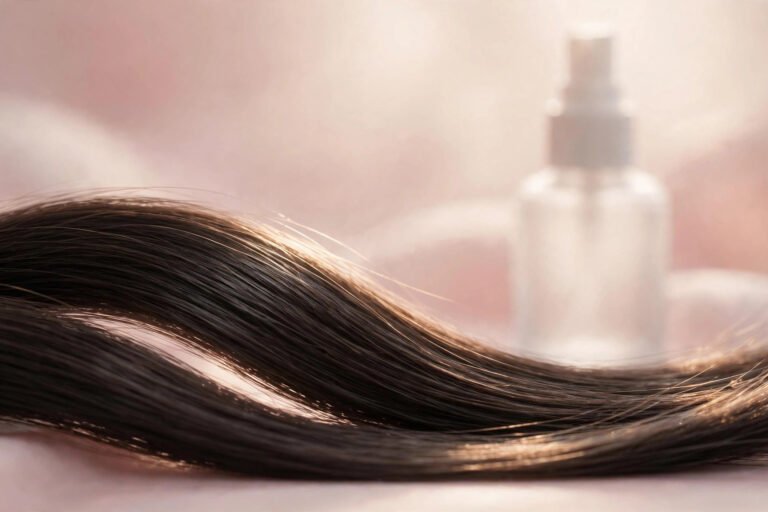
Sprays are the lightest option. They mist evenly over the hair without adding weight, which makes them ideal for fine hair that gets greasy easily. Most sprays work on both damp and dry hair.
Pros: Lightweight, even distribution, won’t weigh hair down, quick to apply
Cons: Easiest to under-apply (a quick spritz isn’t enough), can feel like they “disappear”
How to choose: Look for sprays that specifically mention heat protection up to at least 230°C / 450°F. Avoid anything that’s mostly alcohol — it can be drying on its own.
Heat protectant creams
Best for: Thick, coarse, or very dry hair
Creams are richer and provide more conditioning alongside protection. They’re a good choice if your hair is thick enough to absorb a heavier product without looking greasy, or if you’re dealing with existing dryness and want the extra moisture.
Pros: More conditioning, better for thick/coarse textures, often doubles as a smoothing product
Cons: Can weigh down fine hair, easier to over-apply, needs thorough distribution
How to choose: A pea-sized to dime-sized amount (depending on hair length) is usually enough. Focus on mid-lengths to ends where damage is most likely.
Heat protectant serums and oils
Best for: Coarse, frizzy, or curly hair; finishing and smoothing
Serums (usually silicone-based) and heat-protective oils offer protection plus significant smoothing and frizz control. They’re the heaviest option, so they’re best for hair textures that can handle it.
Pros: Excellent frizz control, adds shine, good for coarse textures
Cons: Can look greasy on fine hair, easy to over-apply, some oils have low smoke points
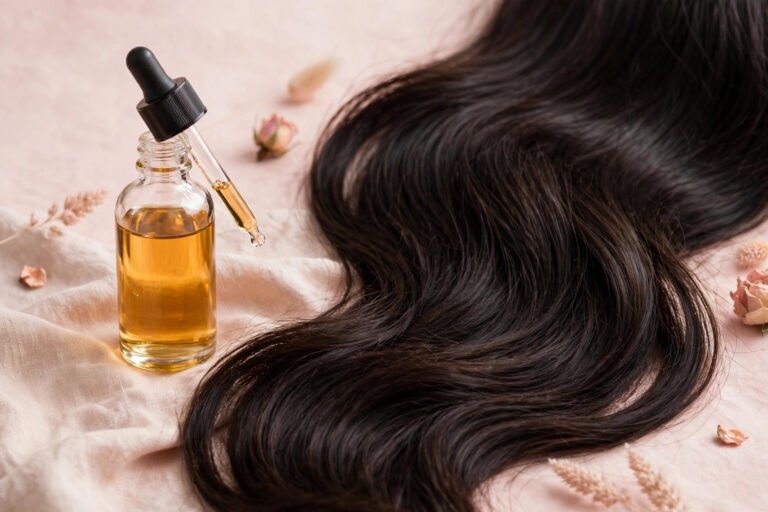
Important note: Not all oils protect against heat. In fact, some natural oils can make heat damage worse because they heat up on the hair shaft. If you want to use an oil, choose one specifically formulated as a heat protectant — don’t assume your regular hair oil does the job.
Quick comparison
| Type | Best hair type | Weight | Ease of use |
|---|---|---|---|
| Spray | Fine to medium | Light | Easiest |
| Cream | Thick to coarse | Medium | Moderate |
| Serum/Oil | Coarse, frizzy | Heavy | Needs care |
If you’re unsure where to start, a spray is the safest bet for most people. You can always layer a serum on your ends afterward if you need extra smoothing.
How to Apply Heat Protectant Correctly
Using heat protectant wrong is almost as bad as skipping it. The most common mistake is applying too little, too unevenly, or to the wrong sections. Here’s how to do it right:
Step 1: Start with the right hair state
Most heat protectants work on damp hair (towel-dried, not dripping) if you’re about to blow dry, or on fully dry hair if you’re about to use a flat iron or curling wand. Check your product’s instructions — some are formulated for one or the other.
Never use a flat iron on damp hair, with or without protectant. The water inside the hair turns to steam, which causes a type of damage sometimes called “bubble hair” — tiny steam bubbles form inside the shaft and weaken it from within.
Step 2: Section your hair
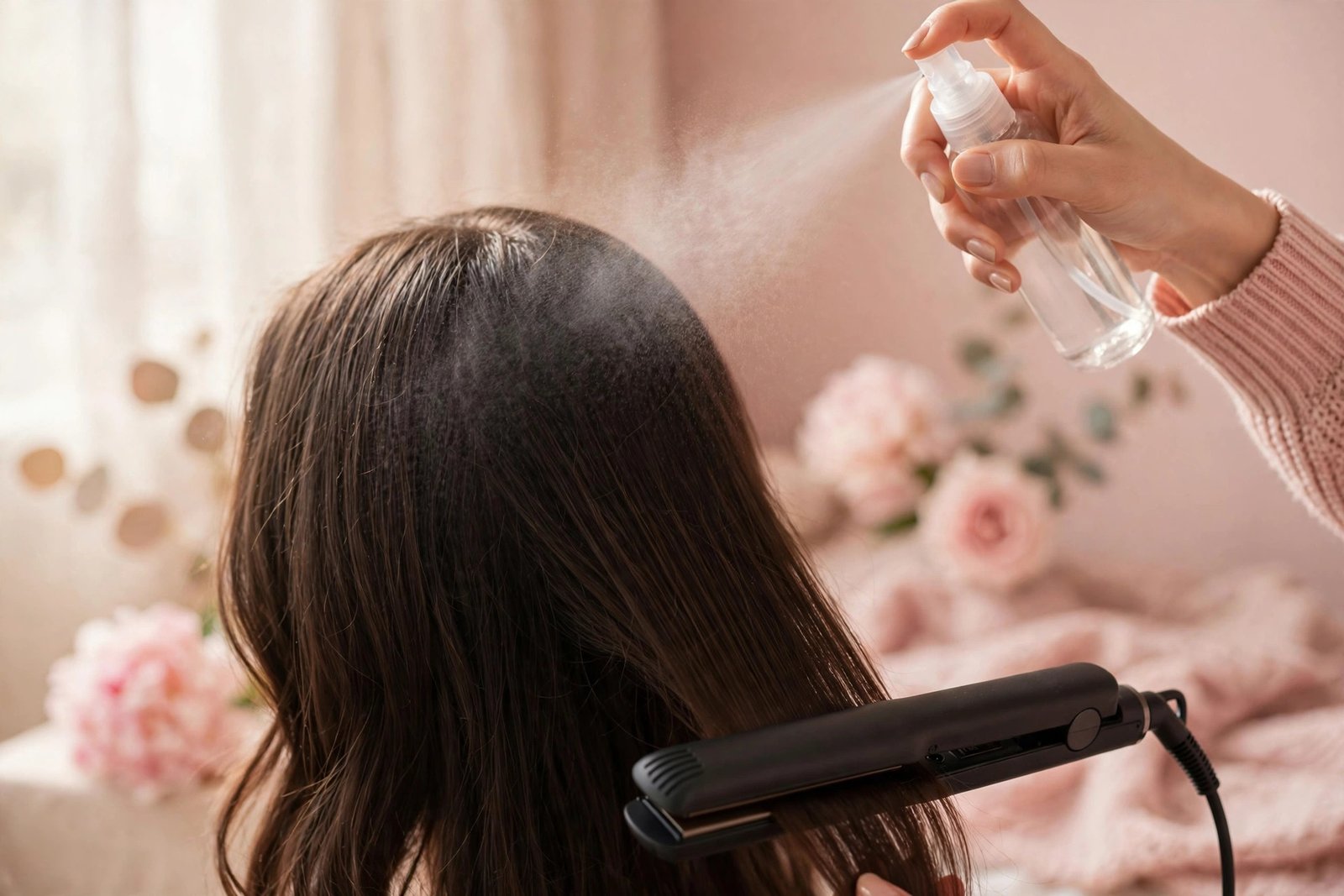
Divide your hair into 2–4 sections (more if it’s very thick). This is the step most people skip, and it’s why protection ends up uneven. You want every strand to get coverage, not just the top layer.
Step 3: Apply evenly from mid-lengths to ends
For sprays: hold the bottle 15–20 cm away and mist each section thoroughly. You should be able to feel slight dampness on the hair — a single quick spritz per section isn’t enough.
For creams: warm a small amount between your palms, then smooth it through each section from mid-lengths to ends. Avoid the roots unless your product specifically says it’s safe — roots rarely need heat protection (the iron shouldn’t be touching your scalp anyway) and product here causes greasiness.
For serums: use 1–2 drops or a pea-sized amount, focus on ends.
Step 4: Comb through
After applying, run a wide-tooth comb through each section to distribute the product evenly. This prevents patchy protection where some strands are coated and others are bare.
Step 5: Let it absorb briefly
Give the product 30–60 seconds to settle into the hair before bringing the heat. This is especially important for creams and serums.
Common application mistakes
- Using too little. If you can’t feel the product on your hair at all, you probably didn’t use enough.
- Only doing the top layer. The underlayers need protection too — that’s why sectioning matters.
- Applying to roots. Leads to greasy, flat roots. Focus on mid-lengths and ends.
- Mixing with too many products. Layering protectant + leave-in + oil + serum can overload the hair. Pick 1–2 complementary products, not five.
Do You Need Heat Protectant for Blow Drying?
Yes — and this is the question that trips up the most people. Many assume that because a blow dryer feels less intense than a flat iron, it doesn’t cause real damage. That’s not the case.
Blow dryers on high heat settings can reach 140–200°C at the nozzle, especially when held close to the hair. That’s squarely in the damage zone. The damage from blow drying tends to be more diffuse (dryness, frizz, roughness) rather than the acute damage of a flat iron, but it’s cumulative — daily unprotected blow drying adds up fast.
The good news: blow drying is the easiest heat styling to protect against. A lightweight heat protectant spray on damp hair before blow drying takes ten seconds and makes a significant difference. Many blowout-specific protectants also add volume or smoothness, so you’re getting styling benefits on top of protection.
What about diffusing curly hair? Yes, use protectant here too. Diffusers spread the heat, but the total heat exposure over a 15–20 minute diffusing session is substantial. A lightweight spray or cream (depending on your hair texture) before diffusing helps preserve your curl pattern.
The one exception: if you’re air-drying with no heat at all, you don’t need heat protectant. But the moment any heated tool touches your hair — dryer, straightener, curler, hot brush, even a heated round brush — protectant should go on first.
For more on reducing heat damage overall, our hair care routine for beginners covers how to balance heat styling with hair health, including how often to use heat and what to do on rest days.
Frequently Asked Questions
Can I use coconut oil or argan oil instead of heat protectant?
This is a common question, and the answer is: not really. While some oils (like argan) have relatively high smoke points, most natural oils don’t provide the same level of protection as a formulated heat protectant. Silicones and heat-activated polymers in proper protectants are specifically engineered to distribute heat and form a barrier — plain oils mostly just coat the hair and can actually conduct heat into the shaft. If you love oils, use a heat protectant first, then a tiny amount of oil on the ends after styling for shine.
Do I need heat protectant if I only use low heat settings?
Yes. Damage from heat is cumulative, and even lower temperatures cause harm over time with repeated exposure. Lower heat + protectant is the best combination — don’t think of them as either/or. If you can get the result you want on a lower setting, do that and use protectant.
Will heat protectant make my hair greasy?
It can, if you use too much or choose the wrong formula for your hair type. Fine hair + heavy cream = greasy roots. The fix is simple: use a lightweight spray, apply mainly to mid-lengths and ends, and start with less product than you think you need. You can always add more.
How often should I reapply during styling?
Once per styling session is enough. You don’t need to re-spray between every pass of the flat iron. One thorough, even application before you start is the correct approach.
Does heat protectant expire?
Yes, like most hair products. Check the PAO (period-after-opening) symbol on the packaging — it’s usually 12 months. An expired protectant may be less effective because the active ingredients degrade over time. If yours smells off or has changed texture, replace it.
Can I skip heat protectant if my hair is already damaged?
Definitely not — damaged hair needs more protection, not less. Already-compromised cuticles are more vulnerable to further heat damage. If your hair is significantly damaged, consider reducing heat styling frequency overall while you focus on repair, and always use protectant when you do style.
Key Takeaways
- Yes, you need heat protectant whenever you use heated styling tools — flat irons, curling wands, blow dryers, and hot brushes all count.
- Heat protectants work by slowing heat transfer, locking in moisture, and reducing friction — they reduce damage significantly but don’t eliminate it entirely.
- Without protection, regular heat styling leads to dryness, breakage, split ends, color fading, and that burnt smell.
- Choose your formula by hair type: sprays for fine hair, creams for thick hair, serums for coarse or frizzy hair.
- Apply correctly: section your hair, cover mid-lengths to ends evenly, comb through, and don’t skimp.
- Blow drying counts. If heat touches your hair, protectant goes on first — no exceptions.
- Lower heat settings + heat protectant is the best combination for minimizing damage over time.
Love this? Pin it for later!