Should You Cut Your Cuticles? What Dermatologists Actually Say
If you’ve ever had a professional manicure, you’ve probably watched a technician reach for a pair of nippers and snip away at your cuticles. It feels like a normal part of the process — but dermatologists have been telling a different story for years: you should not cut your cuticles.
That’s a bold statement if you’ve been trimming them for years. So let’s break down what cuticles actually do, why removing them causes problems, what dermatologists recommend instead, and how to get neat, healthy-looking nails without ever picking up nippers.
For a full overview of keeping your nails healthy from base to tip, see our complete nail care routine for beginners at home.
What Cuticles Actually Do
Before deciding what to do with them, it helps to understand what they are.
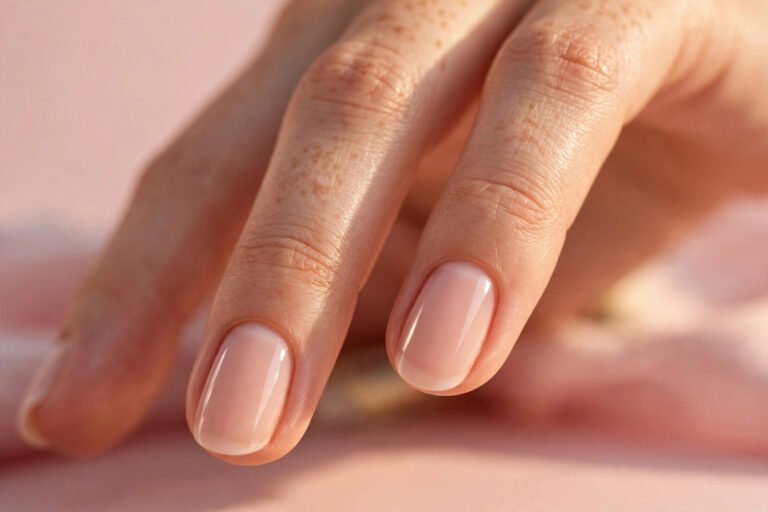
The cuticle is the thin strip of skin at the base of your nail, where the nail plate meets the finger. Beneath it sits the eponychium, the living skin fold that produces the cuticle cells. Together, they form a seal.
That seal has a job: it protects the nail matrix — the sensitive area under the base of the nail where new nail cells are formed — from bacteria, fungi, yeast, and irritants. Think of it as a gasket. When the seal is intact, germs and moisture can’t easily slip into the nail fold.
When you cut or push back cuticles too aggressively, you break that seal. Dermatologists describe this as removing the nail’s natural barrier, and once it’s gone, the area becomes vulnerable to:
- Paronychia — a painful bacterial or fungal infection of the nail fold, causing redness, swelling, and tenderness around the base of the nail
- Hangnails — torn bits of skin that catch, bleed, and invite infection when cuticles are trimmed unevenly
- Irritation and dryness — the exposed skin is more sensitive to water, chemicals, and friction
- Slower, weaker nail growth — if the matrix gets irritated or infected, new nail can grow in ridged or discolored
This is why most dermatologists advise leaving cuticles alone: they’re not cosmetic clutter, they’re functional protection.
Why Cutting Your Cuticles Is Risky
It helps to get specific about what can go wrong, because “it’s bad for you” rarely convinces anyone on its own.
1. Infection risk goes up
The nail fold is warm, moist, and full of tiny creases — exactly the environment bacteria love. Cutting the cuticle creates micro-tears in the skin, giving bacteria a direct entry point. Paronychia is the most common result: the skin around the nail becomes red, swollen, and sore, sometimes developing pus. Acute paronychia often comes from a single nick; chronic paronychia can develop when the cuticle area is repeatedly damaged and stays moist (think frequent dishwashing after aggressive trimming).
2. You can damage the nail itself
The matrix sits just beneath the cuticle area. If nippers slip or press too hard, they can bruise or cut the matrix, and the damage shows up weeks later as ridges, dents, or white spots in the growing nail. Because nails grow slowly (fingernails take about six months to fully replace), a single overzealous trim can leave a visible mark for months.
3. Cuticles grow back thicker and messier
Here’s the irony dermatologists point out: cutting cuticles doesn’t make them go away — it stimulates them. The body treats the trimmed area as a wound and sends more skin cells to repair it, so cuticles often grow back thicker, drier, and more ragged than before. People then cut them again, creating a cycle. Leaving them alone (with proper moisturizing) usually produces smoother results over time.
4. At-home tools make it worse
Salon nippers are sharp and sterilized (in reputable salons, at least). At home, people often use dull cuticle trimmers, scissors, or even nail clippers — tools that tear rather than cut cleanly. Torn cuticles mean hangnails, and hangnails tempt you to pull or bite them, which tears the skin further. Dermatologists consistently warn against pulling hangnails for this reason.
What Dermatologists Say You Should Do Instead
The good news: you can absolutely have neat, tidy-looking cuticles without cutting them. Dermatologists recommend a routine built on softening, gently pushing, and moisturizing.
Step 1: Soften first
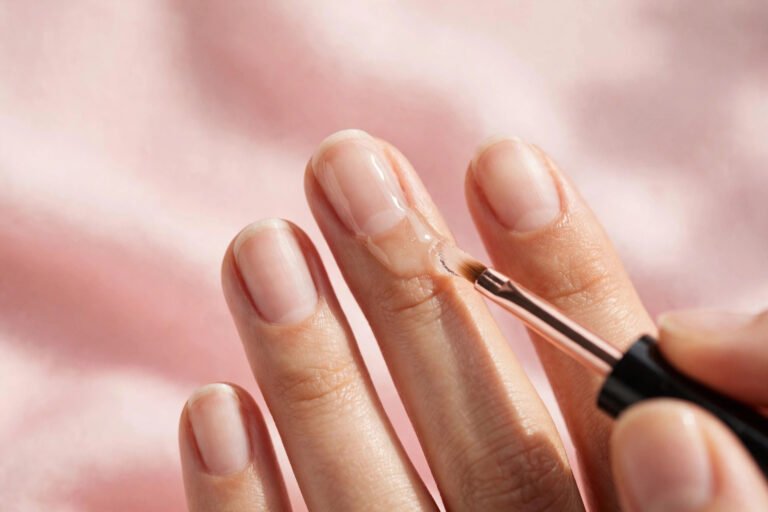
Never work on dry cuticles. Soak your fingertips in warm (not hot) water for 5–10 minutes, or apply cuticle oil/remover and let it sit for a few minutes. Softened cuticles are pliable and far less likely to tear. Doing this right after a shower works too — the steam and warmth have already done the softening for you.
Step 2: Gently push, don’t cut
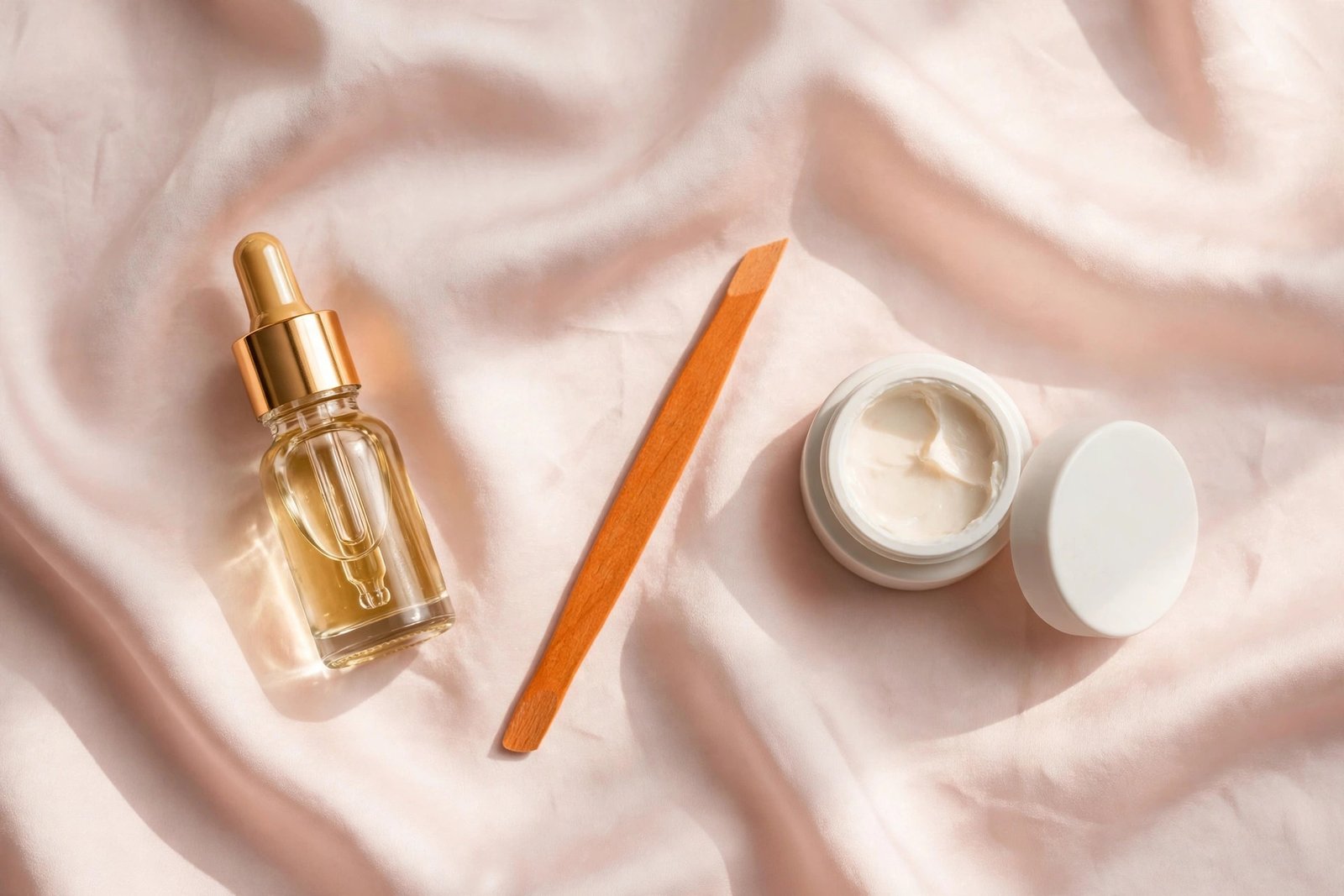
Using a soft cuticle pusher (wooden orangewood sticks are the classic, inexpensive choice; silicone-tipped pushers are even gentler), gently push the cuticle back toward the nail fold. The key word is gently — you’re nudging loosened skin, not scraping. Work at a shallow angle and stop if you feel any resistance or discomfort. The goal is a neat nail line, not exposed nail bed.
If there are small, loose flaps of dead skin (true hangnails or lifted bits), you can carefully trim only the loose flap with clean, sharp nippers — never the attached cuticle itself. And never pull a hangnail; always clip it cleanly at the base.
Step 3: Moisturize religiously
This is the step most people skip, and it’s the one dermatologists emphasize most. Cuticles are skin, and dry skin cracks, snags, and looks ragged. After every hand wash, and especially before bed:
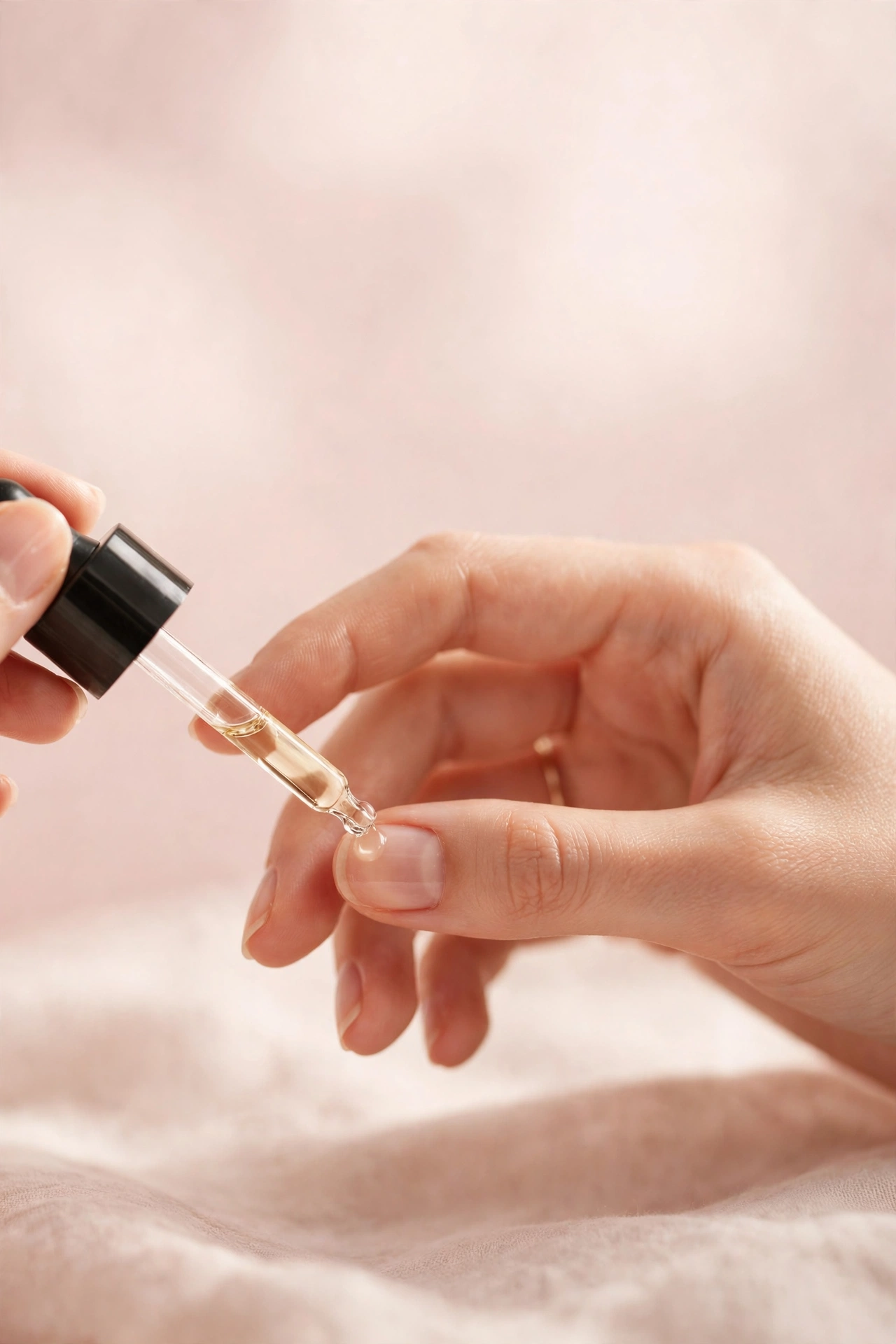
- Massage cuticle oil (jojoba-based oils are a favorite because jojoba closely resembles skin’s natural oils) into each nail base
- Follow with a rich hand cream to seal in moisture
- For very dry cuticles, an overnight treatment — oil, then cotton gloves — works wonders
Well-moisturized cuticles lie flat, look tidy, and rarely produce hangnails. Many people find that once they start moisturizing consistently, the urge to cut disappears because there’s nothing ragged left to trim.
How often?
Dermatologists suggest cuticle maintenance once a week as part of a regular routine, with daily moisturizing in between. That’s it. More frequent pushing or trimming increases the risk of irritation without any cosmetic benefit.
For a complete weekly schedule that includes cuticle care, see our nail care routine for beginners at home.
Professional Manicures vs. At-Home: What’s Different?
This is where confusion creeps in, because many salons still cut cuticles as standard practice. Here’s how to think about it:
At a salon: You can simply ask the technician not to cut your cuticles — just push them back gently. Reputable nail techs are used to this request, and many have shifted to cuticle-pushing as the default as dermatologist guidance has spread. If a salon insists on cutting or uses visibly unsterilized tools, that’s a red flag worth walking away from.
At home: You have full control, which is an advantage. Stick to pushing and moisturizing. Avoid buying cuticle nippers “just in case” — having them in the drawer makes it tempting to use them.
One exception dermatologists sometimes note: if you have a genuine hangnail (a torn, loose strip of skin), trimming just that loose piece with sterilized nippers is fine — and better than pulling it. But that’s spot-treating damage, not routine cuticle removal.
It’s also worth knowing that cuticle damage can complicate other nail services. Lifting and irritation around the nail fold are among the reasons enhancements fail early — which is why proper cuticle-area prep (gentle, not aggressive) matters. If you’ve dealt with enhancements lifting, our guide on why gel nails lift at the cuticle explains the 7 prep mistakes that cause it.
FAQ: Cuticle Questions Dermatologists Hear Most
“But my cuticles look so much better right after cutting?”
Temporarily, yes — that’s the appeal. But within a week or two they typically grow back thicker and more ragged (the repair response described above). People who switch to push-and-moisturize usually report that after 3–4 weeks, their cuticles look better than they ever did with cutting — and stay that way with far less effort.
“What about cuticle remover products?”
Cuticle removers (usually alkaline creams or gels) dissolve dead cuticle tissue chemically. Dermatologists consider them acceptable if used as directed and not overused — apply, wait the stated time, gently push, then rinse thoroughly. Don’t leave them on longer than instructed, and don’t use them more than weekly. They’re a tool for loosening, not a license to be aggressive.
“My cuticles are really overgrown — what then?”
“Overgrown” cuticles are usually just dry, unmaintained ones. Start with a week of twice-daily moisturizing and one gentle push-back session after soaking. Most people are surprised how much neater things look. If cuticles are severely thickened, cracked, or painful, see a dermatologist — don’t try to cut your way out of it.
“Can cutting cuticles cause permanent damage?”
Routine trimming won’t permanently destroy your nails, but repeated deep cutting can cause chronic inflammation of the nail fold, persistent hangnails, and long-term changes to how the cuticle area looks. In rare cases, deep matrix injury can cause permanent ridging. The risk is low for a one-time nick but real for habitual aggressive trimming.
“What if I already cut them and they’re sore?”
Keep the area clean, apply a plain moisturizer or petroleum jelly, and avoid picking at it. If you see spreading redness, increasing pain, swelling, or pus, see a doctor — those are signs of infection (paronychia), which sometimes needs medical treatment.
Key Takeaways
- Don’t cut your cuticles. Dermatologists agree: the cuticle seals and protects the nail matrix, and cutting it raises infection risk.
- Push gently instead. Soften with warm water or cuticle oil, then nudge back with an orangewood stick or silicone pusher — never scrape or force.
- Moisturize daily. Cuticle oil plus hand cream keeps cuticles flat, tidy, and hangnail-free. This single habit replaces most of the “need” to trim.
- Trim only loose hangnails — cleanly, with sterilized nippers, never by pulling.
- At the salon, just ask. Request no cuticle cutting; pushing only. Walk away from unsterilized tools.
- Give it 3–4 weeks. The push-and-moisturize routine takes a few weeks to show its full effect, but the results last with minimal upkeep.
Your cuticles aren’t the enemy — they’re doing a job. Treat them well, and they’ll return the favor with healthier, better-looking nails.
Love this? Pin it for later!