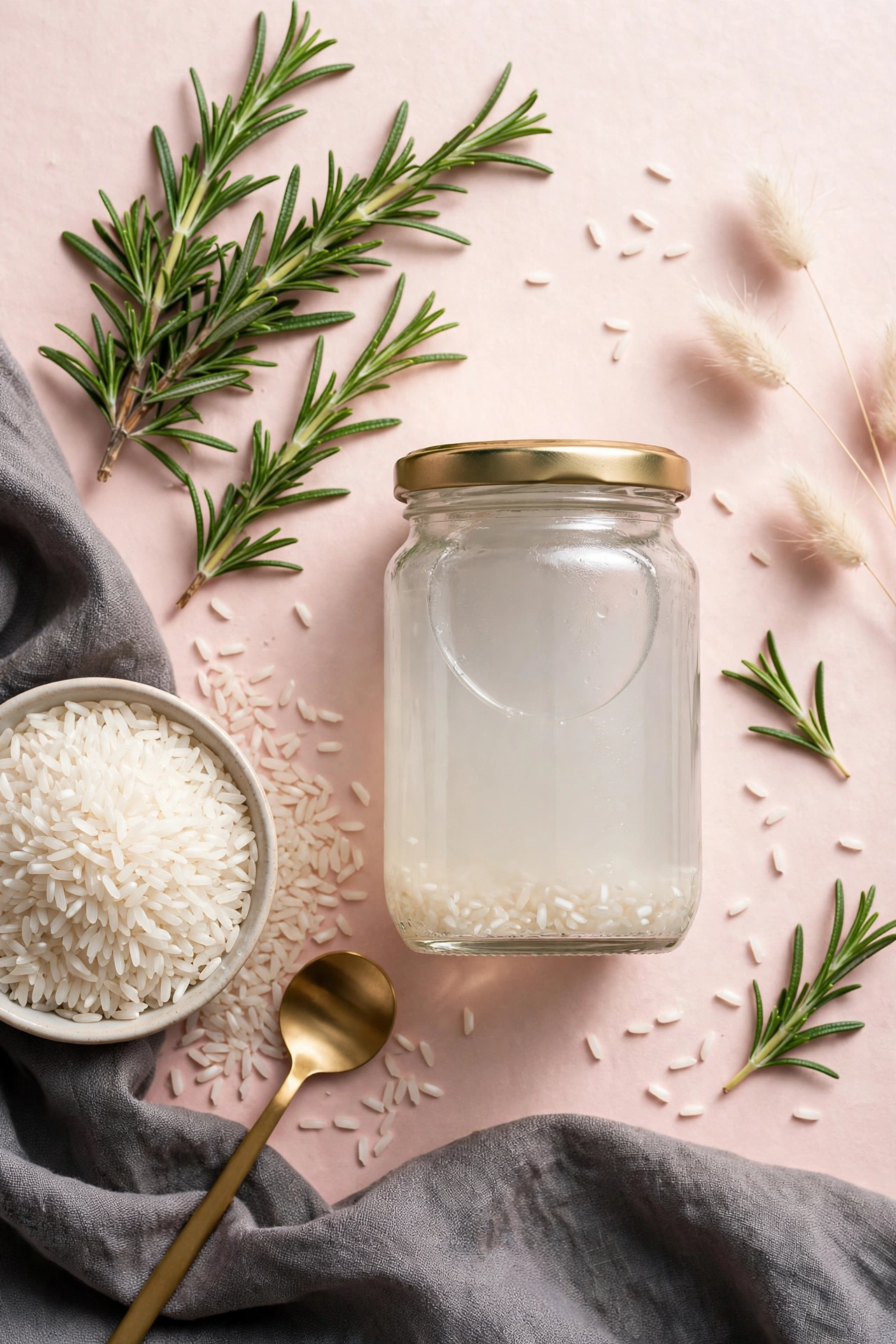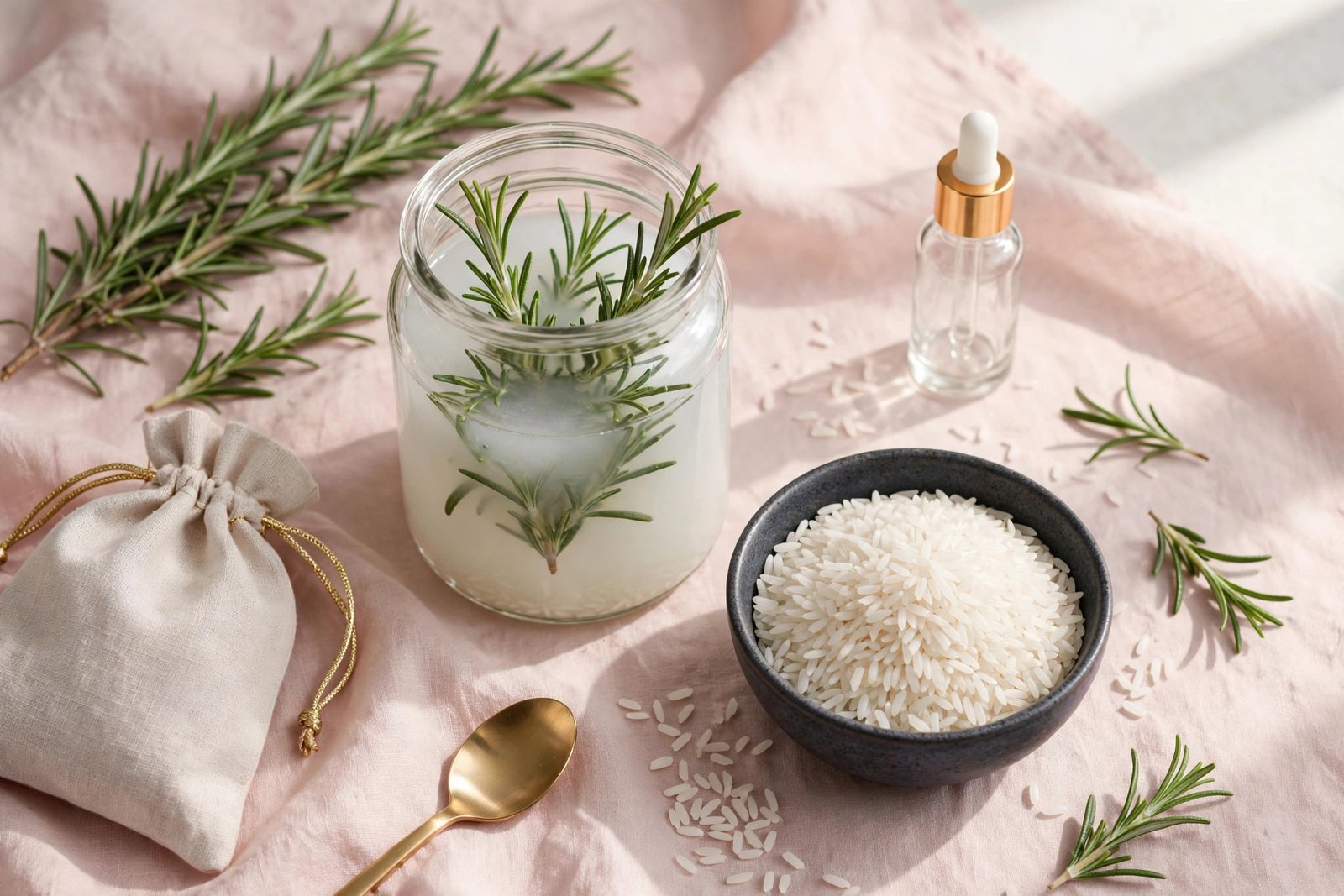
Rice Water & Rosemary Hair Rinse: DIY Recipe for Stronger Hair
Some beauty trends cycle through and disappear. Rice water and rosemary water are not those trends — they’re everywhere right now, from Pinterest’s Farm to Face movement to haircare aisles, and for good reason. Both have long histories in traditional haircare, and both are backed by plausible science: rice water delivers amino acids and a unique carbohydrate called inositol to the hair shaft, while rosemary supports scalp circulation, which is the foundation of healthy growth.
The best part? You don’t need an expensive bottle. This DIY recipe combines both ingredients into one simple rinse you can make in your kitchen. Here’s exactly how to do it.
Why Rice Water + Rosemary Is a Power Pair
What Rice Water Does for Hair
Rice water — the starchy liquid left over from soaking or boiling rice — contains amino acids, B vitamins, vitamin E, and inositol, a carbohydrate that can penetrate damaged hair and help repair it from within. It also provides a light protein boost, which can make fine or weak hair feel stronger and look shinier. Historically, the court ladies of Heian-era Japan were known for floor-length hair maintained with rice water rinses.
What Rosemary Does for the Scalp
Rosemary is rich in antioxidants and compounds like rosmarinic acid and ursolic acid. Applied to the scalp, rosemary water is associated with improved circulation — and a well-circulated scalp is simply a healthier environment for hair to grow. It’s also traditionally used to help with flakiness and to add shine. Combined with rice water’s strengthening effect on the strands themselves, you get a treatment that addresses both the scalp and the hair.
The Farm to Face Trend
Pinterest’s Farm to Face trend captures exactly this movement: simple, plant-based ingredients prepared at home instead of complex formulas. Rice water and rosemary water are two of the trend’s most-pinned staples — a rosemary and rice rinse sits right at the intersection of both.
Fermented vs. Plain Rice Water: Which to Make?
You’ll see two versions of rice water everywhere. Here’s the honest difference:
- Plain (soaked) rice water: Made by soaking uncooked rice in water for 30–60 minutes, then straining. Milder, lower effort, and less likely to cause protein overload. Best for beginners and protein-sensitive hair.
- Fermented rice water: The soaked liquid is left at room temperature for 24–48 hours until it turns slightly sour, which lowers its pH and is believed to increase the concentration of beneficial compounds. Potentially more potent — but also more likely to cause stiffness or dryness in protein-sensitive hair, and it smells stronger.
For this recipe, plain soaked rice water is the default. It’s effective, forgiving, and keeps for a few days in the fridge. Notes on fermentation are included below for those who want to try it.
What You’ll Need
- ½ cup uncooked white rice (any variety; white rice gives the cleanest rinse)
- 2–3 cups filtered or distilled water
- 2–3 sprigs fresh rosemary (or 2 tablespoons dried rosemary)
- A fine-mesh strainer or cheesecloth
- A clean jar or bottle with a lid (a squeeze bottle or old shampoo bottle works perfectly for application)
The Combined Recipe: Step by Step
Step 1: Rinse the Rice
Place the rice in a bowl, cover with water, swirl, and drain. This removes surface dust and excess starch so the final rinse is clean rather than gummy. Discard this first rinse water.
Step 2: Soak the Rice
Add 2 cups of fresh filtered water to the rinsed rice. Let it soak at room temperature for 30–60 minutes, swirling occasionally. The water will turn milky — that cloudiness is the starch and nutrients you want.
Step 3: Strain the Rice Water
Strain the liquid through a fine-mesh strainer or cheesecloth into a clean bowl or jar. Set the rice aside (it’s perfectly fine to cook and eat).
Step 4: Make the Rosemary Infusion
While the rice soaks, bring 1 cup of water to a boil, remove from heat, and add the rosemary sprigs (or dried rosemary). Cover and steep for 20–30 minutes until the liquid is deeply fragrant and amber-tinted. Strain out the rosemary and let the infusion cool to room temperature.
Step 5: Combine
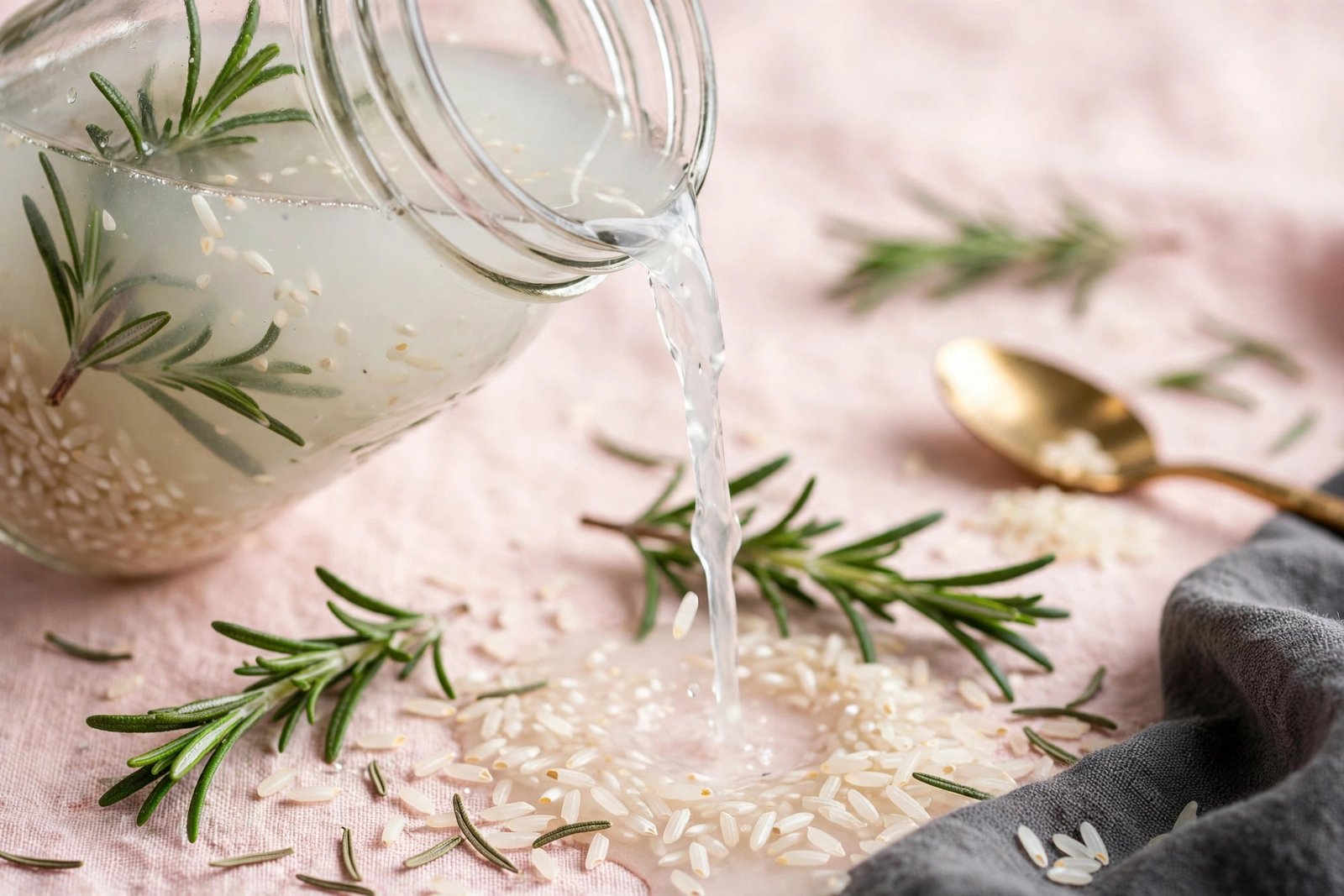
Pour the cooled rosemary infusion into the jar with the strained rice water. Stir or shake gently to combine. That’s it — your rice water and rosemary rinse is ready.
Optional: The Fermented Version
If you’d like to try fermented rice water, strain the soaked rice water into a jar, cover loosely (not sealed airtight), and leave at room temperature for 24–48 hours. It’s ready when it smells slightly sour. Then refrigerate immediately, and mix with the rosemary infusion as above. Start with the plain version first to see how your hair responds.
How to Apply the Rinse
- Start with clean, damp hair. Shampoo as usual and rinse thoroughly. The rinse works best on clean hair so nothing blocks absorption.
- Pour or squeeze the rinse through your hair. Work in sections, pouring from roots to ends. Massage into the scalp for 1–2 minutes — this is where the rosemary does its best work.
- Leave it on for 10–20 minutes. Pile hair up and clip it if you like. Ten minutes is plenty for a first try; work up to twenty as you learn how your hair responds.
- Rinse out thoroughly with lukewarm water. This is a rinse, not a leave-in — all of it should come out. Follow with conditioner on the mid-lengths and ends if your hair needs it (many people find they need less conditioner after this treatment).
- Style as usual. Hair often feels slightly different while damp — wait until it’s dry to judge the results.
For guidance on how often to repeat this treatment, see how often to use rice water.
Storage and Shelf Life
- Refrigerate always. Both plain and fermented rice water spoil quickly at room temperature.
- Plain version: Keeps 4–5 days in the fridge.
- Fermented version: Keeps up to a week refrigerated.
- The rosemary infusion keeps about a week refrigerated on its own, so you can make a larger batch and mix fresh portions as needed.
- Discard if it smells off (beyond the mild sourness of fermentation), looks slimy, or develops any mold. When in doubt, make a fresh batch — the ingredients cost almost nothing.
Who Should Avoid It (Protein Sensitivity Warning)
Rice water is a mild protein treatment, and too much protein makes some hair types stiff, dry, or brittle — a condition often called protein overload. Be cautious or skip this rinse if:
- Your hair is low-porosity and protein-sensitive (it tends to feel straw-like after protein treatments)
- Your hair is already dry, coarse, or damaged and you’ve been using lots of protein products
- You notice stiffness, tangling, or a coated feeling after the first use — that’s your hair telling you to stop
If you’re unsure, do a strand test first: apply the rinse to a small hidden section, wait, rinse, and check how it feels when dry. And balance is everything — pairing this rinse with a good moisturizing routine (like a DIY hair mask for dry hair) keeps protein and moisture in healthy proportion. Those focused on growth routines may also want to explore oiling hair for growth as a complementary step.
Key Takeaways
- Rice water delivers amino acids and inositol that help strengthen the hair shaft; rosemary supports scalp circulation for a healthier growth environment.
- Plain soaked rice water is the best starting point — milder and more forgiving than fermented.
- The combined recipe: soak rinsed rice 30–60 minutes, strain, mix with a cooled rosemary infusion (steeped 20–30 minutes).
- Apply to clean, damp hair, leave on 10–20 minutes, then rinse thoroughly — it’s a rinse, not a leave-in.
- Refrigerate and use within 4–5 days (plain) or up to a week (fermented); discard if it smells off or looks slimy.
- Protein-sensitive hair should strand-test first and stop if hair feels stiff or straw-like.
Frequently Asked Questions
Can I use brown rice instead of white rice?
Yes. Brown rice works, though it produces a slightly different nutrient profile and the rinse may be a touch cloudier. White rice is simply the most common choice because it’s what most kitchens have on hand.
Does the rice water rinse replace conditioner?
Not exactly. It’s a treatment applied before conditioning. Many people find they need less conditioner afterward because hair feels smoother, but very dry or long hair still benefits from conditioner on the ends after rinsing the treatment out.
Can I leave rice water in my hair overnight?
This recipe is designed as a rinse-out treatment, and leaving it in isn’t recommended — extended exposure increases the risk of protein stiffness and scalp irritation. Stick to the 10–20 minute window.
Why does my fermented rice water smell bad?
A mild sour smell is normal for fermentation. A strongly rotten or foul smell means it’s spoiled — discard it and start fresh. Keeping everything refrigerated after the fermenting window prevents this.
Can I add essential oils to the rinse?
A drop or two of rosemary essential oil can boost the scent, but it’s optional and not necessary — the infusion already carries rosemary’s properties. Never add undiluted essential oils directly to the scalp; always mix them into the full batch of rinse first, and skip them entirely if your scalp is sensitive.
Love this? Pin it for later!