How to Remove Self Tanner Fast: Fix Mistakes & Start Over
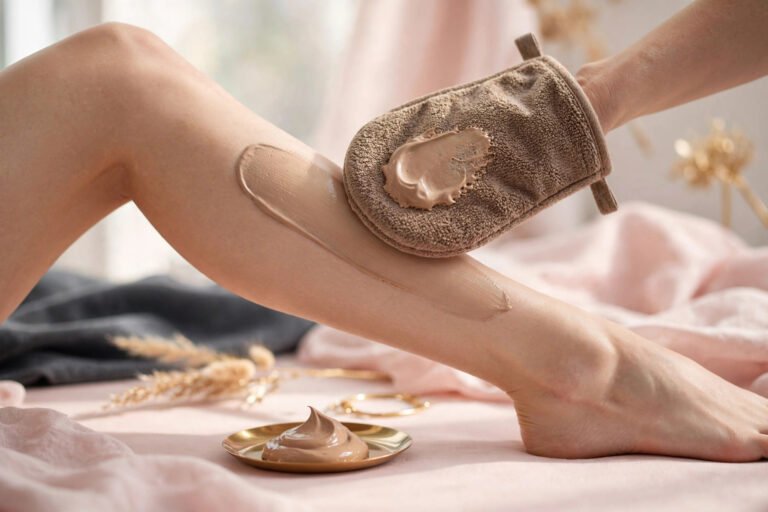
It happens to everyone who self tans: the streaky ankle, the too-dark hands, the patch that developed three shades deeper than the rest, or the full-body result you simply hate. The panic is real, but the situation is fixable. Self tanner sits only in the outermost dead skin cells, which means it can be lifted — you just need to accelerate what your skin would do naturally over a week.
This guide covers nine methods for removing self tanner fast, ordered from gentlest to strongest, plus targeted fixes for common problem areas and advice on when to fix versus when to start over. And for next time, the streak-free application guide will help you avoid needing this page at all — though every tanner keeps it bookmarked just in case.
First: Assess the Damage
Before reaching for the strongest method, figure out what you’re dealing with — the fix depends on the problem.
- Light streaks or slightly uneven patches: Usually fixable with one round of gentle exfoliation, or evened out by building up the light areas (see below).
- Dark spots on knees, elbows, hands, or feet: Targeted treatment on just those areas — you don’t need to strip your whole body.
- Overall too dark: A full-body removal session with one of the stronger methods, possibly repeated the next day.
- Orange tone: Often improves significantly with exfoliation plus time; the warmest tones sit in the uppermost cells and lift first.
- Fresh mistake (under 1 hour since application): If the tanner hasn’t developed yet, you can often wash it off with soap and water right now — DHA needs hours to react. Act fast.
Fix or even out? If most of your tan looks good and only small areas are off, it’s usually easier to even out — apply gradual tanning lotion to the light areas over a day or two — than to strip everything and start over. Reserve full removal for genuinely unsalvageable situations.
The 9 Fastest Removal Methods
1. Exfoliating Mitt + Warm Water (Gentle, Best First Step)
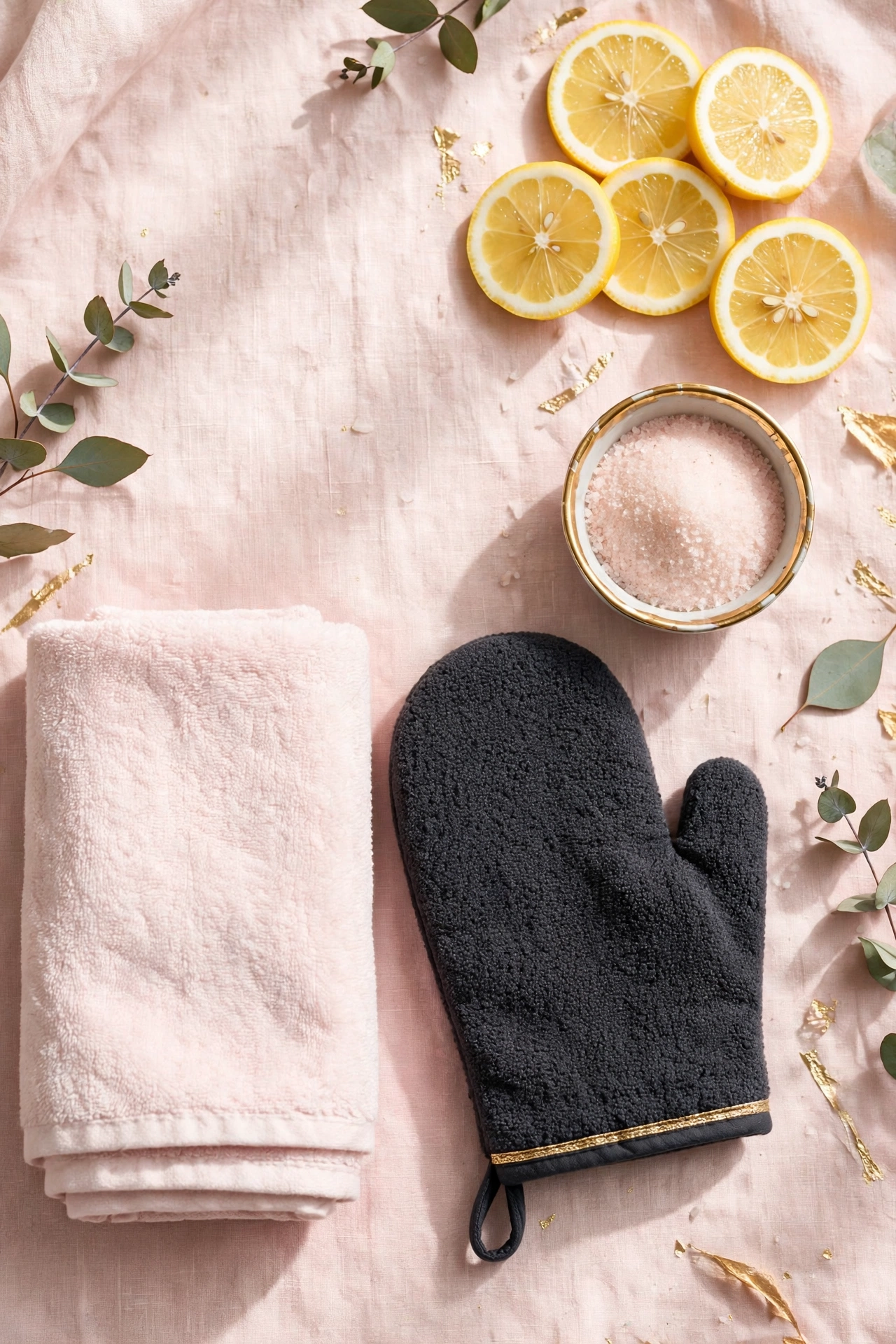
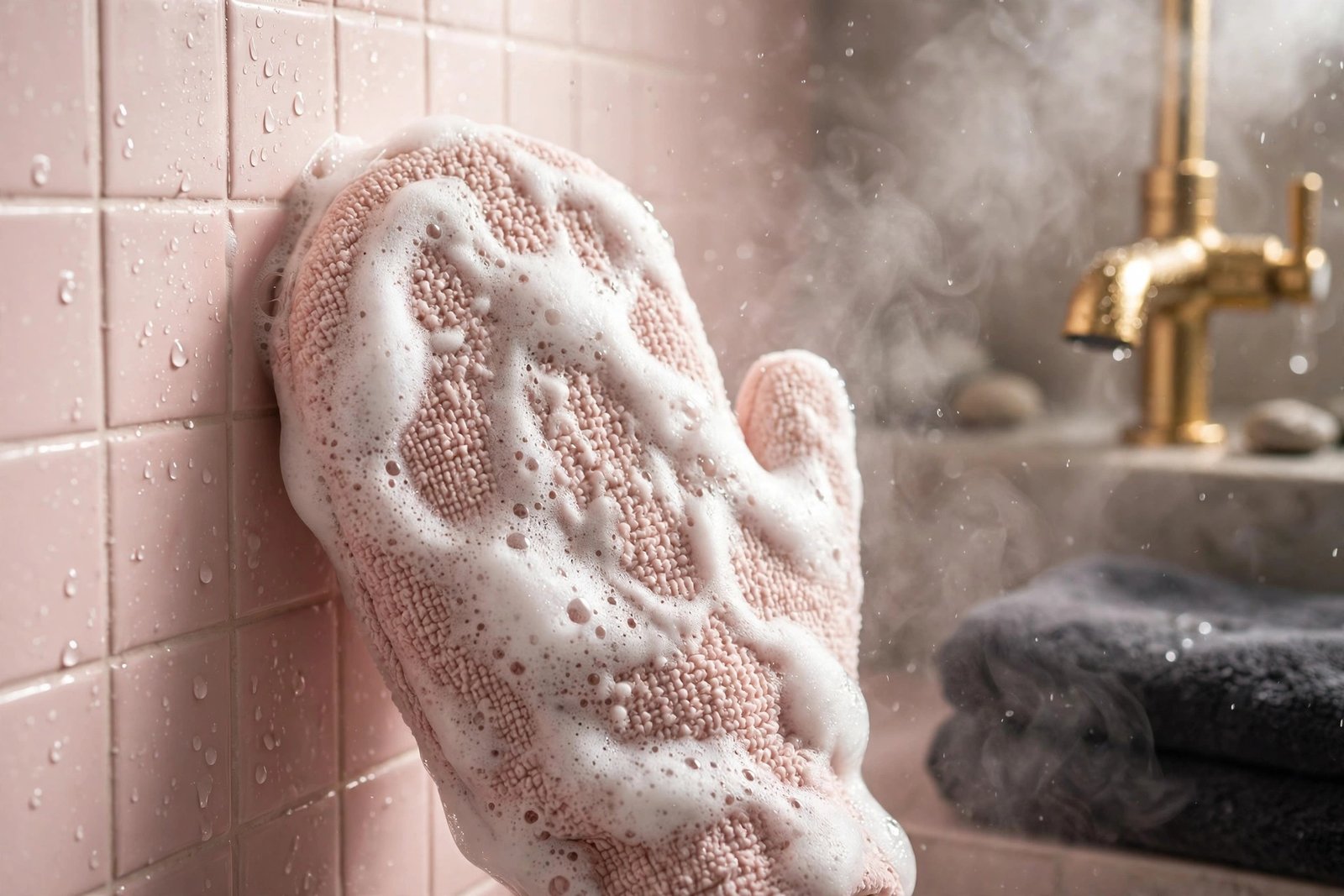
The workhorse of tan removal. Soak in a warm bath or stand in a warm shower for 10–15 minutes to soften the skin, then buff your entire body with an exfoliating mitt (the textured Korean-style mitts work best) using firm, circular motions. You’ll see dead skin — and tanner — rolling off. This alone removes a significant amount of color and is the right first step for almost every situation.
Best for: Overall fading, patchy areas, first attempt at any fix.
Time: 15–20 minutes.
2. Body Scrub (Gentle to Moderate)
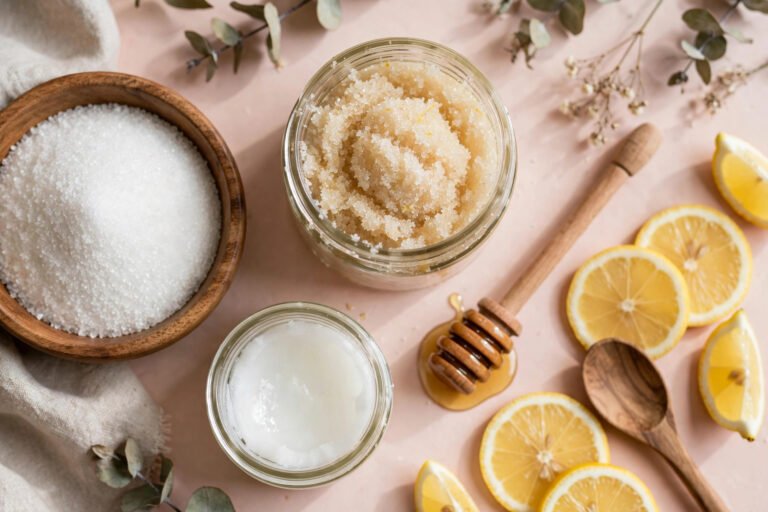
A grainy body scrub with sugar or salt provides mechanical exfoliation similar to the mitt but with more targeted control — useful for working on specific dark spots like knees or ankles. Massage the scrub into damp skin in circular motions for 30–60 seconds per area, then rinse. For technique details, the body exfoliation guide covers scrub methods in depth.
Best for: Targeted dark spots, sensitive areas where a mitt feels too harsh.
Time: 10–15 minutes.
3. Baking Soda Paste (Moderate)
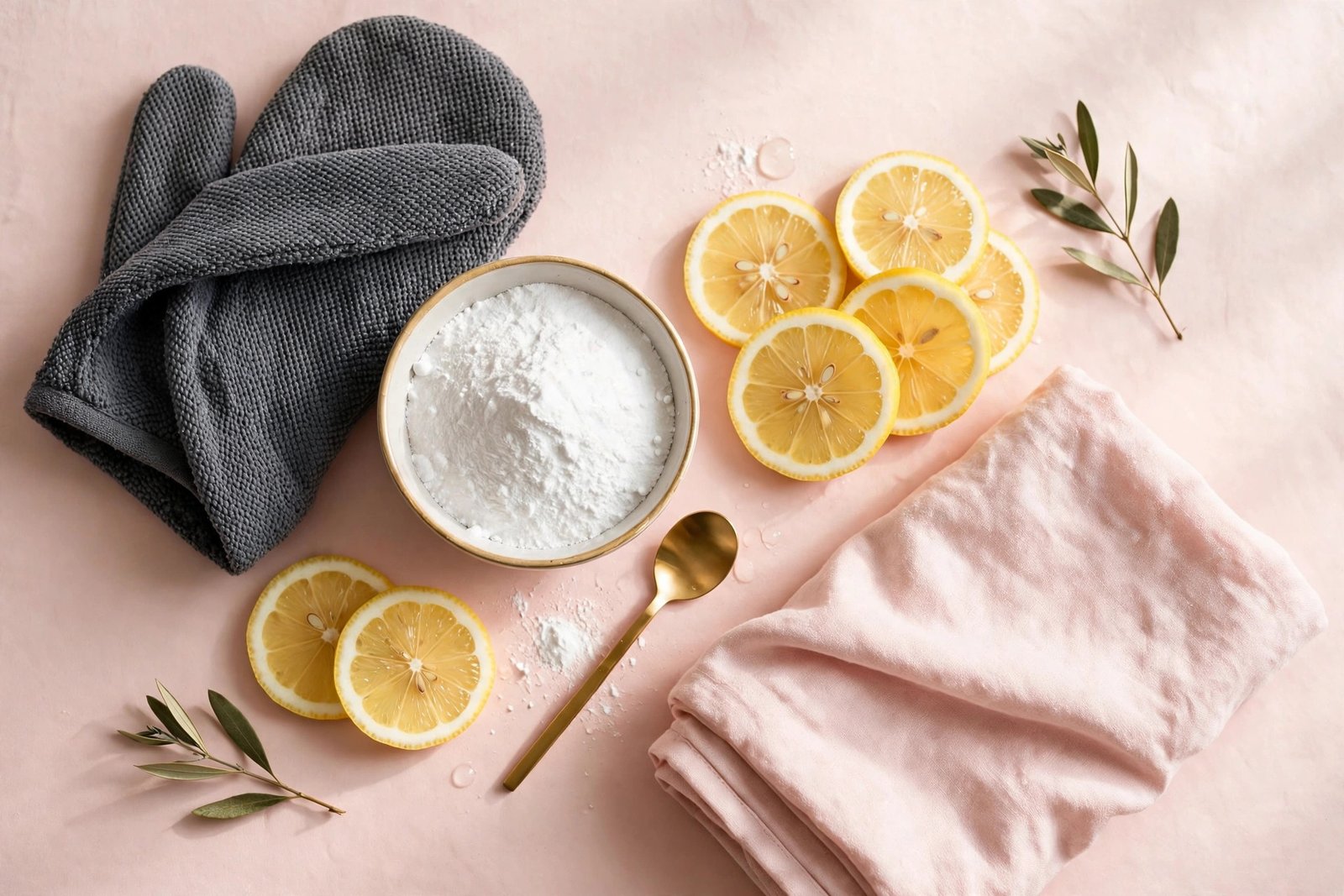
Baking soda is a mild alkali and a gentle physical exfoliant — the combination lifts tanner effectively. Mix 2–3 tablespoons of baking soda with just enough water (or coconut oil, for less dryness) to form a thick paste. Massage it into the tanned areas in circular motions, leave it on for 5–10 minutes, then rinse in a warm shower. Many people find this the best balance of effectiveness and gentleness for a full-body fade.
Best for: Overall too-dark tans, large uneven areas.
Time: 15–20 minutes.
Caution: Can be drying — moisturize well afterward.
4. Lemon Juice (Moderate, Targeted)
The citric acid in lemon juice acts as a mild chemical exfoliant and has a slight lightening effect. Rub a halved lemon directly over dark spots — knuckles, elbows, ankles — or soak a cotton pad in lemon juice and press it onto the area for 5–10 minutes before rinsing. It’s best for small, stubborn spots rather than full-body removal.
Best for: Dark knuckles, stained cuticles, small stubborn patches.
Time: 10 minutes per area.
Caution: Don’t use on broken, irritated, or freshly shaved skin — it will sting. And don’t go into the sun with lemon juice on your skin (it increases photosensitivity); rinse thoroughly.
5. Whitening Toothpaste (Moderate, Very Targeted)
The mild abrasives in whitening toothpaste can lift tanner from tiny areas — stained cuticles, between fingers, a dark line at the wrist. Dab a small amount onto the spot, rub gently with a toothbrush or your fingertip for a minute, then rinse. This is a precision tool, not a body-wide solution.
Best for: Cuticle stains, small lines, between fingers and toes.
Time: 2–3 minutes per spot.
6. Oil Soak + Exfoliation (Moderate)
Oil loosens the bond between tanner and skin. Apply baby oil, coconut oil, or olive oil generously to tanned areas, leave it for 15–30 minutes (or apply before a warm bath and soak), then exfoliate with a mitt or scrub. The oil softens the dead cells holding the color, making mechanical exfoliation dramatically more effective. This combo is one of the most effective full-body methods.
Best for: Stubborn overall tans, dry skin that can’t handle harsh scrubbing alone.
Time: 30–45 minutes total.
7. Hair Removal Cream (Strong, Use Cautiously)
Depilatory creams contain chemicals that break down keratin — the protein in both hair and the dead skin cells holding your tan. Applied to tanned skin for the minimum recommended time, they can strip significant color. This is effective but aggressive: patch-test first, never exceed the product’s timing, and don’t use on the face, broken skin, or sensitive areas.
Best for: Emergency removal of a very dark or very wrong tan on body areas.
Time: 10–15 minutes.
Caution: This is the harshest method here. Moisturize heavily afterward and don’t re-tan for at least 24–48 hours.
8. Swimming Pool / Chlorine (Moderate, Passive)
Chlorinated water fades self tanner noticeably — a 30–45 minute swim can lift a full shade. It’s not the fastest method, but if you have pool access, it’s an easy passive fade. Follow with exfoliation in the shower afterward for maximum effect.
Best for: Gradual, low-effort fading over a day or two.
Time: 30–45 minutes of swimming.
9. Professional Tan Remover Products (Moderate)
Brands that sell self tanner often sell dedicated tan removers or “tan erasers” — usually exfoliating formulas with AHAs or urea designed to dissolve tanner. They work well and are formulated to be less irritating than DIY strong methods. If you self tan regularly, keeping one on hand is worth it.
Best for: Regular self tanners who want a reliable, skin-friendly reset option.
Time: Per product instructions, usually 10–20 minutes.
Targeted Fixes for Common Problem Areas
Orange or Stained Palms
The classic giveaway. Scrub palms with a baking soda paste or an exfoliating mitt immediately — palms shed skin quickly, so this usually resolves within a day. Prevention reminder: wash hands thoroughly right after application, or wear gloves.
Dark Knees, Elbows, and Ankles
Apply the baking soda paste or lemon juice to just these areas, leave for 5–10 minutes, then buff with an exfoliating mitt. These areas hold color stubbornly because the skin is thick, so you may need two rounds. Next time, use only residual product on these zones — the streak-free guide explains the technique.
Stained Nails and Cuticles
Whitening toothpaste or lemon juice on a cotton pad, rubbed gently around each nail. An old toothbrush helps get into the cuticle edges. Petroleum jelly before your next application prevents this entirely.
Dark Lines in Creases (Wrists, Inner Elbows, Behind Knees)
These are product that pooled in folds during development. Gentle exfoliation with a mitt usually lifts them in one session since the color sits superficially. A baking soda paste left on the line for a few minutes helps for stubborn ones.
Tan on Clothes or Sheets
Not skin, but the related panic: most self tanner guide color washes out of fabric with regular laundry. Treat promptly — rinse with cold water, then wash as normal. Developed DHA stains are harder, but the cosmetic bronzer (which is most of what transfers) comes out easily.
After Removal: Skin Recovery
Every removal method exfoliates, and the stronger ones stress the skin. Afterward:
- Moisturize generously. Use a rich, fragrance-free body lotion — your barrier needs support after aggressive exfoliation. The body lotions for dry, bumpy skin roundup includes good recovery options.
- Wait before re-tanning. Give skin 24–48 hours after a full removal before applying tanner again, especially after strong methods. Freshly exfoliated, sensitized skin absorbs DHA unevenly — re-tanning too soon restarts the whole problem cycle.
- Skip harsh actives for a day. No retinol, strong AHAs, or acne treatments on freshly scrubbed areas until any redness calms.
Key Takeaways
- Self tanner can always be removed or faded — it sits only in dead surface skin cells.
- Start gentle: warm soak + exfoliating mitt fixes most problems. Escalate only if needed.
- Baking soda paste is the best DIY all-rounder; oil soak + exfoliation is the most effective combo; lemon juice and whitening toothpaste handle small targeted spots.
- Fix small areas rather than stripping everything when most of the tan looks good — or even out light areas with gradual tanner.
- Moisturize after any removal method, and wait 24–48 hours before re-tanning.
- If the tanner was applied less than an hour ago and hasn’t developed, soap and water may remove it entirely.
FAQ
How fast can I remove self tanner completely?
A single 20–30 minute session with an exfoliating mitt after a warm soak removes most of a tan. Very dark or stubborn tans may need a second session the next day. Complete removal in under an hour is realistic for light-to-medium tans.
Does lemon juice really remove fake tan?
Yes, for small areas. The citric acid gently exfoliates and lightens the stained dead cells. It works best on concentrated spots like knuckles and ankles rather than full-body removal, and it shouldn’t be used on irritated skin.
Will scrubbing damage my skin?
Normal exfoliation with a mitt or scrub is safe for intact skin, but be firm — not aggressive. If skin turns red and sore, stop. Always moisturize afterward, and avoid strong methods (like depilatory cream) on sensitive or broken skin.
Can I reapply self tanner right after removing it?
Wait 24–48 hours. Freshly exfoliated skin is sensitized and absorbs DHA unevenly, so immediate reapplication often produces a worse result than the one you just removed.
How do I remove self tanner from my hands quickly?
Scrub with baking soda paste or an exfoliating mitt — hand skin turns over fast, so color lifts within a day. For stained cuticles, whitening toothpaste with an old toothbrush works precisely.
Conclusion
A bad fake tan feels like a disaster in the moment, but it’s one of the most fixable beauty mistakes there is — the color is temporary by design, and every method here just speeds up what your skin was going to do anyway. Keep an exfoliating mitt and some baking soda in your bathroom, and no tanning mishap will ever ruin your week again.
And when you’re ready for round two, set yourself up for success: review the full method in the beginner’s self tanner guide, perfect your streak-free technique, and choose a fair-skin-friendly formula if that’s your skin tone. The best removal method is the one you never need.
Love this? Pin it for later!