How to Fix Chronically Chapped Lips (For Good)
There’s a special frustration reserved for lips that never stay healed. You apply balm, they feel better for an hour, then they’re cracking again. You try a new “intensive repair” stick, same story. If your lips have been chapped for weeks or months — peeling, splitting, stinging, maybe cracking at the corners — you’re not dealing with ordinary dryness. You’re dealing with a damaged lip barrier, and it needs a different approach than another layer of balm.
This guide gives you that approach: the lip-barrier repair method, the ingredients that genuinely heal versus the ones secretly keeping you chapped, a 14-day plan to break the cycle, and clear signs for when it’s time to see a doctor. Once your lips are healed, our complete lip care routine guide shows you how to keep them that way permanently.
Key Takeaways
- Chronically chapped lips usually mean a damaged lip barrier — the fix is barrier repair, not more balm.
- Many popular lip balms contain irritants (menthol, camphor, phenol, salicylic acid, fragrance) that keep the cycle going.
- The repair method: stop all irritants, hydrate with humectants, seal with a plain occlusive — for 14 days straight.
- Lip licking, picking flakes, and matte long-wear lipsticks are the top behavioral causes of non-healing lips.
- Cracking at the mouth corners (angular cheilitis) or persistent single cracks may need medical treatment, not skincare.
- Once healed, a simple maintenance routine prevents relapse — most people need only 2–3 products.
Why Your Lips Won’t Heal: The Barrier Problem
What the lip barrier is
Like all skin, lips have a barrier — a thin layer of lipids and dead cells that keeps water in and irritants out. On lips, this barrier is exceptionally thin and has no oil glands backing it up. When it’s intact, lips stay smooth with minimal help. When it’s damaged — by irritants, over-exfoliation, harsh weather, or constant licking — water escapes rapidly, irritants penetrate easily, and inflammation keeps the tissue from repairing itself.
How the cycle sustains itself
Here’s the trap: damaged barrier → dryness and cracking → you apply an irritating balm for relief → the irritants further damage the barrier → worse dryness → more balm. Add lip licking (saliva enzymes irritate the lip border) and flake-picking (tears healthy tissue) and the cycle becomes self-perpetuating. People can stay in it for months or years without realizing their “treatment” is the cause.
Breaking the cycle means doing less, not more: strip the routine to zero irritants, give the barrier what it needs to rebuild, and protect it while it does.
The Balms Making It Worse
Before the repair plan, audit what you’re currently using. These ingredients are common in lip products and are frequent culprits behind non-healing lips:
- Menthol, camphor, and phenol — the “medicated” tingle. These are counter-irritants: they create a cooling sensation that masks discomfort while drying and irritating the tissue. If your balm tingles, it’s suspect number one.
- Salicylic acid — marketed in “exfoliating” lip products. On already-damaged lips, it strips the fragile barrier further. Fine for intact lips occasionally; terrible for chapped ones.
- Fragrance and flavoring — mint, cherry, vanilla flavor oils are common contact allergens on lips. “Natural” doesn’t mean non-irritating.
- Eucalyptus and peppermint oils — sensitizing essential oils that irritate compromised skin.
- Lanolin — a great occlusive for many, but a known allergen for some. If plain products still sting, lanolin sensitivity is worth considering.
- Chemical sunscreen filters (in lip SPF) — avobenzone and oxybenzone irritate some people’s lips. Mineral SPF lip balms (zinc oxide) are the gentler alternative during repair.
Check every lip product you own — balm, lipstick, liner, gloss, night treatment. During the repair phase, anything with the above goes in a drawer. For choosing replacements, our roundup of the best lip balm for dry lips focuses on genuinely healing formulas.
The Lip-Barrier Repair Method
This is the core of the fix — a deliberately boring routine that gives your lips everything they need and nothing they don’t. Follow it for 14 days.
Phase 1: The reset (days 1–3)
Stop everything except the essentials. No lipstick, no gloss, no scrubs, no plumping products, no flavored balms. The only products touching your lips:
- A gentle cleanser (your regular face wash is fine) to remove the day’s residue — no scrubbing.
- A plain occlusive — petrolatum (plain Vaseline) is the gold standard here. It’s hypoallergenic, maximally protective, and gives the barrier a sealed environment to repair itself.
Apply the occlusive generously and often — after eating, after drinking, before bed, whenever lips feel tight. The goal is simple: lips should never feel dry and exposed during these three days.
Phase 2: Rebuild (days 4–10)
Once the worst rawness calms, add hydration under the occlusive:
- Morning: On slightly damp lips, press a thin layer of a humectant product (hyaluronic acid serum or a glycerin-based hydrating balm), then seal with petrolatum.
- Evening: Same layering, with a thicker occlusive seal. Consider “lip slugging” — a generous petrolatum layer overnight, the lip equivalent of skin slugging.
- Still banned: exfoliants, actives, fragrance, color products. Let the barrier rebuild without interruption.
Most people notice a real turning point around day 5–7: less tightness, flakes diminishing, no new splits forming.
Phase 3: Stabilize (days 11–14)
If lips feel consistently comfortable — no tightness between applications, no new cracking — you can begin reintroducing one product at a time, starting with a simple non-irritating balm. Introduce slowly: one new product every 2–3 days, so if irritation returns you know exactly what caused it. Keep the occlusive seal at night indefinitely — it’s cheap insurance.
If lips aren’t improving by day 10, don’t push through — see the “when to see a doctor” section below.
Ingredients That Actually Heal
During and after repair, these are the ingredients worth seeking:
- Petrolatum — the single most effective lip barrier protector. Unfashionable, unbeatable.
- Ceramides — the lipids your barrier is made of; topical ceramides support rebuilding.
- Hyaluronic acid and glycerin — humectants that pull water into lip tissue (apply to damp lips).
- Squalane — lightweight, non-irritating emollient that supports the barrier.
- Shea butter — nourishing emollient rich in fatty acids; good in balms for the maintenance phase.
- Colloidal oatmeal — calms irritation and itching on compromised lips.
- Zinc oxide (in lip SPF) — gentle mineral sun protection for the maintenance phase.
Notice what’s absent: no tingle, no “active” exfoliants, no fragrance. Healing is quiet work.
The Behavioral Fixes (Non-Negotiable)
Products alone won’t fix chronically chapped lips if the behaviors continue. These four changes matter as much as the routine:
Stop licking, completely
Saliva contains digestive enzymes (amylase, lipase) that break down the lip border, and rapid evaporation steals moisture. Every lick sets healing back. Keep plain balm within arm’s reach at all times during the repair phase and apply instead of licking — make the replacement easier than the habit.
Stop picking and peeling
Pulled flakes tear living tissue underneath, creating raw patches that scab, then flake worse. If a flake is catching, soften it with occlusive and let it release on its own. No exceptions during the 14 days.
Pause the matte lipsticks
Long-wear and matte formulas achieve their staying power by dehydrating. During repair they’re banned; afterward, reserve them for shorter wear and always remove thoroughly. Creamy formulas over a balm base are the lip-friendly default.
Address nighttime mouth breathing
If you wake up with lips drier than when you went to sleep despite the overnight seal, you may be mouth-breathing through congestion. A humidifier helps; persistent congestion deserves a doctor’s visit. Winter dryness compounds all of this — our dry lips winter remedies covers the seasonal survival kit.
What About DIY Remedies?
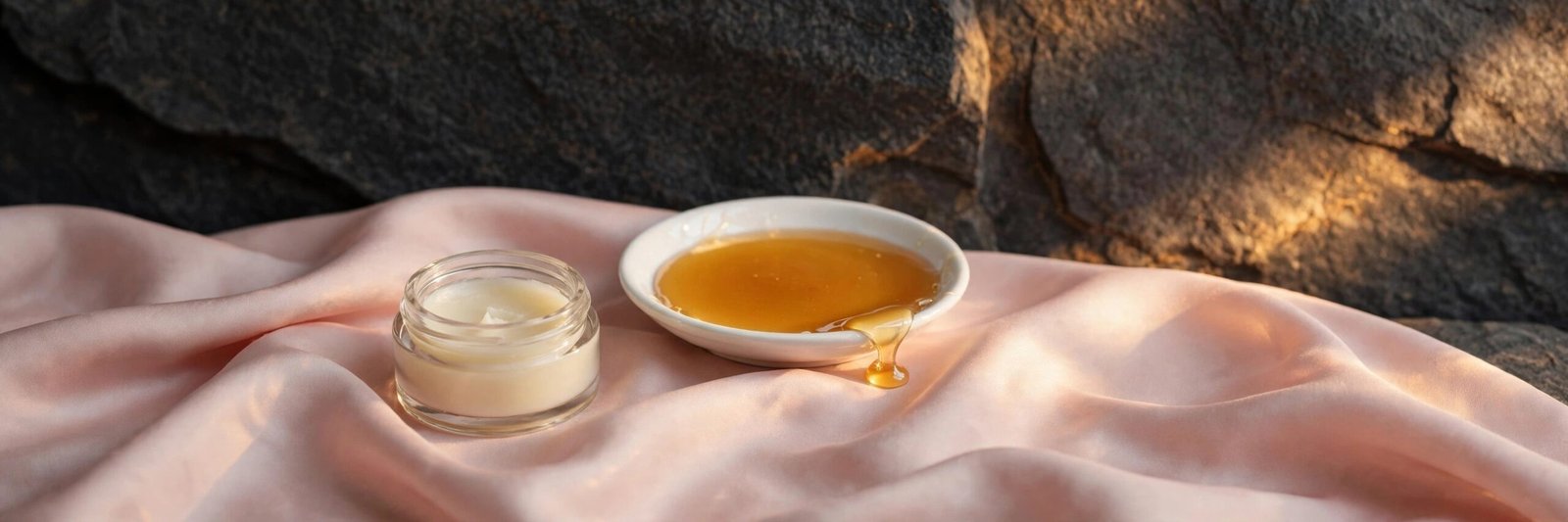
Simple homemade options can support the repair phase. Plain coconut oil works as a basic emollient (though it’s less occlusive than petrolatum, so it’s better as a daytime layer than a night seal). Honey has genuine humectant and mild antibacterial properties — a thin layer under your occlusive for 10 minutes, then sealed, is a reasonable soothing treatment. Our DIY coconut oil lip balm recipe gives you a clean, customizable balm base without the irritants hiding in commercial formulas.
Skip the DIY “hacks” involving lemon juice, baking soda scrubs, or cinnamon plumping — acids and irritants on a damaged barrier are exactly what you’re trying to escape.
When to See a Doctor
Most chronically chapped lips respond to the barrier repair method. But some situations need medical care, not skincare:
- Angular cheilitis — painful cracking, redness, or crusting specifically at the mouth corners. Often fungal or bacterial, sometimes linked to B-vitamin or iron deficiency. Needs diagnosis and usually prescription treatment.
- A single crack that won’t heal after 2–3 weeks of proper care — persistent fissures can indicate infection or, rarely, something needing biopsy.
- Swelling, blistering, or spreading redness — suggests allergic contact cheilitis or infection (including cold sores/herpes simplex, which need antiviral treatment, not balm).
- Eczema on or around the lips — atopic or contact dermatitis of the lip area often needs prescription-strength care.
- No improvement after 14 days of diligent barrier repair — something beyond simple barrier damage is going on.
Don’t feel you’ve “failed” if you need a doctor — some lip conditions are medical, and getting the right diagnosis saves months of guessing.
The 14-Day Plan at a Glance
| Days | Do | Don’t |
|---|---|---|
| 1–3 | Plain petrolatum, applied often; gentle cleansing | All other lip products, color, scrubs |
| 4–10 | Add humectant under occlusive; overnight lip slugging | Exfoliants, fragrance, plumpers, mattes |
| 11–14 | Reintroduce one gentle product at a time | Multiple new products at once; picking flakes |
| 15+ | Transition to maintenance routine | Returning to irritating old favorites |
Print it, stick it on the mirror, and follow it literally. The people who succeed with this method are the ones who commit to the boring simplicity of it — no experimenting mid-repair, no “just one” application of the old favorite balm.
Frequently Asked Questions
How long does it take to fix chronically chapped lips?
With diligent barrier repair, most people see meaningful improvement within 7–10 days and full resolution in 2–4 weeks. Lips that have been chapped for months may take the full month — the barrier rebuilds at skin’s natural turnover pace, and there’s no shortcut.
Why do my lips get chapped even though I drink lots of water?
Hydration helps, but chronically chapped lips are usually a barrier problem, not a water-intake problem. If the barrier is damaged and irritants keep hitting it, no amount of water fixes it. Repair the barrier first; internal hydration supports but doesn’t replace that.
Is it bad to use lip balm every day?
Not if it’s the right balm. Plain, non-irritating balms used daily are perfectly fine and genuinely protective. The problem is balms with menthol, camphor, phenol, salicylic acid, or fragrance — those create dependency by irritating the lips they claim to heal.
Can chapped lips be a sign of something serious?
Usually not — most chronic chapping is barrier damage plus irritants. But persistent corner cracking (angular cheilitis), non-healing fissures, or discoloration warrant a doctor’s visit to rule out infection, deficiency, or dermatitis. When in doubt, get checked.
Should I exfoliate chapped lips?
Not while they’re actively chapped. Exfoliating damaged lips strips the fragile barrier further and delays healing. Wait until lips are fully healed (comfortable for at least a week), then exfoliate gently once weekly as maintenance — never on cracked or raw lips.
What’s the single best product for chronically chapped lips?
Plain petrolatum. It’s the least likely to irritate, the most effective at preventing water loss, and costs almost nothing. Everything else in the repair method is supporting cast. If you buy one thing, make it the plain tub.
Fix It Once, Keep It Fixed
Chronically chapped lips aren’t a life sentence — they’re a solvable problem with a specific cause: a damaged barrier kept damaged by irritants and habits. Strip everything back, hydrate under a plain occlusive seal, stop the licking and picking, give it fourteen disciplined days, and most lips come back. Then lock in the win with a real maintenance system — our lip care routine guide is the permanent version of everything you learned here, and a clean homemade option like our DIY coconut oil lip balm keeps irritants out of your daily rotation for good. Your lips have been asking for less, not more. Now you know.
Love this? Pin it for later!