Rosacea Triggers to Avoid: The Complete List
You can use the gentlest products on earth and still flare if your triggers are running the show. Rosacea is a trigger-driven condition: flares of redness, flushing, and bumps are set off by specific exposures — heat, sun, certain foods and drinks, stress, and irritating skincare — that vary from person to person. Understanding and managing your triggers is, for many people, the single highest-impact thing they can do for their rosacea.
This guide covers the 15 most commonly reported rosacea triggers, why each one provokes flares, and a practical method for identifying your own personal list. If you haven’t read the full routine yet, start with the complete rosacea skincare guide — triggers and skincare work best together.
Key Takeaways
- Sun exposure is the most commonly reported rosacea trigger — daily mineral sunscreen is the single most important preventive step.
- Heat (weather, showers, saunas, spicy food, hot drinks) triggers flushing by dilating facial blood vessels.
- Common dietary triggers: alcohol (especially red wine), spicy foods, and very hot beverages — but triggers are individual, so track yours.
- Stress, intense exercise, and harsh skincare products (fragrance, alcohol, strong acids) round out the top trigger categories.
- A 2–4 week trigger diary is the most reliable way to identify your personal flare-up causes.
This article is for informational purposes only and is not medical advice. Skin conditions vary — see a dermatologist for diagnosis and treatment.
How Rosacea Triggers Work
In rosacea-prone skin, the blood vessels and immune cells in the face overreact to stimuli that most people’s skin shrugs off. Heat, UV radiation, certain chemicals in food and drink, and emotional stress all activate pathways — including the TRP (transient receptor potential) channels on nerve endings and the innate immune system — that cause blood vessels to dilate and inflammatory mediators to flood the skin. The result: flushing, persistent redness, and sometimes bumps.
The practical upshot is that triggers are not “bad for everyone” — they’re specific to your skin’s reactivity. Large patient surveys (notably those by the National Rosacea Society) have found that more than 80% of rosacea patients can identify at least one personal trigger, and the most commonly cited ones appear again and again. Here they are, grouped by category.
Heat & Weather Triggers
1. Sun exposure
The number one reported trigger. UV radiation provokes inflammation and damages blood vessel walls over time, making redness more persistent. Management: broad-spectrum mineral SPF 30+ every single day, wide-brimmed hats, seeking shade between 10am and 4pm, and reapplying sunscreen during extended outdoor time. Don’t skip sunscreen on cloudy days or in winter — UV triggers flares year-round.
2. Hot weather and humidity
High ambient temperatures dilate facial blood vessels directly. On hot days: stay in air-conditioned spaces when possible, carry a thermal water mist or fan, sip cold water frequently, and schedule outdoor exercise for early morning or evening.
3. Hot showers, baths, and saunas
Hot water on the face is a potent flushing trigger, and saunas combine heat with humidity. Switch to lukewarm showers, keep your face out of the direct hot stream, and skip saunas and steam rooms — or at least cool your face with a cold cloth afterward.
4. Cold wind and rapid temperature changes
Winter is flare season for many: cold wind irritates skin, and moving from freezing outdoors into heated rooms causes rebound flushing as vessels rapidly dilate. Protect your face with a scarf, use a richer moisturizer as a wind barrier, and let your skin adjust gradually when coming indoors.
Food & Drink Triggers
5. Alcohol — especially red wine
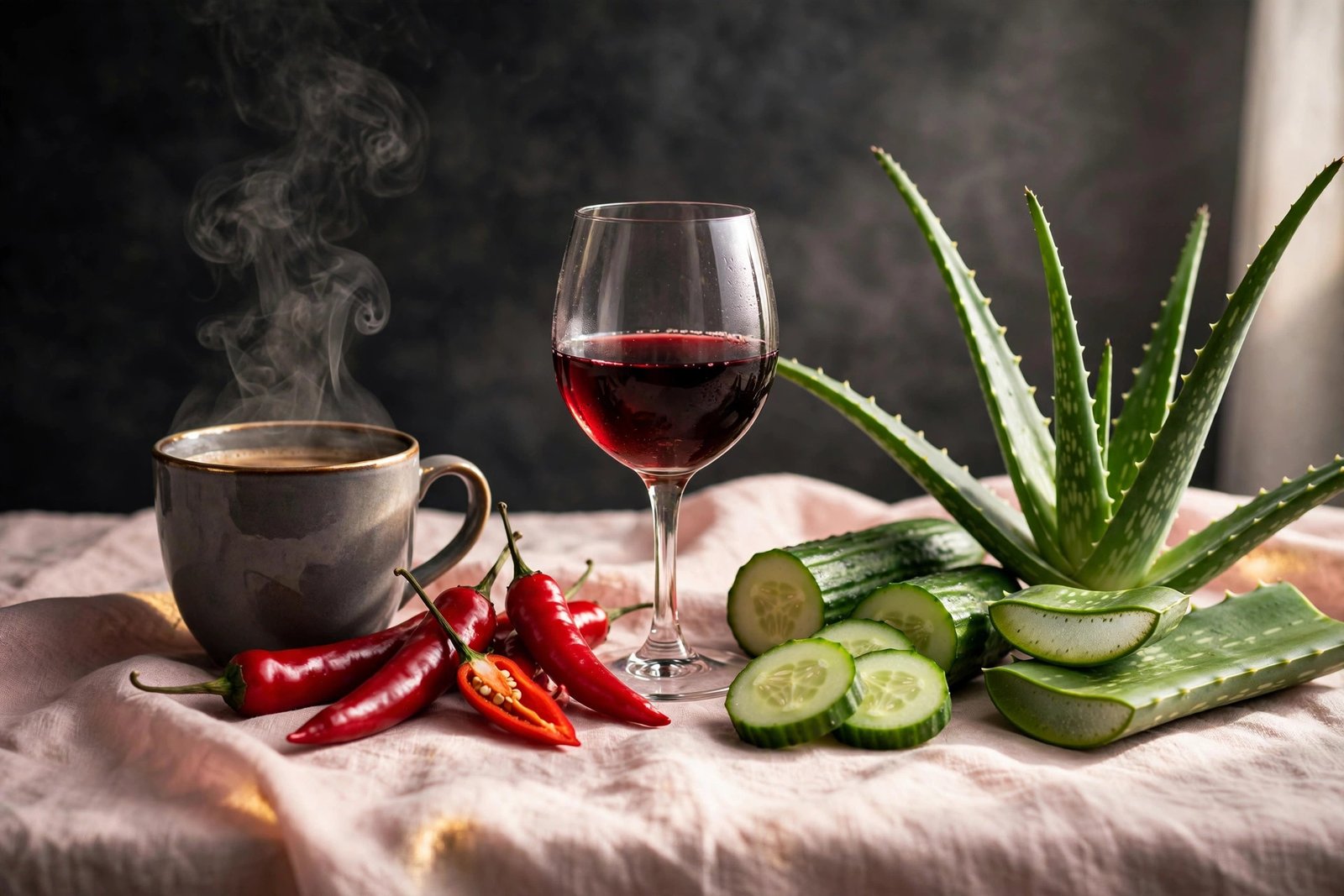
Red wine is the single most frequently cited food/drink trigger, likely due to a combination of alcohol’s vasodilating effect and compounds like histamines and sulfites. But any alcohol can trigger some people. If you drink: note which types and amounts affect you, drink slowly with food and water, and consider whether the trade-off is worth it on high-flare days. There’s no need for total abstinence if small amounts don’t affect you — this is personal data, not a rule.
6. Spicy foods
Capsaicin (in chili peppers) activates the same TRP heat receptors as hot temperatures, triggering flushing in many rosacea patients. If spicy food is a trigger for you, dialing back the heat level — or enjoying spice in smaller amounts — usually helps more than total avoidance.
7. Hot beverages
It’s often the heat, not the coffee or tea itself: very hot drinks trigger flushing as reliably as hot weather. Let drinks cool to warm, sip slowly, and use a straw to keep heat away from your lips and chin. If caffeine itself seems to be your issue, test it separately with cooled coffee.
8. Aged cheese, chocolate, and histamine-rich foods
A smaller subset of people report flares from histamine-rich or vasoactive foods — aged cheeses, chocolate, citrus, tomatoes. The evidence here is weaker and highly individual. Only restrict these if your own tracking shows a clear pattern; broad elimination diets without evidence rarely help.
Lifestyle & Emotional Triggers
9. Stress and strong emotions
Stress, anxiety, embarrassment, and anger trigger flushing through the nervous system — the classic “blush” response, amplified. Stress management isn’t just wellness talk for rosacea: regular sleep, daily movement, and even brief breathing exercises measurably reduce flare frequency for many people.
10. Intense exercise
Hard workouts overheat the face. You don’t need to stop exercising — instead, work out in cool environments, take breaks when your face gets very hot, splash cool water on your face mid-session, and favor lower-intensity or interval formats on high-flare days.
11. Certain medications
Some drugs list flushing as a side effect — including niacin (vitamin B3 in high doses), some blood pressure medications, and topical steroids (which can actually worsen rosacea with prolonged use). Never stop a prescribed medication because of rosacea; instead, mention the flushing to the prescribing doctor, who may adjust the dose or switch you to an alternative.
Skincare & Cosmetic Triggers
12. Fragrance and essential oils
Fragrance — including “natural” essential oils like lavender, tea tree, and citrus oils — is one of the most common skincare irritants for rosacea. Choose fragrance-free everything: cleansers, moisturizers, sunscreen, and makeup.
13. Harsh actives and exfoliants
Strong retinoids, high-percentage AHAs/BHAs, benzoyl peroxide, and physical scrubs strip the already-fragile barrier and provoke flares. Rosacea skin can tolerate some actives (like azelaic acid) — the key is choosing rosacea-appropriate ones. For what to use instead, see the best ingredients for rosacea-prone skin.
14. Drying alcohols and astringent toners
Denatured alcohol, witch hazel, and menthol- or camphor-containing “refreshing” toners are classic rosacea irritants. If a product stings, burns, or gives you a “tingle,” that’s your skin telling you to stop — with rosacea, tingling is never a good sign.
15. Heavy occlusives and overheating products
Very heavy balms, oils, and occlusive sleeping masks can trap heat against the skin and trigger flushing in some people, especially in warm weather. Layer lighter textures in summer and save richer products for winter nights.
How to Find Your Personal Triggers: The 2–4 Week Diary
General lists only go so far — your triggers are yours. The most reliable method dermatologists recommend is a simple flare diary:
- For 2–4 weeks, jot down each flare: when it started, how long it lasted, and how severe it was (mild pink / obvious red / red with bumps).
- Alongside each entry, note: what you ate and drank in the previous few hours, weather and temperature, activities (exercise, stress, shower temperature), and any new or changed skincare/makeup.
- Look for patterns weekly. Triggers usually reveal themselves within 2–3 weeks — the same food, weather condition, or product showing up before most flares.
- Test one variable at a time. Remove or reduce the suspected trigger for 1–2 weeks and watch. If flares drop, you’ve found one.
Keep the diary simple — a notes app on your phone is fine. The goal isn’t perfection; it’s spotting your top 2–3 triggers. Most people find that managing just those makes an outsized difference.
What to Do During a Flare
Even with good trigger management, flares happen. When one hits: move to a cool environment, apply a cool (not ice-cold) damp cloth to your face, sip cold water, and avoid touching or rubbing your skin. Skip active treatments until the flare settles — layering azelaic acid onto actively flushing skin usually stings. Stick to cleanser, moisturizer, and sunscreen until calm returns. If flares are frequent, severe, or include eye symptoms, that’s a sign to see a dermatologist about prescription options — learn when professional treatment is needed.
Frequently Asked Questions
How long do rosacea flare-ups last?
It varies widely — from 30 minutes of flushing after a trigger to days or weeks of increased redness and bumps during a bad stretch. Short flushing episodes from heat or emotion typically fade within an hour once you cool down. Longer flares often need both trigger removal and consistent gentle skincare to settle.
Can rosacea triggers change over time?
Yes. Many people find their triggers shift with seasons (winter wind vs. summer heat), hormonal changes, stress levels, and even age. Revisit your trigger diary once or twice a year, especially if flares return after a calm period.
Is coffee a rosacea trigger?
For most people, it’s the heat of the drink rather than the coffee itself. Interestingly, some research has even associated moderate coffee consumption with slightly lower rosacea risk — possibly due to caffeine’s vasoconstrictive effect. Test cooled coffee separately from hot coffee to find out which (if either) affects you.
Should I avoid all alcohol forever?
Not necessarily. Triggers are individual — some people flush after half a glass of red wine, others drink moderately with no effect. Track your own response to different types and amounts. If alcohol is a clear trigger for you, reducing quantity, choosing lower-histamine options, and hydrating alongside can help, but there’s no universal rule.
Can stress really cause a rosacea flare?
Yes — stress and strong emotions are among the most commonly reported triggers. The mechanism is neurological: emotional arousal activates the sympathetic nervous system, dilating facial blood vessels. This is also why blushing-related anxiety can create a frustrating cycle. Sleep, regular exercise, and stress-management practices genuinely help.
Conclusion
Trigger management is a skill, not a restriction list — and it’s one of the most powerful tools in rosacea care. Start with the big ones most people share (sun, heat, harsh skincare), use a simple diary to find your personal top three, and manage those consistently rather than trying to avoid everything at once. Combined with the gentle routine in the rosacea skincare guide and rosacea-safe products like azelaic acid and other calming ingredients, trigger awareness turns rosacea from an unpredictable enemy into a manageable condition.
Love this? Pin it for later!