Best Moisturizers for Eczema-Prone Skin
If you have eczema, moisturizer is not a luxury step — it is treatment. Eczema-prone skin has a faulty barrier: it loses water faster than healthy skin and lets irritants in more easily. A good moisturizer does two jobs at once: it replaces the moisture the skin cannot hold onto, and it forms a protective seal that keeps triggers out. Dermatologists consistently rank consistent moisturizing as the single most important daily habit for eczema management, ahead of any fancy serum or active ingredient.
But not all moisturizers are equal, and eczema-prone skin is picky. A lotion that works beautifully for normal dry skin can sting, burn, or simply fail on eczema. This guide explains what makes a moisturizer work for eczema, the textures worth considering, the ingredients that help (and the ones to dodge), and how to apply moisturizer so it actually performs.
Key Takeaways
- Ointments seal best, creams balance comfort and protection, lotions are usually too thin for eczema.
- Look for ceramides, glycerin, colloidal oatmeal, petrolatum, and shea butter; avoid fragrance, alcohol, and strong essential oils.
- The “soak and seal” method — moisturize within 3 minutes of bathing on damp skin — dramatically improves results.
- Heavier formulas work best at night; lighter barrier creams suit daytime use under sunscreen.
- Moisturizer manages eczema daily, but active flare-ups may still need prescription treatment from a dermatologist.
This article is for informational purposes only and is not medical advice. Skin conditions vary — see a dermatologist for diagnosis and treatment.
Why Texture Matters More Than Brand
When dermatologists talk about eczema moisturizers, they think in textures, not brand names. The water-to-oil ratio of a formula determines how well it seals moisture in:
Ointments (like plain petrolatum) are the most occlusive — up to 98% oil. They seal in moisture better than anything else and rarely cause reactions, but they feel greasy and can be uncomfortable during the day. They are ideal for nighttime use and for very dry, cracked patches.
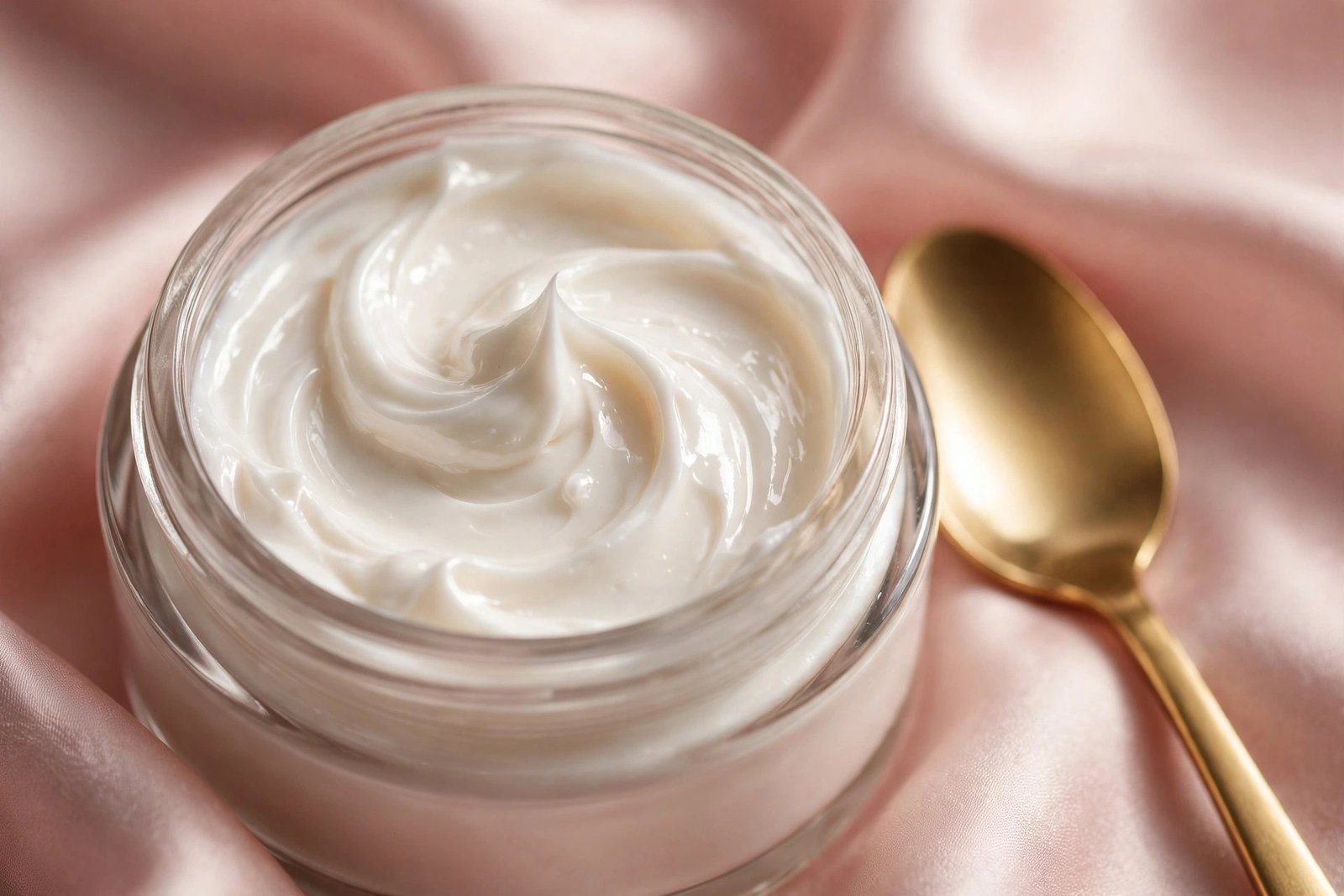
Creams are the sweet spot for most people with eczema: thick enough to protect, cosmetically acceptable enough to use twice daily. Look for formulas in tubes or tubs rather than pumps — that thickness usually signals a higher oil content.
Lotions are mostly water with a little oil. They feel light and absorb fast, but they evaporate quickly and often contain more preservatives and fragrance to stabilize the thin formula. For eczema-prone skin, lotions are usually the least effective option.
Balms sit between creams and ointments — rich, often anhydrous (water-free), and excellent for targeted dry patches, hands, and lips. For a broader look at eczema care across the whole body, this eczema skincare guide covers the full routine these moisturizers fit into.
Ingredients That Help Eczema-Prone Skin
The proven helpers
- Ceramides — lipids that are literally part of your skin barrier; eczema-prone skin is often deficient in them. Formulas with multiple ceramide types help rebuild what is missing. For a deeper breakdown of how they work, see this guide to ceramide moisturizers.
- Glycerin — a humectant that draws water into the skin; one of the most studied and reliable moisturizing ingredients.
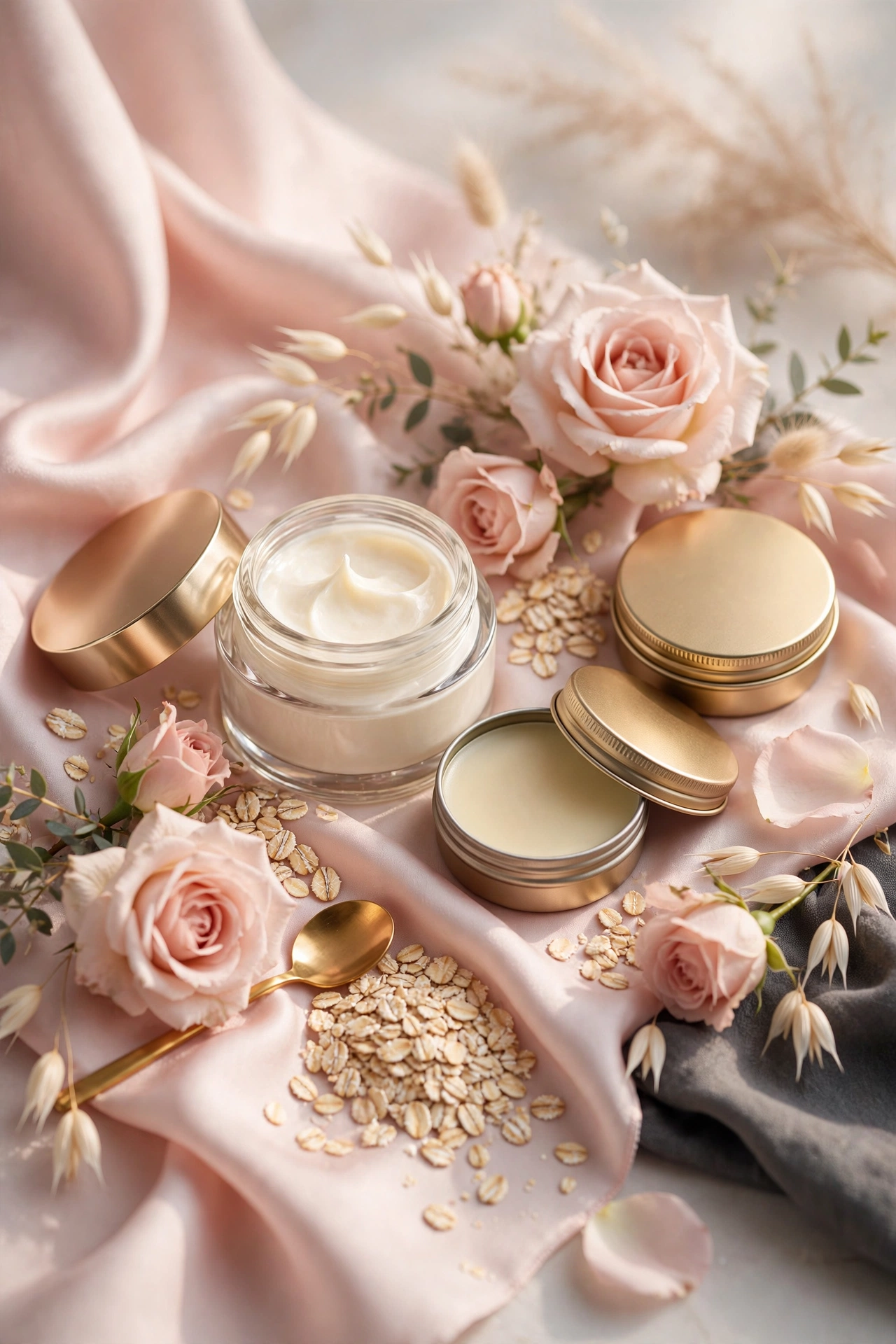
- Colloidal oatmeal — finely ground oatmeal with genuine anti-itch and anti-inflammatory properties; recognized by dermatologists as a legitimate eczema soother, not just marketing.
- Petrolatum — the gold-standard occlusive; seals in moisture better than almost anything and is remarkably non-irritating.
- Shea butter — an emollient rich in fatty acids that softens rough, scaly patches.
- Squalane — a lightweight emollient that mimics skin’s own oils; good for people who find heavier formulas uncomfortable.
- Niacinamide — supports barrier function and calms redness at low percentages; best in leave-on moisturizers rather than strong serums during flares.
Ingredients to avoid
- Fragrance/parfum — the most common cosmetic irritant for eczema-prone skin, including “natural” fragrance from essential oils.
- Denatured alcohol (alcohol denat.) — drying and stinging; different from fatty alcohols like cetyl alcohol, which are fine.
- Strong essential oils — tea tree, lavender, citrus oils, and peppermint can all trigger reactions on compromised skin.
- Exfoliating acids — glycolic, salicylic, and high-strength lactic acid have no place in an eczema moisturizer.
- Retinoids — too irritating for eczema-prone skin, especially during flares.
- Witch hazel and menthol — astringent and sensitizing on broken skin.
A shorter ingredient list is generally safer. If you cannot pronounce half the label and the product is heavily fragranced, it is not for eczema-prone skin.
How to Choose: 12 Qualities of a Great Eczema Moisturizer
Rather than chasing a single “best” product — skin varies too much for one winner — use this checklist to evaluate any moisturizer:
- Fragrance-free (not just “unscented” — check for masking fragrance)
- Cream, ointment, or balm texture — skip thin lotions for eczema areas
- Contains ceramides, glycerin, or colloidal oatmeal — at least one proven barrier ingredient
- Minimal ingredient list — fewer ingredients means fewer potential triggers
- No denatured alcohol or strong essential oils
- Hypoallergenic labeling — not a regulated term, but a useful signal of intent
- Packaging that limits contamination — tubes and pumps beat open jars for eczema-prone skin
- Suitable for face AND body (or buy separate formulas — facial skin needs gentler options)
- Dermatologist-tested or National Eczema Association–accepted — third-party validation helps
- Affordable enough to use generously — you will go through a lot of it; a product you ration is a product that fails
- No stinging on application — mild tingling on broken skin can be normal, but burning is a stop signal
- Keeps skin comfortable for hours — if you need to reapply constantly, the seal is not strong enough
Price is a poor predictor of performance here. Some of the most dermatologist-recommended eczema moisturizers are drugstore staples, while expensive luxury creams often contain the fragrance and botanical extracts that trigger flares.
The Soak and Seal Method: How to Apply
The best moisturizer in the world underperforms if applied wrong. Dermatologists teach the “soak and seal” technique because it measurably improves hydration:
- Bathe in lukewarm water for 5–10 minutes (hot water strips oils and triggers itching).
- Use a gentle, fragrance-free cleanser only where needed — not all over.
- Pat skin until damp, not dry — leave it visibly moist.
- Apply moisturizer within 3 minutes of stepping out, while skin is still damp. Use generous amounts — more than you think you need.
- Layer an occlusive (plain petrolatum) over the worst patches to lock everything in, especially at night.
- Reapply during the day as needed, particularly after hand washing.
Consistency beats intensity. Moisturizing twice daily, every day, prevents more flares than any single product choice. Moisture maintenance is also central to repairing a damaged skin barrier, since a compromised barrier is the root problem moisturizer addresses.
Day vs. Night Strategy
Daytime: use a comfortable barrier cream that layers well under clothing and sunscreen. It needs to be cosmetically elegant enough that you will actually reapply it. Greasy ointments under work clothes are a non-starter for most people — save those for night.
Nighttime: go heavy. This is when ointments and thick balms earn their keep — you do not care about the feel, and the long undisturbed hours let occlusives do maximum work. For hands, the classic trick is a thick layer of ointment under cotton gloves overnight.
Moisturizer Mistakes That Worsen Eczema
Even good products fail when the habits around them are wrong. The most common mistakes:
- Applying to dry skin — moisturizer on fully dry skin seals in nothing; damp skin is the whole point.
- Using too little — eczema-prone skin needs generous amounts; a pea-sized dab will not cover a forearm.
- Switching products constantly — every new formula is a new variable; give one product 2–3 weeks before judging it.
- Moisturizing only during flares — maintenance moisturizing between flares is what prevents the next one.
- Skipping moisturizer because skin feels oily — eczema-prone skin can feel greasy on the surface while being dehydrated underneath; do not confuse the two.
- Applying irritating actives first — during flares, moisturizer goes on clean skin with nothing underneath it.
If you are building a full routine around your moisturizer rather than treating it as a standalone step, this sensitive skin routine guide shows how to structure the rest of your products safely.
Frequently Asked Questions
Should you moisturize eczema every day even when skin looks fine?
Yes — this is the single most important habit. Eczema is a chronic barrier problem, not just a flare problem. Daily moisturizing between flares keeps the barrier supported and measurably reduces how often flares occur. Skipping moisturizer when skin looks good is like skipping maintenance because the car is running fine today.
Is coconut oil good for eczema?
It is a mixed bag. Coconut oil is occlusive and some people find it soothing, but it is also comedogenic and can cause reactions in a meaningful subset of eczema-prone individuals. Dermatologists generally prefer petrolatum or ceramide-based moisturizers with stronger evidence behind them. If you want to try coconut oil, patch-test first and stop if itching increases.
Can moisturizer alone treat an eczema flare-up?
Moisturizer is the foundation, but moderate to severe flare-ups usually need more — typically a prescription anti-inflammatory treatment alongside the moisturizer. Think of it this way: moisturizer maintains and protects, while flare treatment actively calms inflammation. If consistent moisturizing plus trigger avoidance has not improved a flare within two to three weeks, see a dermatologist rather than just trying heavier creams.
Why does my moisturizer sting when I apply it?
Stinging on broken or actively flaring skin can happen even with gentle formulas — tiny cracks in the barrier let ingredients reach nerve endings. Mild, brief tingling that fades is usually tolerable. Burning, spreading redness, or itching that gets worse after application means the product is wrong for you — rinse it off and try a simpler formula. Ointments with minimal ingredients sting the least.
Are expensive eczema creams worth it?
Rarely for the price difference. What matters is the formula: fragrance-free, barrier-supporting ingredients, and the right texture. Many inexpensive drugstore creams meet every criterion on the checklist above. Expensive creams sometimes add fragrance, botanical extracts, or trendy actives that actively work against eczema-prone skin. Judge the ingredient list, not the price tag.
The Bottom Line
The best moisturizer for eczema is not a specific brand — it is a formula profile: fragrance-free, rich in ceramides or colloidal oatmeal, thick enough to seal, and cheap enough to use generously twice a day on damp skin. Ointments for night, creams for day, the soak-and-seal method every time you bathe, and no irritating ingredients sneaking in. Get those fundamentals right and moisturizer stops being a cosmetic step and becomes genuine treatment — the daily foundation that everything else in the eczema skincare guide builds on.
Love this? Pin it for later!