Best Ingredients for Rosacea-Prone Skin
Walk into any skincare aisle and you’ll find dozens of products promising to “calm redness.” For rosacea-prone skin, though, most of them are either too weak to matter or too aggressive to tolerate. The ingredients that actually help rosacea share a profile: anti-inflammatory, barrier-supporting, and gentle enough for reactive skin — with real clinical evidence behind them, not just marketing.
This guide covers the best ingredients for rosacea, what each one does, the concentrations that work, what to avoid, and how to layer everything without provoking a flare. For the full routine these ingredients fit into, see the complete rosacea skincare guide.
Key Takeaways
- Azelaic acid (10–20%) is the best-evidenced over-the-counter ingredient for rosacea — it reduces redness and bumps.
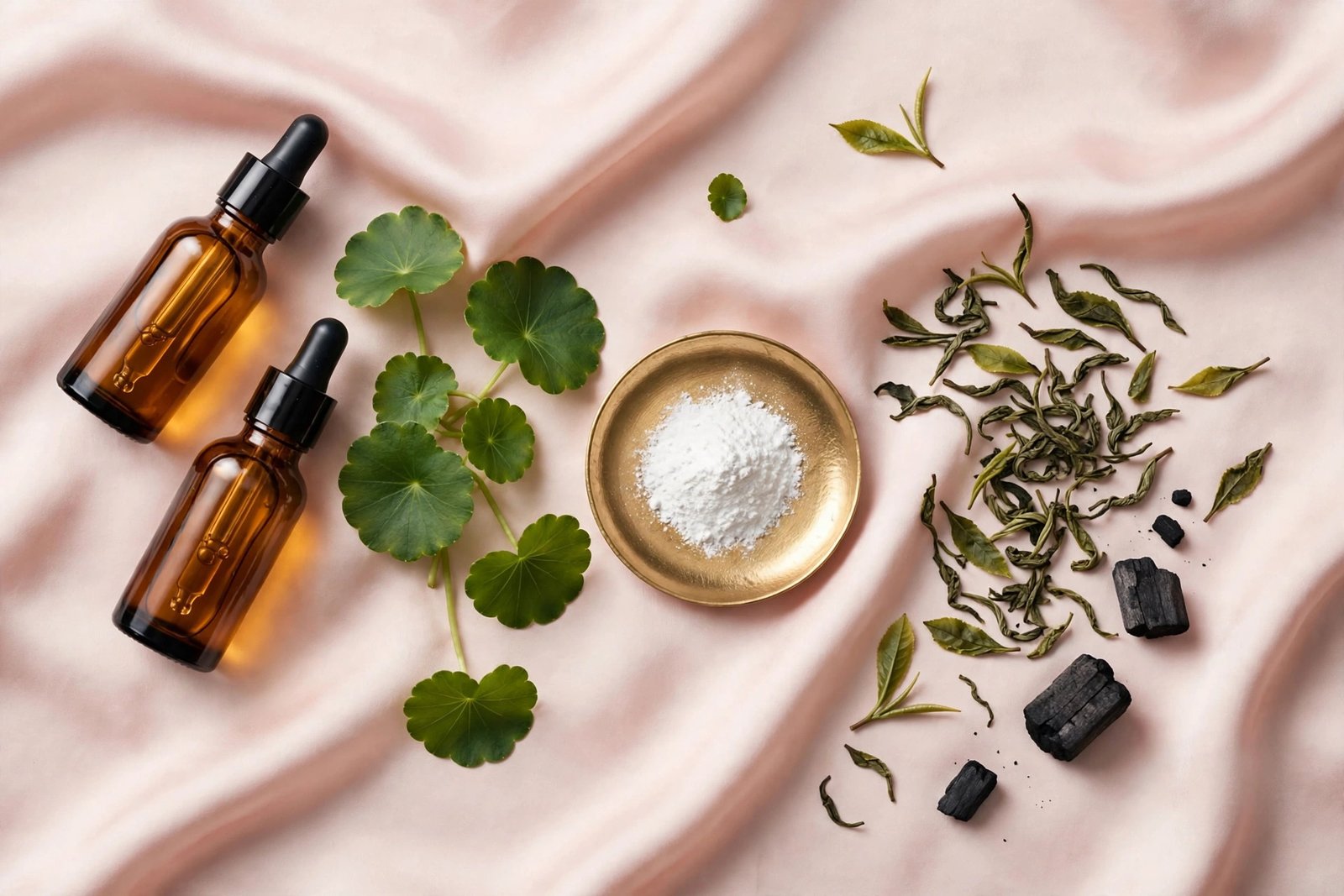
- Niacinamide (2–5%), centella asiatica, green tea, and licorice root are well-tolerated calming and barrier-supporting ingredients.
- Ceramides, squalane, glycerin, and hyaluronic acid repair the weakened barrier that makes rosacea skin so reactive.
- Skip: fragrance, drying alcohols, high-percentage AHAs, strong retinoids, benzoyl peroxide, and physical scrubs.
- Layer one new product at a time, thinnest to thickest, and give each ingredient 2+ weeks before judging.
This article is for informational purposes only and is not medical advice. Skin conditions vary — see a dermatologist for diagnosis and treatment.
The Star Ingredient: Azelaic Acid
If rosacea-prone skin had one hero ingredient, it would be azelaic acid. It’s a naturally occurring dicarboxylic acid (found in grains like barley and wheat) with a rare combination of benefits: it’s anti-inflammatory, antimicrobial, and it normalizes keratinization — meaning it addresses both the redness and the bumps of papulopustular rosacea.
The evidence is genuinely strong: prescription azelaic acid 15–20% has been studied in multiple clinical trials for rosacea, showing significant reductions in inflammatory lesions and redness over 12 weeks. Over-the-counter 10% formulations are widely available and, while less studied, are well tolerated and a sensible starting point. Most people apply it once daily (often in the morning under sunscreen, or at night), and mild tingling for the first week is common — persistent burning is not.
Azelaic acid also plays well with others: it layers fine under moisturizer and sunscreen, and it doesn’t increase sun sensitivity the way AHAs do. If you add only one active to your rosacea routine, dermatologists would most often point here.
The Calming Core: Niacinamide, Centella & Botanical Soothers
Niacinamide (vitamin B3)
Niacinamide is one of the most versatile ingredients in skincare, and rosacea skin benefits from nearly all of its effects: it strengthens the skin barrier (reducing the water loss that makes rosacea skin sting), calms redness, regulates sebum, and improves uneven tone. Concentrations of 2–5% are ideal for reactive skin — higher percentages (10%+) can cause flushing in some people, which is exactly what you’re trying to avoid. Look for it in serums and moisturizers; it’s stable, non-acidic, and layers well with azelaic acid.
Centella asiatica (cica)
Centella — marketed as “cica” — is a traditional medicinal plant with modern evidence for wound healing and anti-inflammatory effects. Its active compounds (asiaticoside, madecassoside) help calm irritation and support barrier repair. Cica products (serums, creams, sheet masks) are among the best-tolerated options for rosacea-prone skin, and they’re widely available at every price point.
Green tea extract
Green tea is rich in polyphenols (especially EGCG) with documented anti-inflammatory and antioxidant effects. Topical green tea has shown modest benefits for redness in small studies, and it’s gentle enough for daily use in toners, serums, and moisturizers.
Licorice root extract
Licorice root contains glabridin and licochalcone, compounds with anti-inflammatory and redness-reducing properties. It’s a common “redness relief” ingredient in sensitive-skin lines and pairs well with niacinamide and centella.
The Barrier Builders: Ceramides, Squalane & Humectants
Rosacea skin typically has a compromised barrier — it loses water faster and lets irritants in more easily, which is why everything stings. Barrier-repair ingredients don’t directly treat rosacea inflammation, but they make skin dramatically less reactive over time:
- Ceramides — lipids that make up the skin’s protective matrix. Ceramide-containing moisturizers help restore barrier function and reduce sensitivity.
- Squalane — a lightweight, non-comedogenic emollient (derived from olives or sugarcane) that softens skin without heaviness or clogged pores.
- Glycerin — a humble, highly effective humectant that draws water into the skin. It’s in nearly every good moisturizer for a reason.
- Hyaluronic acid — another humectant that hydrates without oil. Apply to damp skin and seal with moisturizer; in very dry climates, use it under a cream, not alone.
- Colloidal oatmeal — anti-inflammatory and protective; excellent in cleansers and moisturizers for reactive skin, and one of the few ingredients that actively soothes itching.
A moisturizer combining two or three of these (for example, ceramides + glycerin + squalane) gives rosacea skin the barrier support it needs to tolerate everything else.
Ingredients to Approach With Caution
Not every popular ingredient belongs in a rosacea routine:
- Retinoids (tretinoin, retinol, adapalene): the irritation risk is high during active flares. Some people tolerate low-strength retinoids once their skin is calm, ideally introduced slowly and under dermatologist guidance — but they’re never a first step for rosacea.
- Vitamin C (L-ascorbic acid): pure ascorbic acid is acidic and frequently stings rosacea skin. Gentler derivatives (sodium ascorbyl phosphate, ascorbyl glucoside) are better tolerated by some, but prioritize proven rosacea ingredients first.
- AHAs/BHAs (glycolic, lactic, salicylic acid): high percentages and frequent use provoke flares. Very low-percentage, infrequent use may suit some — but azelaic acid usually does the job with less risk.
-
Benzoyl peroxide: designed for acne bacteria, far too harsh for rosacea — a classic case of treating the wrong condition. If you’re unsure whether your redness and bumps are rosacea or acne, the rosacea skincare guide explains how to tell them apart.
-
Witch hazel, menthol, eucalyptus, camphor: “refreshing” ingredients that are frequent rosacea irritants. Tingling is not a sign a product is working — it’s a warning.
What to Skip Entirely
Hard no’s for rosacea-prone skin: added fragrance and essential oils, denatured/SD alcohol, physical scrubs and stiff cleansing brushes, and any product whose marketing leans on “tingle,” “purge,” or “detox.” Also skip layering multiple new actives at once — with rosacea, you should always know exactly which product caused a reaction.
How to Layer: A Simple Order
Morning and night, apply thinnest to thickest:
- Cleanser (gentle, fragrance-free, lukewarm water)
- Treatment serum — azelaic acid OR niacinamide serum (not both on day one; add the second after 2–3 calm weeks)
- Moisturizer — ceramides, squalane, glycerin
- Sunscreen (morning only) — mineral SPF 30+
Introduce products one at a time, at least two weeks apart. Patch-test each new product on the jawline for 3–5 days. If a product causes persistent stinging, flushing, or new bumps beyond the first few days, stop it — even if it’s a “holy grail” ingredient for someone else. For help identifying whether a reaction is product-related or trigger-related, see the complete rosacea trigger list.
Frequently Asked Questions
How long does azelaic acid take to work for rosacea?
Most clinical trials show meaningful improvement at 8–12 weeks of consistent daily use. Some people notice calmer redness within 3–4 weeks. If you see no change after 12 weeks, talk to a dermatologist about prescription-strength options or alternatives.
Can I use niacinamide and azelaic acid together?
Yes — they layer well and address different aspects of rosacea (niacinamide for barrier and tone, azelaic acid for inflammation and bumps). Introduce them one at a time, a few weeks apart, so you know which one your skin likes.
Is hyaluronic acid good for rosacea?
Generally yes — it’s a gentle humectant that hydrates without irritation. Just apply it to damp skin and seal with moisturizer, and skip it as a standalone step in very dry climates where it can pull water out of skin instead.
What percentage of niacinamide is best for rosacea?
2–5% is the sweet spot for reactive skin. Higher concentrations (10%+) work for many people but can cause temporary flushing in sensitive individuals — counterproductive when redness is the concern. Start low.
Are “redness relief” product lines worth it?
They can be a good shortcut — many are fragrance-free and built around niacinamide, centella, and ceramides. But read the ingredient list, not the marketing: some “calming” lines still contain fragrance or drying alcohols. The ingredient matters more than the brand story.
Conclusion
The best ingredients for rosacea aren’t exotic — they’re the well-evidenced, barrier-friendly workhorses: azelaic acid for inflammation and bumps, niacinamide and centella for calming, ceramides and squalane for barrier repair. Build slowly, one ingredient at a time, skip the irritants without mercy, and give each addition a fair multi-week trial. Combined with trigger awareness (find your rosacea triggers) and the full routine (rosacea skincare guide), the right ingredients turn redness from a daily battle into a manageable background detail.
Love this? Pin it for later!