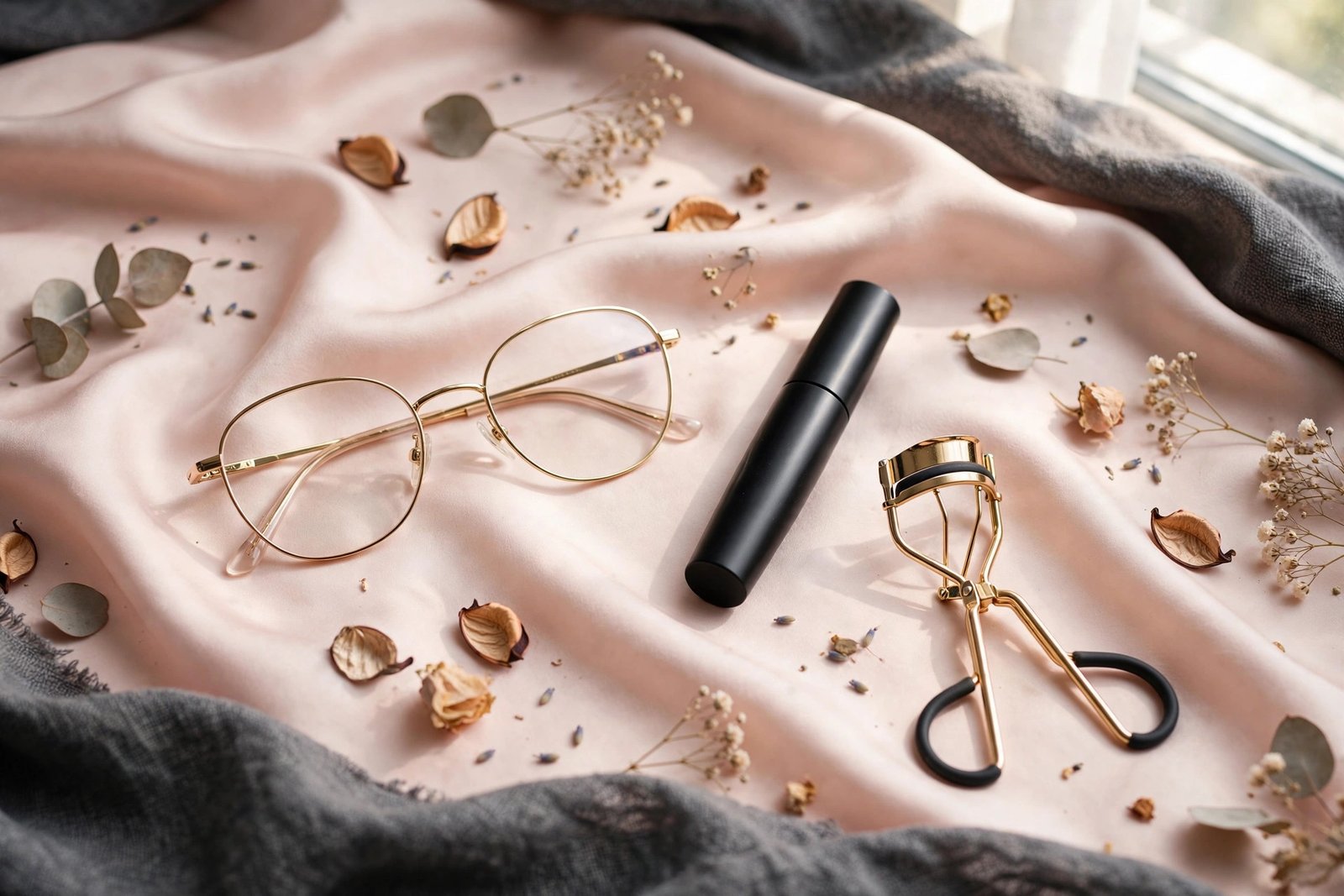
How to Stop Mascara Smudging on Your Glasses
Few things are more frustrating than looking through a haze of tiny black dots by lunchtime. If you wear glasses and mascara, you know the scene: your lashes look great in the morning mirror, and by afternoon your lenses carry a faint constellation of smudges, transfers, and mascara dust. The good news is that this is one of the most fixable makeup problems there is. Once you understand why the transfer happens — and it’s usually a combination of formula, lash length, and application — a few small changes can keep your lenses crystal clear from morning to night.
Key Takeaways
- Mascara smudges on glasses because lashes physically brush the lenses, or because oil and moisture migrate the formula off the lashes.
- Tubing and waterproof mascaras resist transfer far better than creamy, conditioning formulas.
- Curling your lashes and concentrating product on the roots (not the tips) is the single biggest application fix.
- Setting your under-eye area and keeping the lash line oil-free prevents the slow downward transfer that shows up by afternoon.
- If lashes are very long or glasses sit close to your face, a lash tint or a thin tubing formula on the top lashes may be the better move than a volumizing mascara.
Why Mascara Ends Up on Your Lenses
Understanding the cause helps you pick the right fix. There are two main transfer routes, and most glasses wearers deal with at least a little of both.
Lashes touching the lenses
This is the most direct route. If your frames sit close to your eyes — common with smaller frames, certain prescriptions, or glasses that slide down the nose — your upper lashes physically brush against the inside of the lenses with every blink. Over the course of a day, that’s thousands of tiny contacts, each one depositing a speck of mascara. Long lashes make this dramatically worse, as does any mascara that adds a lot of length.
Formula migration from oil and moisture
The second route is slower but affects almost everyone. Skin oils, humidity, sweat, and even the natural movement of your eyes throughout the day can cause mascara to break down and migrate — onto the skin under your eyes, onto your lower lashes, and onto the lower rim of your lenses. Creamy, conditioning formulas and anything marketed as “hydrating” or “nourishing” tend to migrate most, because the oils that keep the formula smooth are the same ones that help it travel.
9 Fixes That Keep Lenses Clean
1. Switch to a tubing or waterproof formula
The single most effective change is switching your formula. Tubing mascaras wrap each lash in a polymer “tube” instead of painting them with pigment — the result is a smudge-proof coating that only comes off with warm water and gentle pressure. Because nothing is sitting loosely on the lash surface, there is essentially nothing to transfer, even if your lashes touch the lenses directly. If you prefer classic mascaras, waterproof formulas are the next best option: the film-forming agents that make them water-resistant also make them far more transfer-resistant than standard washable mascaras.
This is the same principle behind the comparison of waterproof versus regular mascara, which breaks down exactly when each formula type earns its place in your routine.
2. Curl your lashes before applying
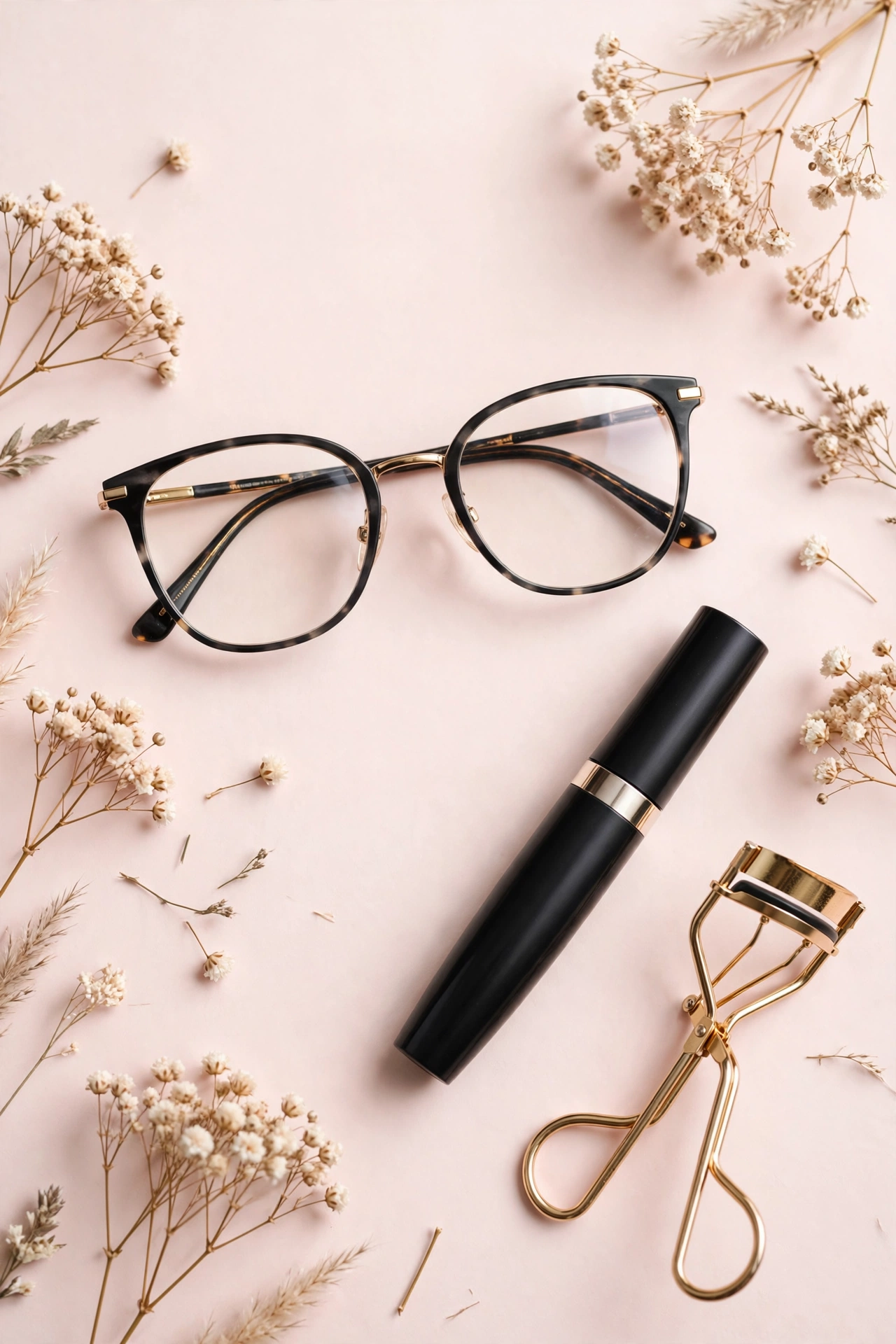
A curled lash lifts up and away from the lens instead of reaching straight toward it. Curling is arguably the highest-impact application fix because it changes the actual geometry of the problem: lashes that point upward simply make less contact with glasses. Use an eyelash curler at the base of the lashes before mascara, hold for about ten seconds, and consider a second gentle squeeze mid-lash for extra lift. Many makeup artists recommend curling as the foundation of any mascara application that avoids clumps and smudges, because a lifted lash also distributes product more evenly.
3. Concentrate product at the roots, not the tips
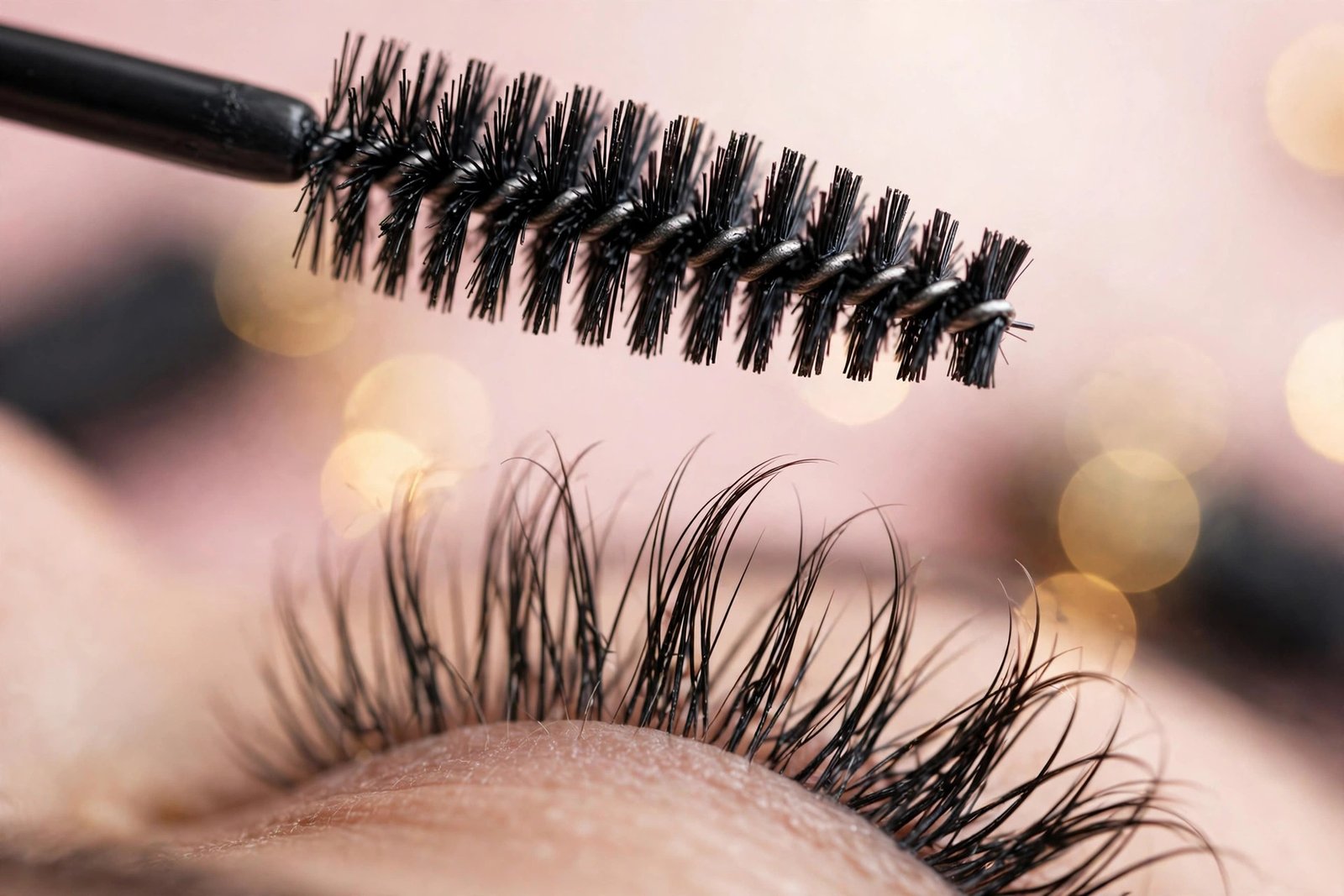
Where you put the mascara matters as much as which one you use. Most transfer happens when the tips of the lashes — the part that reaches toward the lenses — are loaded with product. Try applying the bulk of your mascara at the base of the lashes, wiggling the wand at the roots to build thickness there, and pulling through to the tips with almost no additional product. The roots are what create the illusion of fullness and definition; the tips just need a light coat. This technique alone visibly reduces the speckling on lenses for most wearers.
4. Comb through while still wet
Clumps and excess product are transfer waiting to happen. After each coat, run a clean lash comb or a spoolie through your lashes before the formula sets. This removes the excess that would otherwise flake or smudge, separates lashes so they look fuller naturally, and dramatically cuts down on the tiny product blobs that end up pressed against your lenses. It’s a ten-second step that upgrades every mascara you own.
5. Keep the lash line and under-eye oil-free
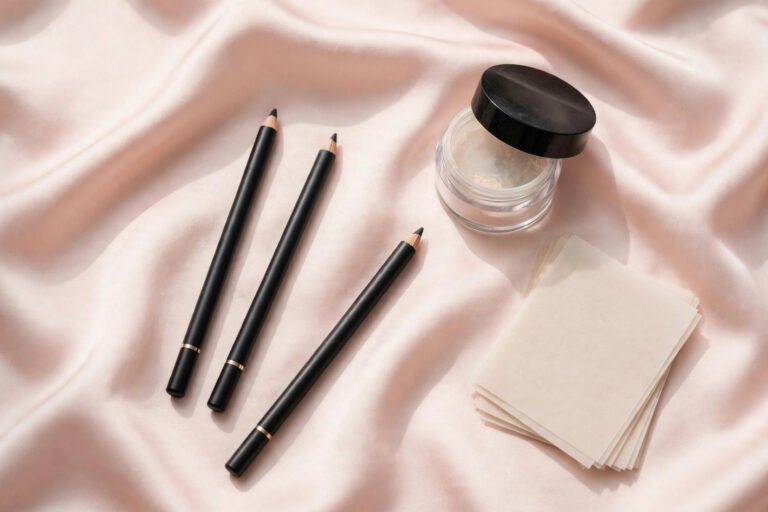
Oil is the great enemy of mascara longevity. On oily skin, or in humid weather, mascara breaks down faster and migrates toward the lenses and the under-eye area. A light dusting of translucent setting powder under the eyes and along the lash line before mascara gives the formula a dry surface to grip. Some glasses wearers also find that a thin layer of eyeshadow primer on the lower lash line prevents the slow downward transfer that leaves dots on the lower rim of the lenses by evening.
6. Try mascara only on the upper lashes
Lower-lash mascara sits very close to the bottom edge of many frames, and it’s a common source of the smudges that appear on the lower portion of lenses. If you’re struggling with transfer, try skipping lower-lash mascara entirely for a week and see whether the problem disappears. Most people find their eyes still look fully defined — the upper lashes do the heavy lifting — and the transfer problem drops by half or more. If you miss the lower-lash definition, a tightline with a waterproof pencil gives structure without the transfer risk.
7. Consider a lash tint instead of mascara
For glasses wearers with long lashes, sometimes the best mascara is no mascara. A professional lash tint darkens the lashes for several weeks with zero product sitting on the lash surface — which means zero transfer, ever. It won’t add volume or length the way mascara does, but paired with curled lashes it gives a polished, defined look that survives any frame style. Lash tinting is also worth considering for anyone whose eyes water behind their lenses, since tears accelerate mascara breakdown.
8. Adjust how your glasses sit
Sometimes the problem isn’t the makeup — it’s the fit. Glasses that slide down the nose bring the lenses closer to the lashes, and frames with nose pads that sit too low can push the whole frame upward. An optician can adjust the nose pads, temple arms, and bridge fit in minutes, often for free, and a slightly better frame position can create enough clearance that the transfer problem largely disappears. This is especially worth trying before you buy a whole new mascara wardrobe.
9. Blot and refresh instead of layering more
By late afternoon, even the best routine can show some wear. Resist the urge to add another coat of mascara — layering over a partially broken-down formula is what creates the heavy transfer and flaking that really dots up lenses. Instead, blot the lenses with a microfiber cloth, gently press a tissue against the lash tips to lift loose product, and touch up the under-eye area with a clean spoolie. A light refresh keeps everything tidy without adding more product to transfer.
Application Order That Prevents Smudging
The order of your morning routine affects transfer more than most people realize. Apply eye makeup — including mascara — before your base makeup, so any fallout or smudges can be cleaned up without disturbing foundation. Let mascara dry fully (at least two to three minutes) before putting on your glasses; mascara that feels dry to the touch is far less likely to transfer on that first morning contact. If you’re in a rush, a quick blast of cool air from a hand fan or hair dryer on the cool setting sets the formula faster.
For a full routine built around these principles, the complete makeup guide for glasses wearers walks through eye makeup, base, and brows in an order designed to keep frames clean.
What to Avoid
A few common choices make smudging worse, and dropping them costs nothing:
- Very lengthening mascaras. Length-building formulas put the most product exactly where transfer happens — the lash tips. If your lashes are already long, prioritize volume at the roots instead.
- Creamy, hydrating formulas. The conditioning oils that make these mascaras feel comfortable are the same oils that help them migrate throughout the day.
- Layering three or more coats. Heavy product loads flake and transfer far more than one or two well-applied coats.
- Old mascara. Mascara past its prime (roughly three months open) dries unevenly, flakes more, and smudges worse. Replacing it is one of the cheapest fixes on this list.
- Touching your lenses. Handling glasses by the rims is fine, but fingers that have touched your face carry oils straight to the lenses, loosening any mascara residue and spreading it around.
Frequently Asked Questions
Why does mascara only smudge on one lens?
Usually this comes down to asymmetry: one side of your frames sits closer to the eye, or one eye’s lashes are slightly longer or curl differently. Check whether your glasses sit evenly, and try curling the lashes on the smudge-prone side a little more. A frame adjustment at the optician can fix a persistent one-sided problem.
Will waterproof mascara completely stop smudging?
Waterproof formulas dramatically reduce transfer, but they aren’t magic — if your lashes physically press against the lenses all day, even waterproof mascara can leave faint marks. The best results come from combining a smudge-resistant formula with curling and root-focused application. For near-total protection, tubing mascaras outperform both regular and waterproof formulas when it comes to transfer.
How do I clean mascara smudges off my lenses?
Use a microfiber lens cloth with a drop of lens cleaner or plain lukewarm water — never paper towels or tissues, which scratch lens coatings. Wipe gently in circular motions. Avoid alcohol-based cleaners on coated lenses unless the coating is rated for them, since harsh solvents can damage anti-reflective coatings over time.
Should I apply mascara before or after putting on glasses?
Before, always. Mascara needs two to three minutes to set, and putting glasses on immediately means the first contact happens while the formula is still tacky — the worst moment for transfer. Build your routine so mascara goes on early, with enough drying time before your frames go on.
Does prescription strength affect mascara smudging?
Indirectly, yes. Stronger prescriptions sometimes mean thicker or more curved lenses, which can sit closer to the eyes depending on the frame design. High-index lenses and flatter lens designs can create a bit more clearance. If smudging started after a prescription change, the lens geometry — not your makeup — may be the real culprit, and a frame adjustment can help.
Conclusion
Mascara smudging on glasses is annoying, but it’s one of the most solvable problems in a glasses wearer’s routine. Start with the two highest-impact changes — a tubing or waterproof formula, and curling your lashes before application — and you’ll likely see most of the smudging disappear. Add root-focused application and an oil-free lash line for the rest, and your lenses can stay clear from your morning commute to your evening wind-down. And if the problem persists despite your best efforts, check your frame fit before buying another mascara: sometimes the fix is a free five-minute adjustment at the optician, not a new product.
For more strategies that keep every part of your routine glasses-friendly, explore the complete guide to makeup for glasses wearers — from smudge-proof eye looks to foundation that survives your frames.
Love this? Pin it for later!