How to Cover Gray Hair Without Dye: 8 Temporary Fixes
Not everyone wants dye — and that’s completely valid. Maybe you’re growing out your color, avoiding chemicals during pregnancy, giving your hair a break, or just not ready to commit to a 4–6 week touch-up cycle. Whatever the reason, covering gray hair without dye is entirely possible: a whole category of temporary, wash-out products hides grays in minutes with zero damage.
These eight methods range from 30-second touch-ups to clever styling tricks. None of them change your hair permanently, and all of them wash out with shampoo. For the full dye picture — permanent, demi-permanent, and everything in between — see how to cover gray hair at home.
Key Takeaways
- Root powders and sprays are the fastest fixes — minutes to apply, gone with one wash.
- Hair mascaras and concealer wands give precision for hairlines and part lines.
- Color-depositing conditioners tint grays gradually over several washes.
- Styling tricks (part changes, texture, accessories) hide grays with no product at all.
- Everything here is damage-free — no developer, no bleach, no commitment.
1. Root Touch-Up Powders
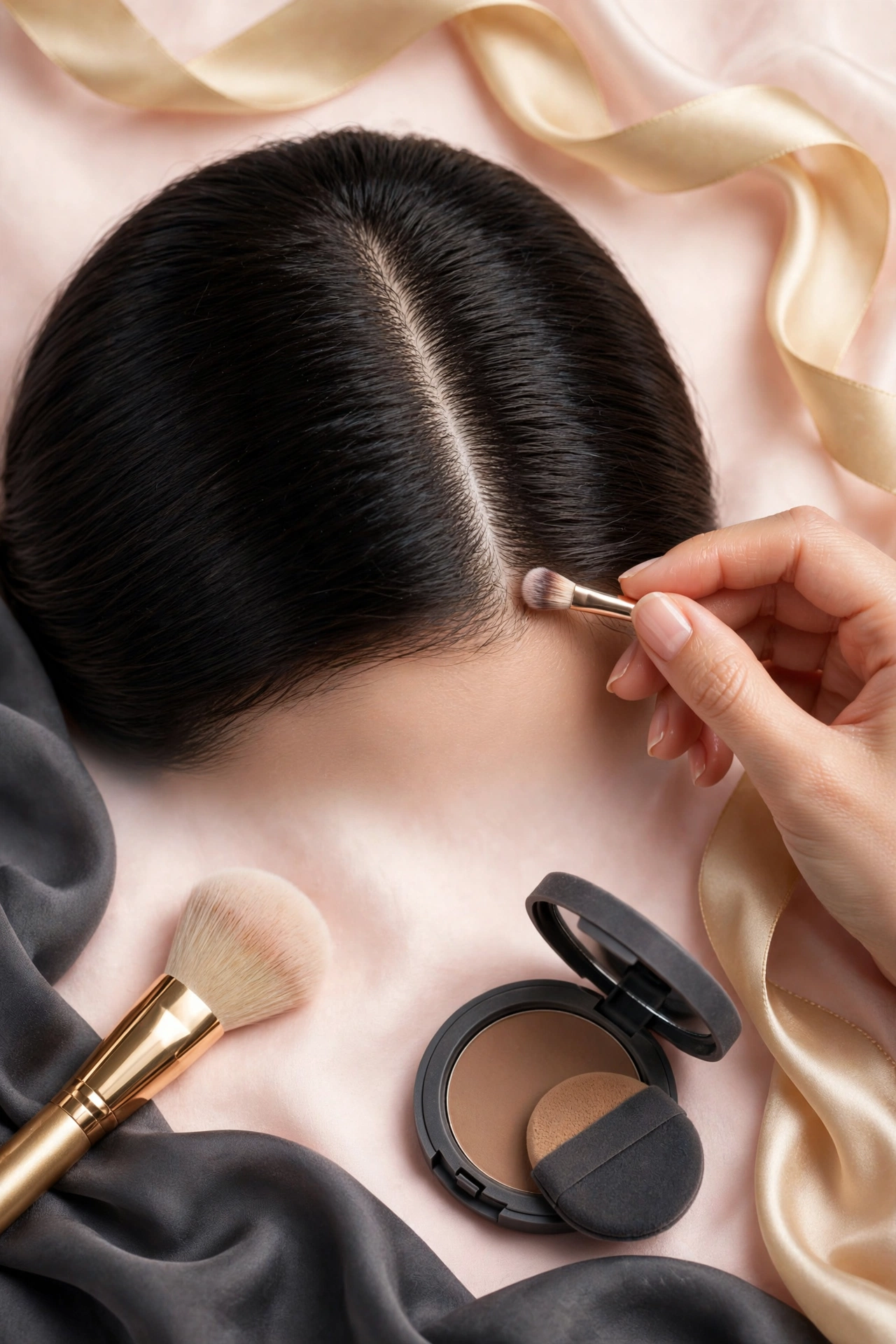
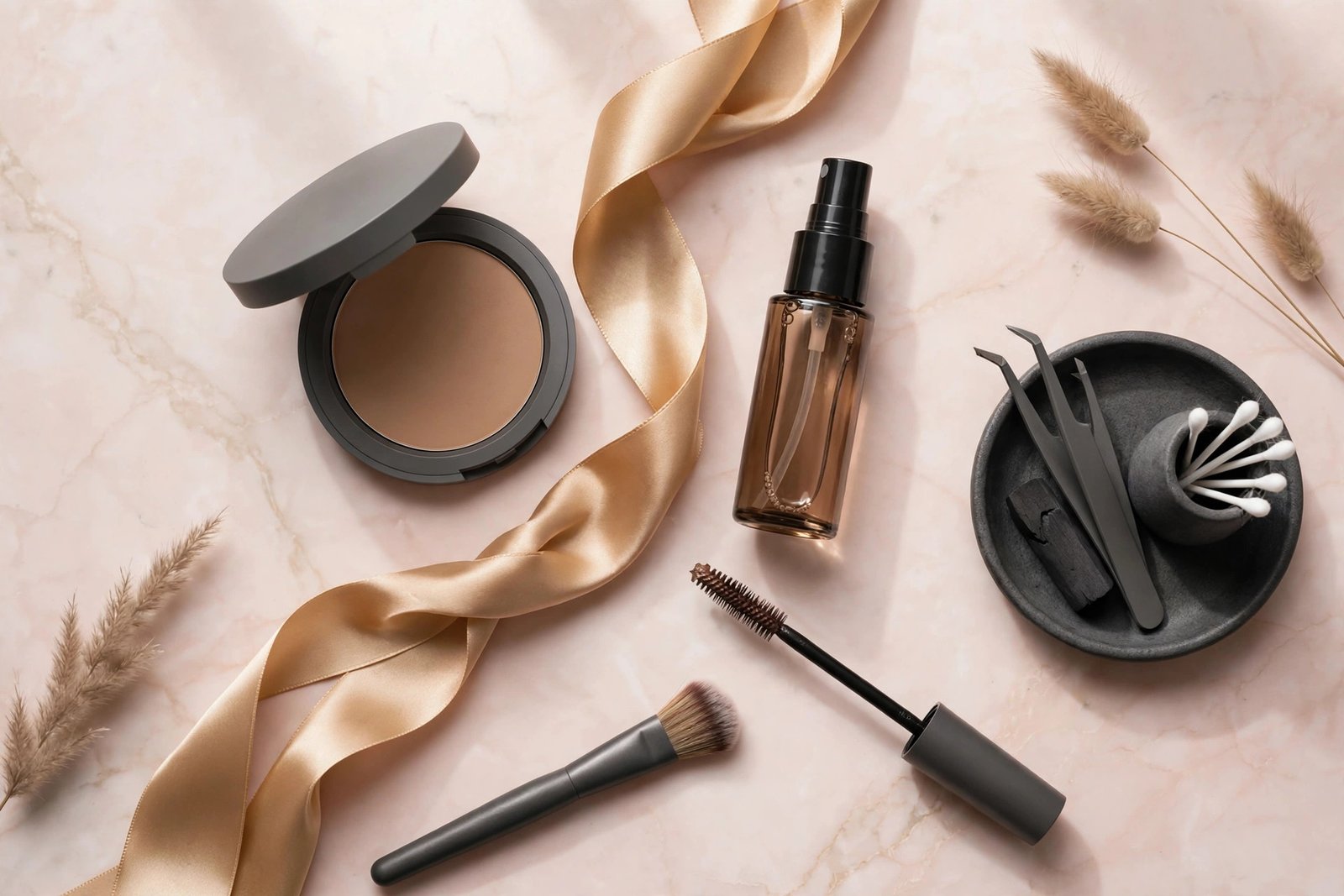
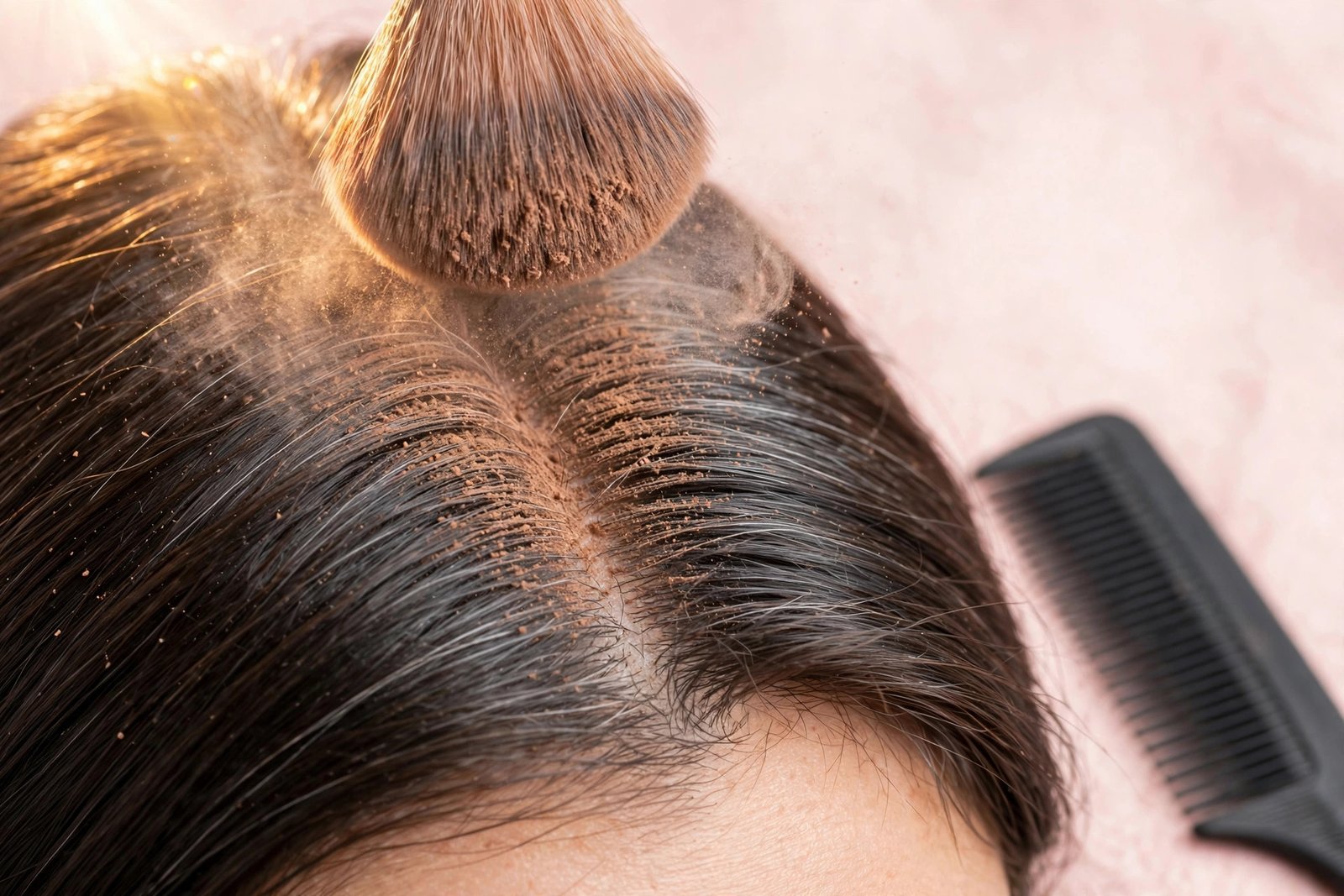
Pressed-powder compacts with a small brush are the classic gray concealer. Dab the brush into the powder and press it along your part line, temples, or anywhere regrowth shows. The powder clings to the hair shaft and scalp, darkening the gray area instantly.
Why it works: Powders are buildable and forgiving — start light and add more where needed. They also absorb a little oil at the roots, which is a nice bonus on second-day hair.
Watch out for: Powders transfer if you touch your hair a lot or sleep on it. Keep application to the top layers where it shows, and don’t over-apply — heavy layers can look dull. For a deeper comparison of formats, check the best root touch-up products.
2. Root Concealer Sprays
Aerosol root sprays deliver the most opaque coverage of any temporary option — closer to real dye than powder. Hold the can 4–6 inches from dry hair, aim at the regrowth, and spray in short bursts. The fine mist coats strands evenly in seconds.
Best for: events, photos, and days when grays need to genuinely disappear. A few minutes with a root spray can look convincingly like a fresh dye job.
Tips: Protect your hairline with a tissue, shield clothing and bathroom surfaces (overspray stains), and use a light hand — layering two light passes looks more natural than one heavy one. Most formulas shampoo out completely, though some very dark shades need two washes.
3. Hair Mascaras and Concealer Wands
Hair mascara — a wand applicator with tinted gel or cream — gives surgical precision. It excels exactly where other products are clumsy: the hairline edges, baby hairs at the temples, and a stark part line. Brush it on like mascara for your hair.
Best for: scattered grays at the hairline, touch-ups on the go (the wands are purse-sized), and blending grays into a ponytail or bun edge.
Reality check: Mascara-style products work strand by strand, so they’re slow for large areas. Use them for detail work and let powders or sprays handle the big zones.
4. Color-Depositing Conditioners
Color-depositing conditioners (sometimes called color masks) tint hair gradually over several uses. Apply in the shower like a deep conditioner, leave for 5–10 minutes, rinse. Grays pick up a soft tint that builds with each application — think “softened” rather than fully covered.
Best for: low gray levels where you want to tone down the contrast, or as maintenance between other methods. They’re genuinely conditioning, so hair feels better, not worse.
Limitations: The tint is translucent, so resistant grays may look like lighter versions of the target shade rather than a full match. Results also vary a lot by product — read shade reviews before buying, and expect a few applications before judging.
5. Tinted Dry Shampoo
Tinted dry shampoos do double duty: they absorb root oil and deposit a light veil of color. They’re not as opaque as dedicated root sprays, but for light gray coverage on non-wash days, they’re a convenient two-in-one.
How to use: Shake well, spray at the roots from 6–8 inches away, wait a minute, then massage in and brush through. The color distributes as the powder absorbs.
Best for: blondes and light browns especially — the color payoff is softer, which suits lighter hair. On very dark hair, check that the tinted formula is deep enough to actually cover rather than just dust over.
6. Hair Fibers and Root Fillers
Keratin hair fibers (tiny tinted fibers that cling to existing hair via static) were designed for thinning areas, but they also work on sparse grays at the part. Sprinkle or puff the fibers along the part line and they cling to nearby strands, filling in the pale gap.
Best for: widening parts and thin spots where scalp shows through — the combination of gray + visible scalp is what reads as “aging,” and fibers address both at once.
Caveat: Fibers need existing hair to cling to, so they don’t work on completely bare patches. They’re also the least rain-friendly option on this list — keep a backup plan for wet weather.
7. Henna Gloss and Herbal Rinses
If you want plant-based coverage without full-commitment henna dyeing, a henna gloss — henna mixed with conditioner — deposits a light coppery tint with conditioning benefits. It’s far subtler than straight henna and washes out gradually over a few weeks.
Herbal rinses (black tea, coffee, sage) give even subtler results — a gentle darkening that softens grays over repeated use. Think of them as “gray softeners” rather than cover-ups. They’re free, harmless, and pleasant as a ritual, but set expectations accordingly: they won’t replace any product above for visible coverage.
Note that true henna is a permanent commitment that can react with chemical dyes later. A gloss is lower-stakes, but if you’re considering any henna product, patch-test and understand the long-term implications first.
8. Styling Tricks That Hide Grays (No Product Needed)
Sometimes the best cover-up is a comb, not a product:
- Change your part. Grays concentrate where hair is thinnest and most exposed. A deep side part or a zigzag part redistributes coverage and hides the stark center line.
- Add texture. Straight, flat hair shows every gray; waves, curls, and volume break up the light and make grays far less noticeable.
- Go shorter on top layers. Face-framing layers and curtain bangs cover temple grays — the most visible and most resistant ones.
- Use accessories. Headbands, scarves, and hats cover the part line completely. A silk scarf as a headband is both coverage and a style statement.
- Embrace the blend. If your gray level is moderate, styling that lets some gray show reads as intentional “silver blending” rather than neglected regrowth — especially with good shine products.
If these tricks have you curious about the long game, the gray hair transition guide covers growing out color gracefully.
How to Make Temporary Cover-Ups Last Longer
Temporary products are designed to wash out — but you can stretch each application:
- Apply to clean, dry hair. Product grips better on freshly washed, fully dry strands. Oily roots cause powders to cake and sprays to look uneven.
- Set with a light hairspray. A fine mist of flexible-hold spray over root powder or fibers reduces transfer to fingers and pillowcases.
- Don’t over-touch. Every touch transfers product to your hands and dulls the coverage. Apply, style, and leave it alone.
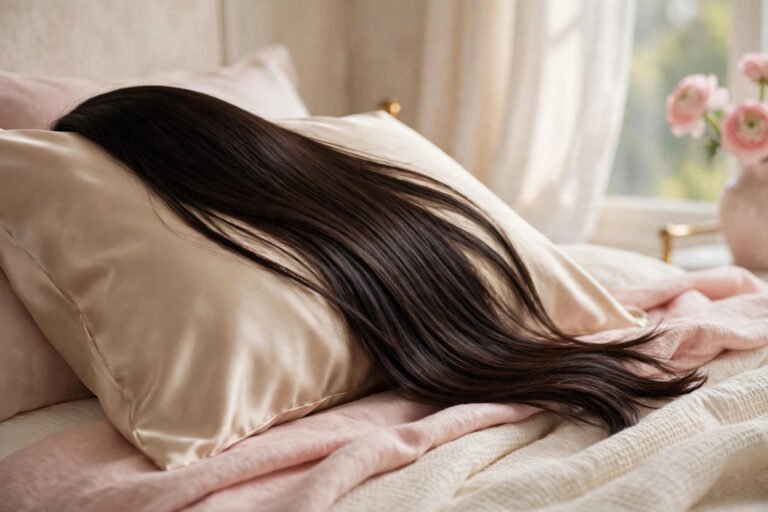
- Sleep on silk. If you need coverage to survive overnight, a silk pillowcase or loose silk scarf reduces friction and transfer.
- Carry a mini. Root powder compacts and mascara wands are purse-sized for a reason — a 30-second refresh before dinner beats starting over.
Frequently Asked Questions
Do temporary gray cover-ups damage hair?
No — that’s their main advantage. Powders, sprays, mascaras, and fibers sit on the surface of the hair and wash out with shampoo. Color-depositing conditioners are genuinely conditioning. None of them use developer or bleach, so there’s no structural damage.
How long do root touch-up products last?
Most last until your next shampoo — typically 1–3 days. They’re designed for short-term coverage: apply in the morning, wash out whenever you next wash your hair. A light setting spray can extend wear through the day.
Can I cover gray hair without dye if I have a lot of gray?
Temporary products work best up to moderate gray levels. With very heavy gray, powders and sprays can look flat or require so much product that the result looks dull. At that point, blending techniques, demi-permanent color, or embracing the transition tend to look more natural — see every at-home method compared for the full range.
Will root spray stain my skin or clothes?
Overspray can stain skin, bathroom surfaces, and light clothing. Shield your hairline with a tissue, wear a dark towel over your shoulders during application, and wipe the counter afterward. Most skin staining washes off with soap and water.
Are temporary cover-ups waterproof?
Generally no. Rain, sweat, and swimming will fade or streak most temporary products. For water-exposed days, either skip the product or choose the most water-resistant formula you can find — and keep expectations realistic.
Conclusion
Covering gray hair without dye isn’t a compromise — for many people, it’s the smarter choice. Root powders, sprays, mascaras, color-depositing conditioners, and a few clever styling tricks give you polished, gray-free hair in minutes, with zero damage and zero commitment. Start with whichever method matches your gray level and your routine, and remember: everything here washes out, so experimenting is risk-free.
Love this? Pin it for later!